
BUSINESS
India’s Tariffs Did Not Fall When Trump Lost the House
A Democratic Congress would revive 2018-style hearings, not erase India’s 10 percent duty or the $100,000 H-1B entry payment already locked in by proclamation.

Americans vote November 3 for all 435 House seats and 35 Senate seats, in a race that will not rewrite India’s US tariff or H-1B rules. Republicans hold the House 218-214 and the Senate 53-47. Democrats need a net gain of four seats in each chamber to take the gavel, and President Donald Trump remains in office until January 2029 with a veto and a stack of executive tools already in use.
The last time this movie ran, in 2018, the House flipped and India’s market access still got worse. Defence files that never needed a Republican majority kept moving. That split is the working map for New Delhi, not the promise of instant relief.
India’s Duties Rose After the 2018 House Flip
Voters handed Democrats the House on November 6, 2018. Republicans kept the Senate. Trade lawyers in Washington spent that winter talking about hearings on steel, aluminium and China tariffs. None of that restored duty-free access for Indian goods.
On March 4, 2019, Trump notified Congress that he would terminate India’s GSP status. The proclamation took effect June 5, 2019, after he found that India had not assured “equitable and reasonable access to its markets.” About $6.3 billion of Indian goods had entered under the programme in 2018. Section 232 metal tariffs imposed earlier that year stayed in place. A Democratic House did not unwind them.
FROM THE 2018 HOUSE FLIP TO THE GSP CUT
- September 2018: India and the United States sign COMCASA at the first 2+2 meeting in New Delhi, weeks before the midterms.
- November 6, 2018: Democrats take the House. Republicans keep the Senate.
- March 4, 2019: Trump notifies Congress and India that GSP designation will end.
- June 5, 2019: India is removed from GSP. Duty-free treatment on those lines stops.
The files that advanced were the ones that never required a Republican floor vote. COMCASA was done before ballots were counted. Later defence paperwork, including BECA in 2020, moved under a divided Capitol. Trade pain and strategic warmth ran on separate clocks. They still do.
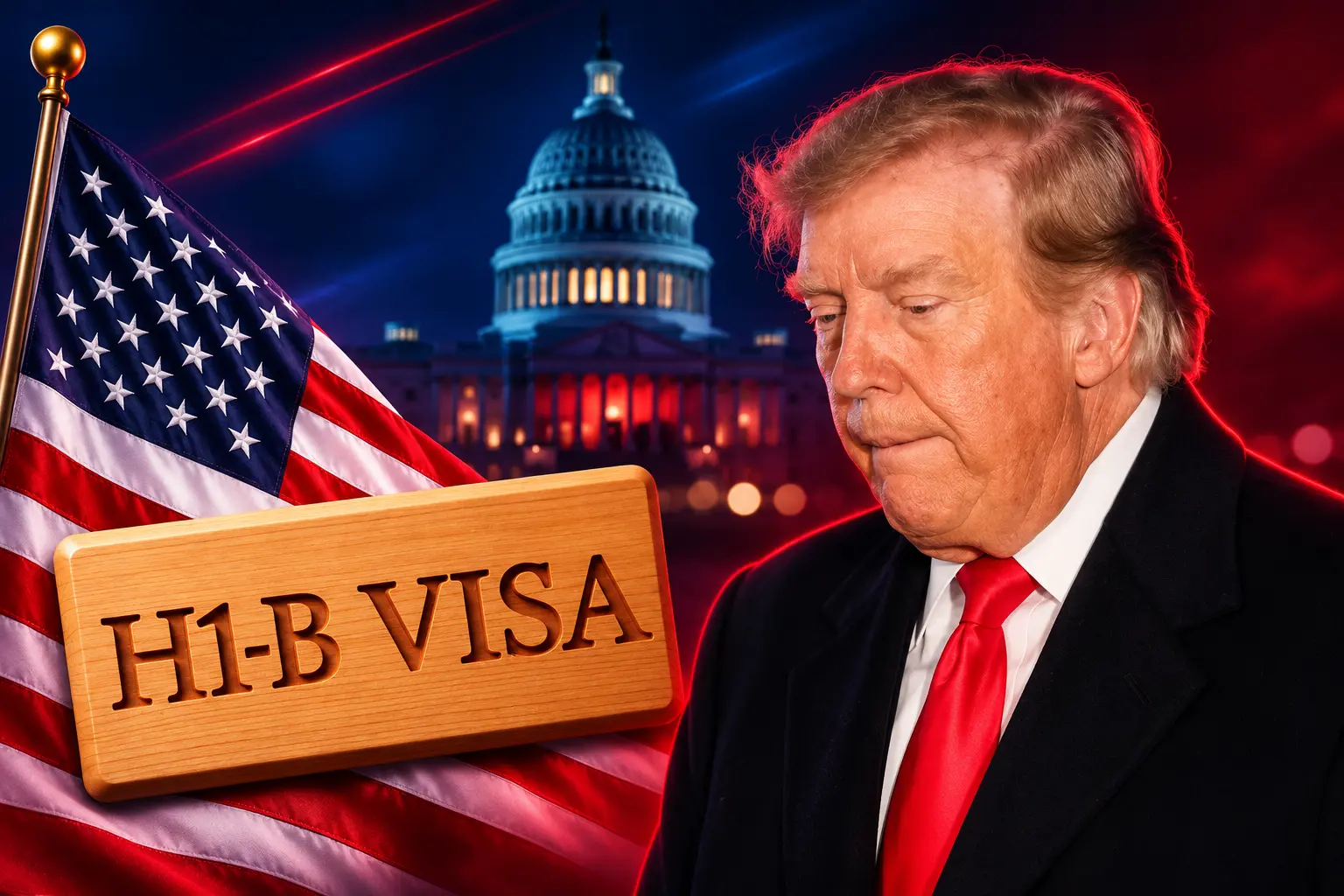
The 10% Levy a New Congress Would Inherit
India’s present US duty bill was written by executive orders, a Supreme Court ruling and a Section 301 notice, not by a midterm campaign. A live 10 percent Section 301 duty has applied to products of India since July 24, 2026, on top of the normal Column 1 rate. GSP has been gone since June 5, 2019, so those lines pay the general rate unless they are free anyway.
The spike that dominated 2025 is already dead. An IEEPA reciprocal duty of 25 percent and a separate 25 percent levy tied to Russian oil purchases were stacked from August 27, 2025, so most Indian goods paid 50 percent on top of the normal duty. A February 6, 2026 framework talked about an 18 percent reciprocal rate. That 18 percent never took effect. On February 20, 2026, the Supreme Court held 6-3 in Learning Resources, Inc. v. Trump that IEEPA does not authorize tariffs. Collection of those IEEPA duties stopped on February 24, 2026. The court cut more from India’s invoice than a new House majority is likely to.
THE DUTY STACK ON INDIAN GOODS
| Measure | Rate | Status |
|---|---|---|
| Section 301 (forced labour notice) | 10 percent | In force since July 24, 2026 |
| Section 232 metals | 50 percent of customs value | In force, no India partner rate |
| Autos and parts (Section 232) | 25 percent | In force |
| IEEPA reciprocal plus oil stack | 50 percent combined | Ended after the February 20, 2026 ruling |
| GSP duty-free lines | Zero on listed goods | Ended June 5, 2019 |
Section 232 and Section 301 are statutes Congress wrote. Repealing or fencing them in would need a bill, a veto-proof margin, or a president willing to sign. Forecasters have Democrats as favorites for the House, with the Senate still competitive. Even a two-chamber flip would not, on its own, take 10 percent off a garment or an engineering shipment landing in Los Angeles.
Why the $100,000 H-1B Fee Survives the Ballot
The H-1B squeeze on Indian staffing firms is a presidential proclamation under the Immigration and Nationality Act, not a line in a spending bill. On September 19, 2025, Trump restricted entry of H-1B workers from abroad unless the petition carried a $100,000 H-1B entry payment. He extended that restriction on September 18, 2026, through 12:01 a.m. eastern time on September 21, 2027. The White House said the $100,000 payment had been made for over 700 petitions. The order does not hit renewals inside the United States in the same way, and the homeland security secretary can still waive it in the national interest.
Since the effective date of the 2025 Proclamation and subsequent promulgation of the DHS final rule, there have been several measurable impacts on the H-1B program, including a significant reduction in H-1B registrations filed by large IT outsourcing firms, with the largest IT staffing and outsourcing firms reducing their combined H-1B registrations from 24,946 to 2,055, a 92 percent decrease.
Donald J. Trump, Restriction on Entry of Certain Nonimmigrant Workers, White House proclamation, September 18, 2026
DHS also replaced the random lottery with a wage-weighted selection rule that ran for the fiscal 2027 cap season. Registrations for beneficiaries with at least a US master’s degree rose from 45.1 percent of the fiscal 2026 pool to 66.1 percent for fiscal 2027. Offers at the two highest wage levels were about 46.3 percent of selections; the lowest wage level was 17.8 percent. Consular processing requests, the White House said, fell nearly 97 percent from the fiscal 2025 cap season to fiscal 2027.
Indian-born workers remain the core of the programme. A USCIS report to Congress counted 283,772 Indian-born beneficiaries, 69.9 percent of H-1B approvals among 406,348 petitions in fiscal 2025. China was second at 49,161, or 12.1 percent. Computer-related jobs took 62 percent of approvals. A Democratic committee can haul in labour and homeland security officials. It cannot, by holding a hearing, cancel a 212(f) entry restriction that runs until September 21, 2027, or rewrite the wage weights already in the Code of Federal Regulations. Court challenges to the fee are the live constraint, and they were live before anyone voted.
Defense Files That Never Needed a Republican Majority
The strategic relationship is the part of the ledger that looks least like 2018’s trade fight, because it never depended on who held the House gavel. On February 13, 2025, Trump and Prime Minister Narendra Modi launched COMPACT and the Mission 500 and TRUST initiative in a joint statement in Washington. Mission 500 sets a goal of more than doubling bilateral trade to $500 billion by 2030. TRUST is the technology frame covering defence, artificial intelligence, semiconductors, quantum, biotechnology, energy and space, including a promised US-India roadmap on AI infrastructure.
The same statement listed hardware already in India’s inventory, from C-17s and P-8Is to Apaches and MQ-9Bs, and named new work on Javelin missiles, Stryker vehicles and six additional P-8I aircraft. It flagged a ten-year major defence partnership framework, a review of ITAR rules, talks on a reciprocal defence procurement deal, and a look at fifth-generation fighters and undersea systems. Indian companies’ US investments cited in the statement ran to about $7.35 billion. Those items move through the Pentagon, State, and export-control shops. A hostile House can slow a sale with questions. It does not have to invent the partnership, and a friendly House does not have to pass a new statute for it to exist.
What a Democratic Senate Could Still Block
The one 2026 twist that 2018 did not fully test is the Senate. Democrats need four net seats to reach 51. At 50-50, Vice President JD Vance still breaks ties and Republicans keep the chamber. A Democratic Senate would set the calendar for ambassadors, senior Pentagon civilians and some trade jobs. It would also handle foreign military sales notifications and any implementing bill for a bilateral trade deal that still has no signed text. The February 6 framework is not in force. That is a real lever, and it is narrower than the campaign language about “losing Congress.”
WHAT FLIPPING CONGRESS DOES AND DOES NOT CHANGE
- Hearings and subpoenas: A Democratic House can investigate tariff processes, H-1B rulemaking and defence sales, and it can force officials to sit for the cameras.
- Spending bills: Riders on State, Homeland Security and Pentagon money can slow a programme without repealing the underlying statute.
- Senate nominations: If Democrats take 51 seats, they can stall confirmations that a Republican majority would have waved through.
- The veto line: Trump can reject a bill that tries to fence Section 232, Section 301 or INA 212(f). A two-thirds override in both chambers is a different election than November 3.
- The live duties and the fee: The 10 percent Section 301 duty, the 50 percent metal tariff and the $100,000 H-1B entry payment stay until the president, a court, or a signed statute moves them.
CSIS made the same call after the 2018 flip: a Democratic House would police process and hold hearings on Section 232 and Section 301. It would not, by taking the gavel, take the tariffs down. That reading still fits the statutes on the shelf.
Oil, the Dollar and Files Congress Does Not Touch
Indian exporters and IT employers will feel Wednesday’s map, but the invoice that actually moves is not a Ways and Means press release. US politics reaches rupee assets through energy prices, the dollar and Treasury yields, which sit with the Federal Reserve, the oil market and the White House’s foreign-policy clock. Committee control changes how loud the hearings are. It does not set Brent, and it does not staff a consulate window in Hyderabad.
Broker notes circulating in Mumbai on November 2 made that point in plainer language than most Washington explainers. A Democratic Congress, they argued, brings closer scrutiny of tariff and immigration policy without a material change in the frictions that matter for India, while defence and China policy still have votes in both parties. Traders who have to mark a book on Wednesday morning are watching crude and the dollar, not the name on a subcommittee door. That is a colder reading than the one that treats a House flip as breathing room for Tiruppur or Bangalore, and it matches the 2018 tape.
New Delhi will still lobby whoever wins. It has to. The 10 percent Section 301 duty and the $100,000 H-1B entry payment will be on the books on November 4 whether the speaker is a Democrat or a Republican, unless a court or the president moves first. That is what happened after 2018, when the House changed hands and India’s GSP benefits ended anyway.

ADNOC Ship Hit in Hormuz Leaves One Crew Missing

SpiceJet’s Rs 5,500 Crore Plan Follows a Rescue That Failed

Hasina’s Return Fight Sets Fire to Yunus’s Bank

Bancroft Recants the 2018 Inquiry and Names the Team

Adhikari Ties the Saffron Saree Row to School Licences

Clancy Juror Says the Holdout Never Cited Evidence

The iPhone 18 Pro Max Splits Apple’s Fall in Two

OpenAI Calls GPT-6 Astra AGI Then Locks Its Exploits

Trump Claims Hormuz Control as Oil Holds Near $96

Russia Closes the Goethe-Institut Berlin Tried to Save

 NEWS2 months ago
Clancy Juror Says the Holdout Never Cited Evidence
- NEWS3 months ago
The iPhone 18 Pro Max Splits Apple’s Fall in Two
- NEWS3 months ago
OpenAI Calls GPT-6 Astra AGI Then Locks Its Exploits
- BUSINESS3 months ago
Trump Claims Hormuz Control as Oil Holds Near $96
- LIFESTYLE3 months ago
Russia Closes the Goethe-Institut Berlin Tried to Save
- AUTO3 months ago
Volkswagen’s Job Cuts Leave Four Plants Without Cars
- NEWS3 months ago
Dyson Puts Nurovi Robots on Sale Without the UV Flagship
- BUSINESS2 months ago
US Destroys Five Iranian Tankers as the Shock Hits Jordan










