BUSINESS
Khambata Walks Away From Tata Trusts Over Listing Fight
Darius Khambata will not seek another Tata Trusts term, calling the September 17 Tata Sons vote infamous and tying an unlisted holding company to cash for.

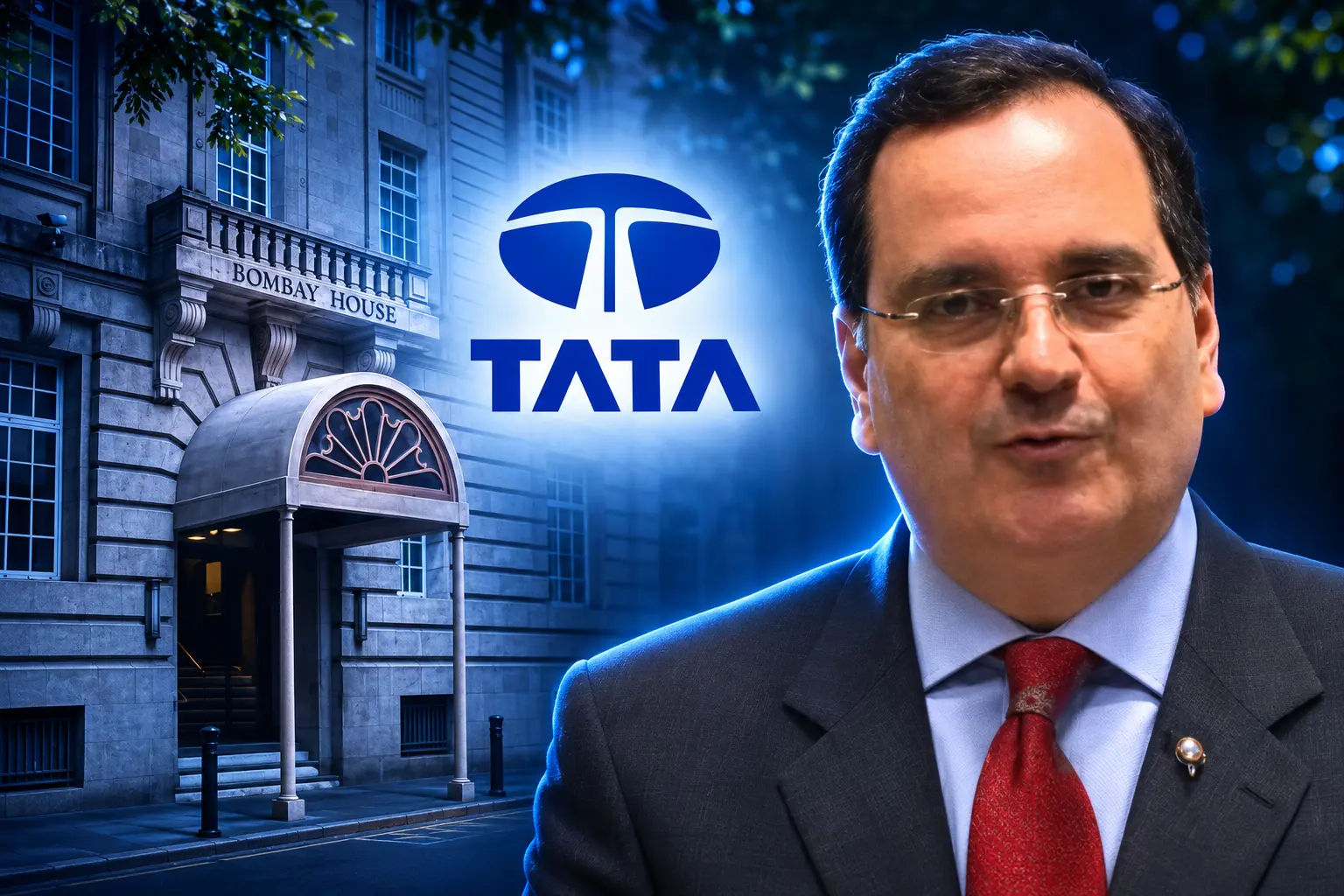
Senior advocate Darius J. Khambata has declined reappointment as a trustee of the Sir Dorabji Tata Trust and the Sir Ratan Tata Trust. He told chairman Noel N. Tata he will not ask fellow trustees for the consent Indian trust law requires to stay.
The four-page letter, dated November 2 and copied to Trusts chief executive Siddharth Sharma, treats the Tata Sons board meeting of September 17 as the event that poisoned the house Ratan Tata left. Khambata still opposes a listing of Tata Sons and still wants cash for the Shapoorji Pallonji Group by a sale of shares.
A Consent He Will Not Seek
Khambata came back to both trusts in November 2023 at the invitation of the late Ratan Tata, after leaving in late 2016. Noel Tata and Sharma had asked him to continue. His Sir Dorabji Tata Trust term ends on November 9, and his Sir Ratan Tata Trust term ends in November as well.
Reappointment, he wrote, needs the agreement of every other trustee. That is the step he will not take.
That is a consent that it is not in my character to seek as it would compromise my independence to do so
Darius J. Khambata, letter to Tata Trusts, November 2, 2026
He said his stand had at times differed from other trustees, including Noel, and he thanked the chairman for accepting those differences. He also wrote that Ratan Tata had asked him to do what was right regardless of personal cost, and that this had guided him as a trustee.
Unanimous consent is a hard rule when the board is already split. Venu Srinivasan, the TVS Motor chairman emeritus and a Trust nominee on the Tata Sons board, and Vijay Singh, the former defence secretary, told reporters in April 2026 that they favoured a listing, against earlier unanimous Trust resolutions. Asking those men to keep him in office would have turned a legal formality into a vote on the listing fight itself.
September 17 Is the Charge Sheet
The letter’s sharpest pages are not about tenure. They are about September 17, when the Tata Sons board, after the Reserve Bank of India had rejected a bid to stay private, voted to give executive chairman N. Chandrasekaran another five-year term and to start complying with the central bank’s listing rules.
Chandrasekaran, 63, had written to the board on August 12 saying he would not seek another term when the present one ends on February 20, 2027. The board asked him to reverse that, and he did. He recused himself from the vote. Four directors backed him. Noel Tata, one of two Trust nominees, voted no. Tata Trusts, which hold about 66% of Tata Sons, called the resolution illegal and a legal nullity, saying the Articles require a majority of Trust nominee directors to support a chairman’s appointment. Srinivasan voted with the majority, so the two nominees split.
HOW THE TATA SONS BOARD VOTED ON SEPTEMBER 17
| Director | Role | Vote on a third term |
|---|---|---|
| Noel Tata | Tata Trusts chairman and nominee director | Against |
| Venu Srinivasan | Trust nominee director | For |
| Harish Manwani | Director, former Unilever global chief operating officer | For |
| Saurabh Agrawal | Tata Sons group chief financial officer | For |
| Anita M. George | Director, former World Bank official | For |
| N. Chandrasekaran | Executive chairman | Recused |
Tata Sons said Chandrasekaran acceded to the board’s request and that the board then resolved by a majority to reappoint him for five years after February 20, 2027. It also said it would seek guidance from the RBI, the Trusts and other stakeholders on the listing rules. The Trusts said the August 12 decision had been accepted and had attained finality, and that employees, lenders and the majority shareholder had already proceeded on it. Noel Tata had warned the board that if forced to vote he would veto a listing, saying a listing would destroy Tata Sons’ character.
The sad events of 17 September 2026, a day that will live in infamy, have sullied Tata Sons’ reputation and have imperilled the image of corporate India. No spin doctoring can mask what happened
Darius J. Khambata, letter to Tata Trusts, November 2, 2026
He asked whether the board would have acted that way had Ratan Tata still been alive, then answered his own question: of course not. Duties, he added, are owed to institutions, not to individuals, repeating Ratan Tata’s line that the institution is always bigger than the individual. A July 28, 2025 Trust resolution backing a third term for Chandrasekaran had, he wrote, been overtaken by the astounding events of August and September 2026. Both the extra term and the listing steps still need to go to a pending Tata Sons annual general meeting.
The Reserve Bank Already Shut the Private Door
Khambata had first warned, at a Trust meeting on May 28, 2025, that a listing would be existential for the Trusts. He later drafted the July 28, 2025 resolution that opposed listing, backed Chandrasekaran’s talks with the RBI on deregistration, and tied that stance to an exit and cash for Shapoorji Pallonji.
Those talks are, in his account, the failure that left listing as the remaining path. He wrote that he does not believe the engagement with the RBI was meaningful, much less successful, in showing how Tata Sons could adopt a listed company’s transparency and reporting even if it were deregistered as a Core Investment Company, or how it could restructure to avoid what he called the nuclear option of listing.
THE RBI PATH THAT RAN OUT
- September 2022: The Reserve Bank first places Tata Sons in the Upper Layer of non-banking financial companies and requires a listing within three years, a clock that ran to September 2025.
- March 28, 2024: Tata Sons applies to surrender its CIC registration after prepaying more than ₹21,000 crore of debt, seeking a route to stay unlisted.
- June 2026: The scale-based rules are revised so the Upper Layer is built around entities with assets of ₹1,00,000 crore and above.
- August 6, 2026: The central bank publishes the 2026-27 Upper Layer list of 17 firms and names Tata Sons Private Limited on the Upper Layer list as a core investment company, without prejudice then to the pending deregistration bid. Tata Sons’ assets were ₹2.01 lakh crore as of March 31, 2026.
- September 11, 2026: In a letter to the company, the RBI says the surrender request cannot be acceded to and tells Tata Sons to comply with Upper Layer rules.
Those rules include mandatory listing within three years of identification as an Upper Layer NBFC, plus extra oversight that lasts at least five years. Khambata still wants the Trusts to test whether Tata Sons can secure CIC deregistration or restructure. The September 11 letter is why the board, six days later, voted to start complying instead.
Cash for Shapoorji Pallonji Without an IPO
Opposition to listing, Khambata wrote, must go hand in hand with giving liquidity to the Shapoorji Pallonji Group by sale of some or all of their shares. He said he had remained strongly supportive of any proposal that gives the group cash. That is the same bargain he wrote into the July 2025 resolution, and it is the part of his exit that the listing fight keeps swallowing.
The Mistry family’s vehicles, Sterling Investment Corporation and Cyrus Investments, hold 18.4% of Tata Sons, the second-largest block after the charitable trusts. The group’s borrowings are estimated at ₹55,000-60,000 crore. Shapoor Mistry, the SP Group chairman, has called a public listing a social and moral imperative after the RBI’s September order. He has also kept a private exit on the table.
WHO HOLDS TATA SONS AND WHAT THEY WANT
| Holder | Stake | Position on listing and cash |
|---|---|---|
| Tata Trusts (all seven shareholding trusts) | About 66% | Chairman Noel Tata opposes a listing; Khambata’s letter holds the same line |
| Sir Dorabji Tata Trust | 27.98% | Largest single trust; Khambata leaves this board on November 9 |
| Sir Ratan Tata Trust | 23.56% | Second-largest trust; his term there also ends in November |
| Shapoorji Pallonji Group | 18.4% | Wants a fair-value exit; open to a buyback or a listing |
| Tata group companies | Around 13% | Balance held with family and other shareholders |
At the September 17 meeting, Noel Tata tabled an SP Group proposal for Tata Sons to take out enough of that holding, through a selective capital reduction that would need National Company Law Tribunal approval, to raise at least ₹25,000 crore in two tranches over 18 months. A 2-3% sale at the top of that range would imply a holding-company value of about ₹8.3 lakh crore. No deal has been announced. Khambata’s point is that the Trusts can still refuse an IPO and still pay the Mistrys out. Walking off the trusts does not settle which of those paths the remaining trustees will take.
What Changes on the Trusts After November 9
The boards of the two principal Tata Trusts still list Khambata. After he goes, Sir Dorabji Tata Trust drops from six trustees to five and Sir Ratan Tata Trust from five to four. The charitable block’s 66% does not move with one man. The ability to pass a unanimous trustee resolution does.
WHO REMAINS ON THE TWO MAIN TRUSTS
- Noel Tata: Chairman and a perpetual trustee on both boards; he leaves six operating-company boards on November 12, when he turns 70, and stays as a Trust nominee on Tata Sons.
- Venu Srinivasan: On both main trusts; his Sir Ratan Tata Trust term runs to December, his Sir Dorabji Tata Trust term to November 2028; he is the nominee who voted for Chandrasekaran.
- Vijay Singh: On Sir Dorabji Tata Trust until July 2027; his Tata Sons nominee seat was not renewed in September 2025.
- Neville Tata: Noel’s son, on Sir Dorabji Tata Trust; Khambata wrote that he proposed that appointment in November 2025.
- Bhaskar Bhat: Former Titan Company managing director, on Sir Dorabji Tata Trust, term running to November 2028.
- Jimmy Tata and Jehangir H.C. Jehangir: Perpetual trustees on Sir Ratan Tata Trust, with Noel; Jehangir chairs Jehangir Hospital in Pune.
Khambata wrote that he had seconded Noel’s appointment as Trusts chairman in October 2024 despite pressure to defer it. He also defended an October 17, 2024 resolution to reappoint trustees without a tenure limit, which he said was meant to keep the trusts stable and the trustees independent. Maharashtra later capped perpetual trustees at one-fourth of a board, a rule that already hangs over Sir Ratan Tata Trust’s three life seats. The letter does not name a successor. It does make the next unanimous vote harder for Noel’s camp, because one reliable anti-listing lawyer will no longer be in the room.
Nominee Directors Split the Fiduciary Line
The September 2025 decision not to renew Vijay Singh as a Trust nominee on the Tata Sons board is, in Khambata’s telling, the move that later preserved a veto through Noel. Four trustees across the two trusts, including Khambata, backed that non-renewal to strengthen opposition to a listing. He said they then faced a sustained media campaign designed to discredit them. It is now apparent why, he wrote, after Srinivasan and Singh’s April comments on listing.
He also questioned Srinivasan’s decision to sit and vote on September 17 after a trust had tried, the day before, to keep him out of that meeting. A nominee director of a public charitable trust, he wrote, sits on that board to protect the Trusts and may not act against their interests merely because he also owes a duty to the company.
THE TRUST RESOLUTIONS HE PUT ON THE RECORD
- October 17, 2024: Reappoint trustees without a tenure limit, which he said protected stability and independence.
- July 28, 2025, listing: Oppose a Tata Sons IPO, back the RBI deregistration talks, and support an SP Group exit and cash.
- July 28, 2025, chairman: Support a third term for Chandrasekaran, a vote he now says August and September overtook.
- September 11, 2025: Four trustees, including Khambata, refuse to renew Vijay Singh as a Tata Sons nominee director.
He rested that view on the Supreme Court’s March 26, 2021 judgment in the Tata-Mistry dispute, which upheld the special rights of Trust nominee directors under Tata Sons’ Articles, including the affirmative-vote design in Articles 104, 118 and 121. There cannot be two classes of trustees, those who are nominee directors and those who are not, he wrote. All trustees owe an equal duty to the Trust.
That is the legal fight Noel Tata has already carried into the company secretary’s office. On October 26 he wrote challenging the September 17 record, saying the extra term was not properly on the agenda and that the voting conditions were not met. Khambata’s letter does not add a new court paper. It adds a former Maharashtra advocate general, appointed by Ratan Tata, saying the nominee-duty argument out loud as he leaves.
Leave It to History, He Wrote
Khambata described the Tata model as a living form of Mahatma Gandhi’s trusteeship idea, with Tata Sons and the Trusts as two limbs of one industrial and charitable body, neither meaningful without the other. More than 90% of Trust meeting time, he said, goes to philanthropic projects for millions of silent beneficiaries. Talk of easier capital and faster growth, he wrote, misses a simple truth: the model succeeded because it was not driven by avarice or short-term gain. He pointed to private-company choices, fully repaying Tata Finance depositors, funding the group’s telecom losses to honour commitments, buying into Air India, and putting money into semiconductors, that a listed Tata Sons judged on shorter-term returns could probably not make.
He said he was saddened by the divide between Noel Tata and Chandrasekaran. Leadership, he wrote, is not about power or position but about dharma, wisdom and temperance, and a position must be won by consensus and respect and not by stratagem. He closed by invoking Jamsetji Tata, Sir Dorabji Tata, Sir Ratanji Tata, J.R.D. Tata and Ratan Tata, and by leaving it to history to judge whether those entrusted with the model have the statesmanship to rise above personal interest and preserve it rather than diminish it.
The next Tata Sons board meeting is on November 26, after Noel’s challenge to the September minutes. Khambata’s trustee seats run out before that meeting opens. The listing order, the SP Group’s need for cash, and the disputed third term for Chandrasekaran stay on the table without him.
Disclaimer: This article is news reporting and analysis of public letters, company statements and regulatory notices. It is informational only and is not investment advice, legal advice, or a recommendation to buy, sell or hold any Tata group or Shapoorji Pallonji security. Readers who are considering an investment, a trust, or a legal step tied to these facts should consult a SEBI-registered adviser or a qualified corporate lawyer who can review their own position. Figures, board seats and case statuses reflect the documents and statements cited as of November 2, 2026, and may change as the Reserve Bank, the courts, the trusts and Tata Sons act.

ADNOC Ship Hit in Hormuz Leaves One Crew Missing

SpiceJet’s Rs 5,500 Crore Plan Follows a Rescue That Failed

Hasina’s Return Fight Sets Fire to Yunus’s Bank

Bancroft Recants the 2018 Inquiry and Names the Team

Adhikari Ties the Saffron Saree Row to School Licences

Clancy Juror Says the Holdout Never Cited Evidence

The iPhone 18 Pro Max Splits Apple’s Fall in Two

OpenAI Calls GPT-6 Astra AGI Then Locks Its Exploits

Trump Claims Hormuz Control as Oil Holds Near $96

Russia Closes the Goethe-Institut Berlin Tried to Save

 NEWS2 months ago
Clancy Juror Says the Holdout Never Cited Evidence
- NEWS3 months ago
The iPhone 18 Pro Max Splits Apple’s Fall in Two
- NEWS3 months ago
OpenAI Calls GPT-6 Astra AGI Then Locks Its Exploits
- BUSINESS3 months ago
Trump Claims Hormuz Control as Oil Holds Near $96
- LIFESTYLE3 months ago
Russia Closes the Goethe-Institut Berlin Tried to Save
- AUTO3 months ago
Volkswagen’s Job Cuts Leave Four Plants Without Cars
- NEWS3 months ago
Dyson Puts Nurovi Robots on Sale Without the UV Flagship
- BUSINESS2 months ago
US Destroys Five Iranian Tankers as the Shock Hits Jordan