
BUSINESS
Wage Board Lands as 264 Ashulia Factories Go Dark
A new wage board was gazetted on 1 November, yet 264 Ashulia and Savar garment factories still shut on 2 November as workers held out for Tk 30,000.

Industrial Police confirmed that 264 factories in Savar and Ashulia shut on 2 November, a day after Dhaka gazetted a six-member wage board. Workers were still demanding a Tk 30,000 monthly minimum, more than double the Tk 12,500 floor set on 1 December 2023.
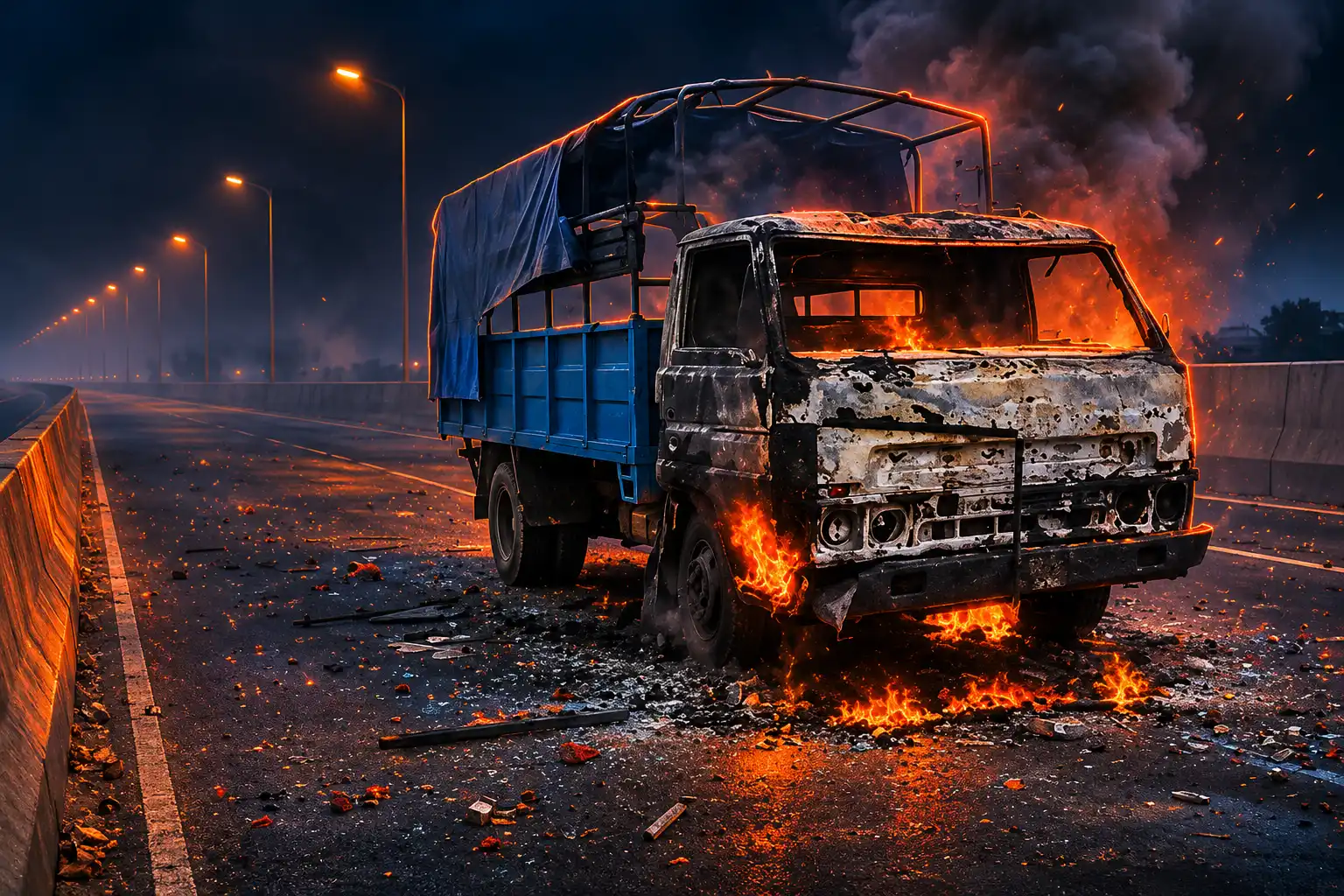
Union officials who sit on that board said they have no role in the street fight. The board has not set a first meeting. Police fired tear gas and used water cannons. Protesters put bricks through factory walls and burned a covered van in Narsinghpur.
264 Factories Go Dark Across Ashulia and Savar
Mohammad Mominul Islam Bhuiyan, superintendent of Industrial Police-1 in Ashulia, put the local shutdown at 264 plants in a message around 3:30 p.m. The units declared a general holiday or halted work for the day. The walkout began around 9:30 a.m. at New Age Group factories and then moved through Zirabo, Kathgora, Ghoshbagh and Narsinghpur.
Workers gathered at an Ananta Group plant and later threw bricks and stones toward police at a Ha-Meem Group factory. Around 9:30 a.m. they also targeted Bengal Plastic Pipes Ltd beside Kathgora Road. Twice they tried to block the Nabinagar-Chandra highway at Kabirpur. Mohibullah Akon, assistant commissioner (land) of Ashulia Circle, confirmed the highway attempt around 9:45 a.m.
A covered van was set on fire in Narsinghpur around 11:30 a.m. Mohammad Tariqul Islam, officer-in-charge of Ashulia Police Station, said two people were detained around 1:00 p.m. for alleged attacks on officers. It was not clear whether they were garment workers. Industrial Police said 12 officers were injured and that bricks hit at least eight factories, including Pickard Bangladesh, Artistic Design, Janran Sweater, Ferrari Garments, Denitex, Anlima Textile, Al Islam Textile and GQ Industries.
The Ashulia-Savar stoppage sat inside a wider walkout. On 1 November the Bangladesh Garment Manufacturers and Exporters Association counted disruption at 529 of 2,134 factories across five hubs, with 987,190 workers off the floor. By 11:30 a.m. on 2 November, BGMEA vice-president Mijanur Rahman said 670 member factories had halted work, affecting about 1.68 million workers. The Bangladesh Knitwear Manufacturers and Exporters Association reported about 20 more plants idle in Narayanganj, covering more than 50,000 workers. Gazipur and Mymensingh accounted for 382 of the Monday BGMEA closures; Mirpur accounted for 65. Narayanganj and Chattogram had stayed quiet on Sunday.
WHERE THE SUNDAY WALKOUT HIT
| Hub | Factories affected | Workers off the floor | Factories in the BGMEA count |
|---|---|---|---|
| Gazipur and Mymensingh | 276 | 645,360 | 836 |
| Savar, Ashulia and Jirani | 185 | 290,205 | 441 |
| Mirpur (Dhaka police area) | 68 | 51,625 | 320 |
| Narayanganj | 0 | 0 | 197 |
| Chattogram | 0 | 0 | 340 |
| Five hubs combined | 529 | 987,190 | 2,134 |
Those Sunday figures are BGMEA’s situation report for 1 November. They are not the Ashulia police tally for the next afternoon, and they are not a count of jobs lost for good.
MONDAY FROM 9:30 A.M.
- 9:30 a.m.: New Age Group workers walk out for a Tk 30,000 floor; the crowd spreads to Zirabo, Kathgora, Ghoshbagh and Narsinghpur.
- 9:45 a.m.: Ashulia land officer confirms a bid to block the Nabinagar-Chandra highway at Kabirpur; police answer with tear gas and water cannons.
- 11:30 a.m.: A covered van burns in Narsinghpur during clashes.
- 1:00 p.m.: Ashulia police detain two people over alleged attacks on officers.
- 3:30 p.m.: Industrial Police-1 confirms 264 Savar and Ashulia factories on holiday or halted.
Bhuiyan said workers leaving one plant pulled staff from factories that had still been running, then put up barricades and set fires. He also said outsiders had joined, and that police would act on what they could prove.
Sunday’s Gazette Did Not Clear Monday’s Streets
Labour and Employment Minister Ariful Haque Choudhury announced the board at a Secretariat briefing around 11:30 a.m. on 1 November, after talks with BGMEA and the knitwear association. He told workers their demand had been a wage board, that the board now existed with the names they had put forward, and that they should leave the roads. The ministry followed with two gazette notices naming the wage board under the Bangladesh Labour Act, 2006, as amended in 2026. Chairman Sheikh Ashfaqur Rahman, a senior district and sessions judge, was asked to start work with employers, workers and a neutral member. When journalists rang him after the notices, he did not pick up and asked by text to be called later.
The amended law shortens the wage review from five years to three, so the 2023 floor was due for a fresh look in December 2026. Kazi Ruhul Amin, general secretary of the Bangladesh Garments and Sweaters Workers Trade Union Centre, said the board itself was already six months late. “The formation of the wage board is already six months overdue. If the new wage structure is not implemented by December, the situation could become even more complicated,” he said. Labour groups want a new structure announced in December so higher pay can start with the new year. The board has said it cannot promise a timetable before it meets. It has not called that meeting, and owners have not tabled a number.
WHO SITS ON THE SIX-MEMBER BOARD
- The chair: Sheikh Ashfaqur Rahman, senior district and sessions judge, already heading the standing Minimum Wage Board.
- The neutral seat: Prof. Mosleh Uddin Ahmed, Department of Public Administration, University of Dhaka.
- Employers, general: Asif Ayub, joint secretary-general of the Bangladesh Employers’ Federation.
- Workers, general: Anwar Hossain, president of Bangladesh Jatiyatabadi Sramik Dal.
- Employers, garment: ABM Shamsuddin, a BGMEA director and chairman of Hannan Group.
- Workers, garment: Babul Akhter, general secretary of the Bangladesh Garments and Industrial Workers Federation.
Babul Akhter said his side had been told the board was formed and hoped the government would start its work soon. ABM Shamsuddin, sitting for owners, put the timetable on consent. “If everyone agrees, it will take five seconds to make this decision. But if they do not agree, it may not be implemented even in six months,” he said. Prime Minister Tarique Rahman directed police to keep production running and to protect lives and property. The minister warned that long stoppages could delay export shipments and payments from foreign buyers. He also alleged that a vested political quarter was using labour grievances to destabilise the government.
What Tk 12,500 Buys After Four Years of Inflation
The Tk 12,500 floor is the Grade 4 helper rate. Grade 3 is Tk 13,550, Grade 2 is Tk 14,273 and Grade 1 is Tk 15,035. Operators sit above helpers, and annual increments of 5 percent and then 9 percent have lifted some take-home pay since 2023. Owners say a Grade 4 worker who does two hours of overtime a day can reach about Tk 18,000 to Tk 20,000, or Tk 20,000 to Tk 22,000 with attendance and incentive bonuses. Smriti Akter, a Gazipur leader of the Garment Workers Solidarity Federation, gave a harder overtime sum: about Tk 3,000 extra for 100 overtime hours a month for helpers.
She put a family-of-five rent in Gazipur at least at Tk 8,000 and a cooking-gas cylinder at Tk 2,200 to Tk 2,500, in homes with no piped gas. The medical allowance is Tk 750; a doctor’s fee, she said, is Tk 800 to Tk 1,000. “How can people manage, even if two members of a family are employed?” she asked. She also said her organisation had not itself tabled Tk 30,000, and wanted a rise tied to living costs and to 2023 studies by BILS, the Centre for Policy Dialogue and Asia Alliance.
Kalpona Akhter of the Bangladesh Center for Workers Solidarity put current take-home near Tk 13,000 and said this round’s ask was a bit more than Tk 30,000 after inflation. The Tk 30,000 figure is $245. Bangladesh Bureau of Statistics data put September 2026 inflation at 8.34 percent, with food at 7.22 percent and non-food at 9.30 percent. Wage growth that month was 7.9 percent. Inflation ran ahead of wages for 56 straight months from February 2022 through September 2026. Average household income was Tk 33,513 against spending of Tk 35,311, a gap of Tk 1,798. An ILO study of Bangladesh pay finds women’s monthly earnings 22 to 25 percent lower than men’s across sectors, a gap that lands hardest where the job is already the floor rate.
WHAT THE FLOOR MEETS IN GAZIPUR
- The helper rate: Tk 12,500 a month before overtime, set on 1 December 2023.
- The rent: At least Tk 8,000 for a family of five, per Smriti Akter.
- The cylinder: Tk 2,200 to Tk 2,500 for cooking gas where there is no piped line.
- The clinic: Tk 750 medical allowance against a Tk 800 to Tk 1,000 doctor’s fee.
Nationally the garment industry employs about 4 million people, earns more than 80 percent of export receipts and contributes about 10 percent of GDP. It is the world’s second-largest apparel exporter after China. That is the machine the street is holding idle while the board looks for a date.
The 2023 Gap Comes Due
This is the same argument with a higher sticker. In 2023 labour groups sought about Tk 23,000 to Tk 25,000. Workers’ representatives on that board proposed Tk 20,390. Owners opened at Tk 10,400. The board closed at Tk 12,500, a 56.25 percent rise from Tk 8,000, with a 5 percent annual increment. Workers rejected it in Ashulia and Gazipur. At least four people were killed in that round. Factories shut, cases named thousands of workers, and the unrest ran down only after closures, lawsuits and arrests. An ILO governing-body paper later recorded that the 45 cases filed after those protests had been settled, and that employers and workers had reached an 18-point joint declaration signed in September 2024 on unpaid wages and related grievances.
The gap between the ask and the gazette is the pattern, not an exception.
DEMAND VERSUS THE GAZETTE
| Year | What workers sought | What owners first offered | What the board set |
|---|---|---|---|
| 2006 | Tk 3,000 | Not stated in this round’s record | Tk 1,662.50 |
| 2010 | Tk 5,000 | Not stated in this round’s record | Tk 3,000 |
| 2013 | Tk 8,114 | Not stated in this round’s record | Tk 5,300 |
| 2018 | Tk 12,020 (unions also asked Tk 16,000) | Tk 6,360 | Tk 8,000 |
| 2023 | Tk 20,390 on the board (groups asked Tk 23,000 to Tk 25,000) | Tk 10,400 | Tk 12,500 |
| 2026 | Tk 30,000 | No proposal yet | Board named, no sitting |
Each of those settlements arrived after street pressure. Each also landed far below the figure on the banners. The 2026 ask is 2.4 times the current floor, a 140 percent jump, and owners have not put a counter on paper.
Blacklisting Is Still on the Gate Lists
The Tk 30,000 floor is not the only item. Workers also want an end to blacklisting and the return of dismissed colleagues. In Ashulia, that practice has meant a name and photo on a “suspended” sheet at the gate, often with a theft or vandalism tag, after which other factories in the belt will not hire the person. IndustriALL has said biometric employment records are used to spot workers who joined unions or protests and to keep them out. A September 2026 account from Al-Ghousia Textiles Ltd in Ashulia described 23 workers listed that way after an earlier push for a wage board and a Tk 16,000 floor.
The Labour (Amendment) Act 2026, in force from 10 April 2026, added blacklisting of workers as an unfair labour practice under Section 195, and gave the Director General of Labour power under Section 196B to order it stopped and to award compensation without a Labour Court case. The street demand for an end to blacklisting is a claim that the new rule has not reached the gate. Reinstatement of sacked workers sits beside it, because a board that only names a new floor leaves those names on the list.
Khairul Mamun Mintu, legal affairs secretary of the Bangladesh Garments and Sweaters Workers Trade Union Centre, tied the anger to earlier attacks on workers and to the absence of factory-level talks that would explain the board. The government, he said, had not yet opened those shop-floor discussions.
Factory Owners Cap Their Offer Near Tk 16,500
Owners have not submitted a wage-board proposal. Several told interviewers that a jump to Tk 30,000 was unrealistic and that even a much smaller rise could close plants. Bangladesh Knitwear Manufacturers and Exporters Association president Mohammad Hatem said owners would work out how far pay could rise without stopping the lines, then file a figure. BGMEA president Mahmud Hasan Khan said the government had already formed the board and that workers should let the review run. If fresh protests forced more shutdowns, he said, owners would use the “no work, no pay” rule, and industry representatives were due to see the home minister.
Faruque Hassan, a former BGMEA president, set a ceiling far below the banners.
Even if the minimum wage rises to Tk16,000 or Tk16,500, it will become difficult for us to operate. We will no longer be able to compete in the global market and will lose orders.
Faruque Hassan, former president, Bangladesh Garment Manufacturers and Exporters Association
An owner speaking without a name went further, saying a rise of even Tk 5,000 would close at least 800 factories within six months. Owners also point to higher electricity and gas tariffs, fuel and transport costs, thin prices on the low-end orders that still dominate the book, and weaker demand in export markets. Labour Minister Choudhury had already warned that long disruption would delay shipments and buyer payments. Mustafizur Rahman, a distinguished fellow at the Centre for Policy Dialogue, said the street had put pressure on the authorities and that a deal would now depend on talks, consensus and government mediation. BGMEA director Faisal Samad said a concrete wage proposal would take time and that earlier rounds had taken around three months.
Three months from 1 November runs past the December date labour groups want. The board’s own line is that it will not promise a date before it sits.
The Street Fight Has No Union Sponsor
The people named to bargain are not the people on the asphalt. Mintu put that on the record while asking workers to stay peaceful and to watch the board.
Negotiations over wages are beginning. We want the new wages to be implemented by December. Labour organisations currently have no role in this movement.
Khairul Mamun Mintu, legal affairs secretary, Bangladesh Garments and Sweaters Workers Trade Union Centre
Rafiqul Islam Sujon, president of the Bangladesh Garments and Shilpa Sramik Federation and member secretary of the Garment Sramik Shilpo Rokkha Moncho, also told workers to stay calm and said a “third party” had entered the protests. Smriti Akter described people on the Gazipur roads with bracelets and long hair and no factory ID cards, and said there was political instigation even as she backed a cost-of-living rise. Bhuiyan, from the industrial police, alleged outsiders and miscreants. Ruling-party cadres have been standing with police along industrial highways in Gazipur, which is the sort of overlay union leaders are pointing at when they talk about a third party. Home Affairs Minister Salahuddin Ahmed warned of firm action against anyone using the protests to destabilise the country.
A worker at one Savar-Ashulia factory, speaking without a name on 1 November, said the board had been formed but that nobody had said who would sit for them, and that the unrest would run until new wages were announced. That is the hole the gazette did not fill. The minister presented the board as the answer to the demand. The demand on the road is still Tk 30,000, an end to blacklisting, and the return of dismissed workers. The six people named to settle that have not been given a room or a date. Chairman Rahman has not called them in. Owners have not offered a figure. Unions want the new pay in workers’ hands by December, and they also say this movement is not theirs.
On 2 November the official path and the street ran on the same calendar and did not meet. Ashulia’s 264 silent factories were the proof, and the board still had no first sitting to put against them.

ADNOC Ship Hit in Hormuz Leaves One Crew Missing

SpiceJet’s Rs 5,500 Crore Plan Follows a Rescue That Failed

Hasina’s Return Fight Sets Fire to Yunus’s Bank

Bancroft Recants the 2018 Inquiry and Names the Team

Adhikari Ties the Saffron Saree Row to School Licences

Clancy Juror Says the Holdout Never Cited Evidence

The iPhone 18 Pro Max Splits Apple’s Fall in Two

OpenAI Calls GPT-6 Astra AGI Then Locks Its Exploits

Trump Claims Hormuz Control as Oil Holds Near $96

Russia Closes the Goethe-Institut Berlin Tried to Save

 NEWS2 months ago
Clancy Juror Says the Holdout Never Cited Evidence
- NEWS3 months ago
The iPhone 18 Pro Max Splits Apple’s Fall in Two
- NEWS3 months ago
OpenAI Calls GPT-6 Astra AGI Then Locks Its Exploits
- BUSINESS3 months ago
Trump Claims Hormuz Control as Oil Holds Near $96
- LIFESTYLE3 months ago
Russia Closes the Goethe-Institut Berlin Tried to Save
- AUTO3 months ago
Volkswagen’s Job Cuts Leave Four Plants Without Cars
- NEWS3 months ago
Dyson Puts Nurovi Robots on Sale Without the UV Flagship
- BUSINESS2 months ago
US Destroys Five Iranian Tankers as the Shock Hits Jordan










