
ENTERTAINMENT
Sanjay Gupta Dies at 57 After a Fall at Home
Sanjay Gupta died at 57 after a home fall, closing a 32-year run of remakes, Kaante, and Shootout films he had already called commercially finished.

Sanjay Gupta, the Hindi director of Kaante and the Shootout crime films, died on October 30 after a fall at his Mumbai home. He was 57.
Filmmaker Ashoke Pandit, who had spoken to Gupta’s brother-in-law, said he slipped, took a fatal head injury, and bled heavily. Details of the last rites had not been issued on October 31.
How Sanjay Gupta Died at 57
Gupta was born 23 October 1969 in Mumbai, so the fall came seven days after his 57th birthday. Pandit, a friend and the chief advisor at FWICE, confirmed the death on Instagram and in interviews that morning, before a family statement went out.
I just spoke to his brother-in-law also, so he probably slipped at home and had a fatal head injury. He bled very profusely and expired. I’m going mad here, seriously and was not able to process it. It’s really a great loss. It was not an age to go.
Ashoke Pandit, filmmaker
Trade analyst Taran Adarsh wrote that he had met Gupta only a few days earlier at a Mata Ki Chowki held at the director’s house. Kamaal R Khan, posting as @kamaalrkhan, said they had been talking “almost every 2nd day about films and Bollywood.” Rakesh Roshan, who produced Kaabil with him in 2017, called the news “shockingly sad.”
The International Indian Film Academy put a public condolence on the record the same morning.
Filmmaker Sanjay Gupta, known for movies like Kaante, Kaabil, Musafir and Shootout at Wadala, has reportedly passed away on October 30, 2026. His films and contribution to Hindi cinema will always be remembered.
May his soul rest in peace. 🤍#SanjayGupta #RIPSanjayGupta… pic.twitter.com/7cweacEXSo
— IIFA (@IIFA) October 31, 2026
WHAT WE KNOW
- The date: Gupta died on Friday, October 30, 2026, in Mumbai.
- The injury: Pandit said a fall at home caused a head injury and heavy bleeding.
- The family: He is survived by his wife, Anu Lekhi; last-rites details were still to be shared.
WHAT IS UNCONFIRMED
- The room: Trade accounts placed the fall in a bathroom or a kitchen; Pandit did not.
- A medical report: No autopsy note or hospital bulletin had been made public by October 31.
- A family statement: Word reached the industry through Pandit and the brother-in-law, not a signed note.
Kaante is still the title people reach for when they say his name. That is not because it was his biggest earner. It is because, for 24 years, it stood in for a whole method: take a foreign crime picture, restage it with Hindi film stars, and sell the attitude as Bombay.
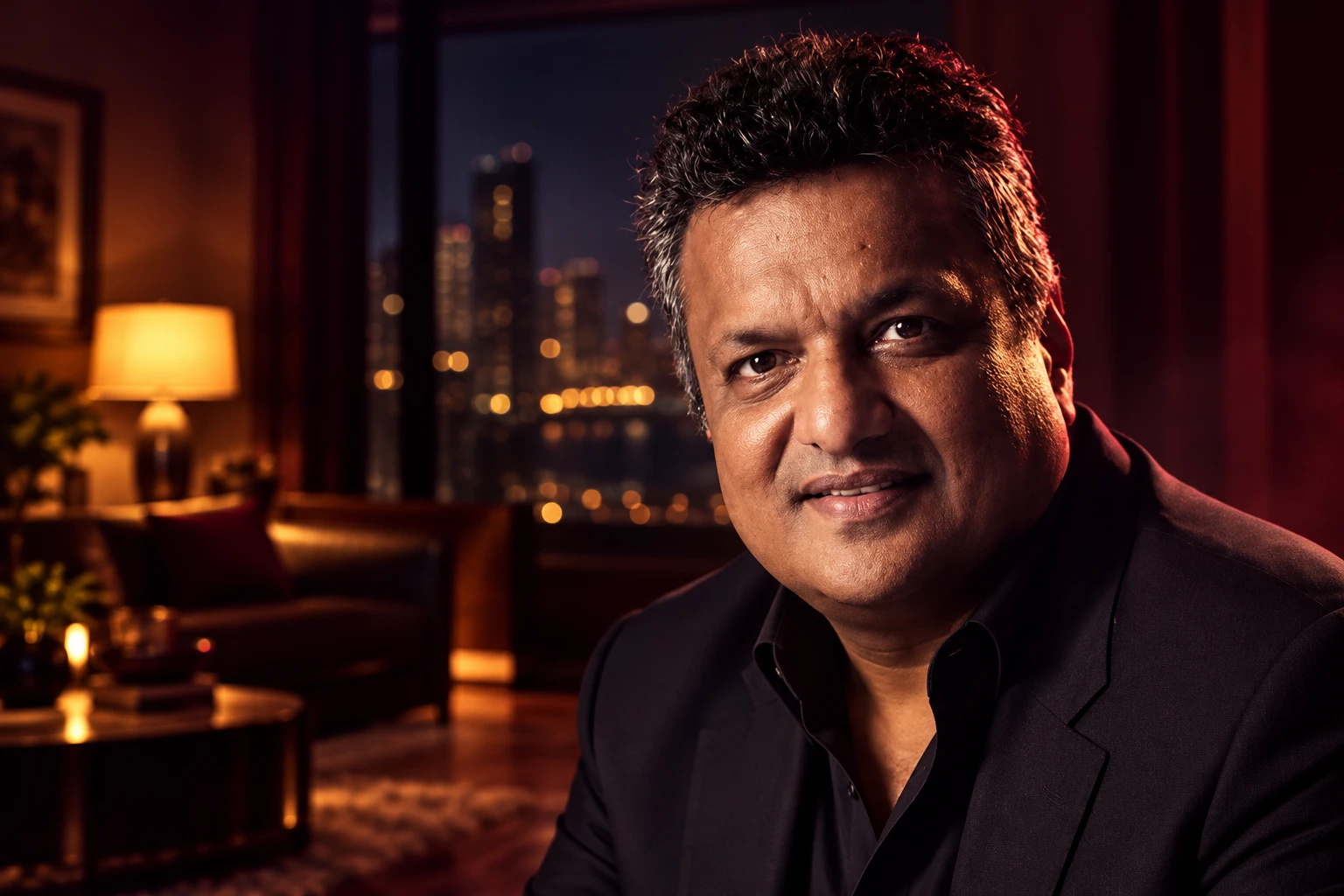
He Built Crime Films From Other Movies
Gupta’s first feature, Aatish: Feel the Fire, opened on June 17, 1994, with Sanjay Dutt and Aditya Pancholi. The credits already pointed at other films. Wikipedia’s filmography lists Deewaar, John Woo’s A Better Tomorrow, and State of Grace among the sources. That mix, a Hindi angry-young-man template plus a Hong Kong brotherhood plot, became the way he worked for three decades.
He said so himself. In a 2002 interview later cited in his career record, he said he would “beg, borrow and steal from any medium, be it films, newspapers, magazines, novels, reality, fiction, to make an interesting story.” The line was not a slip. It was the business plan.
THE FILMS AND THEIR SOURCES
| Film | Year | Drawn from |
|---|---|---|
| Aatish: Feel the Fire | 1994 | Deewaar, A Better Tomorrow, State of Grace |
| Ram Shastra | 1995 | Hard to Kill |
| Jung | 2000 | Desperate Measures |
| Khauff | 2000 | The Juror |
| Kaante | 2002 | City on Fire, Reservoir Dogs |
| Musafir | 2004 | U Turn |
| Zinda | 2006 | Oldboy |
| Jazbaa | 2015 | Seven Days |
Zinda, with Dutt locked in a cell and John Abraham as his captor, was widely called an unofficial remake of Park Chan-wook’s Oldboy. The Korean producers publicly weighed legal action in 2005. Gupta kept the method anyway, because Hindi multiplex crime in those years ran on borrowed plots more than on original ones, and he was faster at the conversion than most of his peers.
Sanjay Dutt was the constant. They worked together on Aatish, Kaante, Musafir, Zinda, and the Lokhandwala shootout film Gupta produced. Dutt’s own court history with the 1993 bombings sat in the same city as Gupta’s gangster pictures, which is one reason those films felt closer to the news than they often were on the page.
Kaante Went to Los Angeles and Came Back a Cult
Kaante, released on December 20, 2002, is the film that outlived the rest of the list. Gupta directed and produced it. Amitabh Bachchan, Dutt, Suniel Shetty, Mahesh Manjrekar, Lucky Ali, and Kumar Gaurav played thieves turning on each other after a job. Large parts were shot in Los Angeles in 2001. After the September 11 attacks, planned scenes had to move off sites that were suddenly treated as sensitive.
Commentators lined it up next to Quentin Tarantino’s Reservoir Dogs (1992) and Ringo Lam’s City on Fire, the Hong Kong film Tarantino had already drawn from. Gupta spent years answering the charge. On the YouTube show Timeout with Ankit in 2024, he both admitted the debt and refused the copycat label.
Yes, of course, Kaante is inspired by Reservoir Dogs but the fact is, I have not seen Reservoir Dogs. I haven’t seen the film. I am telling you, I don’t need to lie. I am telling you why, because I found it boring. Every time I used to start it, I would turn it off after 10-15 minutes. I felt it’s just a bunch of guys talking talking so I have actually never seen that entire film.
Sanjay Gupta, director, on Timeout with Ankit
He added that Reservoir Dogs is “six men in a warehouse,” which he called “reel number 12 of Kaante,” and that Tarantino had praised the back stories he wrote for the thieves. That last claim is Gupta’s, not Tarantino’s on a tape anyone circulated with the obituaries. What the record does show is a Filmfare Best Director nomination, a long afterlife on cable, and a critic score that never followed the India nett verdict. Kaante still scores 83 percent on Rotten Tomatoes, the highest mark on his page.
Box Office India logged it as Below Average, with an India nett of ₹20.45 crore. Cult status and a hit are different jobs, and Kaante only did the first one in the till.
The Shootout Films Made Real Gunfights a Franchise
The turn that made Gupta more than a remake specialist was not a Hollywood lift. It was a 1991 police operation in a Mumbai housing complex. He later said he read a magazine piece about the tenth anniversary of the Lokhandwala Complex shootout, could not shake the image of officer A. A. Khan walking out with a gun in his waistband, and went to Khan for the file.
Shootout at Lokhandwala opened on May 25, 2007. Apoorva Lakhia directed. Gupta produced it with Ekta Kapoor under White Feather Films and Balaji, and he shares story and writing credit. Vivek Oberoi played a version of Maya Dolas. Dutt played a version of the officer. The picture restaged a daylight gunfight in a residential block as a mass-hero action film, which Hindi cinema had not really done with a named real incident at that scale.
Obituaries on October 31 kept calling Gupta the director of that film. He was not. He directed the prequel, Shootout at Wadala, which opened on May 3, 2013, with John Abraham as Manya Surve, and he based it on S. Hussain Zaidi’s book Dongri to Dubai. Box Office India scored Wadala Average at ₹53.59 crore nett, the stronger of the two Shootout titles on his director sheet.
Gupta described the franchise rule in plain terms: a true, shocking story, kept close to the facts, with cinematic liberties, stars, and a moral stand. He and Kapoor talked for years about a third film, at one point titled around Bombay gang wars and later around Byculla and the 1992 JJ Hospital shootout. By the time he was promoting The Miranda Brothers, he said they would not set that third film in Mumbai at all.
Box Office India Rarely Called the Films Hits
The cult talk around Kaante and the Shootout brand hides a colder sheet. The India nett figures for his films as director, tracked by Box Office India, show one early Average, one later Average, two Below Average verdicts on his best-known titles, and a run of flops and disasters around them.
THE TILL VERSUS THE REPUTATION
| Film | Credit | India nett | Verdict |
|---|---|---|---|
| Aatish (1994) | Director | ₹6.42 crore | Average |
| Kaante (2002) | Director | ₹20.45 crore | Below Average |
| Shootout at Lokhandwala (2007) | Producer | ₹29.72 crore | Semi Hit |
| Shootout at Wadala (2013) | Director | ₹53.59 crore | Average |
| Kaabil (2017) | Director | ₹86.54 crore | Below Average |
| Mumbai Saga (2021) | Director | ₹17.23 crore | Disaster |
Lokhandwala is the outlier on the producer list, a Semi Hit at the domestic till. Kaabil, with Hrithik Roshan as a blind dubbing artist hunting the men who destroyed his marriage, is the biggest nett number on the director list at ₹86.54 crore, and Box Office India still marked it Below Average against its cost and against the Shah Rukh Khan film it opened opposite, Raees. Mumbai Saga, an ensemble underworld picture released on March 19, 2021, during a Covid curfew in Maharashtra, closed as a Disaster at ₹17.23 crore.
Musafir, Zinda, Jazbaa, Jung, Khauff, Ram Shastra, and Hameshaa all finished as flops or worse on the same sheet. The style travelled. The mathematics often did not. That gap is why Gupta could be famous for crime films in Mumbai and still spend his last years arguing that the genre itself was a bad business.
Months Earlier, He Declared the Genre Over
In a Variety India conversation published in early 2026, Gupta said gangster dramas had saturated, that audiences found them repetitive, and that the films “do well only in Maharashtra and maybe some of the metro cities.” He added the line that finishes the 32-year loop: “Ultimately, movies are a business.” Family crowds, he said, stay away.
He had already tested that limit. Mumbai Saga tried to restage 1980s and 1990s Bombay gang war as a big theatrical canvas after the real gangs had been broken, and the till did not come. The Miranda Brothers, released on JioCinema on October 25, 2024, left the underworld for a Goa football revenge plot with Harshvardhan Rane and Meezaan Jafri. He shot it with a smaller crew, he said, because stars would not wait in line for a direct-to-OTT film.
The crime film did not vanish from Hindi in 2026. It moved. Gupta’s version, theatrical, male, styled on older Hollywood and Hong Kong, and sold as Bombay folklore, was the one he had just talked down. He died a few months after that interview, with the argument still hanging in the trade press.
Kaabil 2 Stayed on the Page
He did not leave an empty desk. He left scripts that needed other people’s yes.
THE WORK HE DID NOT SHOOT
- Kaabil 2: Gupta said the script was done and “far more deadlier” than the 2017 film, and that he would start the minute Hrithik Roshan and Rakesh Roshan cleared it; he also said the Roshan family’s focus was Krrish 4, and that any announcement would come from Rakesh Roshan.
- A third Shootout: He and Ekta Kapoor had a third crime picture in development, with the setting moved out of Mumbai because, he said, present-day gang crime could not be filmed the old way.
- Rakshak: In December 2019 he announced that White Feather Films had bought a vigilante graphic novel for a feature he would direct; no film followed.
He had run White Feather as a writer-director-producer shop through the 2000s, putting money into Plan, Dus Kahaniyaan, Woodstock Villa, Acid Factory, and Pankh, most of which Box Office India logged as flops or disasters. The banner’s name sat on the films people still quote and on the ones they do not.
Pandit wrote that details of the last rites would be shared soon. The Kaabil 2 pages Gupta said were ready will move, if they move, only when the Roshans say so. The third Shootout will move, if it moves, without the man who turned a 1991 police file into a franchise.
Frequently Asked Questions
Who was Sanjay Gupta married to?
He is survived by Anu Lekhi, also named Anuradha Gupta in credits and records. A 2009 report in his career file notes that he remarried his former wife that year, after an earlier split, and she later produced films with him under White Feather, including The Miranda Brothers.
What was Sanjay Gupta’s last released film?
The Miranda Brothers, a 99-minute Hindi sports drama he directed, wrote, and produced, began streaming on JioCinema on October 25, 2024. Harshvardhan Rane and Meezaan Jafri play footballer brothers in Goa; Sanjay Suri plays a coach. It was a break from the underworld pictures that made his name.
Did Kaante win Sanjay Gupta any awards?
It did not win the big directing prizes, but it brought him a Filmfare Award nomination for Best Director. That remains the clearest awards-body mark on a career that ran more on cult replay and crime-film branding than on trophies.
What did Sanjay Gupta do before Aatish?
Before the 1994 debut he worked in post-production and sound, and he assisted director Pankaj Parashar on the television series Karamchand and the film Jalwa. The crime-film style he later owned started as crew work, not as a first-film manifesto.
Was Kaabil also a remake?
Career listings flag Blind Fury and Broken as sources for the 2017 Hrithik Roshan film, alongside an original revenge plot about a blind couple. Gupta later said a sequel was written and waiting on the Roshan family, with Krrish 4 ahead of it in their queue.

ADNOC Ship Hit in Hormuz Leaves One Crew Missing

SpiceJet’s Rs 5,500 Crore Plan Follows a Rescue That Failed

Hasina’s Return Fight Sets Fire to Yunus’s Bank

Bancroft Recants the 2018 Inquiry and Names the Team

Adhikari Ties the Saffron Saree Row to School Licences

Clancy Juror Says the Holdout Never Cited Evidence

The iPhone 18 Pro Max Splits Apple’s Fall in Two

OpenAI Calls GPT-6 Astra AGI Then Locks Its Exploits

Trump Claims Hormuz Control as Oil Holds Near $96

Russia Closes the Goethe-Institut Berlin Tried to Save

 NEWS2 months ago
Clancy Juror Says the Holdout Never Cited Evidence
- NEWS3 months ago
The iPhone 18 Pro Max Splits Apple’s Fall in Two
- NEWS3 months ago
OpenAI Calls GPT-6 Astra AGI Then Locks Its Exploits
- BUSINESS3 months ago
Trump Claims Hormuz Control as Oil Holds Near $96
- LIFESTYLE3 months ago
Russia Closes the Goethe-Institut Berlin Tried to Save
- AUTO3 months ago
Volkswagen’s Job Cuts Leave Four Plants Without Cars
- NEWS3 months ago
Dyson Puts Nurovi Robots on Sale Without the UV Flagship
- BUSINESS2 months ago
US Destroys Five Iranian Tankers as the Shock Hits Jordan










