
BUSINESS
Mother Dairy Hikes Milk as the Flush Season Tightens
Mother Dairy raises Delhi-NCR milk by Rs 2 to Rs 4 a litre from November 12, matching Amul as farmer payouts and a milk-fat shortage hit flush season.

Mother Dairy will raise liquid milk prices by Rs 2 to Rs 4 a litre in Delhi-NCR from November 12. Amul is lifting pouch prices the same morning.
The two largest organised dairies are moving together in the winter flush, when collection usually improves and retail rates usually stay put. Mother Dairy, a wholly owned arm of the National Dairy Development Board, last raised prices on May 14, 2026, and before that in April 2025. A company spokesperson declined to comment.
The New Mother Dairy Rates in Delhi-NCR
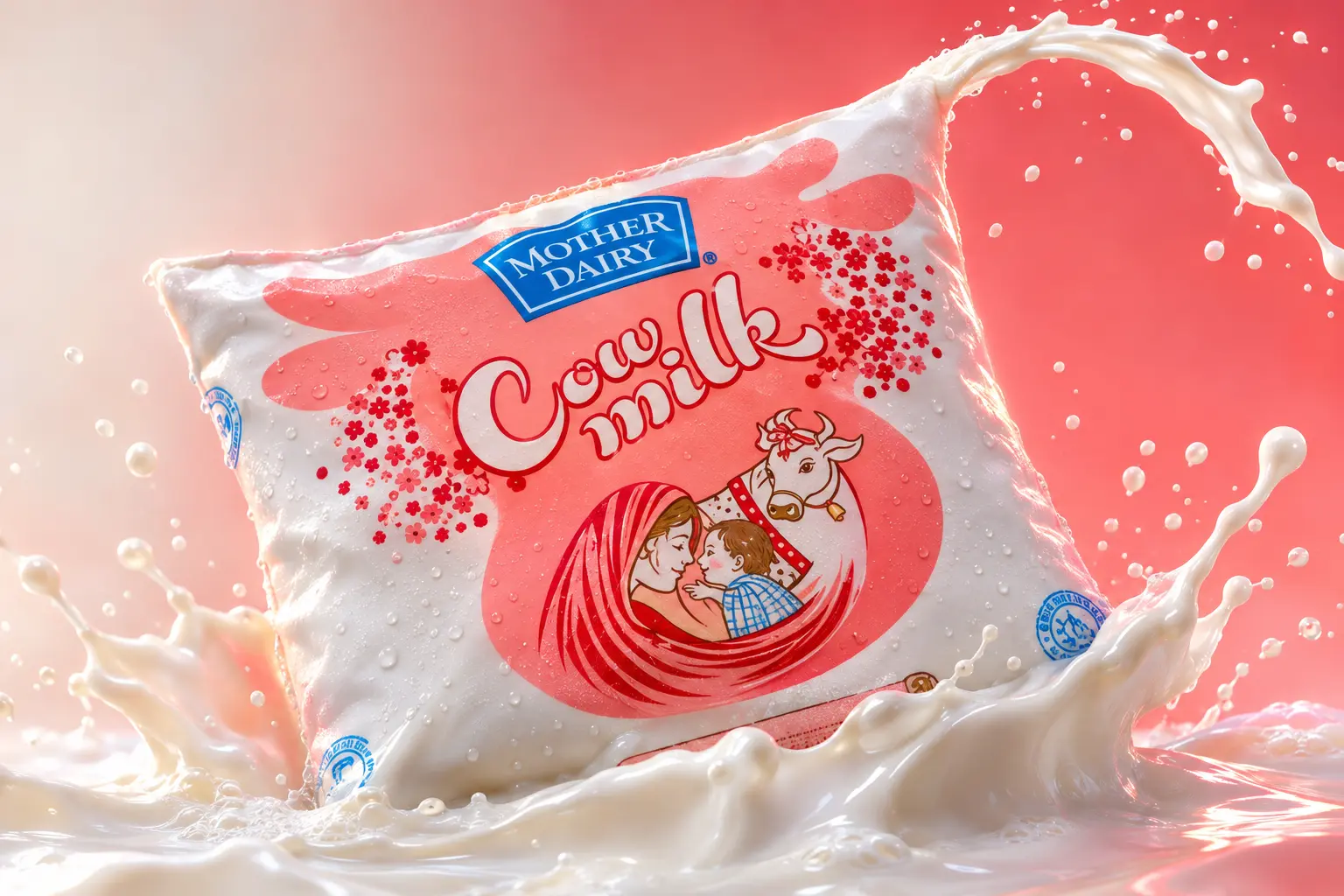
People familiar with the revision said procurement prices paid to farmers have risen, so the dairy is passing on part of that cost. Full cream pouches take the largest step, up Rs 4 a litre. Cow milk rises Rs 3. The toned and double-toned lines each move Rs 2.
DELHI-NCR RATES FROM NOVEMBER 12
| Variant | Old price (Rs/L) | New price (Rs/L) | Increase (Rs) |
|---|---|---|---|
| Toned milk, bulk vended | 58 | 60 | 2 |
| Toned milk, pouched | 60 | 62 | 2 |
| Full cream milk, pouched | 72 | 76 | 4 |
| Double toned milk | 54 | 56 | 2 |
| Cow milk | 62 | 65 | 3 |
A household that buys two litres of pouched toned milk a day will spend Rs 4 extra each day, or Rs 120 over 30 days, on that one line. Switch the same volume to full cream and the extra is Rs 240 a month. Mother Dairy sells about 35 lakh litres a day in Delhi-NCR through its own booths, general trade and e-commerce, and more than 50 lakh litres a day in all.
Amul Matches the Hike Across India
The Gujarat Cooperative Milk Marketing Federation, which markets Amul, said on November 11 that fresh pouch milk will rise about 4-5% across major packs from November 12. Taaza toned milk with 3% fat goes up Rs 2 a litre, a 3.3% increase. Gold milk with 6% fat goes up Rs 4 a litre, a 5.5% rise. Industry sources put full-cream buffalo milk with 6.5% fat at Rs 86 a litre, up from Rs 80, a separate Rs 6 step that sits outside the Taaza and Gold announcement.
GCMMF had last raised rates in May 2026, the same week Mother Dairy moved Rs 2 a litre. Member unions have already lifted farm-gate prices 4-5% over the past year, the federation said, and 80% of consumer revenue in the Amul structure goes back to 36 lakh milk producers.
In the current challenging environmental circumstances due to low and uneven rainfall in Gujarat, as well as many parts of India, we are constrained to increase the consumer price of milk to pay better prices to our producers and support them in these difficult times.
Gujarat Cooperative Milk Marketing Federation, statement, November 11, 2026
The statement also listed green and dry fodder, cattle-feed ingredients such as oil cake, maize and molasses, packaging film and fuel as costs that rose through the year. That feed bill is the part of the story that sits under the farmer-welfare line. Winter flush is when dairies usually freeze the booth price. Doing the opposite means those input costs are already inside what they pay at the village society.
Why Is Milk Rising in Flush Season?
Flush season is the winter window when milk production and availability typically improve and retail prices typically hold. This round is arriving anyway because the shortage that dairies are pricing is fat, not litres on a ledger. Industry sources said milk-fat prices have risen around 20 to 25% over the past few months. When fresh collection falls short, plants normally blend milk powder with fat to keep pouches filled. Dearer fat makes that fallback expensive too.
India’s milk output has still been growing about 3% a year over the past decade, according to the US Department of Agriculture. More of that extra volume now comes from cows rather than buffaloes. Standard cow milk is taken at 3.5% fat and 8.5% solids-not-fat. Buffalo milk is taken at 6.5% fat and 9% solids-not-fat. Buffaloes now contribute hardly 45% of national output, against about 60% three decades ago, so the same litre yields less fat.
INDIA’S MILK FAT SQUEEZE
- Herd mix: Buffaloes supply about 45% of milk now, down from about 60% three decades ago.
- Fat per litre: Cow milk is taken at 3.5% fat; buffalo milk at 6.5%.
- Three-year prices: Average ex-dairy butter rose more than 54% from October 2023 to October 2026, against about 18% for skimmed milk powder.
- This year: USDA figures for January-August 2026 show milk up about 4%, powder up about 8%, and butter up about 10% against 2025.
Demand for genuine ghee, khoya and paneer also rose after food-safety crackdowns on fat substitutes and after the September 2025 GST cut that took ghee, butter and cheese from 12% to 5%, ice-cream from 18% to 5%, and paneer from 5% to zero. The USDA Foreign Agricultural Service in New Delhi, in its Dairy and Products Annual dated October 28, put 2026 output at 222 million tonnes and a milk output forecast of 226.5 million tonnes for 2027, a 2% rise after 2.5% growth in 2026, with El Niño-linked drought expected to tighten feed and fodder.
The same report notes that about 95% of Indian milk producers own one to five animals, that some 80 million rural households depend on dairy, and that six states (Uttar Pradesh, Rajasthan, Madhya Pradesh, Gujarat, Maharashtra and Punjab) account for more than 60% of output. The ICAR-Indian Grassland and Fodder Research Institute estimates supply gaps of 11-32% in green fodder, 23% in dry fodder and 28-40% in concentrate feed. Average butter was about Rs 515 a kg in August 2026. Skimmed milk powder was about Rs 280 a kg.
Most of the Extra Rupee Goes to Farmers
Mother Dairy passes on 75-80% of its milk sales proceeds to farmers. That is the design of an NDDB subsidiary, not a side note. Amul’s matching figure is 80% of consumer revenue returned to producers. Industry sources said Amul has raised the procurement rate linked to milk fat to Rs 1,000 per kilogram, which lets farmers receive more than Rs 60 a litre.
The booth price is the consumer end of that pass-through. Mother Dairy was commissioned in 1974 and sells milk under its own brand, oils under Dhara, and fruit and vegetables under Safal. It runs nine milk plants and four horticulture plants, with edible-oil work backed by 16 associated plants. Turnover rose 17% to Rs 20,300 crore in the last fiscal year on milk products and cooking oils. The company can grow that top line and still raise retail milk if farm-gate prices keep climbing, because most of what a litre fetches is contractually meant to leave the dairy.
On May 14, Mother Dairy had already described farmer procurement as up around 6% over the previous year and called that revision only a partial pass-through. Six months later the same argument is back. May 14 to November 12 is 182 days, inside a six-month window.
Karnataka Raised Nandini Before Delhi Did
Delhi is late in this cycle, not first. The Karnataka Cabinet on October 29 approved an Rs 8 a litre increase in Nandini milk from November 1, taking a litre of the blue-packet toned line from Rs 46 to Rs 54. Greater Bengaluru Development Minister Krishna Byre Gowda said farmers had asked for Rs 10.
Farmers had sought an increase by Rs 10 but the Cabinet felt that is not possible and has decided to increase the prices (of milk) by Rs 8 (per litre). Of this, Rs 7 will go to farmers, Rs 1 will go to milk federations.
Krishna Byre Gowda, Greater Bengaluru Development Minister, post-Cabinet briefing, October 29, 2026
Procurement paid to Karnataka farmers rises from Rs 35 to Rs 42 a litre. A Rs 5 state incentive continues, so the farmer total is Rs 47 a litre. Cooperative Minister Laxman Savadi said that without the increase, milk would have moved to neighbouring states where prices were higher. Nandini ghee, butter and paneer then moved on November 4 and 5. A one-litre ghee sachet went from Rs 715 to Rs 850, up Rs 135.
THE WIDER DAIRY MOVES
- Karnataka milk: Nandini toned milk rises Rs 8 a litre from November 1, with Rs 7 of that rupee going to farmers.
- Karnataka fat products: Nandini ghee, butter and paneer were revised from November 4, including ghee at Rs 850 a litre sachet.
- Maharashtra: Major cooperative and private dairies approved a Rs 2 a litre increase in cow and buffalo milk in August.
- National pouches: Mother Dairy in Delhi-NCR and Amul across India revise liquid milk from November 12.
Savadi’s leakage warning is the same logic Delhi now faces in reverse. If NCR dairies lag farm-gate rates paid elsewhere, collection thins. If they match those rates, the pouch price has to move. Mother Dairy’s Rs 2 to Rs 4 step looks modest next to Karnataka’s Rs 8, and it is still a second 2026 increase in the country’s largest NCR milk market.
September Food Inflation Already Hit 7.74%
The National Statistics Office’s September consumer price index print of 5.54% (provisional, base 2024=100) was up from a final 4.83% in August. The official food inflation reading of 7.74% on the Consumer Food Price Index was up from 5.97%. Rural inflation was 6.08% and urban inflation 4.88%. Rural food inflation was 8.06% and urban food inflation 7.18%. The combined CPI index rose to 109.49 from 108.74.
Onions, not milk, led that September jump, with onion inflation at 108.09%. Milk is the next daily staple whose listed price is now moving in the capital region. The Reserve Bank of India raised the repo rate by 25 basis points to 5.50% on October 7 and shifted its stance to calibrated tightening. The NSO said the October 2026 CPI will be released on November 12, the morning the new pouches go on sale.
THE 2026 DAIRY AND INFLATION CALENDAR
- April 2025: Mother Dairy revises liquid milk prices, its last change before the 2026 round.
- May 14, 2026: Mother Dairy and Amul raise milk by Rs 2 a litre, with Amul buffalo milk up Rs 4 to Rs 80.
- August 2026: Maharashtra dairies approve a Rs 2 a litre increase in cow and buffalo milk.
- October 7, 2026: The RBI raises the repo rate to 5.50% and adopts a calibrated tightening stance.
- October 12, 2026: The NSO prints 5.54% retail inflation and 7.74% food inflation for September.
- October 29, 2026: Karnataka’s Cabinet approves an Rs 8 Nandini milk increase from November 1.
- November 4, 2026: Nandini ghee, butter and paneer prices are revised.
- November 11, 2026: Mother Dairy’s Delhi-NCR revision is disclosed; GCMMF issues its nationwide pouch statement.
- November 12, 2026: The new milk prices take effect, and the October CPI is due the same day.
The October inflation print is due on November 12, the morning the new Mother Dairy and Amul pouches go on sale.

ADNOC Ship Hit in Hormuz Leaves One Crew Missing

SpiceJet’s Rs 5,500 Crore Plan Follows a Rescue That Failed

Hasina’s Return Fight Sets Fire to Yunus’s Bank

Bancroft Recants the 2018 Inquiry and Names the Team

Adhikari Ties the Saffron Saree Row to School Licences

Clancy Juror Says the Holdout Never Cited Evidence

The iPhone 18 Pro Max Splits Apple’s Fall in Two

OpenAI Calls GPT-6 Astra AGI Then Locks Its Exploits

Trump Claims Hormuz Control as Oil Holds Near $96

Russia Closes the Goethe-Institut Berlin Tried to Save

 NEWS2 months ago
Clancy Juror Says the Holdout Never Cited Evidence
- NEWS3 months ago
The iPhone 18 Pro Max Splits Apple’s Fall in Two
- NEWS3 months ago
OpenAI Calls GPT-6 Astra AGI Then Locks Its Exploits
- BUSINESS3 months ago
Trump Claims Hormuz Control as Oil Holds Near $96
- LIFESTYLE3 months ago
Russia Closes the Goethe-Institut Berlin Tried to Save
- AUTO3 months ago
Volkswagen’s Job Cuts Leave Four Plants Without Cars
- NEWS3 months ago
Dyson Puts Nurovi Robots on Sale Without the UV Flagship
- BUSINESS2 months ago
US Destroys Five Iranian Tankers as the Shock Hits Jordan










