
NEWS
Iran’s Terrorist Label on Argentina Follows a 2019 Script
Iran tagged Argentina’s navy and air force under a 2019 law already used against EU and British forces, reopening the AMIA case.

Iran’s Foreign Ministry on Wednesday designated Argentina’s navy and air force as terrorist organizations, citing a 2019 reciprocity law. The ministry named no army units, no ships, and no extra sanctions. The step landed seven months and 11 days after President Javier Milei’s office put Iran’s Islamic Revolutionary Guard Corps on Argentina’s terror-finance registry, a delay that fits a copy-paste legal script more than a sudden military break.
Tehran said Buenos Aires will “bear responsibility for all consequences.” It did not say what those consequences are. Argentina’s foreign ministry called the charge inadmissible and pointed back to the 1992 and 1994 bombings in Buenos Aires, whose accused still have not appeared in Argentine court.
Iran Names the Navy and the Air Force
The Foreign Ministry statement, dated November 11, 2026, treated the IRGC as an official arm of Iran’s armed forces and called Argentina’s March listing a hostile act contrary to the UN Charter. Acting on reciprocity and the 2019 statute, it declares the Argentine Navy and Air Force subject to that law and names them terrorist groups.
It is self-evident that the Argentine government shall bear responsibility for all consequences arising from this action.
Iranian Foreign Ministry statement, November 11, 2026
The text does not mention the army. It lists no Argentine officers, squadrons, or ports. It also lists no asset freeze, travel ban, or special court aimed at sailors or pilots. The legal event is the label itself.
That gap is the point of the instrument. Iran is not describing a plot by the fleet or the air staff. It is matching a paper listing with another paper listing, then hanging the risk on Buenos Aires.
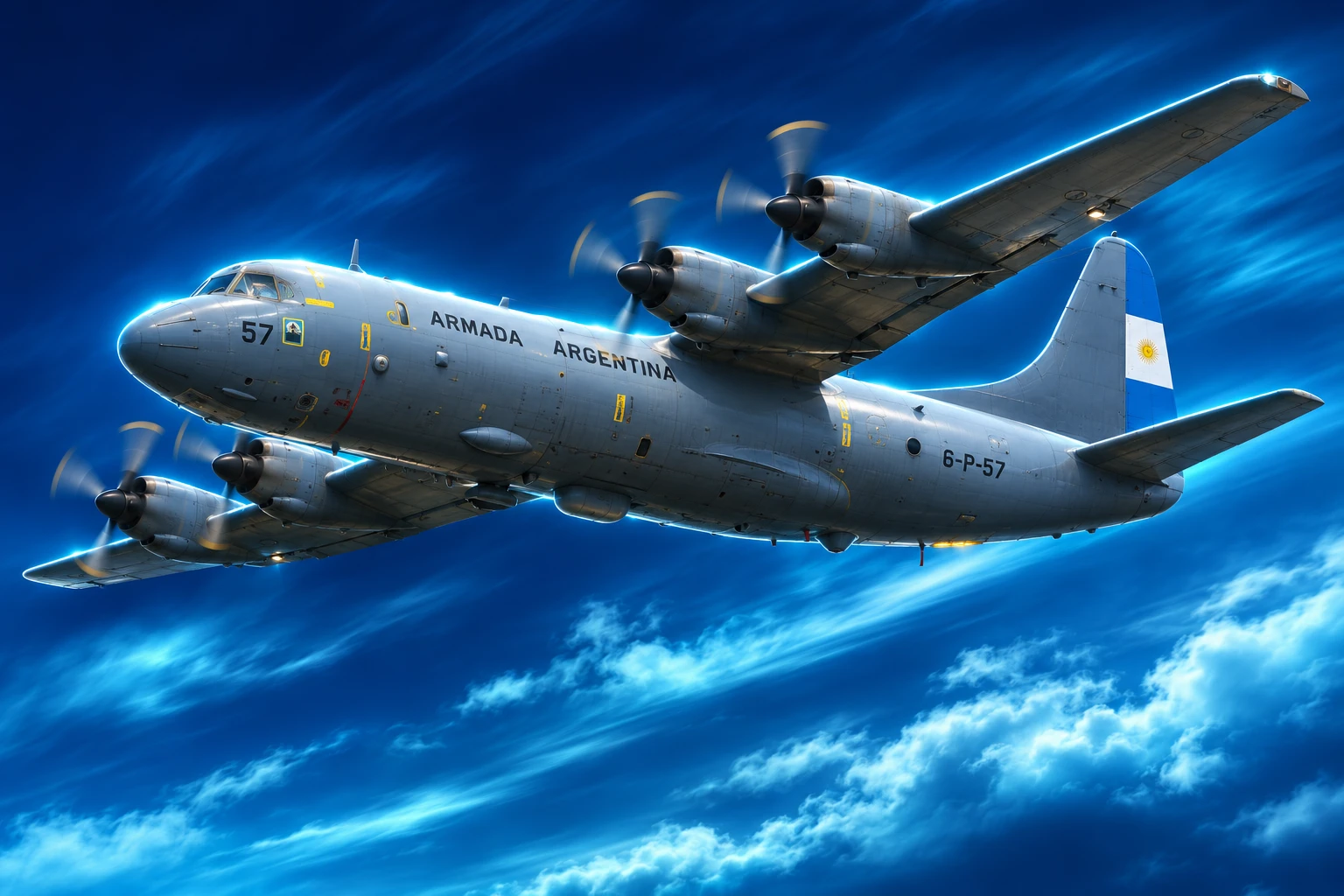
The Same Stamp Used on Europe and Britain
Skip the army, name the navy and the air force, cite the 2019 law, and tell the other government it owns the fallout. That is the sequence Tehran has now run three times in 2026, after the original CENTCOM listing in 2019.
THE 2019-LAW QUEUE
| Force Iran named | Date of Iran’s label | Trigger it cited |
|---|---|---|
| U.S. Central Command and forces under it | April 2019 | U.S. foreign terrorist listing of the IRGC, April 8, 2019 |
| Naval and air forces of all EU member states | February 21, 2026 | EU IRGC terror list, February 19, 2026 |
| UK Royal Navy and Royal Air Force | November 1, 2026 | UK State Threats Act applied to the IRGC, July 13, 2026 |
| Argentine Navy and Air Force | November 11, 2026 | IRGC added to Argentina’s RePET registry, March 31, 2026 |
EU governments agreed in principle on January 29 to put the Guard on the bloc’s terror list and formalized that on February 19. Iran answered in 2 days. Britain brought the Guard under the State Threats Act on July 13. Iran answered on November 1 by naming the Royal Navy and Royal Air Force terrorist organizations and branding MI6 a hostile group. Argentina’s turn came 10 days after the British one.
The army skip is therefore not a riddle about Buenos Aires. It is house style. A February ministry statement put “the naval forces and air forces of all European Union member countries” under Article 4 of the same statute. The British statement did the same for the sea and air services, then used a separate espionage law for MI6. Argentina received the navy-and-air package, without an intelligence-service add-on.
What Argentina Put on Its Terror Registry
Milei’s office announced on March 31 that the IRGC was a terrorist organization and would go into the Public Registry of Persons and Entities Linked to Acts of Terrorism and its Financing, known as RePET. Joint Resolution No. 3/2026, which completed that inscription, entered into force on April 6 after publication in the Official Gazette. Those are two dates for two steps, the political notice and the legal start.
The presidential text tied the Guard to Hezbollah and to two bombings in the capital. It said Argentine courts and intelligence work had found that both attacks were planned, financed, and carried out with direct participation by senior Iranian officials and Revolutionary Guard operatives. Listing the IRGC, the office said, enables financial sanctions and operational limits meant to restrict the force inside Argentina and to keep the local financial system from being used for illicit ends.
WHAT BUENOS AIRES HAD ALREADY LISTED
- Quds Force: On January 17, 2026, the presidential office declared the Quds Force a terrorist organization and named 13 people linked to it, putting them on RePET with the same financial and operational limits.
- Prior groups: The same January notice said the government had already treated Hamas, the Cartel of the Suns, and Muslim Brotherhood chapters in Lebanon, Egypt, and Jordan as terrorists.
- The IRGC itself: The March 31 notice extended that registry from the Guard’s foreign arm to the Guard as a whole, after Washington pressed allies to follow the U.S. listing during the 2026 war with Iran.
Ahmad Vahidi sits in both documents. The January notice said he commanded the Quds Force from 1989 to 1998, faces an Interpol red notice over AMIA, and had been named deputy commander of the IRGC. The March 31 notice said he had recently been appointed to lead the Guard. Iran, both texts said, had not helped Argentine courts try him.
On April 2, the foreign ministry declared Mohsen Soltani Tehrani, then Iran’s chargé d’affaires in Buenos Aires, persona non grata and gave him 48 hours to leave. The diplomatic channel that still existed after January was cut as soon as the full IRGC listing landed.
A 2019 Law Built for Copy-Paste Retaliation
The statute Tehran keeps citing was written for Washington, then stretched to anyone who “in any way” follows or supports the U.S. decision. On April 8, 2019, then-Secretary of State Michael Pompeo moved to designate the Islamic Revolutionary Guard Corps a foreign terrorist organization, the first time the United States had placed part of another government on that list. The listing took effect on April 15.
Iran’s Supreme National Security Council answered within hours by naming the U.S. government a sponsor of terrorism and CENTCOM a terrorist group. Parliament then passed the matching law. On April 23, 2019, the chamber voted 173 to 4, with 11 abstentions, to put CENTCOM and the forces, organizations, and institutes under its command on Iran’s terrorist list, so that cooperation with them would count as a terror act. A companion bill told the intelligence services to compile names of CENTCOM commanders and told the judiciary to prepare a special court. President Hassan Rouhani signed the Act of Counteraction to US Terrorism Designation on April 30 and sent it to the intelligence, foreign, and defense ministries, the armed forces logistics body, the security council, and the budget office.
All countries that in any way comply with or support the decision of the United States of America to designate the Islamic Revolution Guard Corps as a terrorist organization shall be subject to reciprocal action.
Article 7, 2019 Iranian reciprocity law, as quoted by the Foreign Ministry
Article 7 is the hook used on the EU, Britain, and now Argentina. Article 4 is the provision the ministry says then applies to the named navy and air force. The original CENTCOM text treated military, intelligence, financial, technical, training, and logistics help to the listed command as collaboration in terror. None of the 2026 statements published a new Argentine target list to go with that machinery.
The law’s authors were answering an American FTO decision, not an Argentine indictment. Once Article 7 existed, every later IRGC listing by a U.S. partner could be run through the same sentence. Argentina’s AMIA file supplied Milei with a local reason to list the Guard. It did not supply Tehran with a new legal theory.
Buenos Aires Calls the Charge Inadmissible
Argentina’s foreign ministry, led by Pablo Quirno, rejected the Iranian step on Wednesday as a charge with no basis against lawful services that answer to the national constitution and operate under domestic law, treaties, and other states’ sovereignty. The ministry said Argentine courts had already attributed responsibility to Iran for the 1992 attack on the Israeli embassy and the 1994 AMIA bombing, and that Tehran still refuses to cooperate, still ignores international arrest orders, and still places wanted people in high office.
— Cancillería Argentina 🇦🇷 (@Cancilleria_Ar) November 11, 2026
“Tres décadas después, los acusados no han comparecido ante la justicia argentina,” the Cancillería said: three decades later, the accused have not appeared before Argentine justice. It again demanded that Iran cooperate fully and make the accused available to the courts, and it restated solidarity with the victims, their families, and Argentina’s Jewish community.
The Argentine argument that cuts through the noise is older than this cabinet. The government that Buenos Aires still blames for two bombings in its capital is the government now tagging the navy and the air force. A separate fight, loud on the right and the left, is whether listing the IRGC pulled Argentina into a war on the other side of the world. That fight does not move the AMIA docket. Tehran’s new label does not move it either.
The AMIA Accused Who Still Hold Office in Tehran
The presidential office’s own chronology is the spine of the dispute, and it has not changed with the navy-and-air stamp. The 2019 law explains Tehran’s wording. The bombings explain why Argentina listed the Guard in the first place.
THE FILE TEHRAN’S LABEL DOES NOT CLOSE
- March 17, 1992: A car bomb destroys the Israeli embassy in Buenos Aires, killing 29 people and wounding more than 200, according to the March 31 presidential notice.
- July 18, 1994: A second bomb destroys the AMIA Jewish community center, killing 85 people and wounding more than 300, the deadliest terrorist attack on Argentine soil in that notice.
- April 8, 2019: Washington lists the IRGC as a foreign terrorist organization; Iran answers with CENTCOM and, later that month, the reciprocity law now being reused.
- January 17, 2026: Argentina lists the Quds Force and 13 people, names Vahidi’s Interpol notice, and records his promotion inside the Guard.
- March 31, 2026: Argentina lists the IRGC as a whole on RePET, citing Hezbollah as the Guard’s operational arm in the region and repeating the Interpol notices against Iranian citizens, including Vahidi.
- November 11, 2026: Iran names Argentina’s navy and air force terrorist groups under the 2019 law and holds Buenos Aires responsible for whatever follows.
Israeli Foreign Minister Gideon Saar praised the March listing, saying it placed Argentina, under Milei’s leadership, “at the forefront of the free world in the fight against the Iranian regime of terror and its proxies.” That is the political win Buenos Aires cashed in the spring. The bill that arrived on Wednesday is a matching adjective on two conventional services that did not bomb AMIA and do not answer to the Quds Force.
Iran’s ministry still has not said what it will do to an Argentine ship, aircraft, or officer. Argentina’s ministry still has not received the accused it has wanted for three decades. The 2019 statute did the job it was drafted to do. The AMIA case remains where it was on March 31, on January 17, and on July 18, 1994.

ADNOC Ship Hit in Hormuz Leaves One Crew Missing

SpiceJet’s Rs 5,500 Crore Plan Follows a Rescue That Failed

Hasina’s Return Fight Sets Fire to Yunus’s Bank

Bancroft Recants the 2018 Inquiry and Names the Team

Adhikari Ties the Saffron Saree Row to School Licences

Clancy Juror Says the Holdout Never Cited Evidence

The iPhone 18 Pro Max Splits Apple’s Fall in Two

OpenAI Calls GPT-6 Astra AGI Then Locks Its Exploits

Trump Claims Hormuz Control as Oil Holds Near $96

Russia Closes the Goethe-Institut Berlin Tried to Save

 NEWS2 months ago
Clancy Juror Says the Holdout Never Cited Evidence
- NEWS3 months ago
The iPhone 18 Pro Max Splits Apple’s Fall in Two
- NEWS3 months ago
OpenAI Calls GPT-6 Astra AGI Then Locks Its Exploits
- BUSINESS3 months ago
Trump Claims Hormuz Control as Oil Holds Near $96
- LIFESTYLE3 months ago
Russia Closes the Goethe-Institut Berlin Tried to Save
- AUTO3 months ago
Volkswagen’s Job Cuts Leave Four Plants Without Cars
- NEWS3 months ago
Dyson Puts Nurovi Robots on Sale Without the UV Flagship
- BUSINESS2 months ago
US Destroys Five Iranian Tankers as the Shock Hits Jordan










