
BUSINESS
India Backs the Cuba Embargo Vote as the Majority Shrinks
India voted with 130 countries to end the US Cuba embargo, the weakest UN majority in two decades, as Washington peeled off former yes votes.

India voted on 28 October 2026 to end the US embargo on Cuba, one of 130 yes votes in the UN General Assembly. Seventeen members voted no and 25 abstained, the weakest backing in two decades for a text the Assembly has adopted 34 times.
New Delhi’s line did not move. The majority around that line lost 35 yes votes in a year and 57 across two years, which is the result Washington came to New York to collect.
India Stays Put as the Yes Votes Fall
Counsellor Soumya Nair, speaking for India’s Permanent Mission to the UN, restated a position India has held for as long as this resolution has existed. The Assembly, she said, has repeatedly called for an end to the embargo and rejected laws with effects beyond one country’s borders that harm other states’ sovereignty and their people’s progress.
“India reiterates the Assembly’s call to all states to refrain from promulgating and applying, and to repeal and invalidate, such laws and measures in conformity with their obligations under the Charter of the United Nations and international law,” Nair said.
She tied that legal point to a humanitarian one drawn from the Secretary-General’s report. Cuba’s health system, she said, faces shortages of over 60% of essential medicines, and food production has declined by more than 50% in the past five years. Fuel limits, she added, have worsened an energy crisis that has hit health care, schools, water, food distribution and transport.
That is the India the room heard: a Global South vote against unilateral sanctions, framed through the UN Charter rather than through a quarrel with Miami or Moscow. China, Russia, Brazil, South Africa, Mexico and Canada were in the same column. The African Union’s members voted as a bloc in favour. The surprise was not India’s ballot. It was how many old partners of Havana were no longer standing next to it.
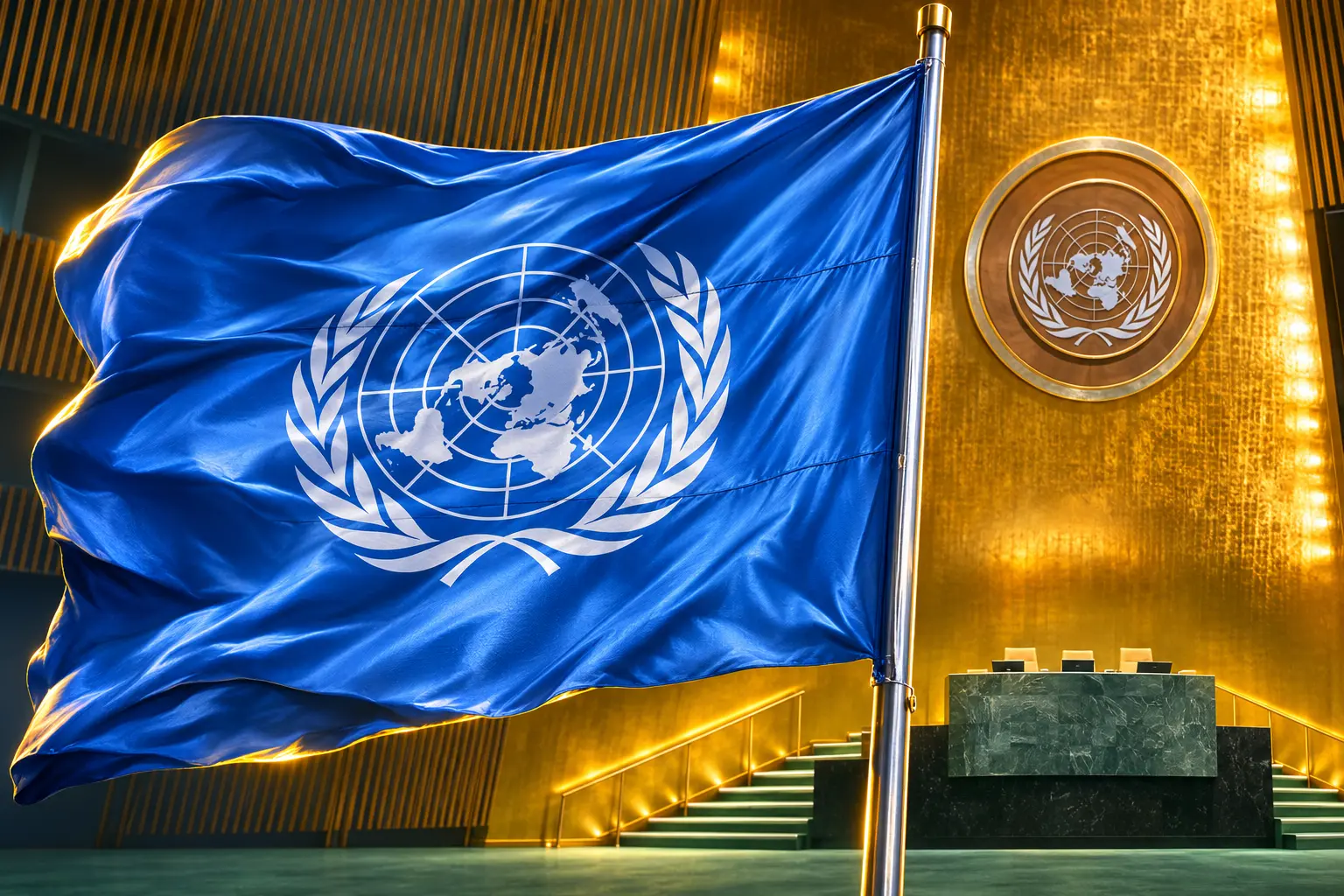
The Weakest Backing in Two Decades
UN News recorded the text as adopted by 130 votes in favour to 17 against, with 25 abstentions. A year earlier the same measure passed 165 to 7, with 12 abstentions. In 2024 it passed 187 to 2, with Moldova the lone abstention.
The first vote, in 1992, was 59 in favour, 3 against and 71 abstentions. Support later peaked at 191 in 2015 and 2017, during and just after the Obama thaw. In 2016 the United States abstained for the only time. The Assembly skipped the item in 2020 during the Covid-19 pandemic, then returned to a near-unanimous ritual until this two-year break in the pattern.
HOW THE YES COLUMN SHRANK
| Year | Yes | No | Abstain |
|---|---|---|---|
| 1992 (first vote) | 59 | 3 | 71 |
| 2024 | 187 | 2 | 1 |
| 2025 | 165 | 7 | 12 |
| 2026 | 130 | 17 | 25 |
The 193-member body also logged 21 members that did not vote in 2026, up from 9 the year before. The 35 lost yes votes line up with 10 extra no votes, 13 extra abstentions and 12 extra absences. Havana still had a majority. It no longer had the isolation of Washington that this item was written to display.
UN General Assembly ADOPTS resolution on the necessity of ending the economic, commercial and financial embargo imposed by the United States of America against Cuba
Result of the vote:
In favor: 130
Against: 17
Abstain: 25 pic.twitter.com/p4E3XqUpu6— UN News (@UN_News_Centre) October 28, 2026
Cuban President Miguel Díaz-Canel later called the 130 a recognition of Cuban resistance. US Ambassador Mike Waltz told reporters he was satisfied that major economies, naming Germany and Korea, had shifted, and that he expected the movement to grow. Both men were describing the same board.
Which Governments Left Cuba’s Side?
Seven governments that voted no in 2025 did so again: the United States, Israel, Argentina, Hungary, North Macedonia, Paraguay and Ukraine. Ten more joined them.
THE 10 NEW NO VOTES
- From yes to no: Colombia, Slovenia, Trinidad and Tobago, and the United Arab Emirates switched off Havana’s side in a single step.
- From abstain to no: Bosnia and Herzegovina, Costa Rica, Czechia, Ecuador, Lithuania and Morocco moved from the sideline into the US column.
- Latin America’s split: Argentina, Paraguay, Colombia, Costa Rica and Ecuador voted no, while Chile, Peru and Honduras abstained; Brazil, Mexico, Uruguay and Panama stayed yes.
- Europe’s middle: Germany and Italy were among governments that abstained after years of voting to condemn the embargo, a shift Waltz cited by name after the ballot.
The named flips cluster where governments have moved closer to the second Trump administration, or where Cuba’s ties with Russia in the Ukraine war have become a public argument. Ukraine and Poland used that Russia link when they explained themselves. Germany and Italy did not have to vote no to register the same chill. An abstention on this item, for decades, was a news event. In 2026 it was a crowded lane.
Jamaica, Guyana and several other Caribbean states also left the yes column for abstention or absence, a break in a neighbourhood that used to treat this resolution as family business. India, far from that neighbourhood, voted as if the old map were still on the wall.
A Podium Fight the President Had to Halt
The ballot on 28 October followed a session the day before that had to be suspended. Waltz was at the lectern when Cuban Foreign Minister Bruno Rodríguez Parrilla and other Cuban diplomats left their seats and walked toward the podium. Assembly President Anwarul K. Chowdhury’s successor in the chair, Khalilur Rahman, stopped the meeting to restore order.
Waltz told the hall the Cuban official needed to back away from the podium and would not intimidate him “in the United States of America” the way, he said, political prisoners are intimidated. He later said a diplomat who laid a hand on an American would be put on a plane to Havana, and he called the conduct a breach of the Host Country Agreement. Rodríguez, for his part, had raised a point of order after Waltz said there was no blockade.
There is no blockade.
Mike Waltz, US Ambassador to the UN, General Assembly, 27 October 2026
He pointed to more than $876 million in US exports to the island in the first eight months of 2026, plus shipments from Canada, Spain, Mexico, China, Russia, the European Union and UN agencies. Cuba’s wealth, he said, had “changed hands” from ordinary people to a ruling elite. A vote against the resolution, he told delegates, was the only thing standing between that elite and another propaganda win.
Rodríguez answered with an on-screen counter that ticked past $22.9 million in estimated embargo costs after the debate opened. He said infant mortality had doubled and that tens of thousands of surgeries had been delayed or cancelled. Cancer drugs could not get in, he said, and Cuban treatments for Alzheimer’s could not get out. “What Cuba demands is to be left in peace,” he said. “Cuba is not a threat, the blockade is.”
The row was about the lectern as much as the text. Waltz spoke as if the hall were US ground. Rodríguez spoke as if it still belonged to 193 equal members. That is why the president had to pause the session, and why the next morning’s tally became a test of whether governments would follow the host’s pressure or the old majority. India, when the lights came back on, followed the majority.
Why India Keeps Voting to Lift the Embargo
Nair did not mention Waltz, Rolex watches, or the Host Country Agreement. She talked about multilateralism, dialogue and the Charter. India’s objection sits on a specific kind of US law: statutes that reach companies and banks in third countries, which is the feature of the Cuba file that also appears in other US sanctions programmes New Delhi has to navigate.
It is in this spirit that India hopes that the embargo will be lifted at the earliest to help create an environment that would enable the people of Cuba to participate more fully in international cooperation and pursue their legitimate development aspirations.
Soumya Nair, Counsellor, Permanent Mission of India to the UN
The resolution itself cites Charter rules on sovereign equality, non-interference, and freedom of trade and navigation. That is the language Indian diplomats use when they oppose unilateral measures as a class, not only when the target is Havana. It is also why a thinning Western and Latin American column does not, by itself, move the Indian vote. The cost of saying yes remains low: the text does not bind anyone in Washington, and it does not require India to ship a single barrel or tablet.
UN officials have been less abstract about conditions on the island. Francisco Pichon, the UN resident coordinator in Cuba, has warned of an energy crisis and a possible humanitarian collapse after a US fuel squeeze that followed the rendition of Venezuela’s president to New York. The World Health Organization has warned that energy shortages are hitting health. In May, senior UN officials reported that more than 100,000 surgical procedures had been postponed. Those figures, not the podium video, are what Nair put on the record.
Helms-Burton Still Binds the US Congress
General Assembly resolutions of this kind are not law. Only the US Congress can repeal the embargo statutes, and the White House can ease or tighten licences around them. The Assembly’s own text names the 1996 Helms-Burton Act, which wrote the embargo into statute and extended penalties to foreign firms that deal in Cuban property claimed by US nationals. That extraterritorial reach is the clause India keeps voting against.
THE STATUTES THE VOTE CANNOT TOUCH
- 1960: The United States first imposes the economic embargo on Cuba, after the revolution and the seizure of US-owned assets.
- 1992: The Assembly holds its first vote on ending the embargo, the same year the Cuban Democracy Act tightens limits on US subsidiaries and shipping.
- 12 March 1996: Helms-Burton becomes law and becomes the measure later resolutions ask other states to refuse to apply.
- 2016: The United States abstains on the Assembly text for the only time, during a short thaw with Havana.
- 28 October 2026: The Assembly adopts the resolution for the 34th time, 130 to 17 with 25 abstentions.
The US Treasury’s Office of Foreign Assets Control Treasury still administers Cuba sanctions as a live programme, not a relic. Executive Order 14404, dated 1 May 2026, imposes further sanctions over repression in Cuba. An OFAC alert in September 2026 advertised another expansion. On 5 November 2026, a week after the New York vote, Treasury issued a determination covering the electronics, manufacturing, marine and technology sectors of the Cuban economy. The Assembly can stack resolutions. The Code of Federal Regulations still runs the file.
Waltz’s export number and Cuba’s shortage number can sit on the same page without cancelling each other. US law, through the Trade Sanctions Reform and Export Enhancement Act of 2000, already carves out some food and medicine sales, which is how hundreds of millions of dollars in US goods still reach the island. Cuban authorities, and Nair citing the Secretary-General, say those channels do not cover fuel, finance, spare parts or a health system short of most essential drugs. The vote does not settle that argument. It only records who is willing to say, in public, that the embargo should end.
The Vote Passes and the Coalition Shrinks
Havana got the 34th adoption. Washington got the trend line, then kept writing rules after the cameras left. India got what it always gets from this item: a chance to say that laws made in one capital should not police trade in another, without having to spend political capital in Congress or at OFAC.
The next Assembly will meet a yes column that is 57 votes thinner than it was in 2024 and a no column that is no longer a pair of names. Waltz has already said he wants that movement to continue. Nair has already said India wants the embargo lifted. Those two sentences, unlike the resolution, do not need a majority to stay in force.
Frequently Asked Questions
Is a UN General Assembly Embargo Vote Legally Binding?
No. Assembly recommendations under the UN Charter do not repeal US statutes, and only the Security Council can impose sanctions that bind all members under Article 41. Helms-Burton and the Cuban Assets Control Regulations stay in force until Congress amends them or OFAC changes licences; the 28 October text cannot do either.
When Did the United States First Impose the Cuba Embargo?
The United States first imposed the embargo in 1960, after the Cuban Revolution and the nationalisation of US-owned property, and the Assembly’s own debate materials treat that year as the start of the measures the resolution addresses. Comprehensive commercial restrictions were then locked in during the early 1960s and later written into standing statutes rather than left as a pure executive policy.
What Does the Helms-Burton Act Require?
The Cuban Liberty and Democratic Solidarity (Libertad) Act of 1996, known as Helms-Burton, codified the embargo in US law and created tools against foreign companies that traffic in Cuban property formerly owned by US nationals. Title III of that act is the piece other governments call extraterritorial, because it exposes non-US firms to US courts, which is why the annual resolution asks states to refuse to apply it.
Has Washington Ever Refrained From Voting No?
Yes, once. In 2016 the United States and Israel abstained while the Assembly recorded a peak of support during the Obama-era opening to Havana. Every other year since 1992, including 2025 and 2026, Washington has voted against the text.
Can US Companies Sell Food and Medicine to Cuba?
Some sales of agricultural goods, medicines and medical devices are allowed under the Trade Sanctions Reform and Export Enhancement Act of 2000, which is the legal path behind the hundreds of millions of dollars in US exports Waltz cited. Those licences do not cover the fuel, finance and shipping restrictions that UN officials and the Indian statement linked to blackouts and empty pharmacies.

ADNOC Ship Hit in Hormuz Leaves One Crew Missing

SpiceJet’s Rs 5,500 Crore Plan Follows a Rescue That Failed

Hasina’s Return Fight Sets Fire to Yunus’s Bank

Bancroft Recants the 2018 Inquiry and Names the Team

Adhikari Ties the Saffron Saree Row to School Licences

Clancy Juror Says the Holdout Never Cited Evidence

The iPhone 18 Pro Max Splits Apple’s Fall in Two

OpenAI Calls GPT-6 Astra AGI Then Locks Its Exploits

Trump Claims Hormuz Control as Oil Holds Near $96

Russia Closes the Goethe-Institut Berlin Tried to Save

 NEWS2 months ago
Clancy Juror Says the Holdout Never Cited Evidence
- NEWS3 months ago
The iPhone 18 Pro Max Splits Apple’s Fall in Two
- NEWS3 months ago
OpenAI Calls GPT-6 Astra AGI Then Locks Its Exploits
- BUSINESS3 months ago
Trump Claims Hormuz Control as Oil Holds Near $96
- LIFESTYLE3 months ago
Russia Closes the Goethe-Institut Berlin Tried to Save
- AUTO3 months ago
Volkswagen’s Job Cuts Leave Four Plants Without Cars
- NEWS3 months ago
Dyson Puts Nurovi Robots on Sale Without the UV Flagship
- BUSINESS2 months ago
US Destroys Five Iranian Tankers as the Shock Hits Jordan










