
BUSINESS
China’s Solar Tool Curbs Hit India’s Factory Build-Out
China’s October draft would license the furnaces India needs for wafers and TOPCon cells, while finished panels still flow as comments close November 15.

China’s new solar export controls, posted October 16, would ban or license the machines India needs to make wafers and advanced cells, while finished panels still ship freely. The Ministry of Commerce and the Ministry of Science and Technology opened comments the same day on adding 12 photovoltaic technologies to the national prohibited-and-restricted list, and they put pre-export registration in force at once.
That is the bill for a factory build that localised modules and left the tools in China. Comments close on November 15. The final catalogue is still a draft. The registration already is not.
The Catalogue Targets the Machines That Make the Cells
The ministries published joint announcement No. 48 of 2026 as a revision of the Catalogue of Technologies Prohibited or Restricted from Export. The consultation covers 40 technologies: 23 in artificial intelligence, 5 in biomedicine and 12 in photovoltaics. Across those fields, 14 items are proposed for a ban and 26 for licensed export.
A ministry spokesperson said the exercise is routine technology-trade work and “does not target any specific country, region or entity.” The same briefing is the reason Indian cell planners are rewriting equipment orders. Photovoltaic know-how, the spokesperson said, often leaves China with a production line: export, install, commission, then upgrade. Those steps would need a technology-export licence once the catalogue is final, and listed core equipment already has to be registered.
MOFCOM Spokesperson’s Remarks on the Revision of the Catalogue of Technologies Prohibited and Restricted from Export
On October 16, 2026, MOFCOM and the Ministry of Science and Technology issued Announcement No. 48 of 2026, soliciting public comments on the revision of the…
— 中华人民共和国商务部MOFCOM (@MOFCOM_China) October 28, 2026
Finished modules, cells and wafers as goods stay outside the draft. Unlisted solar kit, in principle, does too. The choke is the process, the drawings, the code, and the named tools that carry a controlled recipe.
The scope of technologies under control this time is limited, and other technologies that do not meet the control thresholds can still be freely exported. A small number of key photovoltaic devices listed in the announcement are only targeted at situations where they carry technologies that meet the control thresholds. Other photovoltaic equipment that is not listed is in principle not subject to the requirements of this announcement.
Ministry of Commerce spokesperson, China Export Control Information briefing
That wording is doing two jobs. It keeps commodity panel trade open, which protects Chinese exporters. It also lets Beijing decide who gets the next generation of crystal pullers, thin-wafer slicers and TOPCon coaters.
What Beijing Put on the Prohibited List
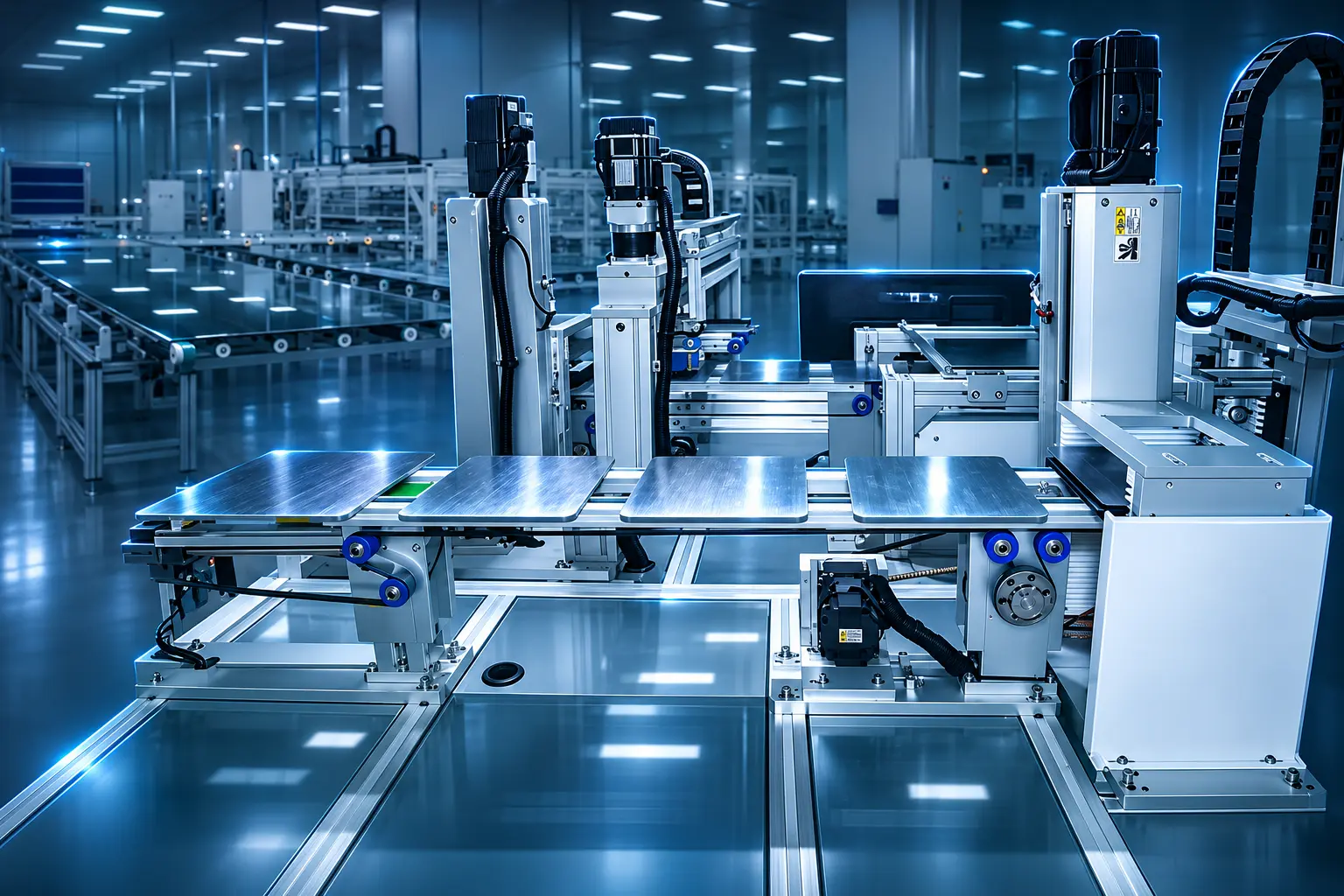
The draft would prohibit five photovoltaic processes, including wafers of 70 micrometers or less and perovskite tandems, and restrict seven more, including TOPCon and heterojunction cell lines. Finished modules stay off the list. Crystal furnaces, wafer slicers, PECVD tools and other named equipment that carry those processes must already be registered before export.
THE 12 PHOTOVOLTAIC ENTRIES IN THE DRAFT
| Process | Draft status | Control point |
|---|---|---|
| Cold-hydrogenation fluidised bed | Prohibited | Single-line trichlorosilane at 250,000 tonnes a year or more |
| Silane fluidised bed | Prohibited | Single-line 20,000 tonnes a year or more |
| Ultra-thin wafer making | Prohibited | Thickness of 70 micrometers or less |
| Edge passivation for thin cells | Prohibited | Large thin crystalline-silicon cells |
| Perovskite and tandem making | Prohibited | Wafers from 182 mm; tandems at 30% efficiency or higher |
| Polysilicon plant engineering | Restricted | Single-line 30,000 tonnes a year or more |
| Crystal pulling and ingot machining | Restricted | Photovoltaic monocrystal furnaces and related tools |
| TOPCon and back-contact cells | Restricted | PECVD, LPCVD, ALD, boron diffusion, copper plating |
| Heterojunction cells | Restricted | Thin wafers, low-indium films, copper plating, space-grade p-type |
Restricted does not mean blocked. It means a licence. Prohibited means no. Slot-die coaters at 1.1 metres wide sit with the perovskite ban. So do some large-area perovskite modules. Space-grade heterojunction language is how the ministries tie a commercial cell line to defence and satellites, which is the national-security hook they used in public.
Exporters must log transfers on the commerce ministry’s technology-trade system, including jobs already started but not finished. The form covers ownership transfers, overseas licences, and a change of actual control to a foreign party. For photovoltaic gear that is on the list, the ministries say every export has to be registered, not only a full process package.
India’s 225 GW Module Base Still Buys Its Wafers
The International Energy Agency put India’s annual module-making capacity at about 225 GW in September 2026, up from about 22 GW in 2022, and treats the country as the second-largest module maker after China. Union minister Pralhad Joshi said cell capacity is 50 GW now and will be 70 GW by December. Ingot and wafer capacity under the production-linked incentive scheme is about 2 GW. Commercial polysilicon production has not started.
INDIA’S SOLAR FACTORY STACK
| Stage | India now | China’s 2024 global share |
|---|---|---|
| Modules | About 225 GW (IEA, September 2026) | 82% |
| Cells | 50 GW (Joshi, November 2026) | 91% |
| Ingots and wafers | About 2 GW (MNRE PLI build) | 95% |
| Polysilicon | No commercial plants | 93 to 98% |
NITI Aayog, using those 2024 IEA figures, still puts India’s own import dependence at close to 100% for polysilicon and above 90% for wafers. China shipped 38.03 GW of wafers to India in FY2025-26, against 7.7 GW in FY2023-24, according to the Centre for Science and Environment’s mapping of the chain. The module boom did not close the wafer gap. It widened the order book for Chinese slices.
Installed solar generation reached 171.05 GW at the end of September 2026. Fatih Birol, the IEA’s executive director, said India is becoming a module alternative and that its global share is set to almost double to 17 percent by 2031. That forecast sits on the downstream rung the draft does not touch. The agency’s own five main segments of solar manufacturing still run polysilicon to ingot to wafer to cell to module, and India is dense only at the last step.
The Institute for Energy Economics and Financial Analysis found Indian module plants running at 35 to 40 percent of capacity, below the 50 to 65% band it treats as sustainable. Empty module halls and a missing wafer furnace can exist in the same country. They now do.
Cell Factories Run on Imported Know-How
The Council on Energy, Environment and Water, in a May 2026 study, found Indian cell making nearly 40 percent more expensive than Chinese lines. Capital spending was about 109% higher. Silver paste cost about 24% more. Machinery is imported, and the process knowledge sits with the vendor, so a new TOPCon line takes about 12 months to tune against 7 to 8 months for older PERC kit. In the capacity CEEW counted, PERC was still about 50% and TOPCon 29%.
Domestic makers spent as much as 0.1% of revenue on research, against up to 2% at Chinese firms. Public solar-PV research money in India since 2014 was about $13 million. That is why a licence on PECVD, LPCVD, ALD, boron-diffusion furnaces and copper-plating tools is not a paperwork event. It is a delay on the exact upgrade path Indian cell plants are on.
Several of those plants are already committed. Premier Energies commissioned a 7 GW TOPCon cell plant in September and took its cell capacity to 10.6 GW. Alpex Solar opened a 2.2 GW TOPCon site in Mathura. Saatvik Green Energy is testing a 4 GW cell plant in Odisha. Vikram Solar has been aiming to start a 10 GW facility by December. Fujiyama Power Systems told exchanges on October 21 that kit for a 1.2 GW TOPCon plant in Ratlam had already arrived, so that job, it said, does not depend on a fresh transfer.
Lines that have the tools can run. Lines that still need a coater, a puller, a spare chamber or a process engineer from the vendor are the ones that go into the new register. Indian battery-cell projects have been hitting a similar wall on a different Chinese list, which is why some LFP tie-ups stalled even though this catalogue is about silicon, not lithium. The method is the same: sell the product, hold the plant.
A June 2028 Wafer Rule Needs Furnaces First
New Delhi has already dated the next localisation step. An MNRE memorandum of March 17, 2026 creates ALMM List-III for wafers, effective June 1, 2028. The list will not be issued until at least three independently owned units together reach 15 GW a year, and enlisted wafer makers must hold matching ingot capacity. From that date, ALMM List-I modules for covered projects are meant to use listed cells and listed wafers.
MNRE secretary Santosh Kumar Sarangi has put a parallel target of at least 80 GW of ingot and wafer capacity by June 2028, and at least 30 GW of polysilicon by 2030. He said a new incentive for polysilicon, covering more than 10 GW, is being prepared. The existing PLI for high-efficiency modules has an outlay of Rs 24,000 crore ($2.52 billion). Letters of award cover 48,337 MW. Under that scheme, about 30 GW of module, 10.5 GW of cell and 2 GW of ingot-wafer capacity had been set up. No incentive cash had been released as of February 28, 2026, because payouts start a year after commissioning.
FROM REGISTRATION TO THE WAFER MANDATE
- October 16, 2026: Announcement 48 opens comments and starts temporary pre-export registration, including listed photovoltaic equipment.
- November 15, 2026: Public comment window closes. The ministries then decide the final thresholds and move restricted items onto licences.
- February 28, 2026: Last official snapshot with no PLI disbursement yet, because the one-year post-commissioning clock had not run.
- June 1, 2028: ALMM List-III for wafers is due to apply, if three independent 15 GW-class ingot-wafer units exist to fill it.
The February snapshot sits earlier on the calendar than the October draft; it is here because it is still the last hard number on PLI cash. The 2028 wafer rule is the date that makes crystal-pulling furnaces, 70-micrometer processes and large polysilicon engineering more than a Chinese industrial argument. India wrote itself a deadline that runs through the exact tools Beijing has now put on paper.
One Indian Crystal Puller and a Hunt in Europe
Subrahmanyam Pulipaka, chief executive of the National Solar Energy Federation of India, has been pushing equipment partnerships rather than waiting for a domestic tool industry to appear. “There is a strong opportunity for collaboration in equipment manufacturing,” he said, adding that NSEFI had already opened talks with Germany and Italy. Industry bodies have also been sounding out Japan, South Korea and Australia. Amit Manohar, secretary general of the Indian Solar Manufacturers Association, has said full local manufacturing remains the aim but could take 3 to 5 years, which is why overseas tie-ups are the bridge.
WHERE A NEW INDIAN LINE CAN STILL GET A FURNACE
- Europe and Japan: Established vendors for deposition, diffusion and metrology, now with Indian buyers who used to default to Chinese kit.
- Korea and Australia: Secondary sources named by Indian industry groups for cells, wafers and some capital goods.
- Kit already on the dock: Plants such as the Ratlam TOPCon line, whose owners say the machines are in, are less exposed than jobs still at purchase-order stage.
- One Indian puller: Raana Semiconductors of Tamil Nadu is selling CZ12 ingot growers into a 1 GW wafer plan, with training on its own pilot line.
Raana signed a preorder with Swelect HHV Solar Photovoltaics, a Swelect Energy Systems unit, for that 1 GW ingot and wafer plant. The firm said China accounts for more than 90% of Czochralski machines supplied to solar, and that its own gear is about 70% locally made. “Silicon ingot growth is the foundation of the solar value chain,” it said. “Crystal quality, process stability, equipment uptime and yield at this first step carry through to wafer quality and cell efficiency downstream.”
A 1 GW Indian puller order does not replace a TOPCon PECVD chamber. It does show where money is moving the week the comment box shuts: into the first machine in the chain, because that is the machine the catalogue is written around.
Comments Close on November 15
The ministries asked for views on scope, thresholds, control policy and any easing measures, in emails to jinxianmulu@mofcom.gov.cn, by fax, or by letter to the Bureau of Industry Security and Import/Export Control in Beijing. Until the revised catalogue is issued, exporters are told to decide for themselves whether a shipment falls inside the temporary register.
Joshi is still talking about cell capacity heading toward 100 GW a few months after December, and about selling those cells into Africa and Europe because the United States is effectively closed by duty. That pitch only holds if the next coaters and pullers arrive. Manohar’s 3 to 5 year clock for a real local machine base is longer than the gap to June 2028.
Raana’s CZ12 preorder, placed the same week comments close, is a small domestic answer to a large imported-tool problem. China will still sell India a wafer and a finished module. The question on November 15 is how hard it becomes to buy the furnace that would stop that purchase.

ADNOC Ship Hit in Hormuz Leaves One Crew Missing

SpiceJet’s Rs 5,500 Crore Plan Follows a Rescue That Failed

Hasina’s Return Fight Sets Fire to Yunus’s Bank

Bancroft Recants the 2018 Inquiry and Names the Team

Adhikari Ties the Saffron Saree Row to School Licences

Clancy Juror Says the Holdout Never Cited Evidence

The iPhone 18 Pro Max Splits Apple’s Fall in Two

OpenAI Calls GPT-6 Astra AGI Then Locks Its Exploits

Trump Claims Hormuz Control as Oil Holds Near $96

Russia Closes the Goethe-Institut Berlin Tried to Save

 NEWS2 months ago
Clancy Juror Says the Holdout Never Cited Evidence
- NEWS3 months ago
The iPhone 18 Pro Max Splits Apple’s Fall in Two
- NEWS3 months ago
OpenAI Calls GPT-6 Astra AGI Then Locks Its Exploits
- BUSINESS3 months ago
Trump Claims Hormuz Control as Oil Holds Near $96
- LIFESTYLE3 months ago
Russia Closes the Goethe-Institut Berlin Tried to Save
- AUTO3 months ago
Volkswagen’s Job Cuts Leave Four Plants Without Cars
- NEWS3 months ago
Dyson Puts Nurovi Robots on Sale Without the UV Flagship
- BUSINESS2 months ago
US Destroys Five Iranian Tankers as the Shock Hits Jordan










