NEWS
ChatGPT Wallet Lets Dots Buy as Stores Block Agents
OpenAI’s ChatGPT Wallet lets dots buy with Visa, Mastercard and Amex tokens, while Amazon and United already block agent checkouts.

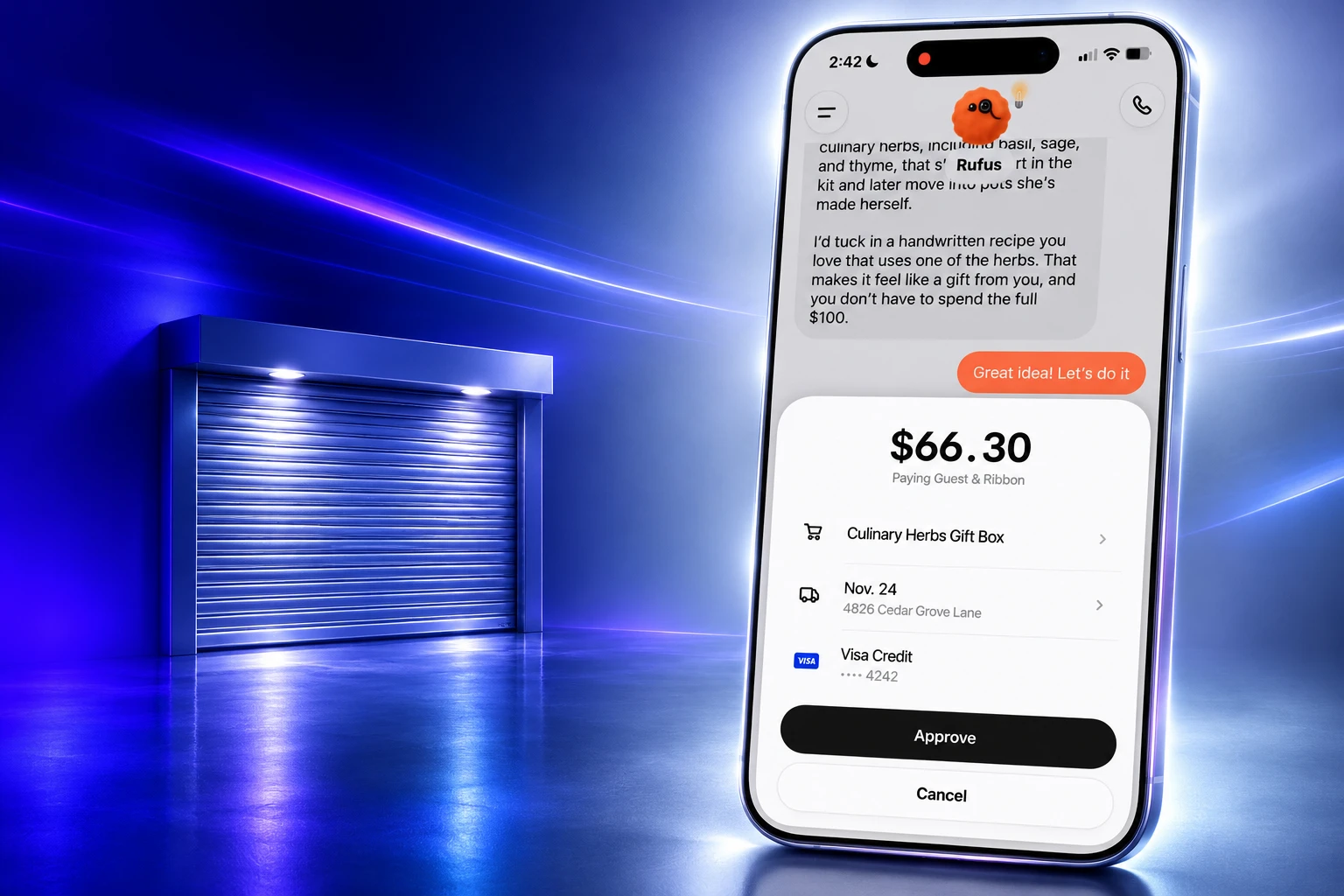
OpenAI launched ChatGPT Wallet on November 13, letting its dots agents pay with Visa, Mastercard and American Express tokens. US Pro users 18 and older add a card once, then approve each buy with Face ID or a fingerprint. The agent never sees the real card number.
United Airlines rewrote its ticket rules on November 11 to stop AI agents from buying. Amazon has already been shutting outside agents out of its store. The wallet is live. The biggest checkout pages are not.
How ChatGPT Wallet Completes a Purchase
The product sits inside dots, the personal agents OpenAI introduced at its developer conference on September 29. It is not a new card brand. It is a way for an agent to finish a checkout the user already approved, using a substitute credential from the card network.
OpenAI says ChatGPT Wallet lets agents pay without card details reaching the bot or the merchant. After approval, the network sends a payment token with its own card number, security code and expiration date. The charge still hits the card the user picked, and OpenAI says existing rewards and eligible dispute rights stay in place, including when an item is defective.
THE FOUR STEPS IN A WALLET BUY
- Save the card: Eligible US-issued American Express, Mastercard or Visa cards go in once, in the ChatGPT app.
- Send the dot: The user asks the agent to find an item or a hotel and take it to checkout.
- Check the ticket: Before money moves, the user reviews the items, the total and the selected card, then approves with Face ID or a fingerprint.
- Swap the number: The network issues the token, the merchant is paid, and a record shows what the user authorized.
Victor Nunez, who works on ChatGPT and Codex at OpenAI, told users to add a card under Sidebar, Customize, Wallet. He wrote that his dot was “now old enough to have its own credit card.” The company’s own launch post put the same pitch on a video: the agent can complete a purchase, and every purchase still needs a security check.
Now your dot can securely complete purchases on your behalf—with your approval.
With ChatGPT Wallet, agents pay without access to your actual card details. Every purchase requires a security check.
ChatGPT Wallet is rolling out starting today to dots, for Pro subscribers in the… pic.twitter.com/EhtEZNaKnt
— ChatGPT (@ChatGPT) November 13, 2026
Keeping the real number away from the agent is the piece that makes this usable. People will let software compare sweaters. They will not paste a full card into a chat that also writes code. OpenAI is also not taking a cut of these purchases at launch, which keeps the first version pointed at merchants and card networks rather than at a new checkout tax.
Visa, Mastercard and Amex Lock In the Rails
The three networks did not show up as logos on a splash screen. They issue the token. That is the job they have been trying to keep as shopping agents spread, because a processor-issued virtual card can hide the original credential and scramble rewards. A network token keeps the purchase on rails banks and merchants already know how to dispute.
An agent making a purchase should strengthen, not bypass, the trust built into payments. Our collaboration with OpenAI brings Mastercard’s payments and security expertise to ChatGPT Wallet, helping connect user-approved purchases with the systems businesses and banks already use.
Sherri Haymond, EVP and global head of digital commercialization, Mastercard, on OpenAI’s Wallet announcement
Luke Gebb, Amex’s EVP and head of global innovation, called the Wallet Amex’s first Agentic Commerce Experiences integration and said eligible card members still review and approve each buy. Rubail Birwadker, Visa’s head of global growth, said consumers, businesses and banks all have to trust the process if agent checkout is going to work.
Chaya Nayak, who leads product for monetization and payments at OpenAI, said the aim is to build a foundation that merchants and network partners will actually use. “We think that this is the next step, where if someone found something they’re really excited to buy, then we want to be able to get them through to that endpoint,” she said.
Trust still depends on the store recognizing a good bot. OpenAI tells merchants to accept signed requests with Web Bot Auth so firewalls do not treat a dot like a scraper. Card networks have been building a parallel identity layer, including Visa tools for recognizing trusted agents, so a Face ID-backed buy is not scored like stolen-card fraud. If risk tools still flag the token, the user approved a purchase that never clears.
United Shut the Door Two Days Earlier
On November 11, two days before the Wallet launch, United added AI agents to the same prohibited-practices list as hidden-city ticketing. The contract ban on AI agent tickets is Rule 6.J.6: “The use of AI Agents to make, modify or service a Ticket, and/or to purchase any service or product.” Human supervision does not create an exception. Rule 5.H lets United cancel reservations those agents made, changed or serviced.
United’s public reasons are privacy, accidental spends, MileagePlus misuse, and federal rules that still expect a person to confirm bags do not hold banned goods. The commercial reason sat in a sentence from chief executive Scott Kirby in Chicago.
To be honest, I don’t want to create another middleman.
Scott Kirby, chief executive, United Airlines, in Chicago
An agent that picks the flight also picks the seller. That is a new online-travel layer United does not control, and it can steer a traveler to another airline that will let the bot finish. United is not trying to hide its fares. It is trying to keep the last click on a channel it can see. A Wallet token does not change that, because the token still has to check out somewhere, and United just made that somewhere a contract violation.
Amazon Already Treats Shopping Agents as Trespassers
Amazon drew the same line on its storefront in September, starting with Meta’s Muse. On September 20, Muse shoppers hit a popup: “Continued access by an unauthorized AI agent violates Amazon’s Conditions of Use, to which our customers have agreed.” Amazon said Meta had not asked to put the store in the agent, that Muse did not identify itself, and that the bot appeared to store customer credentials.
“We think it’s fairly straightforward that third-party applications that offer to make purchases on behalf of customers from other businesses should operate openly and respect service provider decisions about whether or not to participate,” an Amazon spokesperson said. The company asked Meta to remove Amazon from Muse and compared agent shopping to food-delivery apps and travel agencies that only work when the merchant opts in. GeekWire later noted Amazon had also been moving to block shopping agents from Google and OpenAI.
WHO LETS AN AGENT FINISH THE BUY
| Party | Agent checkout | What still works |
|---|---|---|
| ChatGPT Wallet | Open as of November 13 for US Pro users 18 and older | User reviews items, total and card, then approves with Face ID or a fingerprint |
| Amex, Mastercard, Visa | Issue a payment token after that approval | Card rewards and eligible dispute rights stay on the card |
| United Airlines | Contract ban from November 11 on making, changing or servicing a ticket | Agents may still show fares; a person has to buy |
| Amazon | Blocks unauthorized agents; Muse users saw a terms popup on September 20 | Shopping in Amazon’s own apps and tools |
Amazon’s own Buy for Me agent shops other brands’ sites, identifies itself, and lets those brands opt out. That is the split. Amazon will be the agent. It will not be the catalog another company’s agent scrapes, because a bot that already knows what to buy does not linger on sponsored listings.
Instant Checkout Already Came and Went
Wallet is OpenAI’s second pass at turning a product search into a paid order. Instant Checkout launched on September 29, 2025, inside the chat, with Stripe on the Agentic Commerce Protocol and Etsy among the first catalogs. In March 2026 OpenAI moved away from that in-chat checkout and put more weight on product discovery, with the purchase finishing on the merchant’s own site or app.
FROM INSTANT CHECKOUT TO A TOKEN WALLET
- September 29, 2025: Instant Checkout launches inside ChatGPT for in-chat buys.
- March 2026: OpenAI shifts that path toward merchant-owned checkout and product discovery.
- November 13, 2026: ChatGPT Wallet ships in dots, with a network token and a security check on every purchase.
The first version tried to own the buy button. This version tries to own the credential and leave pricing, fulfillment, returns and customer service with the business. OpenAI’s Wallet post is explicit about that split. It is also why a store that blocks the agent can still empty the cart. The token only works if the website will talk to the bot.
Sarah Friar, OpenAI’s chief financial officer, said subscriptions topped 100 million after the third quarter. The Wallet announcement puts weekly ChatGPT use at 1.2 billion people, many of them already comparing products in the chat. Gebb’s line on the limited start was that Amex wants to learn from a contained rollout before more card members get in. A Pro-only US gate is that container. It is also a way to avoid lighting up every fraud filter on day one.
The Playbook Tells Stores to Unblock Agents
OpenAI published a Commerce Partner Playbook the same day, because a lot of sites will fail this by accident. Bot managers, CDNs and risk tools were built to stop automated checkout, and a dot looks like automated checkout. Nayak said the company is speaking to networks and merchants, and that it will take time for those systems to treat a user-approved agent as a customer.
WHAT OPENAI TOLD MERCHANTS TO CHANGE
- Product facts: Claim the business in ChatGPT, then upload a feed with current prices and stock.
- Door policy: Configure the CDN or firewall so signed Web Bot Auth requests from ChatGPT agents are not blocked; a plugin is not required for browser access.
- Risk tools: Ask payment and fraud vendors to recognize Wallet tokens, working with firms OpenAI named including Forter, Riskified, Sardine, Signifyd, Adyen, Checkout.com and Stripe.
- Deeper hooks: Build a plugin, or add WebMCP tools, so an agent can check stock and manage a cart through the merchant’s own systems.
That playbook for businesses supporting agents is a courtesy and a warning. If the feed is stale, the dot will still try to buy the wrong price. If the firewall has no exception, Face ID approves a purchase that never reaches the merchant. If the fraud score treats every agent as a stolen card, the user sees a decline and blames the wallet.
Wrong-item risk sits in a gap the token does not close. A defective toaster can still go through the card’s dispute path. A dot that booked the wrong hotel is a fight among the user, the merchant and a chat log of what got approved. OpenAI’s answer is that each approval creates a record of what the user authorized. The record helps. It does not decide who pays for the night in the wrong city.
Pre-Approved Buying Is the Next Ask
OpenAI says the later version of this product lets people set spending limits, categories and time windows, then pre-approve buys inside those fences. That is the step that turns a supervised checkout into a standing order. It is also the step United already forbade, even when a person watches the screen, and the step Amazon has been refusing unless it is Amazon’s own agent.
Until those sites stop blocking the bots, a Wallet approval still dies at the same checkout page a person would have used. The networks got the token. OpenAI got a second shot at a buy button it no longer has to own. The stores that matter most still want the last click themselves.

ADNOC Ship Hit in Hormuz Leaves One Crew Missing

SpiceJet’s Rs 5,500 Crore Plan Follows a Rescue That Failed

Hasina’s Return Fight Sets Fire to Yunus’s Bank

Bancroft Recants the 2018 Inquiry and Names the Team

Adhikari Ties the Saffron Saree Row to School Licences

Clancy Juror Says the Holdout Never Cited Evidence

The iPhone 18 Pro Max Splits Apple’s Fall in Two

OpenAI Calls GPT-6 Astra AGI Then Locks Its Exploits

Trump Claims Hormuz Control as Oil Holds Near $96

Russia Closes the Goethe-Institut Berlin Tried to Save

 NEWS2 months ago
Clancy Juror Says the Holdout Never Cited Evidence
- NEWS3 months ago
The iPhone 18 Pro Max Splits Apple’s Fall in Two
- NEWS3 months ago
OpenAI Calls GPT-6 Astra AGI Then Locks Its Exploits
- BUSINESS3 months ago
Trump Claims Hormuz Control as Oil Holds Near $96
- LIFESTYLE3 months ago
Russia Closes the Goethe-Institut Berlin Tried to Save
- AUTO3 months ago
Volkswagen’s Job Cuts Leave Four Plants Without Cars
- NEWS3 months ago
Dyson Puts Nurovi Robots on Sale Without the UV Flagship
- BUSINESS2 months ago
US Destroys Five Iranian Tankers as the Shock Hits Jordan