
NEWS
ChatGPT’s Charlie Kirk Error Puts Voice Answers on Trial

The ChatGPT Charlie Kirk error that drew an eyebrow-raise from Elon Musk, the tech executive, on X, the social platform, points to a live-news failure: official records show the conservative activist was shot during an event hosted with Turning Point USA, the conservative youth organization, on September 10, 2025, and died hours later.
The screenshot, posted May 31, mattered because voice answers arrive with borrowed authority. A user hears a fluent reply before checking a source panel, and on political violence the cost of one stale answer rises faster than it would for a wrong restaurant hour, a missed sports score or an outdated celebrity bio.
The Official Record Was Already Settled
The Utah Department of Public Safety, the state police agency co-leading the case, said in its state public-safety update on the shooting that the activist was speaking at a student-sponsored event at Utah Valley University, the Orem public university, when he was shot. The agency said he was taken to Timpanogos Regional Hospital, a Utah County hospital, and pronounced dead hours later.
The Federal Bureau of Investigation (FBI, the U.S. law-enforcement agency) later described the case as the murder of Charlie Kirk on September 10, 2025, at the school. Its FBI Utah Valley shooting updates listed a reward of up to $100,000 for information leading to an arrest. The university used the same baseline months later, when its Utah Valley University review announcement said the school would examine the assassination and its own security response.
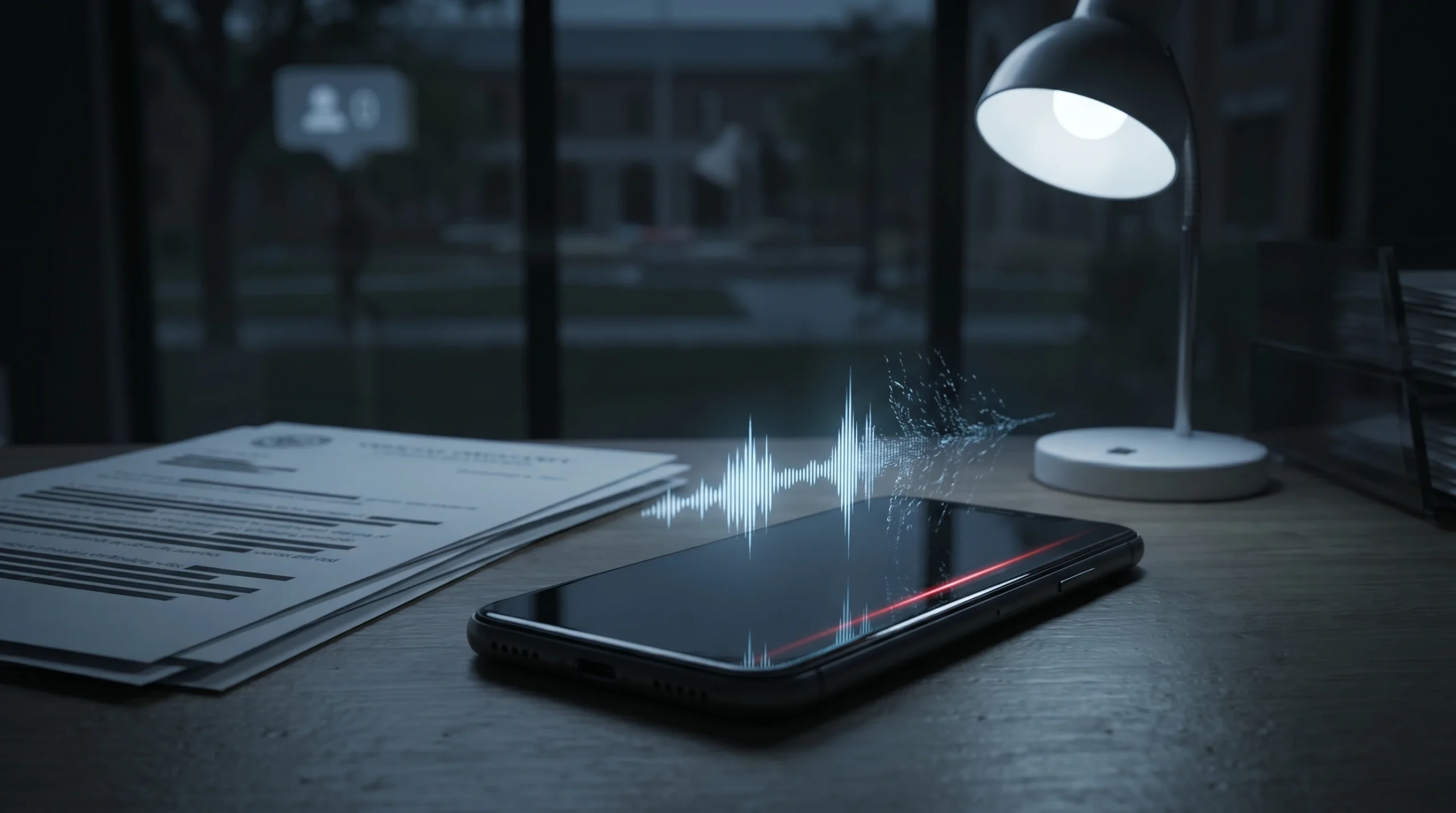
Voice Mode Changes the Risk
Voice conversations may make mistakes, so please check important information.
OpenAI, the artificial intelligence company behind ChatGPT, says that in its Voice Mode FAQ for ChatGPT. The warning is plain, yet the product feels different when the answer is spoken through earbuds or a car speaker. Spoken confidence does not ask the listener to pause, scroll and audit a source panel.
That is why the Miller screenshot hit harder than a wrong text answer. Katie Miller, a commentator and podcaster, posted an example of ChatGPT Voice denying a widely documented death; Musk, whose companies compete in artificial intelligence, amplified it with an emoji. The political charge then did the rest, because the answer sounded less like a search miss and more like a system refusing a settled fact.
The audio setting also compresses uncertainty. In text, caveats sit on the screen and links can be opened in the next tab. In voice, a hesitant phrase can pass by in a second, and a firm answer can feel final before the user has any evidence in hand.
The Product Split Behind One Bad Answer
OpenAI’s docs draw a boundary that casual users often miss. Its ChatGPT accuracy guidance says responses without search are based on training, while search and deep research can bring in current sources. Its ChatGPT Search help page says users can ask the chatbot to search during a voice conversation.
| ChatGPT Path | What It Can Use | Where It Can Fail |
|---|---|---|
| Standard ChatGPT answer | Training data and conversation context unless a tool is used | Recent deaths, court updates and fast-moving public records |
| Search answer | Web pages surfaced through ChatGPT Search, with links when sources are returned | Bad query choice, inaccessible pages or weak source ranking |
| Voice answer with search | A spoken interface that can trigger search when the user asks | Hands-free users may hear the answer before they inspect sources |
| Deep research | A multi-source research workflow meant for longer cited answers | Too slow and formal for a quick voice prompt |
The screenshot alone cannot prove which path failed: retrieval, routing, a stale conversation context or a refusal pattern around disputed breaking news. The useful lesson is narrower. If the source trail is invisible at answer time, users cannot tell whether the assistant checked the web or guessed from old memory.
Why the Error Spread So Fast
The death carried every ingredient that makes a factual miss combustible: political identity, video-era shock, platform rivalry and an official record that should be easy to retrieve. A wrong answer about a living public figure can be embarrassing. A wrong answer about a killing can feel like erasure to supporters and like proof of bias to critics.
The numbers make the point without any conspiracy theory:
- 12:20 pm – Utah public-safety officials placed the shooting during the student-sponsored event.
- $100,000 – The FBI posted that reward while seeking information in the murder investigation.
- 263 days – That is the gap from the shooting date to the screenshot’s publication date.
Musk’s involvement widened the audience because a reaction from him can turn an isolated screenshot into a platform event. That matters for OpenAI because the public no longer judges assistants only by benchmark charts or product notes. It judges them by screenshots that fit an existing suspicion, especially when the subject is politics and the answer can be checked against official records in minutes.
A Practical Test for Breaking-News Prompts
There is a way for users to reduce the risk, though it asks more work from them than most voice interfaces invite. The prompt should force the assistant to show recency, not confidence alone. That means treating a spoken answer as the first step in verification rather than the last word.
- Ask whether it searched the web for the answer and request the source list.
- Give the exact date, location and person, especially when asking about a death, arrest, vote or court action.
- Open at least one official source before sharing a screenshot of the answer.
- When the answer is spoken, ask for the same answer in text with links before relying on it.
None of this is natural voice behavior. People use voice because they want speed, not paperwork. That tension is the product problem: if the safe way to use a voice assistant requires a cross-examination, the interface is carrying trust it has not earned.
The Cost Falls on the Trust Layer
OpenAI has pushed ChatGPT from a text box into a more ambient assistant: voice, search, images in answers, shopping, maps and longer research. That expansion changes the standard. A chatbot can be forgiven for sounding uncertain; an assistant that speaks like a newscaster invites news-grade checks.
The company already identifies the risk in public. Its help page says a confident tone can still accompany an incorrect answer and tells users to verify quotes, data, technical information and references. Product design has to make that caution visible in fast conversations, especially when the answer concerns a death, a criminal case or a live public event.
For official agencies and publishers, the hidden stake is distribution. Their records may be correct, public and timely, yet still lose the first impression if an assistant gives a stale answer before retrieval starts. The source can win the facts and lose the screen.
OpenAI can patch an answer. Harder is persuading users that the next spoken answer has checked the ground beneath it. If ChatGPT makes its source trail obvious in voice, this episode fades into a fixable miss. If it does not, every breaking-news answer will carry the same hidden question: did the model check, or did it guess?

-
 TECH1 year ago
Where Garmin Watches are Made and How They are Assembled
-

 AUTO3 months ago
Tesla’s Roadster Is ‘a Few Weeks Away,’ Says Its Chief Designer
-
 NEWS10 years ago
Samsung Releases Galaxy Note7 TV Ad as Reddit AMA Leaks Specs
-
 NEWS10 years ago
Android 7.0 Nougat Rolls Out To Nexus Devices With New Emoji, Features
-
 FINANCE9 years ago
Cardano Price Surges as ADA Enters the Crypto Top Ten List
-
 NEWS10 years ago
Pre-Order the First Camera Made for Facebook Live Streaming Video
-
 FINANCE1 year ago
Binance Suspends Trading and Withdrawals for a System Upgrade
-
 FINANCE9 years ago
RChain Price Jumps Nearly 150% to a New All-Time High of $2.03