
BUSINESS
ASML’s €1.3 Billion Mistral AI Bet Splits Wall Street

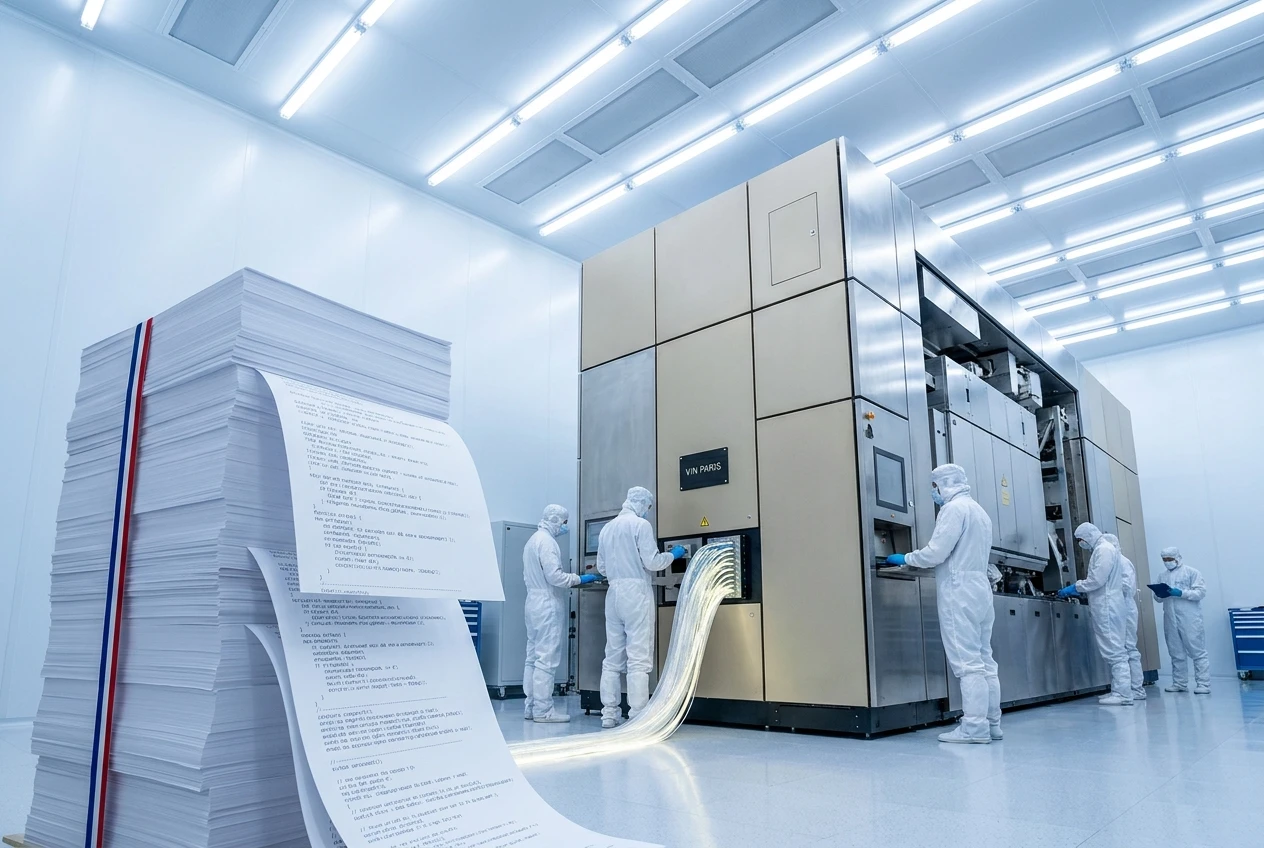
ASML’s €1.3 billion check into Mistral AI, the largest single investment a chip equipment maker has ever written into an AI software company, has split Wall Street and Veldhoven down the middle. The Dutch lithography monopolist now owns roughly 11% of Europe’s most valuable AI startup on a fully diluted basis, valuing the Paris firm at €11.7 billion. As ASML heads into its April 2026 trading window roughly 15% below the €1,463 analyst price target, the question is whether this deal is strategic genius or a distraction from the High-NA EUV ramp investors actually paid for.
The €1.3 Billion Question Hanging Over Veldhoven
ASML led Mistral AI’s €1.7 billion Series C on September 9, 2025, putting in 76.5% of the cash and taking the largest external stake. The deal more than doubled Mistral’s prior €5.8 billion mark. CFO Roger Dassen took a seat on Mistral’s Strategic Committee.
For a company that almost never writes startup checks, the move is a structural shift. ASML built its trillion-euro market cap on extreme ultraviolet machines that print transistors a few nanometers wide. It has now bought a meaningful slice of a generative AI lab whose products run nowhere near a fab.
The unusual nature of the bet is the story. Per the official ASML and Mistral AI strategic partnership announcement, the relationship goes “beyond a traditional vendor-client relationship.” Translation: ASML is buying influence over how the next decade of chip design tooling absorbs large language models, not just access to a supplier.
- €1.3 billion. ASML’s lead-investor cheque, the largest startup investment in its history.
- 11%. ASML’s fully diluted ownership in Mistral AI after the round.
- €11.7 billion. Mistral’s post-money valuation, roughly double its 2024 mark.
- €8.8 billion. ASML’s Q1 2026 revenue, up 13% year on year.
How the Cap Table Now Reads
Mistral’s Series C pulled in capital from a who’s-who of investors who already had skin in the company, with ASML the only newcomer at the top of the stack. The funding round and valuation positions Mistral as Europe’s clearest counterweight to OpenAI and Anthropic, even if its model rankings have not caught up.
| Investor | Role in Series C | Status |
|---|---|---|
| ASML Holding | Lead investor, €1.3B | New, 11% stake |
| Nvidia | Returning | Strategic GPU partner |
| Andreessen Horowitz | Returning | Series A backer |
| DST Global | Returning | Growth capital |
| Bpifrance | Returning | French state bank |
| General Catalyst, Index, Lightspeed | Returning | Earlier-stage backers |
What Fouquet Wants From Mensch
ASML CEO Christophe Fouquet has framed the Mistral tie-up as an engineering deal first, a sovereignty deal second. Lithography systems generate enormous quantities of sensor and process data, and ASML’s customers, principally TSMC, Samsung and Intel, want that data turned into yield faster than the current toolchain allows.
Mistral’s models will be embedded into ASML’s holistic lithography stack to attack four narrow problems: defect detection on EUV reticles, predictive maintenance on the moving parts inside a wafer scanner, optimization of optical proximity correction settings, and engineer-facing copilots that can read process logs in plain language.
Mistral CEO Arthur Mensch, in the joint announcement, said the company has “the ambition to help ASML and its numerous partners solve current and future engineering challenges through AI.” That “numerous partners” phrase is doing real work. The same Mistral models tuned on ASML data could end up running inside customer fabs, which is how a software stake becomes a moat for the hardware business.
This is not abstract. ASML’s High-NA EUV systems for the 2026 ramp generate roughly 30 terabytes of telemetry per machine per month, according to industry estimates referenced by the Yole Group analysis. A model that compresses that into faster root-cause findings is worth more to a 3-nanometer fab than another GPU.
The ‘Gross Misallocation’ Charge
Not everyone in the shareholder base is sold. A bloc of investors publicly labeled the deal a “gross misallocation of capital,” arguing the cash should have gone to dividends or buybacks rather than a high-risk AI startup outside ASML’s competence circle.
- Benchmarks gap. Mistral’s flagship model trailed US peers on Stanford HAI’s Chatbot Arena and underperformed on MixEval-Hard, raising questions about the technical asset ASML is paying for.
- Capital competing with cash returns. The €1.3 billion stake plus the planned EUV capacity build-out compete with the new €12 billion buyback through 2028 if cash generation slips.
- Insider signal risk. Simply Wall St has flagged insider selling at ASML, and shares are described as 71.6% above estimated fair value, sharpening attention on any management share disposals after this move.
- 2026 outlook. Mizuho Securities flagged “downside risk to 2026 business outlook” tied to capex timing and customer order patterns.
Inside the Real Lithography Use Cases
The strongest case for the deal lives below the press-release language, in the workflows where AI actually compresses chipmaker time. Yole Group’s analysis of the strategic rationale identifies a thesis no wire story carried clearly: ASML is hedging against a future where lithography matters less.
“ASML always invested early on crazy projects to capture their own supply chain,” said Taguhi Yeghoyan, analyst at Yole Group, who also warned that scaling “might reach a stage where the scaling of electronic system performance will depend less on lithography, and more on deposition/etch.”
If Yeghoyan is right, ASML’s monopoly weakens at the exact moment 2-nanometer nodes hit volume. Owning a piece of the software layer that ties the whole stack together is one way to keep the toll booth.
Pierre Cambou, also at Yole, framed the second motive bluntly. “Investment in the LLM space is a way to have first-hand access to market knowledge and technology knowhow,” he said. ASML now sits next to a generative AI team trusted by European governments, French defense buyers, and a string of industrial primes. That seat is worth more than the equity coupon.
And there is a defensive read. ASML could have bought into a US lab. It would have triggered Washington export-control attention and Beijing retaliation against a vendor already navigating both. Mistral was the only target that gave ASML the AI exposure without inviting a new front in the chip war.
The integration work has already begun. ASML engineers in Veldhoven and San Diego are reportedly piloting Mistral models on optical proximity correction tasks, where small simulation gains translate directly into faster mask tape-out for customers like TSMC.
The Sovereignty Argument Fouquet Won’t Quite Make
Fouquet has been careful in public to call European tech sovereignty “an additional benefit” rather than the point. The political subtext is louder than that. Brussels has spent two years trying to keep a domestic AI champion alive against US capital and Chinese pricing, and Mistral is its only credible candidate.
The Dutch government, ASML’s home regulator, has every reason to like a deal that anchors French AI capacity inside a Dutch balance sheet. Coverage by Euronews on the September announcement noted that the deal lands at “a time of heightened geopolitical tensions,” which understates the position. ASML is the single most export-controlled company in Europe.
For Mistral, the math runs the other way. The €1.3 billion gives Arthur Mensch the runway to keep saying no to acquisition offers from the US hyperscalers, and the ASML name on the cap table provides industrial credibility no Big Tech rival on its bench can match.
Reading the Q1 2026 Tape
ASML’s first-quarter 2026 print, posted on April 16, gives investors a clean look at how the Mistral bet sits inside the broader business. Revenue came in at €8.8 billion, up 13% year on year. Net profit reached €2.8 billion. Earnings per share rose 19% to €7.15. Management raised guidance into the mid-single-digit range for the full year and confirmed the €7.50-per-share dividend for 2025 alongside the €12 billion buyback running through 2028.
- 2024. Mistral closes a €600 million round at a €5.8 billion valuation.
- September 9, 2025. ASML leads the €1.7 billion Series C; valuation hits €11.7 billion.
- Q4 2025. First Mistral pilots inside ASML engineering tools begin.
- April 16, 2026. ASML reports Q1 revenue of €8.8 billion and reaffirms the AI partnership in the call.
- Late 2026. First customer-facing AI features expected in ASML’s holistic lithography platform.
Frequently Asked Questions
How much did ASML actually invest in Mistral AI?
ASML committed €1.3 billion, equivalent to roughly $1.5 billion at the September 2025 exchange rate, as the lead investor in Mistral AI’s €1.7 billion Series C funding round. The investment gives ASML approximately 11% of Mistral on a fully diluted basis and a seat on the Strategic Committee held by CFO Roger Dassen.
Why is a chip equipment company buying into an AI software firm?
ASML wants Mistral’s generative AI models embedded into its holistic lithography platform to speed up defect detection, predictive maintenance, and chip design optimization. Yole Group analysts argue the deal also hedges ASML against a future where chip scaling depends more on deposition and etch tools than on lithography.
What is Mistral AI’s current valuation in 2026?
Mistral AI was valued at €11.7 billion post-money after the September 2025 Series C, more than double its 2024 €5.8 billion mark. That ranks Mistral as Europe’s most valuable AI company, though still well below US peers OpenAI and Anthropic on both valuation and public benchmark scores.
Is the ASML stock a buy after the Mistral deal?
ASML trades at €1,249.60 in late April 2026, roughly 15% below the €1,463 consensus analyst target but reportedly 71.6% above estimated fair value on Simply Wall St’s model. The 30-day return sits near 9%. Investors should weigh the Mistral exposure, the €12 billion buyback, the High-NA EUV ramp, and flagged insider selling before deciding.
Who else invested in Mistral’s Series C round?
Returning investors included Nvidia, Andreessen Horowitz, DST Global, Bpifrance, General Catalyst, Index Ventures and Lightspeed. ASML was the only new investor at the top of the stack, contributing roughly 76.5% of the total €1.7 billion raised, which is what made it the largest single shareholder after the round closed.
The next test is whether Mistral models actually move the needle on yield, throughput and tape-out speed inside ASML’s customer fabs over the next four quarters. If they do, the €1.3 billion looks cheap relative to the lithography moat it defends. If they don’t, the buyback will get most of the credit for whatever recovery the stock manages from here.

-
 TECH1 year ago
Where Garmin Watches are Made and How They are Assembled
-
 AUTO3 months ago
Tesla’s Roadster Is ‘a Few Weeks Away,’ Says Its Chief Designer
-
 NEWS10 years ago
Samsung Releases Galaxy Note7 TV Ad as Reddit AMA Leaks Specs
-
 NEWS10 years ago
Android 7.0 Nougat Rolls Out To Nexus Devices With New Emoji, Features
-
 FINANCE9 years ago
Cardano Price Surges as ADA Enters the Crypto Top Ten List
-
 NEWS10 years ago
Pre-Order the First Camera Made for Facebook Live Streaming Video
-
 FINANCE1 year ago
Binance Suspends Trading and Withdrawals for a System Upgrade
-
 FINANCE9 years ago
RChain Price Jumps Nearly 150% to a New All-Time High of $2.03