
NEWS
ASEAN Extends Myanmar’s Summit Ban and Offers a Way Back
ASEAN kept Min Aung Hlaing out of the Manila summit and, in the same review, offered a phased path back despite no ceasefire.

Southeast Asian leaders kept Myanmar’s junta-backed president out of their Manila summit on November 15 and, in the same paper, offered him a ladder back. The Association of Southeast Asian Nations extended its ban on political seats at summits and foreign ministers’ meetings until it sees “meaningful progress” on a 2021 peace plan that has never produced a ceasefire.
The review also said that, subject to “sustained and concrete progress,” the bloc may consider a phased return. Min Aung Hlaing, who led the February 2021 coup and took the presidency in April after army-run elections, was represented by a director-general.
Leaders Kept the Ban and Wrote a Ladder
The gradual restoration of full political representation sits a few paragraphs below the line that keeps Myanmar on non-political status. Decision 24 repeats the collective call of the 40th, 41st, 43rd, 44th, 45th, 46th, 47th and 48th summits. Decision 25 then tells the bloc to pursue “calibrated engagement” through a “phased and progress-based approach.”
That pairing is the whole Manila bargain. The empty chair stays in the family photo. The text now describes how the chair might be filled.
Philippine Foreign Secretary Ma. Theresa Lazaro, who is also the ASEAN chair’s special envoy on Myanmar, told reporters the stepped path still starts with an end to fighting. “There’s still certain bombings and displacement of Myanmar people, so step-by-step, we give it to them, how they’re going to tackle this issue, and we’ll monitor that,” she said. She added that the first test is “cessation of hostilities.”
Philippine President Ferdinand Marcos Jr., chairing the 49th ASEAN Summit at the Philippine International Convention Center in Pasay City, had already asked the room a question he first put to the group in May: “What more can we do for Myanmar?” The adopted paper answers with process. It denounces attacks on civilians and public facilities, urges a nationwide ceasefire, and tasks foreign ministers to keep informal talks going.
Lazaro convened the last extended informal consultation on the plan on November 15 in Manila, the fourth such session this year after meetings on January 28, July 12 and July 21.
I convened the final Extended Informal Consultation on the Implementation of the Five-Point Consensus under the Philippines’ Chairship of ASEAN in Manila. This served as an important space to discuss the progress on the implementation of the Five-Point Consensus and the Way… pic.twitter.com/Ed86mZ3bEu
— Ma. Theresa P. Lazaro (@SecLazaro) November 15, 2026
Myanmar remains a member of the 11-nation bloc, now including Timor-Leste. Its seat at other sectoral meetings stays open at every rank. Only the leaders’ table and the foreign ministers’ table stay closed to political figures, and only until the bloc says progress is real.
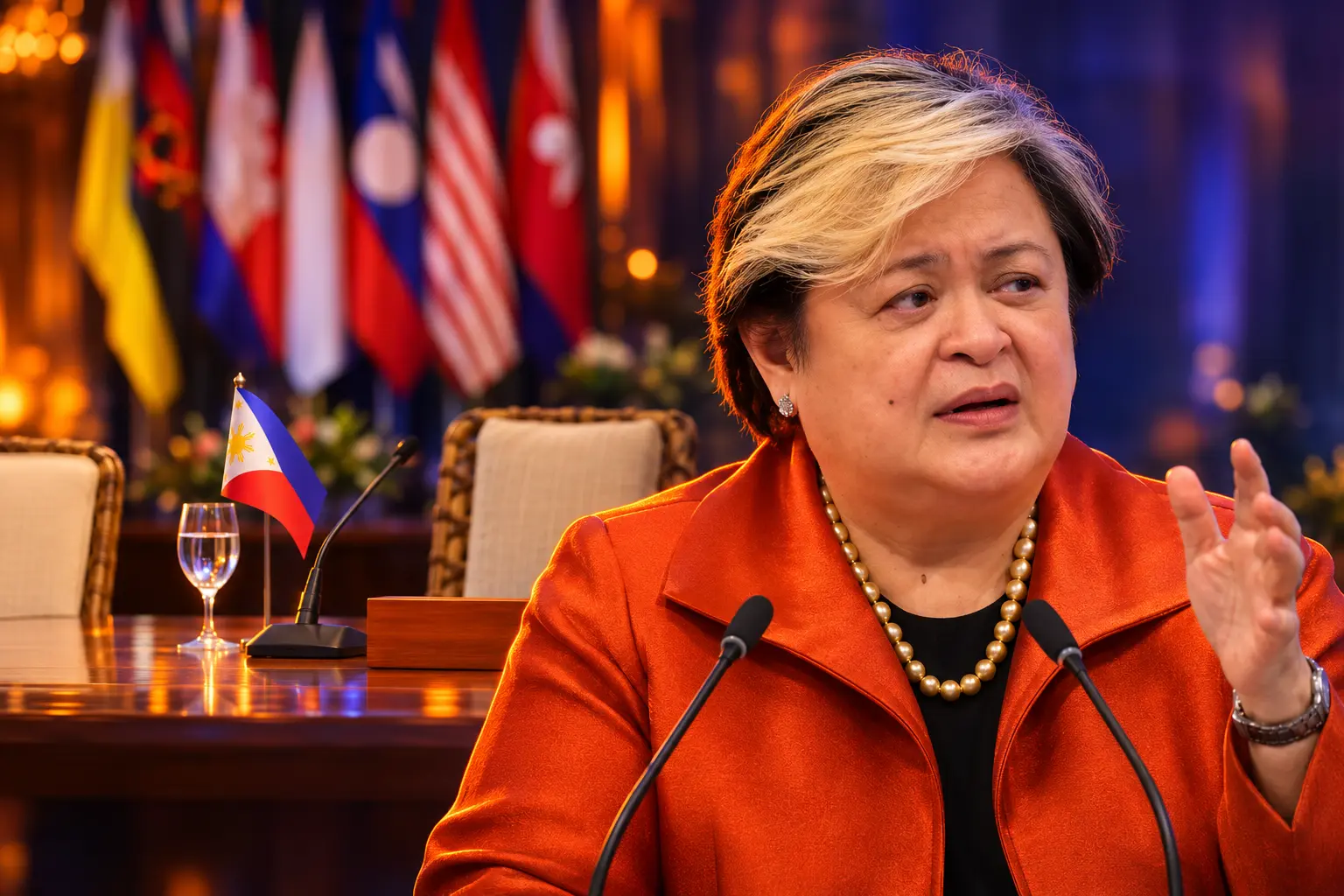
The Five-Point Plan Still Opens With a Ceasefire
The plan the leaders keep calling their “main reference” was written in Jakarta on April 24, 2021, less than three months after the army seized power from the elected government of Aung San Suu Kyi. Min Aung Hlaing sat in that room. The first line called for an immediate cessation of violence in Myanmar and for every party to show utmost restraint.
On July 31, marking 100 days as president, he told parliament the Five-Point Consensus was not the position of all members and was “only the statement of the then ASEAN chair, Brunei.” He said some members had discriminated against Myanmar. “We have been patient. We will respond to non-constructive actions on a case-by-case basis,” he said. He also promised by-elections in 2027 in 172 constituencies that could not vote in the December and January polls, and said his government had already met 13 ethnic armed groups.
Manila still treats the five points as the test. The review finds “insufficient progress” overall and “limited progress” only on aid through the ASEAN Coordinating Centre for Humanitarian Assistance on disaster management, the AHA Centre.
FIVE POINTS, FIVE YEARS LATER
| Point | April 2021 pledge | November 2026 finding |
|---|---|---|
| 1. Ceasefire | Immediate end to violence, utmost restraint | Leaders still urging de-escalation and a nationwide ceasefire |
| 2. Dialogue | Talks among all parties for a peaceful solution | No inclusive national dialogue; envoy contacts noted |
| 3. Special envoy | Chair’s envoy to mediate, with the secretary-general | Lazaro visited Nay Pyi Taw on January 6 and October 29 |
| 4. Aid | Help through the AHA Centre | Limited progress; October run to more than 11,000 households |
| 5. Visits | Envoy and team to meet all parties inside Myanmar | Tagaytay meeting January 19-20; ethnic groups in Pattaya on July 13 |
Point four is the one the leaders can count. An AHA monitoring team that Lazaro led on October 28 started a month-long delivery to more than 11,000 households, including in four priority townships the centre had not reached before. The paper calls that limited. It also asks partners to put up more money and asks Myanmar to let aid move without discrimination.
Aung San Suu Kyi remains detained in isolation, without family or lawyers, according to the U.N. special rapporteur’s report. President Win Myint was allowed home in April under conditions the rapporteur called detention-like. The International Committee of the Red Cross was allowed a brief meeting with Suu Kyi in August. Inclusive talks that include those two names have not begun.
8,384 Civilian Deaths and a Limited Aid Run
The plan’s first point is the one the war keeps answering. Kelley Currie, the U.N. special rapporteur on human rights in Myanmar, told the General Assembly that a minimum of 8,384 civilians killed since the coup can be verified through September 15, among them 1,873 women and 1,112 children. Airstrikes accounted for 2,530 of those deaths, including 889 women and 550 children. Sagaing was the hardest-hit region, with 804 verified deaths. Rakhine was second, with 508, and remains under a military aid blockade.
THE TALLY THE REVIEW DID NOT PRINT
- Civilian deaths: At least 8,384 people killed by the military since February 2021, as of September 15.
- Airstrikes: 2,530 of those deaths, with Sagaing and Rakhine taking the heaviest share.
- Displaced: UNHCR counted 4,054,900 more than four million internally displaced people inside Myanmar as of October 26.
- Political prisoners: At least 31,926 arrested since the coup, with 14,817 still held.
Currie took the mandate on May 1, succeeding Thomas H. Andrews. Nay Pyi Taw told her it was “not ready to accommodate” a country visit. She wrote that the men who dissolved the State Administration Council and put on civilian titles had not changed their method.
The military leaders have changed their clothing and their titles but not their fundamental approach to governance. Their level of brutality towards the people of Myanmar has only increased.
Kelley Currie, U.N. special rapporteur on human rights in Myanmar, report to the General Assembly
She added that neither the change of clothes nor “the wishful thinking of other Member States” will improve conditions on the ground while impunity holds. During the regime’s “100-day peace plan,” from April 20 to July 31, credible sources verified at least 753 civilian deaths, 668 of them, or 89 percent, by the military and its paramilitaries. Airstrikes killed at least 146 people in that window, with media counts of at least 657 attacks, more than six a day. Ground operations, shelling and arson killed at least 65 civilians, a 44 percent jump from the previous 100 days. Martial law covered 58 townships.
The October 28-30 aid mission ran in the same weeks as fresh air attacks. Rights monitors recorded strikes on a school in Karenni State and a maternity clinic in Rakhine, among other sites. The Manila paper names “the armed forces, security forces, and armed groups” together when it asks for restraint. It does not rank who flies the jets.
Who Already Rolled Out the Carpet
The empty chair in Manila is not the same thing as isolation. After the army-run elections and the April move into the presidency, Min Aung Hlaing was received on official visits in Laos, Thailand, Vietnam, Cambodia and Malaysia. Those trips are why the ban had to be argued again before this summit, not why it was invented.
Thailand had already been selling “calibrated engagement” as the way to work the five points. In Manila that phrase became ASEAN English. Decision 20 “encourage[s] efforts by individual ASEAN Member States through constructive engagement with all relevant stakeholders, in consultation with the ASEAN Chair.” The sentence licenses what several capitals were doing anyway.
THE CAPITALS THAT RECEIVED HIM
- Laos: An early post-election stop as the new presidency sought regional recognition.
- Thailand: The border state pushing stepped contact, including a foreign minister visit to Naypyidaw.
- Vietnam: Another official welcome after the April title change.
- Cambodia: A long-standing channel that stayed open through the ban years.
- Malaysia: A visit that included public talk of helping reintegrate Myanmar into the bloc.
The ban held because the chair had the gavel, not because those five governments had decided to freeze the man they had just hosted. Companies watching the file already treated attendance as the signal that would matter more than any communique. Manila kept him off the dais and then wrote permission for the bilateral track into the collective text.
China, India and Russia have backed the military through the war. Quiet contacts with U.S. officials have also been described around the Trump administration’s shift away from isolation, a separate channel the Manila paper does not mention. The review instead repeats that Myanmar “remains an integral part of ASEAN.”
John Sifton, Asia advocacy director at Human Rights Watch, said before the summit that governments “should be increasing pressure on the junta to end its attacks on civilians, lift restrictions on humanitarian aid, and begin credible dialogues about transitioning to civilian rule.” Yanghee Lee, a founding member of the Special Advisory Council for Myanmar, had warned that seating Min Aung Hlaing “would mark a total capitulation” and “a permanent stain on ASEAN.” He was not seated. The paper still leaves the stain question for later, because it describes how seating could resume.
The Chair Myanmar Was Supposed to Hold
Alphabetical order would have given Myanmar the 2026 chair and the job of hosting these meetings. The war took that turn away. The Philippines held the year instead. Decision 27 now says that after Singapore’s chairmanship in 2027, the rotation “shall continue to be based on alphabetical order, until a different decision is made.” Myanmar is not slotted back in. The skip is the working rule until someone reopens it.
Han Win Aung, director-general of Myanmar’s ASEAN Affairs Department, sat in the group photograph. That is the formula used since October 2021: career diplomats, not the commander who became president. Khin Ohmar, founder of the Progressive Voice rights group, welcomed the confirmation that there was “no place at the summit for junta leader Min Aung Hlaing.”
HOW THE EMPTY CHAIR WAS BUILT
- February 1, 2021: The army seizes power from the elected government of Aung San Suu Kyi.
- April 24, 2021: Leaders in Jakarta adopt the Five-Point Consensus, with Min Aung Hlaing in the room.
- October 2021: ASEAN bars the junta’s political leadership from summits and foreign ministers’ meetings.
- 2026: Myanmar’s chair year passes to the Philippines; Singapore is named for 2027.
- April 10, 2026: Min Aung Hlaing takes the presidency after army-run elections.
- July 31, 2026: He tells parliament the five points are Brunei’s statement, not the bloc’s.
- November 15, 2026: Leaders in Manila keep the ban and add a phased path back.
Decision 26 insists the crisis “should not affect the ASEAN Community-building process and decision-making.” The chair skip already has. So has the two-speed membership, in which one country sends a director-general while the others send presidents and prime ministers, then poses for the picture anyway.
Calibrated Engagement Comes Without a Scorecard
The Special Advisory Council for Myanmar and ASEAN Parliamentarians for Human Rights had asked the chair to do more than reprint the ban. They wanted measurable benchmarks, deadlines, and a ladder of penalties if the army kept bombing. They named an end to the violence, the release of political prisoners including Suu Kyi and Win Myint, and unblocked aid. Manila did not adopt that list. It tasked senior officials to keep talking about a longer-term special envoy and “elements for assessing progress,” then sent the file back to the foreign ministers for the next summit.
Lazaro’s own test remains point one. Until the bombings stop, she said, the stepped approach does not move. The review also notes online scams, trafficking, drugs and displacement as regional security problems that leak out of the war. Those are the spillovers that make an empty chair expensive for neighbors even when it is cheap for a communique.
On November 19 the International Court of Justice is due to deliver judgment in The Gambia’s case against Myanmar on the Rohingya genocide convention. Min Aung Hlaing was commander-in-chief during the 2017 campaign in northern Rakhine. The ICC prosecutor’s office asked judges in November 2024 for an arrest warrant over alleged deportation and persecution; no public decision has been issued. Neither court is mentioned in the Manila review.
The three-day summit runs through November 17, with partner meetings still on the calendar. Decision 29 says leaders will look at this text again at future sessions. Min Aung Hlaing will not be in the room when they do, unless the ladder he was handed in the same paper is judged to have been climbed.

ADNOC Ship Hit in Hormuz Leaves One Crew Missing

SpiceJet’s Rs 5,500 Crore Plan Follows a Rescue That Failed

Hasina’s Return Fight Sets Fire to Yunus’s Bank

Bancroft Recants the 2018 Inquiry and Names the Team

Adhikari Ties the Saffron Saree Row to School Licences

Clancy Juror Says the Holdout Never Cited Evidence

The iPhone 18 Pro Max Splits Apple’s Fall in Two

OpenAI Calls GPT-6 Astra AGI Then Locks Its Exploits

Trump Claims Hormuz Control as Oil Holds Near $96

Russia Closes the Goethe-Institut Berlin Tried to Save

 NEWS2 months ago
Clancy Juror Says the Holdout Never Cited Evidence
- NEWS3 months ago
The iPhone 18 Pro Max Splits Apple’s Fall in Two
- NEWS3 months ago
OpenAI Calls GPT-6 Astra AGI Then Locks Its Exploits
- BUSINESS3 months ago
Trump Claims Hormuz Control as Oil Holds Near $96
- LIFESTYLE3 months ago
Russia Closes the Goethe-Institut Berlin Tried to Save
- AUTO3 months ago
Volkswagen’s Job Cuts Leave Four Plants Without Cars
- NEWS3 months ago
Dyson Puts Nurovi Robots on Sale Without the UV Flagship
- BUSINESS2 months ago
US Destroys Five Iranian Tankers as the Shock Hits Jordan










