
BUSINESS
The FII Turn Is Real, and So Are Its Limits
Foreign funds bought Rs 6,836.81 crore of Indian shares, yet the Sensex faded as IT sold off and $103 oil showed the rally’s ceiling.

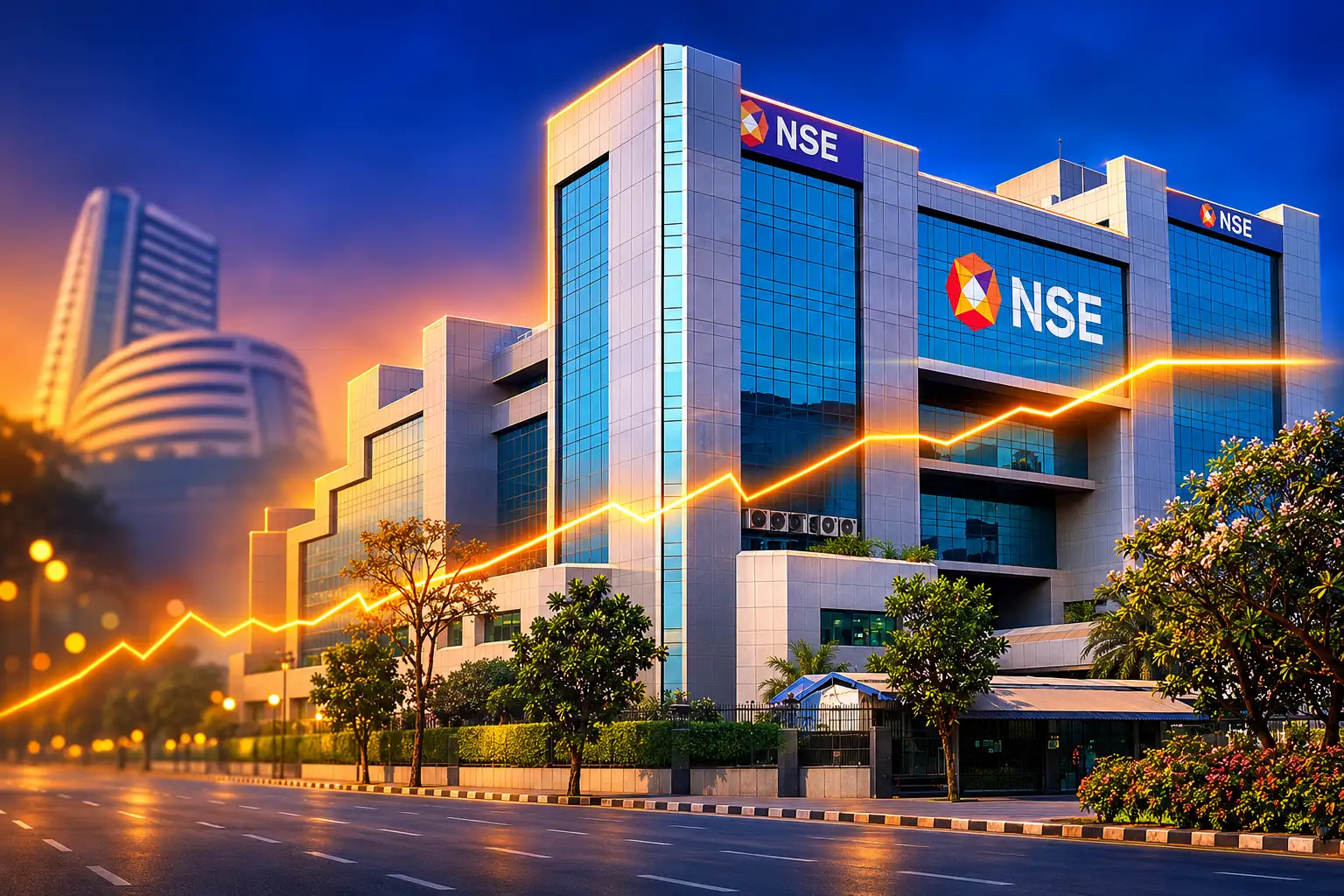
The Sensex ran up to 77,396.04 on Wednesday, November 4, then sat at 76,893.26 by 12:12 pm as IT shares sold off. Foreign funds had just booked their largest cash purchase of 2026, and Brent crude was at $103.2 a barrel.
That bid is the first cash-market proof of a turn in foreign stance toward India. It is arriving in banks, ITC and Bharat Electronics, while Tata Consultancy Services is still being sold.
Foreign Funds Booked Their Biggest Cash Day of 2026
Exchange data put net FII buying at Rs 6,836.81 crore on Tuesday, November 3. Gross purchases were Rs 20,970.51 crore and sales were Rs 14,133.70 crore, so the print is a two-way book with a heavy buy tilt, not a one-way flood. It beat the previous 2026 cash high of Rs 6,688.37 crore on September 2.
Monday’s net buying was Rs 3,114.68 crore. On October 30 it was Rs 3,598.54 crore. Across those three sittings the cash total is Rs 13,550.03 crore. V.K. Vijayakumar, chief investment strategist at Geojit Investments Limited, counted buying on five of the last six trading days and put that haul at Rs 18,661 crore. Between October 16 and November 3, foreign funds were net buyers in eight of twelve sittings, for about Rs 14,725 crore.
The NSDL depository ledger, which lags the exchange cash tape and includes primary deals, still shows the hole those three days sit inside. November equity inflows are Rs 7,810 crore through November 3, against Rs 287,335 crore of 2026 equity sales.
NSDL EQUITY FLOWS, 2026
| Month | Net equity (Rs crore) |
|---|---|
| March | -117,775 |
| July | +20,200 |
| August | +29,631 |
| September | -35,861 |
| October | -34,843 |
| November (to Nov 3) | +7,810 |
| 2026 total | -287,335 |
The monthly series of FPI equity flows on the Reserve Bank’s books tracks that same depository feed. July and August were the only two full months of 2026 that brought equity back in size. March’s Rs 117,775 crore outflow still dwarfs the November start.
Domestic Institutions Sold Into the Same Tape
Domestic institutional investors sold Rs 3,678.85 crore of shares on November 3, a third straight day of net selling, Choice Broking technical research analyst Deepesh Sarawagi said. They had sold Rs 392.20 crore on November 2, when FIIs bought Rs 3,114.68 crore.
For most of 2026 the tape ran the other way: foreign funds sold, domestic funds bought the dip. That swap is the construct change Vijayakumar is pointing at. It also means the latest bounce is being funded by overseas cash while local institutions take profits into strength, a mix that can vanish if the next FII print turns negative.
Sarawagi called the structure positive but stretched after the sharp advance, and he flagged Bank Nifty’s failure to clear its moving-average hurdles. Large-caps are the natural home for this bid because they can absorb size. Mid-caps do not have to lead for the Nifty to hold, but they also will not catch a foreign bid that is this concentrated.
Why TCS Falls When Foreign Money Returns
The working bet on Dalal Street is that a weaker global AI trade frees money for India. Vijayakumar has said that cooling is what helped foreigners return, and that large-cap prices plus earnings are the fundamental support. Bernstein’s November 2 note pushed the other way: a sell-off in AI stocks does not automatically become Indian equity demand, because hundreds of billions committed to private AI projects and corporate AI budgets are not sitting in cash ready to redeploy. India, the note said, has to earn the allocation on its own delivery.
WHERE THE AI ROTATION ARGUMENT SPLITS
- Geojit’s case: V.K. Vijayakumar says the weaker AI trade has already helped FIIs return, and that large-caps can take the next wave of that cash.
- Bernstein’s case: AI capex is locked into ventures and tech-company budgets, so a Nasdaq slide does not free a pool for India.
- The tape on Wednesday: Banks, ITC and Bharat Electronics led early; the Nifty IT index was the worst major sector by late morning.
That split showed up in the names. Early on November 4, State Bank of India rose 1.70 percent, ITC 1.52 percent, Bharat Electronics 1.15 percent and HDFC Bank 1.03 percent. By late morning the Nifty IT index was down 1.74 percent. TCS traded at Rs 2,438.80, down 2.41 percent, with HCL Tech off 1.8 percent and Infosys off 1.28 percent.
WEDNESDAY’S LEADERS AND LAGGARDS
- Early bid: SBI, ITC, Bharat Electronics and HDFC Bank carried the Sensex when the foreign cash was still lifting large-caps.
- IT offer: TCS, HCL Tech and Infosys gave the Nifty back its morning gains once Asia’s technology sell-off arrived.
- Index mix: FMCG had jumped 3.65 percent on Tuesday, so the same consumer names that foreigners sold for months were the first to be bid again.
NSDL’s early-October sector book still had IT as the only large-sector buyer, with a net Rs 2,599 crore, while financials saw Rs 8,634 crore of selling and the all-sector total was a net Rs 47,955 crore outflow. The November tape has flipped that mix. Foreign cash is now chasing banks and staples, and it is still treating Indian IT as part of the same AI complex that is being sold in Korea and Tokyo. An earlier AI-led Sensex bounce faded in the same oil-and-FPI mix, which is why a bid that leaves TCS behind is a different animal from a broad India allocation.
Brent at $103 Is Only a Step Down From $118
Brent, the global oil benchmark, traded 0.43 percent lower at $103.2 a barrel on Wednesday. Over the seven days to November 4 it was down 10.61 percent, after sitting in a $113-117 zone. US crude was at $95.59, down 0.51 percent on the day and 5.74 percent over those seven days. Brent is still up 62.48 percent in 2026.
India imports most of the crude it burns, so a $10-plus drop from last week’s zone eases the import bill, inflation worry and the current-account math that had been chasing foreigners out. It does not make oil cheap. Anil Singhvi, a market commentator, put the Nifty’s climb from about 22,200 toward 23,800 beside that same oil slide, and he said a return to $120-125 a barrel would put the recovery in trouble.
THE OIL PATH INTO WEDNESDAY
- Late October: Brent holds in the $113-117 zone and keeps a lid on Indian equities.
- November 2: Talks on a US-Iran settlement knock the price down toward $110 as the Nifty closes at 23,440.80.
- November 3: The slide continues, the Sensex jumps 1,225.07 points, or 1.62 percent, to 76,917.85, and the Nifty gains 370.05 points, or 1.58 percent, to 23,810.85, its first close above 23,800 since August.
- November 4: Brent prints $103.2, down 0.43 percent, and still sits more than 60 percent above the start of the year.
Peace talks between the United States and Iran, and a limited US strike on Iranian air defences earlier in the week, are what moved the barrel. Either headline can reverse. That is why the last oil-led Sensex rebound is the right comparison: the crude print has to keep falling, or the foreign bid loses its macro cover.
A Capital Gains Cut Would Not Close the Gap
Under the 2024 Budget, long-term gains on listed equity held more than 12 months are taxed at 12.5 percent above Rs 1.25 lakh, and short-term gains at 20 percent. A pre-Budget note attributed to Sebi has asked the government to scrap the long-term tax on foreign equity holdings. Finance Minister Nirmala Sitharaman said in Mumbai that investor complaints had grown louder and that she would consider them, without promising a cut, and she stressed domestic savers as well as foreign capital.
JM Financial has put a bull-case lift from scrapping the foreign long-term tax at $3-5 billion of FY28 inflows, against about $64 billion pulled from Indian equities since October 2024. A 2-point improvement in dollar returns does not refill a Rs 287,335 crore 2026 equity hole. Currency, yields, oil and relative earnings still set the allocation. The tax talk is a sweetener sitting under this week’s bid, not the bid itself.
Wednesday’s High Was Gone by Late Morning
The Sensex opened at 76,853.11 against Tuesday’s 76,917.85 close. The Nifty opened at 23,742.25. Both then ran to session highs of 77,396.04 and 23,946.35 before the offer returned. By 12:12 pm the Sensex was down 24.59 points, or 0.03 percent, at 76,893.26, and the Nifty was down 10.60 points, or 0.04 percent, at 23,800.25. Over the prior four trading days the Sensex had risen 3,671.82 points, or 5 percent, and the Nifty 1,112 points, or 4.89 percent. November 2 alone added 1,233.25 Sensex points.
Japan’s Nikkei 225 fell more than 4 percent and South Korea’s Kospi reversed an early 3.2 percent gain to trade 4 percent lower as technology shares sold off on AI-spending worries. US midterm counts were still coming in, with Democrats projected to take the House. Those are the global wires that hit Mumbai after the FII print had already done its work.
Vijayakumar’s morning note put the mood change on that foreign turn, and on large-caps as the place the cash can land.
#MarketOutlook For the Day by Dr. V.K. Vijayakumar, Chief Investment Strategist @Geojit_official#MarketUpdate #Nifty #Sensex #FII #StockMarketIndia #USElections #Midterms2026 #IndianStockMarket #LargeCaps #Trump #Geojit pic.twitter.com/eblQmm17UW
— Geojit (@Geojit_official) November 4, 2026
There is a distinct change in the market mood now. This has changed the market construct, too. The principal factor that has changed the market mood is the sudden reversal of the FII stance towards India. The sustained selling by FIIs have been weighing on the market for the last two years. This is changing now. In five out of the last six trading days, FIIs have been buyers in the market. They bought stocks for Rs 18,661 crores.
V.K. Vijayakumar, Chief Investment Strategist, Geojit Investments Limited
Bernstein’s kicker is the other half of the same morning: “India’s next chapter cannot be written around someone else’s disappointment. It has to be earned through its own delivery.” Three cash days of FII buying and a $103.2 barrel got the Sensex to 77,396.04. TCS at Rs 2,438.80, down 2.41 percent, is what the same tape looked like once Asia’s AI sell-off arrived.
Disclaimer: This article is news reporting and analysis of market prices, fund-flow prints and named-strategist comments, and it is for information only. It is not investment advice, a recommendation to buy or sell any share, index, derivative or commodity, or a forecast of returns. Readers should consult a SEBI-registered investment adviser or their own broker and tax professional before acting on any figure or view here. Index levels, FII and DII cash numbers, NSDL ledgers and oil prices reflect the sources as dated in the piece and will change in later sessions.

ADNOC Ship Hit in Hormuz Leaves One Crew Missing

SpiceJet’s Rs 5,500 Crore Plan Follows a Rescue That Failed

Hasina’s Return Fight Sets Fire to Yunus’s Bank

Bancroft Recants the 2018 Inquiry and Names the Team

Adhikari Ties the Saffron Saree Row to School Licences

Clancy Juror Says the Holdout Never Cited Evidence

The iPhone 18 Pro Max Splits Apple’s Fall in Two

OpenAI Calls GPT-6 Astra AGI Then Locks Its Exploits

Trump Claims Hormuz Control as Oil Holds Near $96

Russia Closes the Goethe-Institut Berlin Tried to Save

 NEWS2 months ago
Clancy Juror Says the Holdout Never Cited Evidence
- NEWS3 months ago
The iPhone 18 Pro Max Splits Apple’s Fall in Two
- NEWS3 months ago
OpenAI Calls GPT-6 Astra AGI Then Locks Its Exploits
- BUSINESS3 months ago
Trump Claims Hormuz Control as Oil Holds Near $96
- LIFESTYLE3 months ago
Russia Closes the Goethe-Institut Berlin Tried to Save
- AUTO3 months ago
Volkswagen’s Job Cuts Leave Four Plants Without Cars
- NEWS3 months ago
Dyson Puts Nurovi Robots on Sale Without the UV Flagship
- BUSINESS2 months ago
US Destroys Five Iranian Tankers as the Shock Hits Jordan










