BUSINESS
Modi Leaves Bishkek as Pakistan Takes the SCO Chair
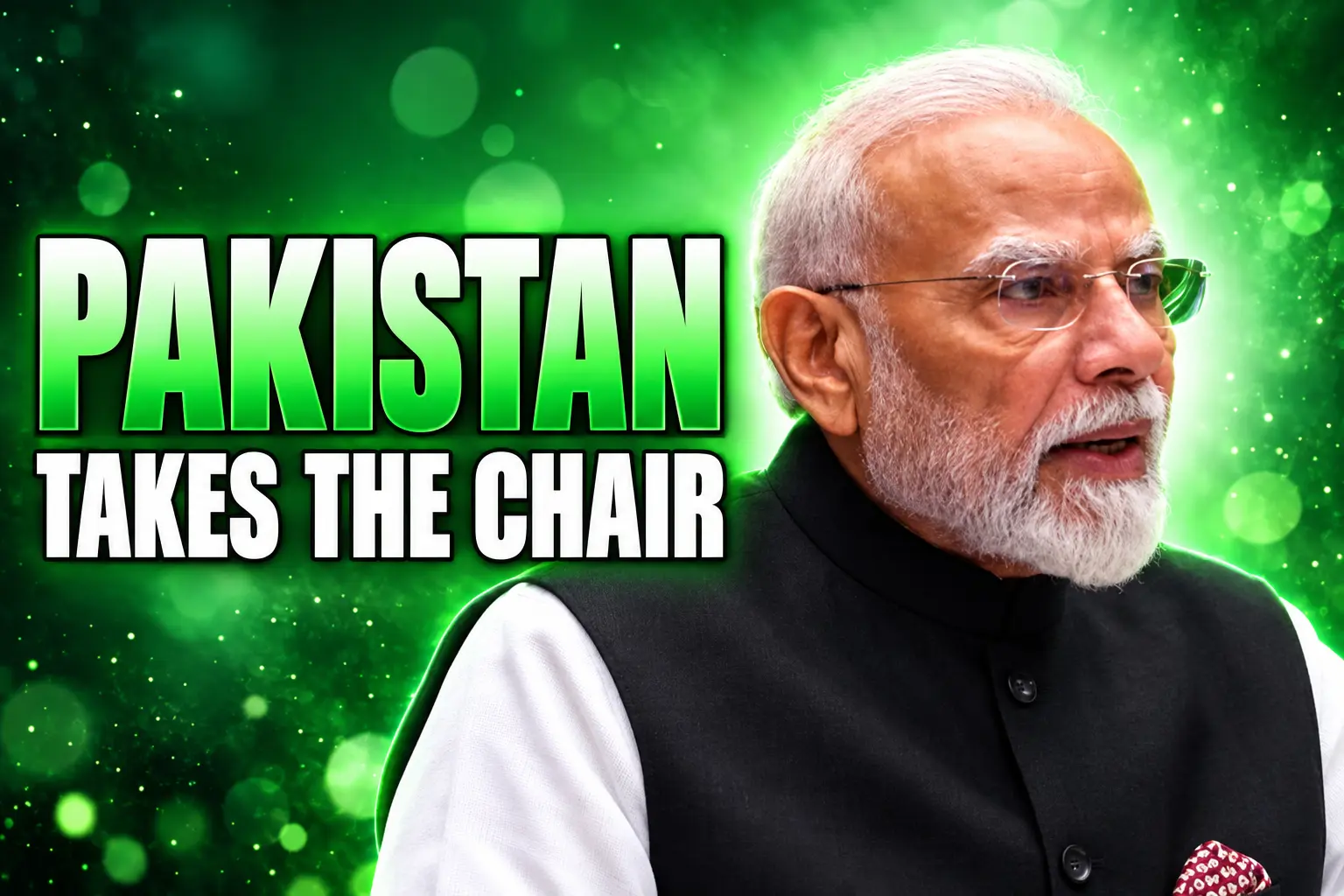
Modi flew home from the Bishkek SCO summit with English in the Charter and a Tashkent trade clock, as Pakistan took the 2026-27 chair.

Prime Minister Narendra Modi left Bishkek on Tuesday after the 26th SCO summit, hours before Pakistan took the group’s chair for 2026-27. The two-day Council of Heads of State sitting, hosted by Kyrgyz President Sadyr Zhaparov, closed a four-day swing that began in Tashkent and ended with a family photograph that also held Chinese President Xi Jinping, Russian President Vladimir Putin and Pakistani Prime Minister Shehbaz Sharif.
The flight home is being sold as the end of a full diary. The heavier fact is what the diary now hands off: India leaves with English written into the SCO Charter and a priced Uzbekistan package, and Pakistan runs the grouping until the 2027 heads of state meeting.
The Chair That Passed to Pakistan
China’s foreign ministry, in its readout of the Bishkek sitting, said the meeting decided that Pakistan will assume the rotating presidency of the Shanghai Cooperation Organisation for 2026-27. Sharif used the same hall to set his year’s theme as “Turning Vision into Action, Connectivity, Innovation and Shared Prosperity,” and to put water at the centre of his first public argument as incoming chair.
Water is the lifeblood of our region that sustains millions of lives, nourishes our lands and secures the very future of our coming generations. It must never be weaponised or used for political coercion.
Shehbaz Sharif, Prime Minister of Pakistan, SCO Plus meeting in Bishkek
That line landed a day after a Permanent Court of Arbitration finding on the Indus Waters Treaty, and it was aimed at Delhi as much as at the room. Indian briefings of Modi’s own schedule list talks with Zhaparov, Putin, Iranian President Masoud Pezeshkian, Armenian Prime Minister Nikol Pashinyan, Tajik President Emomali Rahmon and Lao President Thongloun Sisoulith. They do not list a meeting with Sharif. The two men still share the official photograph, and they will share the SCO calendar for a year.
THE BISHKEK LEDGER
- The group: Ten members now sit in the SCO, which is marking 25 years since it was founded in 2001.
- The chair: Kyrgyzstan handed the rotating presidency to Pakistan for 2026-27, with the next heads of state meeting due in 2027.
- The cultural title: Lahore was named the SCO Tourism and Cultural Capital for 2026-27, a rotating label India last held when Varanasi had it in 2022-23.
- The next Delhi date: Xi and Putin are due in New Delhi on September 12 and 13 for the BRICS summit, 10 days after Modi’s return.
On Wednesday morning, while Indian wires were still writing the departure, Sharif’s office was already posting a separate Kyrgyz haul: a claimed lift in Pakistan-Kyrgyz trade toward $200 million and 16 MoUs witnessed with Zhaparov. The incoming chair did not wait for the family photo to fade.
What the Bishkek Declaration Put on Paper
Modi told the heads of state that last year’s Indian pitch, the three pillars of Security, Connectivity and Opportunity, now had to move from vision to results. The official English text released with the speech puts the demand in one line.
The time has come to move these three pillars beyond vision and translate them into concrete outcomes.
Narendra Modi, Prime Minister of India, 26th SCO Summit, Bishkek
The PMO said he called for committed action to dismantle terror finance, recruitment, radicalisation and safe havens, and that there should be no double standards in the fight against terrorism. He said that in a room that included Sharif. He also tied Eurasian security to peace in Afghanistan and said conflicts cannot be settled on the battlefield. That terror pitch on this same swing had already been laid down before he reached the Bishkek dais.
Indian briefings later said member states agreed that double standards in the fight against terrorism were unacceptable, and that connectivity work has to respect sovereignty and territorial integrity, a clause Delhi uses when Chinese corridor projects sit on disputed ground. The same declaration package, as described in those briefings, opposed unilateral coercive sanctions and voiced support for Iran’s sovereignty after the war in West Asia. Modi had told the sitting that a fight in one region no longer stays there, because it hits energy security, sea trade and supply chains, and that the Global South pays first.
The PMO’s own tally of the sitting is narrower than the political noise around the photograph. It said that besides the Bishkek Declaration, leaders adopted four MoUs and over twenty decisions and statements, spanning climate, nuclear safety, energy conservation and drug control. India’s readout does not pretend that package was written in Delhi.
English Joins Chinese and Russian
The result Delhi is willing to put its name on is institutional. The PMO said India led and supported several items that made the Bishkek Declaration, starting with English in the SCO Charter as an official language. Until this week the grouping’s official pair, in the Indian readout of the charter change, had been Russian and Chinese. The protocol amends the Charter of June 7, 2002.
INDIA’S CHIPS IN THE CHARTER
- Official language: English is written into the SCO Charter as an official language, a long Indian ask that now sits beside Russian and Chinese.
- Civilisation forum: India will host the first SCO Civilisation Dialogue Forum later this year, a proposal Delhi tabled last year.
- Youth science: The Young Scientist Forum is locked in as a regular track, one of the youth items Kyrgyzstan’s chair year had already been pushing.
- Young authors: The Young Author’s Conclave, another Indian-backed forum, is named in the same PMO list of declaration items.
- Security centre: Leaders approved regulations for a Universal Centre for Countering Challenges and Threats to the Security of SCO Member States, plus rules for an SCO anti-drug centre.
Those security bodies are not a court, and they are not a verdict on any one member. The PMO presents the regulations as a way to make joint work on terrorism, extremism, organised crime and narcotics more practical. Xi, in the Chinese readout, said Beijing supports the early opening of the SCO’s four security centres and also called for action against the “three forces” of terrorism, separatism and extremism. The language overlaps. The enforcement chain does not run through New Delhi.
Offstage, a Full Bilateral Week
Modi’s own wrap of the Kyrgyz stop did not linger on the family photograph. It lingered on the meetings that never made the plenary agenda.
https://x.com/narendramodi/status/2094740496556159380
He wrote that the various meetings on the sidelines of the SCO summit “will lead to substantive benefits for India,” and that he had also shared a roadmap as the grouping plans for the next 25 years. He paid homage at the Mahatma Gandhi memorial in Bishkek, met the Indian community, and on Monday evening sat through the opening of the 6th World Nomad Games, which Zhaparov staged on Kyrgyz Independence Day. The games filled the arena. They did not set the chair.
THE FOUR-DAY SWING
- August 29, 2026: Lands in Tashkent for a two-day state visit at the invitation of President Shavkat Mirziyoyev, with the SCO sitting still two days away.
- August 30, 2026: Closes the Uzbekistan visit with a Comprehensive Strategic Partnership, then flies to Bishkek and arrives for the Kyrgyz leg.
- August 31, 2026: Holds one-to-one talks with Zhaparov, Putin, Pezeshkian and Pashinyan, and attends the World Nomad Games opening.
- September 1, 2026: Speaks at the heads of state sitting, meets Rahmon and Sisoulith on the margins, greets Xi before the group photograph, signs the Bishkek Declaration, and leaves for New Delhi.
The Laos meeting is easy to skip in a China-Russia photo. Sisoulith leads a dialogue partner, not a member, and Modi still used the margin to talk up bilateral links. The Armenia meeting sits in the same column: a Caucasus file that the SCO plenary will not carry for India. Putin’s one-to-one, held on Monday, is the one the Kremlin system will keep working all the way to the Delhi BRICS table. Pezeshkian’s slot is the West Asia file in human form, after a year in which the Bishkek text, as Indian briefings described it, felt it had to say something about Iran.
A reply-thread jab that Modi was ignored in Bishkek does not survive that list. What does survive is simpler. He met almost every leader who could sign a one-to-one paper, and he did not meet the man who now chairs the group.
Tashkent Puts a Five-Billion-Dollar Target on Paper
If Bishkek was the stage, Tashkent was the invoice. The PMO’s outcome list for the Uzbekistan visit is dated August 30, before the SCO gavel even opened, and it is the only stretch of the tour with a public price, a partnership upgrade and a signed stack. The 11 agreements signed in Tashkent sit beside five separate announcements, including a commercial deal to let Indian UPI apps scan Uzbekistan’s national UZQR codes.
THE TASHKENT HAUL
| Item | What closed |
|---|---|
| Partnership | Strategic Partnership raised to a Comprehensive Strategic Partnership, 15 years after the original strategic tag |
| Trade clock | Target of $5 billion by 2030, from a relationship Modi said had already crossed $1 billion |
| Signed texts | 11 agreements, covering culture, archives, Ayurveda, mining, tourism, diplomacy training, finance talks, environment, higher education and a Gujarat-Samarkand pairing |
| Digital payments | NPCI International Payments Ltd and Uzbekistan’s National Interbank Processing Centre agree to let Indian UPI apps scan UZQR for merchant payments |
| Aral Sea | $1 million Indian grant for afforestation, plus 100 Lal Bahadur Shastri Hindi scholarships and an ICCR Sanskrit chair in Tashkent |
The mining memorandum is the quiet one. It puts India’s mines ministry across the table from Uzbekistan’s geology ministry on mineral resources, the channel Indian officials have used in public to talk about a long-term uranium supply. That supply is not on the signed list as a finished fuel contract. The partnership paper is. So is the tourism programme for 2026-28 and the cultural exchange programme for 2026-30.
Modi also used Tashkent for memory politics that cost little and travel well: a tribute to Lal Bahadur Shastri at the Shastri Memorial, and a stop at the Mahatma Gandhi Centre at Tashkent State University of Oriental Studies. Those stops do not move uranium. They are how Delhi keeps a Central Asian visit from looking like a single-issue minerals run.
Ten Days to a Delhi BRICS Table
The photograph that will be recycled is the one with Xi and Putin. Modi greeted both men before the group picture at the Yrys Ordo Congress Hall, a short, staged contact that follows last year’s three-way frame at the Tianjin sitting. It is not a new alliance, and it is not a thaw with a date-stamp. It is the minimum required to keep talking before the same two men land in India.
Xi’s own Bishkek speech, titled “Toward Higher Quality Development of the Shanghai Cooperation Organization,” was an economic offer dressed as anniversary language. He said China will build an international AI application cooperation centre with SCO countries, set up a China-SCO port economic cooperation centre in Tianjin, and carry out 100 technological cooperation projects with other SCO countries in the next three years. He also tied the grouping to Belt and Road work and to a decade-long strategy launched at Tianjin in 2025. That is a different SCO from the one in Modi’s three-letter slogan.
Delhi’s bet, visible in the sideline stack rather than in those 100 projects, is that a seat at this table is still worth the photograph with Sharif. The grouping now takes in Belarus and Iran as full members alongside the original Central Asian core, Russia, China, India and Pakistan. It gives Modi a room in which he can talk to Putin and Xi without a Western script, and a room in which he can say the word terrorism while Pakistan’s prime minister sits a few chairs away. It also gives Islamabad a year with the gavel, Lahore a cultural title, and Beijing a list of industrial projects that do not need Indian co-authors.
Modi is back in New Delhi. The SCO year now runs through Pakistan. Xi and Putin are due on September 12 and 13, which means the Bishkek photograph has a sequel on Indian soil before the month is out.
Frequently Asked Questions
Which Countries Are Members of the SCO?
The Shanghai Cooperation Organisation has ten members: Belarus, China, India, Iran, Kazakhstan, Kyrgyzstan, Pakistan, Russia, Tajikistan and Uzbekistan. It was founded in 2001 by China, Kazakhstan, Kyrgyzstan, Russia, Tajikistan and Uzbekistan, and India became a full member in 2017, the same expansion round that brought in Pakistan. Iran and Belarus joined later as the group moved past its original Central Asian core. Dialogue partners, including Laos, sit in some of the wider sessions but do not hold the gavel.
Why Did the SCO Add English as an Official Language?
Indian briefings of the Bishkek charter protocol said English was added as an official and working language of the grouping, ending a two-language official setup that had used Russian and Chinese. The change is written into amendments to the SCO Charter of June 7, 2002, and the PMO listed it among Indian-led items in the Bishkek Declaration. For Indian diplomats it is a working-language win, because it lets Delhi operate in the house tongue it already uses in most other multilateral rooms.
What Is the SCO Universal Centre for Security Threats?
Leaders in Bishkek approved regulations for the Universal Centre for Countering Challenges and Threats to the Security of SCO Member States, a body meant to tighten joint work on terrorism, extremism, organised crime and other cross-border threats, including information sharing. They also approved rules for an SCO anti-drug centre. These are standing SCO structures, not an Indian-run office, and they will only matter if member services actually pass each other usable leads.
When Does Pakistan Chair the SCO, and What Comes After Bishkek?
Pakistan holds the rotating chair of the SCO Council of Heads of State for 2026-27 and is due to host the next heads of state summit in 2027. Sharif has already tagged the year with a theme on connectivity, innovation and shared prosperity, and the grouping named Lahore its Tourism and Cultural Capital for the same term. That cultural title has rotated since 2022, after Varanasi, Almaty, Qingdao and Cholpon-Ata.
Modi’s aircraft left a capital that had just finished an anniversary summit and a Nomad Games opening night. The chair that matters for the next year is not in Bishkek. It is in Islamabad, and the next time Xi and Putin share a frame with him, the backdrop is supposed to be New Delhi.

Eiffel Tower Managers Hid Women for a Guru’s Visit

Russia Ends the Kyiv Pause With Missiles After Envoys Leave

Putin Meets Modi With Jets and Reactors Under a Tariff Cloud

iOS 27 Folds Pro Camera Tools Into the Default App

Adobe Bets on Its Experience Cloud Chief as CEO

The iPhone 18 Pro Max Splits Apple’s Fall in Two

OpenAI Calls GPT-6 Astra AGI Then Locks Its Exploits

Trump Claims Hormuz Control as Oil Holds Near $96

Russia Closes the Goethe-Institut Berlin Tried to Save

Volkswagen’s Job Cuts Leave Four Plants Without Cars

 NEWS2 weeks ago
The iPhone 18 Pro Max Splits Apple’s Fall in Two
- NEWS1 week ago
OpenAI Calls GPT-6 Astra AGI Then Locks Its Exploits
- BUSINESS2 weeks ago
Trump Claims Hormuz Control as Oil Holds Near $96
- LIFESTYLE2 weeks ago
Russia Closes the Goethe-Institut Berlin Tried to Save
- AUTO1 week ago
Volkswagen’s Job Cuts Leave Four Plants Without Cars
- NEWS2 weeks ago
Samsung Splits Galaxy Book6 With a $799 Core 3 Twin
- BUSINESS2 weeks ago
Japan’s 3 Percent Yield Reprices Government Debt Worldwide
- BUSINESS2 weeks ago
India Inc’s 2026 Exits Leave the Hard Jobs Open