
NEWS
Trump’s Economic D-Day Echoes Failed Max Pressure Playbook
Trump’s crushing economic operation against Iran revives tactics that cut oil exports only temporarily.

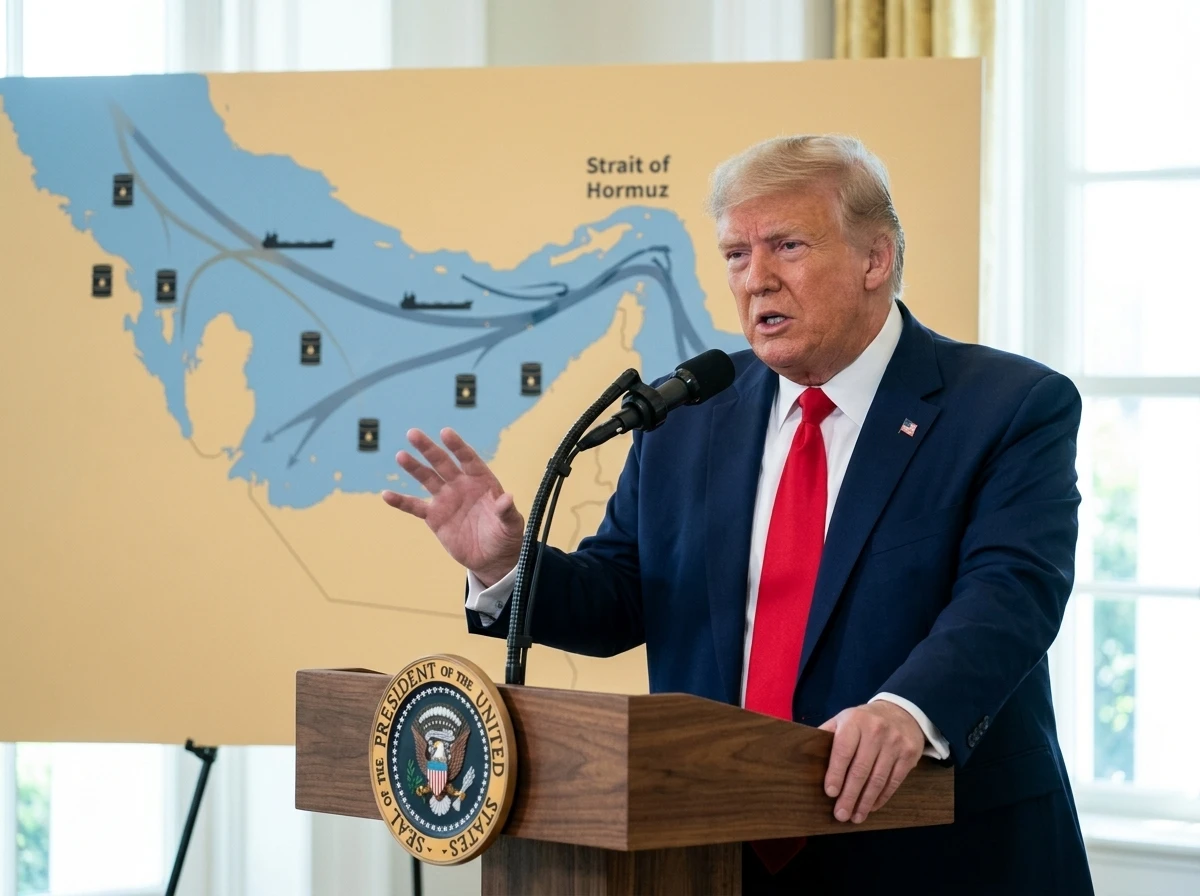
U.S. President Donald Trump announced the “MOST CRUSHING ECONOMIC OPERATION EVER TAKEN AGAINST ANY COUNTRY” against Iran on August 19, calling it Economic D-Day and warning any nation offering financial or commercial lifelines faces tremendous consequences. Iranian Foreign Minister Abbas Araghchi dismissed the move Thursday as a diversion from U.S. domestic problems as the war entered its sixth month with no deal in sight.
The pledge extends Operation Economic Fury, the administration’s pressure campaign since April, and arrives after the UAE suspended all trade and financial dealings with Tehran following reported missile incidents. Brent crude held near $92 a barrel while shipping through the Strait of Hormuz stayed far below pre-war levels.
What Trump’s Economic Warfare Pledge Threatens
In a Truth Social post, Trump said oil smuggling, swap lines, cash transfers, exchange houses, ship registries and front companies “all need to stop NOW.” He argued Iran’s navy, air force and military production are destroyed and its currency worthless, leaving the regime hanging by a thread. Any country whose banks, businesses, airports or government entities provide a lifeline will itself face economic punishment.
This will be an ECONOMIC D-DAY, and we need all of our Allies to stand with the United States of America to isolate, and defeat, the Iran threat.
Donald Trump, Truth Social post, August 19 2026
The list of targets covers the full stack of workarounds that kept Iranian trade moving after earlier rounds of sanctions. Swap lines and exchange houses move value when formal banking channels close. Ship registries and front companies obscure ownership of cargoes. Cash transfers fill gaps when wire systems freeze. By naming each channel, the pledge signals that secondary pressure will reach beyond state oil buyers to the intermediaries that make discounted barrels and dual-use goods move.
Iran’s Deputy Foreign Minister Kazem Gharibabadi replied that the military war failed so the next failure has been renamed economic war. China called for diplomatic solutions, saying sanctions would not help.
Maximum Pressure Already Tried and Partly Outrun
Trump’s first-term maximum pressure campaign after exiting the 2015 nuclear deal drove Iranian oil exports down sharply for a period. Reserves fell and the economy contracted. Yet a Stanford analysis found Iranian oil and non-oil exports later rebounded and exports rebounded past JCPOA levels by 2024 as enforcement eased, China became the dominant buyer, and Iran built evasion infrastructure through ship-to-ship transfers and third-country hubs.
A Congressional Research Service review of the effects of successive maximum pressure rounds notes that sanctions damaged Iran’s economy and reduced resources for some activities, yet Iranian regional behavior, missile work and nuclear hedging continued. Tehran adapted. The current wartime version aims higher by targeting remaining enablers, but the same adaptation tools remain in place.
That history sets the bar for Economic D-Day. Cutting volumes once did not lock in lasting isolation. When enforcement loosened, exports recovered past the levels seen under the nuclear deal. China stepped in as the dominant buyer. Evasion infrastructure, already built, does not vanish because a new label is applied to the campaign. The wartime overlay adds military damage and a Gulf trade cut, yet the rebound pattern remains the benchmark against which any crushing claim will be judged.
| Period | Brent Crude Peak or Level | Context |
|---|---|---|
| Pre-war late Feb 2026 | Around $70-72 | Baseline |
| Early March 2026 | Above $100, peak near $126-139 | Hormuz shock, largest monthly rise on record |
| Late March 2026 | Around $118 | Peak disruption phase |
| July 1 2026 | $71.57 | Temporary easing after MOU |
| Late July 2026 | Back above $100 then $96 | Renewed tensions |
| August 20 2026 | Near $91-92 | Stalemate assessment |
Oil producers outside the conflict zone booked higher profits in the early quarters. Iran itself saw temporary revenue lifts from elevated prices on remaining barrels even as volumes fell.
Hormuz Stays the Real Choke Point
Before the war the Strait of Hormuz carried roughly one-fifth of global oil and large LNG volumes, with nearly 20 million barrels of oil daily in some tallies including products. Iran moved from retaliation to claiming sovereignty over the waterway and requiring approval for transit. Commercial traffic collapsed more than 90 percent at points. Recent Kpler and Lloyd’s data show single-digit daily commodity vessel transits on some days and weekly totals still well below norms.
- Pre-war daily traffic: around 130 ships in some counts
- Post-MOU peak: roughly 70
- Recent weekly: 73 then lower
- Current pattern: selective Iranian approvals plus U.S. pressure keep most operators away
Iranian officials have called control of the strait equivalent to multiple nuclear weapons in leverage terms. That choke, not another sanctions list, remains Tehran’s strongest card against Washington and the Gulf states that depend on the waterway.
The traffic numbers show why. Even after the memorandum of understanding briefly lifted dual blockades, volumes never returned to the pre-war baseline of around 130 ships a day. A post-MOU peak near 70 still left the waterway far below normal. Weekly totals that slipped from 73 to lower figures underline how selective approvals and insurance risk keep operators away. Sanctions can squeeze balance sheets. Hormuz squeezes the physical movement of oil and gas that markets price in real time.
UAE Trade Cut Tests the New Pressure
The United Arab Emirates, previously one of Iran’s largest commercial partners, suspended all trade and financial dealings after accusing Tehran of firing two ballistic missiles toward its territory on August 18. One fell outside territorial waters, the second inside. Iran denied the launches and called the claim a false flag. Abu Dhabi had already accused Iran of targeting its tankers in recent weeks after a quieter stretch since May.
Pre-war non-oil trade ran about $27 billion annually in some reports, with UAE exports to Iran around $19-22 billion and Iranian exports the other way roughly $6-7 billion. The UAE supplied more than 30 percent of Iran’s imports in 2024 by one WTO-linked measure. Closing that channel removes a major re-export and finance hub. Whether other Gulf or Asian intermediaries fill the gap will show how far the isolation threat travels.
| Flow | Pre-war scale | Role |
|---|---|---|
| UAE exports to Iran | Around $19-22 billion | Dominant leg of bilateral trade |
| Iranian exports to UAE | Roughly $6-7 billion | Smaller reverse flow |
| Total non-oil trade | About $27 billion annually | Combined bilateral channel |
| UAE share of Iran imports | More than 30 percent in 2024 | Major supply and re-export hub |
The imbalance matters for enforcement. The larger leg was goods and finance moving from the UAE into Iran, not the other way around. Shutting it removes a convenient third-country platform that earlier sanctions cycles left partly open. If rival hubs absorb the same cargoes and payments, the cut becomes a rerouting story. If they hesitate under the secondary-threat language, the UAE decision becomes the first major test of whether Economic D-Day reaches beyond rhetoric.
Third Countries Face the Real Choice
Trump’s language targets any financial institution, business, airport or government entity still linked to Iran. China is the decisive remaining buyer of Iranian crude and a key logistics partner. Beijing’s foreign ministry said pressure will not solve the issue and urged diplomacy. Analysts note that full Chinese compliance would be required for the “crushing” label to stick, and Beijing has previously absorbed secondary-sanction risk for discounted barrels.
Gulf states sit in a tighter spot. Several joined early retaliatory actions after Iranian missiles hit their territory. Now they face Iranian warnings against assisting U.S. forces plus the economic hit from disrupted shipping and higher insurance. Oman has hosted prior talks and drawn Trump threats. The pattern from earlier sanctions cycles repeats: secondary pressure works only when major traders calculate the U.S. market is more valuable than the Iranian one.
That calculation is not uniform. China weighs discounted barrels and logistics ties against the risk of broader U.S. financial friction. Gulf governments weigh security alignment and insurance costs against residual commercial links and the daily reality of Hormuz risk. The pledge raises the price of staying open to Iran. It does not automatically close every alternative route that Stanford and CRS reviews described after prior rounds.
Iran Signals a Shift Toward Offense
Six months in, Iranian commanders and Supreme Leader Mojtaba Khamenei have publicly prioritized strengthening deterrence and preparing large-scale offensive operations while retaining Hormuz control. Analysts read the rhetoric as a bet that Tehran holds enough leverage to push its demands and break the diplomatic stall. Missile and drone stockpiles remain partially reconstituted in underground sites despite heavy early losses.
- February 28 2026: U.S.-Israeli Operation Epic Fury begins, killing Ali Khamenei and many commanders
- March-April: Iranian missile and drone waves across the Gulf and Israel; Hormuz effectively closed; brief April ceasefire
- June 17: Memorandum of understanding signed aiming at war end within 60 days; dual blockades lifted temporarily
- July 8: Ceasefire collapses after Iranian attacks on commercial vessels asserting sovereignty
- August: UAE severs trade; Trump announces Economic D-Day; Iran talks offense
Casualties run into the thousands on the Iranian side by multiple tallies, with hundreds of U.S. and Israeli personnel killed or wounded and civilian deaths across the Gulf states. The U.S. war cost estimate stood at $113 billion by June, with large new Pentagon budget requests.
The sequence ties the economic pledge to a stalled military and diplomatic track. Operation Economic Fury has run since April. The June memorandum aimed at ending the war within 60 days and briefly eased blockades. The July collapse returned the fight to vessels and sovereignty claims. By August the UAE trade cut and the Economic D-Day language arrived together with Iranian talk of offense. Pressure tools are stacking because the timeline has not produced a settlement.
Sanctions Adaptation Still Blunts Full Isolation
The Stanford finding that exports later rebounded past JCPOA levels by 2024 and the CRS note that regional behavior and nuclear hedging continued both point to the same mechanism. Sanctions raise costs and shrink formal channels. They do not erase geography, land borders, or the incentive for discount buyers to stay in the market. Ship-to-ship transfers and third-country hubs were built for that purpose. Those tools predate the current war and remain available even after military losses and a currency slide.
Trump’s claim that the regime hangs by a thread rests on destroyed forces, worthless currency, and severed lifelines. Former Iranian central bank adviser Mehrdad Sepahvand’s CNBC assessment pushes the other way: shops stocked, no bank runs, long practice under sanctions, and a resource base that makes total cutoff nearly impossible. Public confidence is weakened but not collapsed. The gap between those two pictures is the practical limit on how crushing any single announcement can be without sustained third-country compliance.
- First-term pressure: sharp export drop, reserve losses, contraction, then rebound as enforcement eased
- Evasion layer: ship-to-ship transfers, third-country hubs, China as dominant buyer
- Wartime add-ons: military damage, Hormuz choke, UAE trade suspension, secondary threats to enablers
- Open variable: whether major traders judge the U.S. market worth more than residual Iran ties
Economic D-Day tries to close the enabler gap that earlier rounds left open. The adaptation record shows why that gap mattered. Without Chinese purchase shifts and without other hubs refusing the rerouted trade the UAE once carried, the new campaign risks repeating the pattern of pain without the political breakthrough its authors seek.
Both Capitals Absorb Costs Without a Settlement
The bill is already visible on both sides of the ledger. Oil’s early surge delivered the largest energy-supply shock since the 1970s, with Brent moving from the pre-war $70-72 range to peaks near $126-139 before settling near $91-92 in the stalemate phase. Asian importers faced shortages and rationing. Fertilizer, aviation and tourism took hits. The U.S. war cost estimate had reached $113 billion by June, alongside large new Pentagon budget requests and hundreds of U.S. and Israeli personnel killed or wounded.
Iran has absorbed thousands of casualties by multiple tallies, heavy early losses to missile and drone stocks, and the loss of a commercial partner that supplied more than 30 percent of its imports. Elevated prices on remaining barrels offered only partial offset. Land borders and alternative customers still blunt a total cutoff, yet the cumulative strain is real. Neither capital has translated that strain into a durable bargain. The June memorandum’s 60-day aim lapsed into the July collapse and the August escalation ladder.
Araghchi’s diversion framing, tying the campaign to U.S. domestic problems and debt past $40 trillion, and Trump’s thread metaphor describe the same stalemate from opposite corners. Each side highlights the other’s weakness. Markets price the unfinished fight in freight risk and crude levels that remain well above the pre-war baseline. The leverage contest continues because Hormuz, discount buyers, and secondary-sanction calculus have not aligned into a single decisive squeeze.
Markets and Consumers Already Feel the Bill
Oil’s early surge delivered the largest energy-supply shock since the 1970s. Asian importers faced shortages and rationing. Global fertilizer, aviation and tourism took hits. Prices later eased then climbed again with each diplomatic setback. Current levels near $92 remain well above the pre-war $70s, feeding inflation concerns as U.S. elections approach. Trump faces domestic scrutiny over consumer costs and military toll even as he doubles down on isolation.
Former Iranian central bank adviser Mehrdad Sepahvand told CNBC that shops remain stocked, bank runs have not materialized, and the economy has long practice adapting to sanctions. Geography, land borders and resource base make total cutoff nearly impossible. Public confidence is weakened but not collapsed. That assessment collides with Trump’s claim the regime hangs by a thread.
Araghchi framed the new campaign as diversion from America’s economic problems, including debt now past $40 trillion. Whether the latest pressure wave forces a negotiating shift or simply adds another layer of cost for third parties will become clearer in the coming weeks as shipping data and Chinese purchase patterns update. The historical record shows sanctions can hurt without delivering the political outcome their authors seek when the target retains geographic leverage and alternative customers.

-
 TECH1 year ago
Where Garmin Watches are Made and How They are Assembled
-

 AUTO2 months ago
Tesla’s Roadster Is ‘a Few Weeks Away,’ Says Its Chief Designer
-
 NEWS10 years ago
Samsung Releases Galaxy Note7 TV Ad as Reddit AMA Leaks Specs
-
 NEWS10 years ago
Android 7.0 Nougat Rolls Out To Nexus Devices With New Emoji, Features
-
 FINANCE9 years ago
Cardano Price Surges as ADA Enters the Crypto Top Ten List
-
 NEWS10 years ago
Pre-Order the First Camera Made for Facebook Live Streaming Video
-
 FINANCE1 year ago
Binance Suspends Trading and Withdrawals for a System Upgrade
-
 FINANCE9 years ago
RChain Price Jumps Nearly 150% to a New All-Time High of $2.03