
NEWS
UAE trade freeze hits Iran harder than the missile scare
After a brief missile alert and Iranian denial, Abu Dhabi halted all commerce with Tehran, cutting a key import channel worth tens of billions while Hormuz.

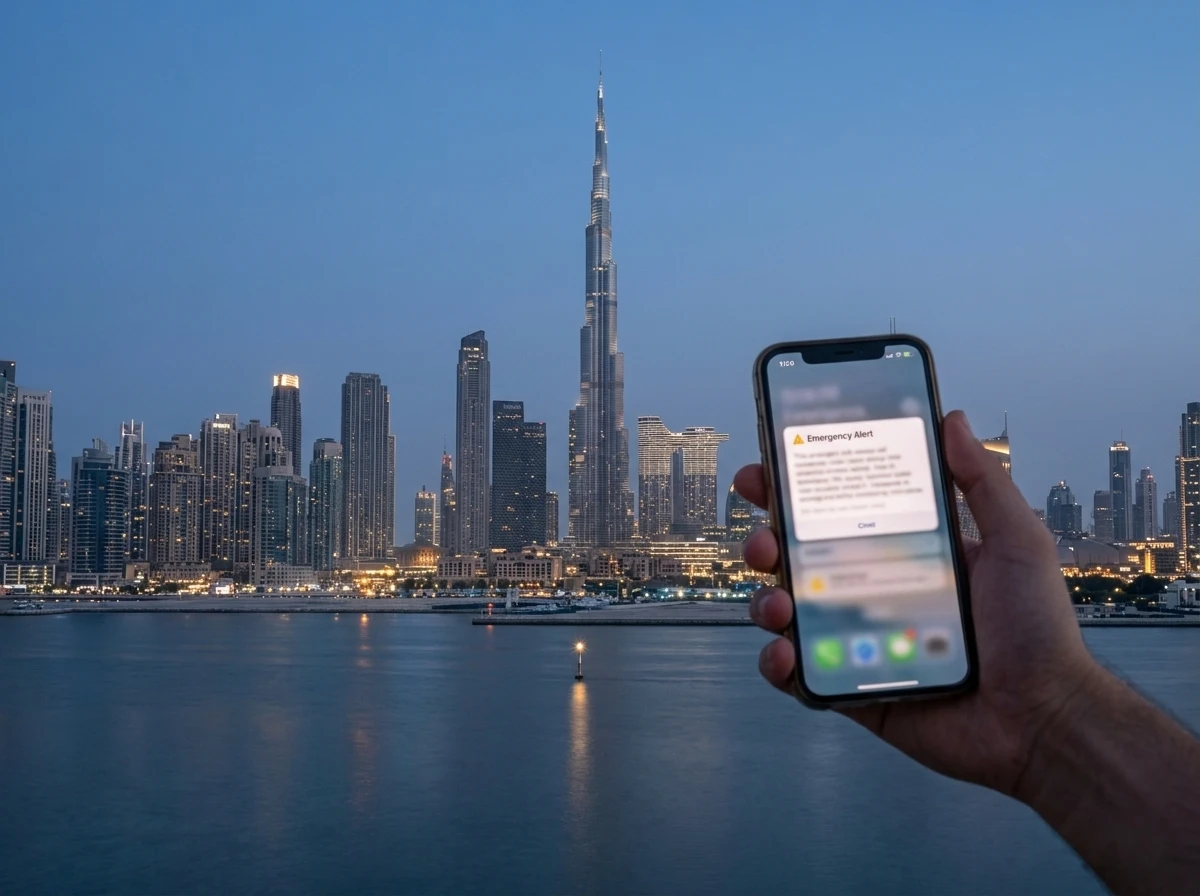
Residents across the United Arab Emirates received a missile threat alert at about 6:52 p.m. local time on Tuesday and were told to seek the nearest secure building. Fifteen minutes later the Interior Ministry lifted it and said the situation was safe. UAE air defence systems had tracked two ballistic missiles launched from Iran; one fell outside territorial waters and the second inside them. Both landed in the sea. Authorities later assessed the missiles were aimed at maritime traffic.
Hours after the all-clear, Abu Dhabi suspended all trade, commercial exchanges and financial transactions with Iran until further notice. The move landed as a 60-day window for U.S.-Iran talks under a June memorandum expired without progress and the Strait of Hormuz remained contested.
The sequence compressed a security scare, a public denial, and a sweeping commercial break into a single evening and night. What began as a phone alert ended as an indefinite freeze on the Gulf’s busiest remaining channel for Iranian goods and payments.
Fifteen minutes of shelter and two missiles in the sea
The National Emergency Crisis and Disaster Management Authority and the Interior Ministry pushed the phone alert simultaneously. People in Dubai and other emirates were told to stay away from windows and open areas. The Defence Ministry confirmed detection of the two ballistic missiles and said forces remained on high alert.
- August 18, ~6:52 p.m. UAE time: Missile threat alert issued nationwide.
- ~7:07 p.m.: Alert cancelled; residents told to resume normal activity.
- Later Tuesday: Defence Ministry states two ballistic missiles from Iran detected, one outside and one inside territorial waters, both into the sea, targeting maritime navigation.
- Late Tuesday / early Wednesday: Foreign Ministry announces indefinite halt to all trade and financial dealings with Iran.
This was the first such reported incident since a May 4 strike on Fujairah port. UAE forces said they were prepared to confront any threat to security and sovereignty.
The short duration of the alert mattered as much as its content. Fifteen minutes left little time for movement and signalled that tracking systems had already classified the trajectories as seaward. Both missiles falling into the water limited physical damage while still forcing a nationwide response and a rapid political decision on trade.
By tying the launches to maritime navigation rather than land targets, authorities framed the episode as a threat to shipping lanes and commercial traffic, not solely to cities. That framing set up the economic steps that followed once the all-clear was given.
Iran calls the claim baseless and points to a false flag
Iranian Foreign Ministry spokesperson Esmaeil Baghaei “categorically rejected” the allegation. He called it baseless and harmful to trust-building efforts among regional countries.
This behaviour is contrary to the principle of good neighbourliness and disrupts ongoing efforts to strengthen trust between regional countries and prevent the escalation of insecurity in the region.
Baghaei, speaking via the ministry’s Telegram channel, urged regional parties to refrain from unsubstantiated accusations and blamed heightened tensions on actions by the United States and Israel. Some Iranian statements floated the idea of a false-flag operation. Iran has not claimed responsibility for recent attacks on vessels belonging to Abu Dhabi National Oil Co. (ADNOC) while they transited the Strait of Hormuz, incidents reported by UAE state media.
The denial and the false-flag suggestion keep official responsibility off the table while shifting blame outward. That stance collides with the UAE account of tracked launches and with the earlier pattern of ADNOC-linked vessel incidents that Tehran also has not claimed. The gap between the two narratives left little room for quiet de-escalation once Abu Dhabi chose the trade route as its reply.
Why cutting commerce matters more than the splashdown
The embargo’s second-order effect is larger than two missiles that never reached land. The UAE has long served as Iran’s primary Gulf logistics and finance hub. Official data and trade trackers show Emirati exports to Iran near $23 billion in recent years, more than one-third of Iran’s total imports. Iran’s non-oil exports to the UAE reached nearly $8 billion. Services trade, logistics, insurance and facilitation account for roughly 22 percent of Iran’s estimated $23 billion annual services imports. Informal and smuggled flows add tens of billions more, much of it routed through Emirati ports and exchange houses.
| Flow | Approximate value | Share / note |
|---|---|---|
| UAE exports / re-exports to Iran | ~$23 billion | Over one-third of Iran imports |
| Iran non-oil exports to UAE | ~$8 billion | Grown from $5.7 billion earlier baseline |
| Iran services imports via UAE | ~22% of $23 billion total | Logistics, engineering, insurance |
| Estimated smuggled goods into Iran | >$20 billion yearly | Significant share via UAE routes |
Retired U.S. general Mark Kimmitt told Al Jazeera the UAE channel could hit Iran harder than many Washington measures because Dubai quietly became a top supplier and a discreet money-moving node. The UAE had already paused direct cargo shipping early in the wider conflict and only resumed limited flows via Jebel Ali in late June. The new freeze closes the formal door again.
Formal exports, services, and the larger informal layer had together made the Emirates the shortest path for machinery, consumer goods, electronics, and payments that sanctions had pushed out of other corridors. Closing that path at once raises costs on every tier, not only on recorded customs figures. The late-June partial restart through Jebel Ali had been a narrow opening; the indefinite halt removes even that residual lane.
Hormuz remains the larger choke point
The missile claim and trade halt sit inside a longer standoff. A June memorandum between Washington and Tehran set a 60-day period for talks aimed at ending the war and reopening the Strait of Hormuz. That window closed on August 17 with no breakthrough. President Donald Trump said Tuesday there were no talks underway or planned. Iran’s top negotiator Mohammad Baqer Qalibaf said the strait will stay closed until the United States meets conditions including lifting the marine blockade, oil sanctions and unfreezing assets.
Trump insisted the waterway is open and operating, yet traffic remains far below pre-conflict levels that once carried roughly one-fifth of global oil and LNG shipments. The Hormuz oil premium that still sticks continues to shape Asian refiners’ costs even as some tankers seek workarounds. Prior ADNOC vessel incidents and Iranian directives for shipping compliance keep insurers and operators cautious. Trump’s Hormuz wait locking leverage has left Tehran with a durable card even while its own import lifeline frays.
The calendar left almost no buffer. The talks window ended on August 17; the alert and the trade freeze followed on August 18. With no new conversations scheduled, the commercial rupture landed on top of an already restricted energy artery rather than beside a diplomatic off-ramp.
Who feels the squeeze first
Iranian importers of machinery, consumer goods, electronics and intermediate products lose their shortest and most established Gulf conduit. Currency exchange networks and document practices long associated with sanctions circumvention face tighter scrutiny. Emirati firms that handled re-exports or services see an abrupt stop until the “further notice” is lifted. UAE exposure is real but secondary: the country has diversified partners and maintains a large U.S. trade relationship that recently hit a record $39 billion US-UAE trade total.
- Iranian factories and traders face higher costs and longer routes for goods previously cleared through Dubai or Abu Dhabi.
- Informal exchange houses and logistics operators linked to Iranian networks lose a primary operating base.
- ADNOC and other UAE shipping interests continue operating under elevated threat levels in the Gulf.
- Global oil markets price in both the trade rupture and the still-restricted strait, even as some tanker workarounds chipping at leverage appear.
Crowd reaction on X quickly framed the embargo as severing another payments and goods channel for Tehran, with voices noting that firing toward the UAE ends business-as-usual assumptions.
The imbalance in who absorbs the hit is structural. Iran depended on one primary Gulf hub; the UAE already holds a record-scale trade partnership elsewhere and can redirect re-export capacity. That asymmetry is why a bilateral freeze registers first in Iranian factories and exchange houses rather than in Emirati headline growth figures.
A relationship that had already cooled
Bilateral volumes had climbed sharply after 2018 as the UAE became a vital transit point under maximum-pressure sanctions. Earlier in the 2026 conflict the UAE absorbed heavy Iranian missile and drone fire aimed at what Tehran called U.S. assets, intercepting hundreds of projectiles. Direct shipping paused then partially restarted after the June memorandum. The latest missiles, denial and full freeze reverse that thaw. Abu Dhabi has stressed it wants to avoid wider escalation, yet the economic step marks a clear break from the relative calm that followed the June talks framework.
- After 2018: Bilateral volumes climb as the UAE becomes a vital transit point under maximum-pressure sanctions.
- Earlier in the 2026 conflict: UAE forces intercept hundreds of Iranian missiles and drones aimed at what Tehran called U.S. assets; direct shipping pauses.
- Late June: Limited cargo flows resume via Jebel Ali after the June memorandum.
- August 17-18: Talks window expires; missile alert, seaward splashdowns, and an indefinite trade and finance freeze follow.
Each stage narrowed the space for quiet commerce. The post-2018 boom rested on transit utility; the 2026 intercepts and shipping pause showed how quickly security could override that utility. The late-June restart was conditional and partial. Tuesday’s freeze treats the relationship as a risk to be shut rather than a channel to be managed.
Abu Dhabi Turns a Pause Into a Full Stop
The new measures go beyond the earlier cargo pause. They cover trade, commercial exchanges, and financial transactions without a stated end date. That sweep catches goods, services facilitation, and the money-moving networks that had operated alongside formal shipping.
Limited Jebel Ali flows after late June had kept a narrow formal lane open even while the wider conflict continued. Ending that lane removes the last official on-ramp for Iranian importers who had rebuilt routines around Emirati ports and exchange houses. Informal routes face tighter scrutiny at the same moment, so the pressure lands on both the recorded and the unrecorded sides of the ledger.
- Formal re-exports and services stop under the indefinite freeze.
- Financial transactions and exchange activity tied to Iranian counterparties lose their primary Gulf base.
- Any residual hope that the late-June restart would widen again is suspended until further notice.
Kimmitt’s point about Dubai as a supplier and discreet money-moving node explains the leverage. A pause on ships alone left other pathways; a full commercial and financial halt targets the node itself.
Talks Expire and Commercial Leverage Shifts
The June memorandum’s 60-day clock ran out on August 17 with no deal to end the war or reopen Hormuz on agreed terms. Trump said there were no talks underway or planned. Qalibaf tied any reopening of the strait to U.S. steps on the marine blockade, oil sanctions, and frozen assets.
| Track | Status after August 17-18 |
|---|---|
| U.S.-Iran talks window | Expired; no talks underway or planned |
| Strait of Hormuz | Contested; traffic far below pre-conflict levels |
| UAE-Iran trade and finance | Indefinite suspension by Abu Dhabi |
| UAE air defences | Remain on high alert |
Tehran still holds a card in the form of restricted energy transit and the premium that Asian refiners continue to pay. At the same time it loses convenient access to more than a third of its import supply line and to a large share of services and informal goods. The two pressures do not cancel each other; they stack.
Shipping companies already weighing risk premiums around Hormuz and prior ADNOC-linked incidents now also price in a Gulf commercial map with the Emirati gateway closed. Workarounds exist elsewhere, yet past patterns show rerouting is slow and expensive when the shortest hub goes dark.
Pressure compounds while diplomacy stays frozen
The practical result is layered isolation for Iran: a contested strait that still throttles energy exports, a U.S. naval posture around its ports, and now the abrupt loss of its most convenient Gulf commercial gateway. UAE air defences remain on high alert. Shipping companies continue to weigh risk premiums. No new U.S.-Iran conversations are scheduled. Whether the trade freeze lasts weeks or months will determine how quickly Iranian importers can reroute through other partners, a shift that past patterns suggest will be slow and expensive. For now the missiles that fell harmlessly into the water have produced a lasting commercial rupture.
The alert lasted fifteen minutes. The freeze has no end date. Between those two facts sits the core of the episode: a seaward launch that caused no land damage still severed the channel that had carried tens of billions in goods, services, and informal flows. Until talks resume or the “further notice” is lifted, Iran’s importers and Iran’s energy customers will keep paying separate prices for the same unresolved standoff.

-
 TECH1 year ago
Where Garmin Watches are Made and How They are Assembled
-

 AUTO2 months ago
Tesla’s Roadster Is ‘a Few Weeks Away,’ Says Its Chief Designer
-
 NEWS10 years ago
Samsung Releases Galaxy Note7 TV Ad as Reddit AMA Leaks Specs
-
 NEWS10 years ago
Android 7.0 Nougat Rolls Out To Nexus Devices With New Emoji, Features
-
 FINANCE9 years ago
Cardano Price Surges as ADA Enters the Crypto Top Ten List
-
 NEWS10 years ago
Pre-Order the First Camera Made for Facebook Live Streaming Video
-
 FINANCE1 year ago
Binance Suspends Trading and Withdrawals for a System Upgrade
-
 FINANCE9 years ago
RChain Price Jumps Nearly 150% to a New All-Time High of $2.03