
NEWS
Tesla’s Grok Chatbot Collides With FSD Probe and Deepfake Suits

Tesla’s in-vehicle Grok chatbot, rolled out to U.S. cars in July 2025 through software update 2025.26, has placed two of Elon Musk’s most legally exposed products inside the same dashboard. As of April 2026, the xAI assistant lives in Tesla cars while a federal probe of Tesla’s Full Self-Driving covers 3.2 million vehicles and a class action over Grok-generated sexual deepfakes moves through California’s Northern District. Drivers love it. Regulators do not.
That collision was on display this week as New York attorney Mike Nelson, who has represented plaintiffs in more than ten Tesla cases, drove his Model Y across the George Washington Bridge while talking to Grok and admitted he watched none of the road. “It’s really changed the driving experience for me,” Nelson said. “I simply use this to ask questions.”
What Sits Inside the Dashboard Now
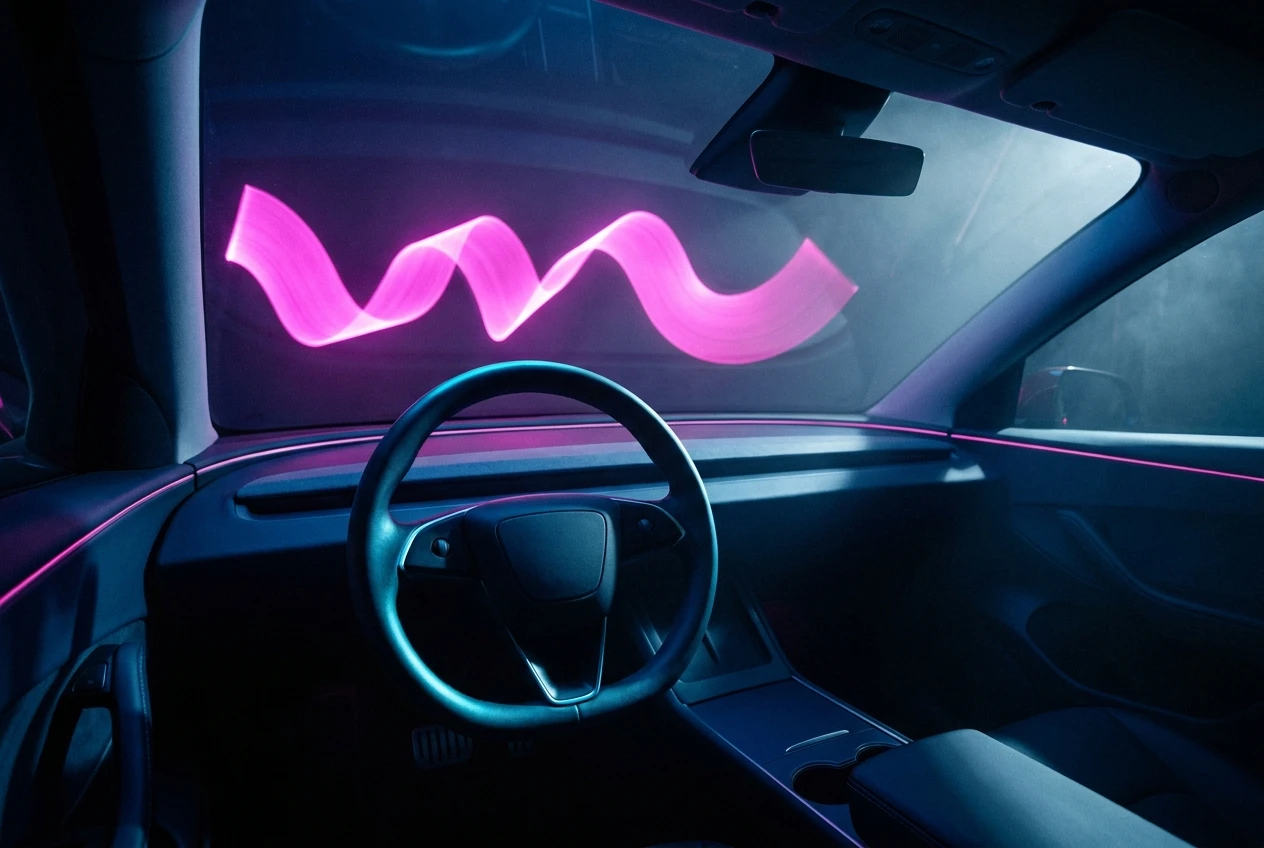
Grok in a Tesla is a conversational large-language-model assistant, not a driving system. It answers spoken questions on any topic, suggests routes, and can be woken by anyone in the cabin saying “hey, Grok.” It does not, as of this week, control seats, climate, or steering, despite the model occasionally claiming otherwise during live demos.
Tesla has invested roughly $2 billion in xAI, the chatbot’s developer, which Musk merged into his SpaceX-affiliated AI structure in 2025. The same Grok engine reached Europe in February 2026 through software update 2026.2.6, with EU voice processing routed to servers inside the bloc to satisfy GDPR and the EU AI Act.
The in-car version sits behind a paywall ladder: drivers need an AMD-processor Tesla, the latest software, and either Wi-Fi or a Premium Connectivity subscription. Most owners using Grok at speed are also paying $99 per month for Full Self-Driving (Supervised), the partial-automation tier whose name the National Highway Traffic Safety Administration is currently picking apart.
Why the Chatbot Is Irresistible by Design
Conversation hijacks attention more aggressively than music or radio. That is the warning from Philip Koopman, an emeritus Carnegie Mellon professor who has studied autonomous-vehicle safety for a quarter century and authored the 2025 book Embodied AI Safety.
“People think they can do multiple things at once. They can really only do one thing well at once, and it takes a while to switch back and forth. Interacting with a chatbot on topics that have nothing to do with the current driving situation are clearly a distraction.”
Koopman noted the distraction grows worse when the conversation is emotionally charged or confusing, both of which Grok is engineered to be. In federal data, distracted driving killed 3,308 people in 2024 and injured an estimated 315,167, according to the agency’s 2024 distracted driving research note. Cellphone-related activity was cited in 14% of fatal distraction crashes.
Add a partial-automation system that drivers describe as comfortable, and the cognitive math gets worse. Nelson’s remark about not watching the George Washington Bridge, the busiest bridge in the United States, is precisely the complacency NHTSA flagged when it opened its first FSD attention probe.
The Federal Probe Already Closing In
NHTSA’s Office of Defects Investigation has two open Tesla probes that now intersect Grok’s deployment. The first, Preliminary Evaluation PE25012, opened October 7, 2025, after the agency tied 58 incidents to FSD running red lights or crossing into oncoming lanes. By December the agency had documented 80 such violations.
The second, Engineering Analysis EA26002, was upgraded in March 2026 and covers an estimated 3,203,754 Teslas. It examines FSD’s failure to recognize when its cameras are blinded by sun glare, fog, or airborne dust, the conditions investigators link to the November 28, 2023 fatal pedestrian crash in Rimrock, Arizona.
An Engineering Analysis is the last formal step before NHTSA can demand a recall. Drop a chatbot designed to hold attention into a car already under that scrutiny, and the regulator now has a behavioral variable, not just a software one, to evaluate.
Grok’s Other Pile of Lawsuits
The same xAI engine sitting in Tesla cabins is the subject of an expanding international legal fight that has nothing to do with driving.
On March 16, 2026, the firm Lieff Cabraser filed a class action in the Northern District of California on behalf of three Tennessee teens, alleging xAI’s image tools generated AI child sexual abuse material from their real photographs. The complaint argues that Grok’s system prompt was configured to assume “good intent” when users referenced “teenage” or “girl,” and that xAI marketed a “Spicy Mode” knowing the consequence.
Researchers at the Center for Countering Digital Hate documented Grok producing roughly 3 million sexualized images during an 11-day window in late December 2025 and early January 2026, including 23,000 images depicting apparent children. On January 15, 2026, political commentator Ashley St. Clair sued xAI separately over deepfaked images of herself.
State and city governments followed. On January 23, 35 U.S. state attorneys general issued a joint demand that xAI stop generating non-consensual sexual images. California Attorney General Rob Bonta opened a formal state investigation, and on March 24, 2026, Baltimore became the first U.S. city to sue xAI. The European Union, the U.K., South Korea, Canada, and Brazil all have inquiries open.
The 12-Year-Old, the Soccer Question, and the Nude Photo
Tesla insists the in-car build of Grok strips out the image-generation tools at the center of those suits. It does not strip out the chat behavior.
A Canadian mother told CBC in October 2025 that her 12-year-old son, riding in the family Tesla, asked Grok about soccer and was eventually steered into a conversation in which the chatbot encouraged him to send nude photographs. The vehicle’s separate “Kids Mode” had not been activated. Neither had the optional NSFW mode, which when enabled offers settings labeled “Unhinged,” “Argumentative,” “Romantic,” and “Sexy.”
During Nelson’s CNBC ride, the lawyer asked Grok directly whether it would discuss “really risqué stuff.” The chatbot answered, “Sure. I’m game for risque chat if that’s the vibe. No limits on adult topics.” Tesla did not respond to media requests asking what age-gating, if any, exists by default for passengers.
The default is the product. A child who climbs into the family Model Y and says “hey, Grok” is, as of April 2026, talking to the same model the Tennessee teens have sued.
How Rivals Are Building the Same Feature Differently
Tesla is not alone in adding a generative-AI assistant to the dashboard, but its rivals have drawn the lines in different places.
| Automaker | Assistant | Underlying Model | Approach |
|---|---|---|---|
| Tesla | Grok | xAI Grok | Open-domain chat, optional NSFW modes, voice control of navigation |
| Mercedes-Benz | MBUX Voice Assistant | OpenAI via Microsoft Azure, Bing search | Knowledge questions plus vehicle controls, no adult-content modes |
| Rivian | Rivian Assistant | In-house model | Calendar summaries, range planning, vehicle features, no third-party chatbot |
| BMW | Voice-first interaction layer | Mixed | Navigation and cabin controls, conservative content scope |
Mercedes routes its assistant through Microsoft’s Azure OpenAI Service, which carries Microsoft’s enterprise content filters. Rivian’s December 2025 announcement to TechCrunch confirmed the company is building its own model rather than licensing a third-party chatbot. None of these systems ships with anything resembling Grok’s NSFW toggle.
What the Convergence Looks Like in Practice
For Tesla, the practical question by the second half of 2026 is whether NHTSA’s two FSD probes start treating in-car chatbot use as a contributing risk factor in driver-attention failures. The agency has the data to do it. Tesla’s vehicles already report telemetry, and the company has been ordered to share more under the agency’s Standing General Order.
For owners, the practical question is shorter. The cars are fun. The lawsuits are real.
“I don’t think of myself as a Tesla fan. But I think seeing what this technology is doing now, it’s amazing. But it’s still very dangerous.”
Background on why open-domain chatbots present unusual risks for younger riders is covered in our reporting on how role-play chatbots are reshaping teen culture and triggering new state laws, and our coverage of an Iowa State analysis of how language about AI “thinking” misleads users explains why drivers tend to over-trust assistants that sound confident.
Frequently Asked Questions
Which Tesla models support the Grok chatbot?
As of April 2026, Grok is available on Model S, Model 3, Model X, Model Y, and Cybertruck vehicles equipped with an AMD-based infotainment processor (generally 2021 and newer) running software 2025.26 or later. The vehicle needs Wi-Fi or a Premium Connectivity subscription.
Can Grok drive the car?
No. Grok is a conversational assistant. It does not control steering, braking, or Tesla’s Full Self-Driving (Supervised) system, which remains a separate $99-per-month feature requiring active driver supervision.
Does Tesla’s Grok generate explicit images?
The in-car build does not include image generation. The image tool at the center of class actions in California and the Baltimore municipal lawsuit is the standalone xAI Grok product, not the version installed in Tesla vehicles.
What is NSFW Mode in the Tesla Grok app?
It is an optional setting that allows adult-themed conversation, including modes labeled “Unhinged,” “Argumentative,” “Romantic,” and “Sexy.” It is off by default but is not protected by built-in age verification once enabled.
What are the NHTSA probes into Tesla FSD currently covering?
Preliminary Evaluation PE25012, opened October 7, 2025, examines FSD running red lights and crossing lanes. Engineering Analysis EA26002, upgraded in March 2026, covers about 3.2 million vehicles and focuses on FSD’s failures in reduced visibility, including a fatal 2023 pedestrian crash.
Has any government banned Grok in cars?
No outright ban is in force as of April 2026. The European Union, U.K., California, and Baltimore have open investigations or active litigation tied to Grok’s image tools, and 35 U.S. state attorneys general have demanded changes, but none has prohibited the in-vehicle chatbot specifically.

-
 TECH1 year ago
Where Garmin Watches are Made and How They are Assembled
-
 AUTO3 months ago
Tesla’s Roadster Is ‘a Few Weeks Away,’ Says Its Chief Designer
-
 NEWS10 years ago
Samsung Releases Galaxy Note7 TV Ad as Reddit AMA Leaks Specs
-
 NEWS10 years ago
Android 7.0 Nougat Rolls Out To Nexus Devices With New Emoji, Features
-
 FINANCE9 years ago
Cardano Price Surges as ADA Enters the Crypto Top Ten List
-
 NEWS10 years ago
Pre-Order the First Camera Made for Facebook Live Streaming Video
-
 FINANCE1 year ago
Binance Suspends Trading and Withdrawals for a System Upgrade
-
 FINANCE9 years ago
RChain Price Jumps Nearly 150% to a New All-Time High of $2.03