
FINANCE
Oracle’s AI Debt Trail Leads to Pension Funds and Insurers
Oracle’s AI debt reached $131.7B at 415% debt-to-equity. Moody’s flagged $662B in off-balance-sheet hyperscaler obligations now routing to pension funds via private credit.

Oracle accumulated $131.7 billion in debt in the 13 months after its September 2025 OpenAI deal, giving it a debt-to-equity ratio of roughly 415 percent, far beyond any other major technology company in the artificial intelligence buildout. Its credit default swap (CDS) spreads, a financial instrument investors use to hedge against corporate default, widened to above 125 basis points by December 2025, a level not recorded since the 2009 financial crisis. Pension fund bondholders have since sued over what they say was a concealed $38 billion second debt raise, and Moody’s Ratings has flagged $662 billion in off-balance-sheet obligations carried collectively by five hyperscalers.
The financing instruments behind that buildout, including special purpose vehicles, residual value guarantees, and chip-backed collateral, are routing a much larger pool of exposure toward pension funds and insurers who cannot yet see it on any public ledger.
Oracle Among the Hyperscalers
Oracle’s total outstanding liabilities exceeded $160 billion as of its latest filings, with $133 billion tied directly to the AI buildout per JPMorgan research cited in Barron’s. Cash holdings sat below $40 billion. Barclays downgraded Oracle’s debt to underweight in November 2025, warning the company could slip to BBB-minus, the last investment-grade notch before junk status, and flagged cash reserves as potentially exhausted by November 2026.
| Company | Debt-to-Equity Ratio | Cash / Liquidity |
|---|---|---|
| Oracle | ~415% | Under $40 billion |
| Meta | Under 80% | ~$80 billion buffer |
| Amazon | Under 80% | Net FCF positive |
| Microsoft | Under 80% | Net FCF positive |
| Alphabet | Under 80% | $70+ billion |
Sources: JPMorgan research cited in Barron’s; Barclays equity research, November 2025; company filings through Q2 fiscal 2026.
Oracle shares fell more than 43 percent from their July 2025 peak. Official credit ratings from Moody’s (Baa2) and S&P (BBB) remain inside investment grade, but the bonds trade in secondary markets at yields consistent with lower-rated issuers. CDS spreads above 125 basis points translate to roughly $1.25 million in annual insurance costs per $100 million in Oracle obligations, pricing that reflects distress well ahead of any formal downgrade. Oracle’s Q2 fiscal 2026 earnings, reported in December, revealed capital expenditures of $12 billion in the quarter against analyst expectations of $8.25 billion, with full-year guidance revised up to $50 billion. Free cash flow for that quarter ran negative by approximately $10 billion.
More than $300 billion of Oracle’s $553 billion in remaining performance obligations (RPOs, contracted revenue the company has yet to collect) flows from a single counterparty: OpenAI. That dependency has made Oracle a de facto proxy for OpenAI’s financial health in public markets. OpenAI recorded roughly $12 billion in losses in a single quarter in late 2025, per Wall Street Journal reporting, and has since explored revenue models it had previously said it would avoid, including advertising.
How an SPV Moves Debt Off the Books
The Structure of a Special Purpose Vehicle
A special purpose vehicle (SPV) is a legal shell company created to hold debt separate from its sponsor’s balance sheet. In the AI data center buildout, SPVs have become the dominant financing method. Oracle carries $66 billion in SPV commitments, the most of any hyperscaler.
The mechanics work in five steps:
- A hyperscaler, or a developer working on its behalf, creates a holding company, the SPV, as a legally separate entity.
- Banks and private credit firms lend to the SPV directly, not to the hyperscaler, to finance data center construction.
- The hyperscaler leases the finished facility back from the SPV, recording payments as rent rather than as debt service on its income statement.
- Residual value guarantees (RVGs) require the hyperscaler to compensate lenders if property values drop sharply, but these guarantees stay off the balance sheet unless an auditor hired by the hyperscaler deems a collapse greater than 50 percent likely.
- The SPV’s debt never appears on the hyperscaler’s balance sheet, though the hyperscaler retains operating control of the asset and remains bound by the guarantee.
The accounting term of art is “control without consolidation.” Financial Times reporting has noted that some SPV deals are cut into tranches and resold to a second generation of investors as new asset-backed securities.
Residual Value Guarantees and the Auditor’s Threshold
Meta’s residual value guarantee on its Hyperion data center complex in Louisiana is valued at roughly $28 billion in company disclosures. The auditor who determines whether that RVG must appear as a balance sheet liability is hired by Meta, the company whose financial statements it would affect. The guarantee goes on the books only if the auditor estimates the probability of collateral collapse above 50 percent. Below that threshold, it remains invisible.
Rating agencies have flagged the gap between formal credit ratings and effective economic exposure in several hyperscaler SPV deals. Moody’s found that the debt Meta used to finance Hyperion received an A-plus rating from S&P Global despite carrying yields closer to high-yield bond levels, a disconnect attributable directly to the off-balance-sheet framing of the obligation.
The $662 Billion Moody’s Found in Lease Accounting
In February 2026, Moody’s Ratings analysts David Gonzales and Alastair Drake published findings on the five major hyperscalers: Amazon, Meta, Alphabet, Microsoft, and Oracle. As of the end of 2025, those five companies had accumulated $969 billion in total undiscounted future data center lease commitments, covering facilities that had yet to be built. Of that figure, $662 billion covered leases signed but not yet commenced. Under the GAAP (Generally Accepted Accounting Principles) lease commencement standard, companies do not need to recognize those obligations on their balance sheets until facilities begin operations, per Fortune’s coverage of the Moody’s analysis. That $662 billion equals 113 percent of the same companies’ combined adjusted on-balance-sheet debt.
Meta’s contractual data center commitments illustrate the pace of accumulation. They rose by $107 billion in a single quarter, from $81 billion at September 30, 2025, per industry analysis of company filings. The speed of commitment growth has far outpaced the speed at which those obligations appear in standard financial reporting.
The lease structure itself has changed in ways that compound the accounting gap. Data center leases historically ran 10 to 15 years. Because AI semiconductor equipment has a useful life of just four to six years, hyperscalers now demand shorter initial lease terms with renewal options. Under GAAP, a renewal period only becomes a liability when renewal is deemed “reasonably certain,” defined as above 70 percent likelihood. Combined with the RVG carve-out, the framework allows hyperscalers to carry enormous forward commitments without those obligations surfacing in standard financial reporting until construction and operations begin.
Gonzales told Fortune the $662 billion marks obligations that are, in Moody’s accounting language, “yet to be on the balance sheet” for leases signed but not yet commenced, a characterization that depends on when commencement occurs.
Chips as Collateral
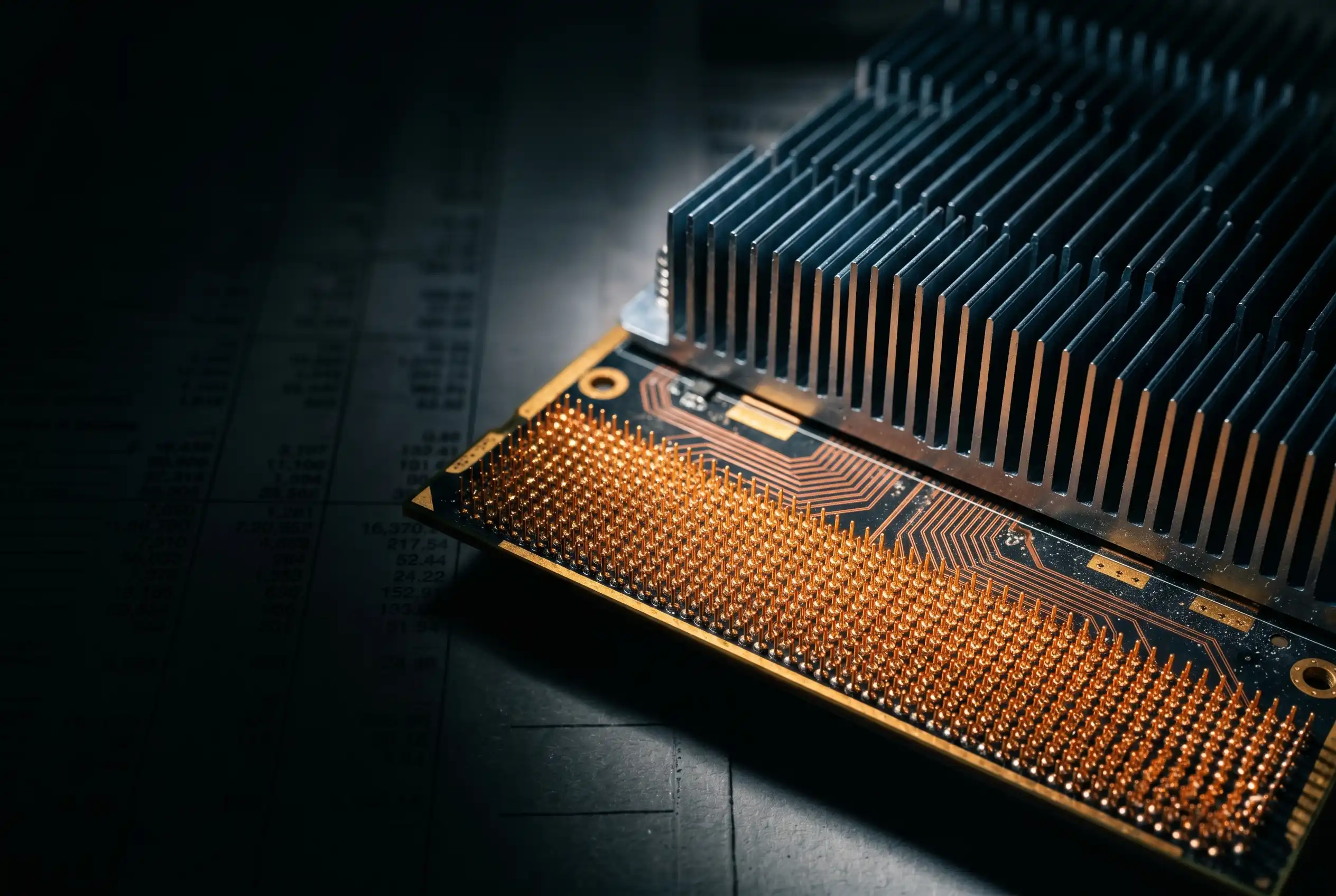
The collateral problem is separate from the accounting one. When an SPV defaults, a lender’s claim is limited to the SPV’s underlying assets: the real estate and the chips inside it. Both depreciate, but chips do so on a timeline commercial secured lending has rarely had to contend with.
A top-tier GPU (graphics processing unit, the specialized semiconductor driving most AI training workloads) has an estimated useful life of four to six years under continuous data center conditions. New chip generations from NVIDIA and others accelerate the obsolescence of older hardware on an overlapping timeline. A facility built around today’s leading chips may be materially less valuable before the debt it underpins is fully repaid, since the chips are run 24 hours a day, seven days a week for model training and new architectures keep arriving.
CoreWeave, an AI cloud computing company, built a multibillion-dollar financing business partly by using GPUs as collateral for debt. The Information reported in its forward outlook for 2026 that Oracle may issue its own chip-backed debt. Commercial real estate lending has typically been collateralized by assets that hold or appreciate over the loan’s life. Chip-backed debt runs the opposite direction by design.
Aashish Rana, whose March 2026 note on AI data center litigation risks was cited in CNBC reporting, told the outlet that private equity funds had already reached out to him with concerns about commercial lease valuations, with tenants and landlords disputing property values at active data center sites. “The disputes are inevitable,” he said, “and we have already seen those disputes.”
Who Ends Up Holding the Risk
Banks Passing Risk Through Significant Risk Transfers
After banks lend to SPVs, many transfer that credit exposure via instruments called significant risk transfers (SRTs), synthetic securitizations that move default risk to private credit funds, hedge funds, and institutional investors. Under an SRT, a bank retains the senior portion of a loan while selling the riskier junior tranche to outside investors, shifting most credit risk off its books while keeping the lending relationship. Morgan Stanley launched a data center-specific SRT product in December 2025. Morgan Stanley research, cited in August 2025 on Apollo Global Management’s digital infrastructure financing analysis, projected that private credit would contribute $800 billion to AI infrastructure financing over the three years through 2028.
A February 2026 study by the Federal Reserve Bank of Chicago found that banks’ direct exposure to AI-adjacent industries averaged just 0.8 percent of total assets. The study cautioned that banks “most likely have additional exposure to AI-adjacent industries through lending to nonbank financial institutions,” a category covering the private credit funds that originate most data center debt. A separate Federal Reserve Board analysis found that up to a quarter of bank loans to non-bank financial institutions now flow to private credit firms, a share up from roughly one percent in 2013.
Pension Funds at the Final Node
The chain extends further. Major life insurance companies hold nearly $1 trillion in private credit assets, and the New York and Pennsylvania state pension plans have both invested in Blue Owl Capital’s $7 billion digital infrastructure fund, the same vehicle that co-financed Meta’s Beignet Investor SPV and multiple Oracle data center projects, per a March 2026 client alert on AI data center financing litigation from Quinn Emanuel Urquhart & Sullivan, citing Federal Reserve Board data.
In February 2026, Blue Owl Capital sold $1.4 billion of fund loans to an insurer it owned, at near par, as redemption requests mounted. Co-president Craig Packer described the transaction on an earnings call as “an arm’s-length economic decision.” Blue Owl’s stock has fallen roughly 50 percent over the past year. On May 6, 2026, the Financial Stability Board (FSB), the international body that coordinates financial regulation across major economies, published a report on vulnerabilities in private credit, identifying interconnections among private credit funds, banks, insurers, and pension funds as a structural risk, warning that leverage across multiple levels in the system “may amplify losses during market stress.”
In late 2025, the collapse of auto lender Tricolor and auto parts company First Brands burned billions in investor money that neither private nor public lenders had adequately flagged before it was too late. JPMorgan Chase chief executive Jamie Dimon put the pattern plainly:
When you see one cockroach, there are probably more.
Dimon made that statement after the Tricolor and First Brands collapses, per Fortune reporting. Blue Owl, Blackstone, Apollo Global Management, and BlackRock have all halted redemptions on various funds in the months since.
Seven Weeks and $38 Billion Later
On September 25, 2025, Oracle sold $18 billion in senior notes. Offering documents stated the company “may” need to raise additional debt to fund its AI infrastructure. Seven weeks later, Bloomberg reported that banks were providing $38 billion in loans for two Vantage Data Centers facilities in Texas and Wisconsin tied to the OpenAI contract. The earlier notes widened in secondary trading, with yields and spreads rising to levels comparable with lower-rated issuers, as the bond market absorbed the full scale of Oracle’s borrowing plan.
The Ohio Carpenters’ Pension Plan filed a class-action lawsuit on January 14, 2026, in New York state court. The complaint names Oracle Chairman Larry Ellison, former CEO Safra Catz, Chief Accounting Officer Maria Smith, and 16 underwriting banks, including Bank of America, Citigroup, Deutsche Bank, Goldman Sachs, HSBC Holdings, and JPMorgan Chase, as defendants. The plaintiffs argue the offering documents were false and misleading because Oracle was already arranging the second debt raise when the prospectus was written, citing the Securities Act of 1933. Oracle and the named banks declined to comment.
The lawsuit covers $18 billion in bonds held directly by institutional investors. Oracle holds $66 billion in SPV commitments, none of which appear on its balance sheet.
Disclaimer: This article is for informational purposes only and does not constitute investment advice. Information reflects publicly available data and reporting as of the date of publication. Readers should consult a qualified financial professional before making any investment decisions. Credit ratings, debt figures, and market conditions are subject to change.

-
 TECH1 year ago
Where Garmin Watches are Made and How They are Assembled
-

 AUTO3 months ago
Tesla’s Roadster Is ‘a Few Weeks Away,’ Says Its Chief Designer
-
 NEWS10 years ago
Samsung Releases Galaxy Note7 TV Ad as Reddit AMA Leaks Specs
-
 NEWS10 years ago
Android 7.0 Nougat Rolls Out To Nexus Devices With New Emoji, Features
-
 FINANCE9 years ago
Cardano Price Surges as ADA Enters the Crypto Top Ten List
-
 NEWS10 years ago
Pre-Order the First Camera Made for Facebook Live Streaming Video
-
 FINANCE1 year ago
Binance Suspends Trading and Withdrawals for a System Upgrade
-
 FINANCE9 years ago
RChain Price Jumps Nearly 150% to a New All-Time High of $2.03