
NEWS
Mira Murati Argues AI Safety Depends on Institutional Design
Mira Murati broke 18 months of silence at Bloomberg Tech 2026 arguing AI safety depends on institutional governance structures, a position shaped by her experience of OpenAI’s 2023 board crisis.

Mira Murati, co-founder and CEO of Thinking Machines Lab, broke 18 months of public silence at Bloomberg Tech 2026 in San Francisco on June 4 with an argument that institutional governance structures determine whether AI development goes right, regardless of the character of the individuals inside it. Her metaphor for the required model was a tandem bike, with both the human and the AI pedaling throughout, hands on the wheel.
The sharper thing she said came when Bloomberg’s Emily Chang pressed directly on whether the public should simply trust the character of AI leaders. Murati didn’t answer yes. She pointed to institutional design. “Morality is not everything,” she said.
Pedaling Past Checkpoints
In the standard enterprise AI deployment model, a human sits at the last step: the AI generates output, a person reviews it, and a sign-off comes. That architecture grew from how generative AI entered commercial use, in complete text responses to complete prompts, where human review at the output stage seemed like a natural control point. Large companies deploying AI in regulated industries have since standardized on this pattern. Murati’s critique is about what it misses.
Real-time human cognition doesn’t happen after the fact. It happens throughout a task: in the mid-sentence correction, in the question that shifts direction before the original is finished, in the pause that signals reconsideration, in the interruption that changes the whole course of an exchange. A system designed to wait for a completed input and return a completed output treats all of that as noise to wait through.
“It sounds like a checkpoint where we’re signing off something and then you’re good to go,” she told Chang, describing the “humans in the loop” framing. What she proposed was continuous. “Both people are pedaling,” she said, “both hands are on the wheel. That’s a system designed for collaboration.”
She also rejected as oversimplified the two dominant predictions for AI’s future, calling neither catastrophe nor unchecked benefit a predetermined outcome. The decisions made during this period, she argued, are the ones that shape direction. Getting the architecture of human involvement right at current capability levels is easier than retrofitting it when the systems are considerably more powerful, and she returned to that point explicitly when the conversation shifted to alignment.

The 200-Millisecond Gap
On May 11, 2026, three weeks before Bloomberg, Thinking Machines published the research preview of TML-Interaction-Small, its first in-house model. The product is the concrete version of what Murati described philosophically on stage.
Standard AI interfaces are turn-based: the user sends a prompt, the model responds after the turn ends. TML-Interaction-Small rejects the turn boundary. It is a full-duplex system that processes audio, video, and text simultaneously in 200-millisecond micro-turns, perceiving and responding at the same time. According to the Thinking Machines Lab interaction models research post, the architecture is trained natively for continuous exchange, with no voice-activity detection harness or external dialog management layer attached. Two components run in parallel: an interaction model that stays live with the user, and a background model handling reasoning and tool calls asynchronously, sharing full context throughout.
The main model carries 276 billion parameters in a Mixture-of-Experts (MoE, an architecture that routes each input to different parameter subsets at inference time) configuration, with 12 billion active per inference step. In practice, it can respond to mid-sentence interruptions, read visual cues from a live video feed, and engage before a speaker finishes forming a thought. Murati framed TML-Interaction-Small as a first step at Bloomberg, not a finished system, and declined to give a release date.
Thinking Machines benchmarked the model on FD-bench v1.5, an evaluation designed specifically for full-duplex voice AI interaction quality. On intelligence benchmarks, the company’s own announcement notes TML-Interaction-Small trails OpenAI’s GPT-Realtime-2.0, where GPT-5-class reasoning gives the OpenAI system an advantage. On interaction quality, the gap runs the other way:
| Model | FD-bench v1.5 (interaction quality) | Turn latency | Current availability |
|---|---|---|---|
| TML-Interaction-Small | 77.8 | 0.40 seconds | Gated research preview |
| Gemini (voice) | 54.3 | Not disclosed | Available |
| GPT-Realtime-2.0 | 47.8 | 1-2 seconds | Available |
Pricing has not been announced. A broader release is planned for later in 2026.
The Crisis She Witnessed
In November 2023, OpenAI’s board dismissed Sam Altman as chief executive without notifying most of the company’s employees. Murati was appointed interim CEO the same day. She began working within hours to reinstate him; the board responded by replacing her with Emmett Shear, then chief executive of Twitch, as interim. More than 700 of OpenAI’s roughly 770 employees signed a letter threatening to resign and follow Altman to Microsoft. Barely five days after the initial firing, Altman returned with a reconstituted board.
Murati gave Bloomberg her fullest public account of those days. When she understood that the board’s decision could destroy the company, she felt she had to act immediately. Without that intervention, “quite likely, OpenAI would have imploded,” she told Chang.
Her role wasn’t uncomplicated. In April, Murati testified in Elon Musk’s lawsuit against OpenAI, saying she had concerns about Altman’s leadership even as she worked to restore him. Former OpenAI board member Helen Toner offered a more layered read in a deposition: Murati “was waiting to see which way the wind would blow, and she didn’t realize she was the wind.”
Murati left OpenAI in September 2024 and co-founded the lab shortly after. The crisis had shown her something specific: a board that couldn’t enforce its own decision, a workforce whose loyalties ran entirely to one person, and a company that nearly dissolved because authority had concentrated in a single relationship. At Bloomberg, she connected both episodes directly, drawing the governance argument from what she had watched happen.
The Governance Case
A Question About Trust
Chang asked whether the public should simply trust the leaders building AI. The field has concentrated enormous capability and decision-making authority in a small number of companies and the individuals who run them, and the standard executive answer has generally been a version of “trust the mission.” Murati redirected to institutional design. She said she hoped the public wouldn’t have to rely on any individual’s character, because a system that depends on individuals getting it right is already poorly designed.
Why Institutions Outlast Individuals
Ideally, the structure of governance and decision-making should not hinge on one person. Morality is not everything. You have to think about actual decision-making structures, transparency and governance.
That was Murati at Bloomberg Tech 2026 in San Francisco, when Chang asked whether the character of AI founders is a sufficient safety guarantee.
She extended the argument to alignment, the technical challenge of keeping AI behavior in line with human values as models grow more capable. The dominant industry approach treats alignment as a training problem: embed the values during model development, then verify outputs. Murati’s concern is structural. Pulling humans out of the development process now, she argued, compounds the difficulty at every higher capability level. “I see very little future possibilities that we can get this right when AI systems are even more capable,” she said. The window for embedding meaningful institutional checks into AI development is the period the industry is currently sitting in.
AI companies’ governance failures have already produced documented liability exposure. OpenAI now faces multiple lawsuits tying chatbot outputs to violent incidents, a pattern that OpenAI’s third major chatbot harm lawsuit in roughly three months made visible in May 2026. Murati’s framework addresses that gap directly: institutional structure determines how a system behaves when the individuals inside it are wrong, or when the situation exceeds what any single person can correctly assess.
Thinking Machines at the Starting Line
The company is 16 months old. In capital committed and compute secured, its position is substantial; in products available to customers, it is early-stage.
- The startup raised $2 billion at a $12 billion valuation in a seed round that closed in July 2025, led by Andreessen Horowitz with participation from Accel, Nvidia, AMD, and Jane Street
- Nvidia announced a multiyear chip supply agreement in March 2026, committing Vera Rubin accelerators, its next-generation GPU line, to the company
- Products shipped to date: Tinker, a fine-tuning application programming interface for open-source AI models that served as the company’s only public-facing product for more than a year; and TML-Interaction-Small, in a gated research preview since May 11, 2026
- Co-founders Andrew Tulloch, Barret Zoph, and Luke Metz have all departed since October 2025, with Zoph and Metz returning to OpenAI in January 2026; Soumith Chintala has since been named chief technology officer
Murati downplayed the departures at Bloomberg, arguing that building a frontier AI lab compresses years of normal organizational churn into months. She also declined to share a headcount or a consumer launch timeline. Crypto Briefing reported the company is in discussions that could push its valuation to $50 billion; Murati didn’t address that figure publicly in San Francisco.
Competing against OpenAI, which dominates consumer AI; Anthropic, which has built a substantial enterprise base with Claude; and Google, whose Gemini ships inside productivity tools used by hundreds of millions of people, the company needs to convert capital and compute into products that customers choose over incumbents already everywhere. When Chang asked about competitive instincts, Murati returned to the collaboration argument. “When I wake up in the morning, I am not thinking about how to kill the competitor,” she said. The wider interaction model release, scheduled for later in 2026, is where that argument meets the product.

-
 TECH1 year ago
Where Garmin Watches are Made and How They are Assembled
-

 AUTO3 months ago
Tesla’s Roadster Is ‘a Few Weeks Away,’ Says Its Chief Designer
-
 NEWS10 years ago
Samsung Releases Galaxy Note7 TV Ad as Reddit AMA Leaks Specs
-
 NEWS10 years ago
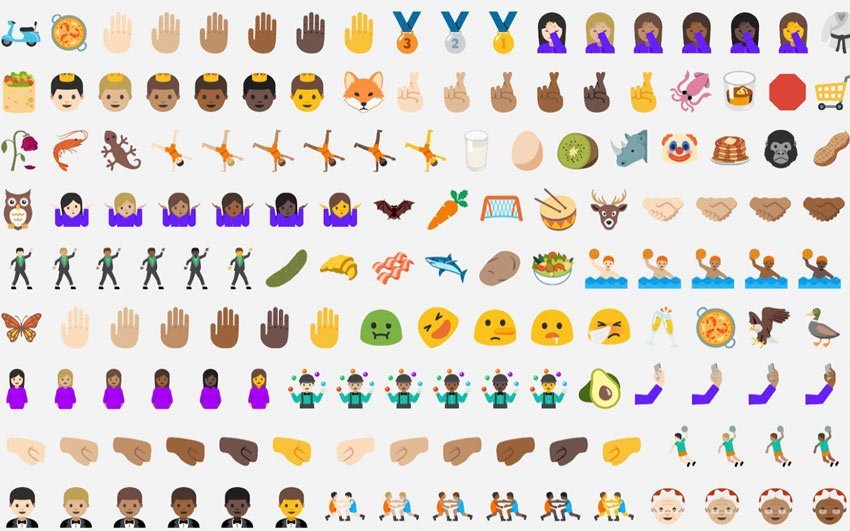
Android 7.0 Nougat Rolls Out To Nexus Devices With New Emoji, Features
-
 FINANCE9 years ago
Cardano Price Surges as ADA Enters the Crypto Top Ten List
-
 NEWS10 years ago
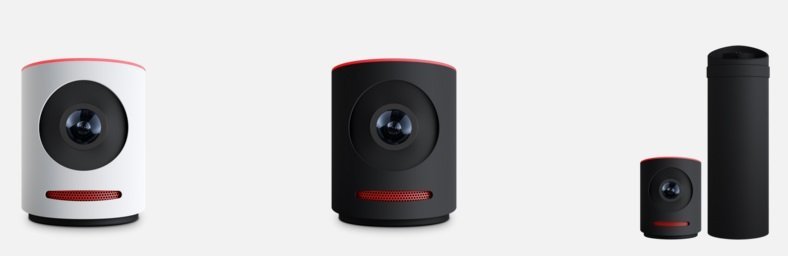
Pre-Order the First Camera Made for Facebook Live Streaming Video
-
 FINANCE1 year ago
Binance Suspends Trading and Withdrawals for a System Upgrade
-
 FINANCE9 years ago
RChain Price Jumps Nearly 150% to a New All-Time High of $2.03