
NEWS
NTSB AI Audio Recreation Forces New Docket Rules

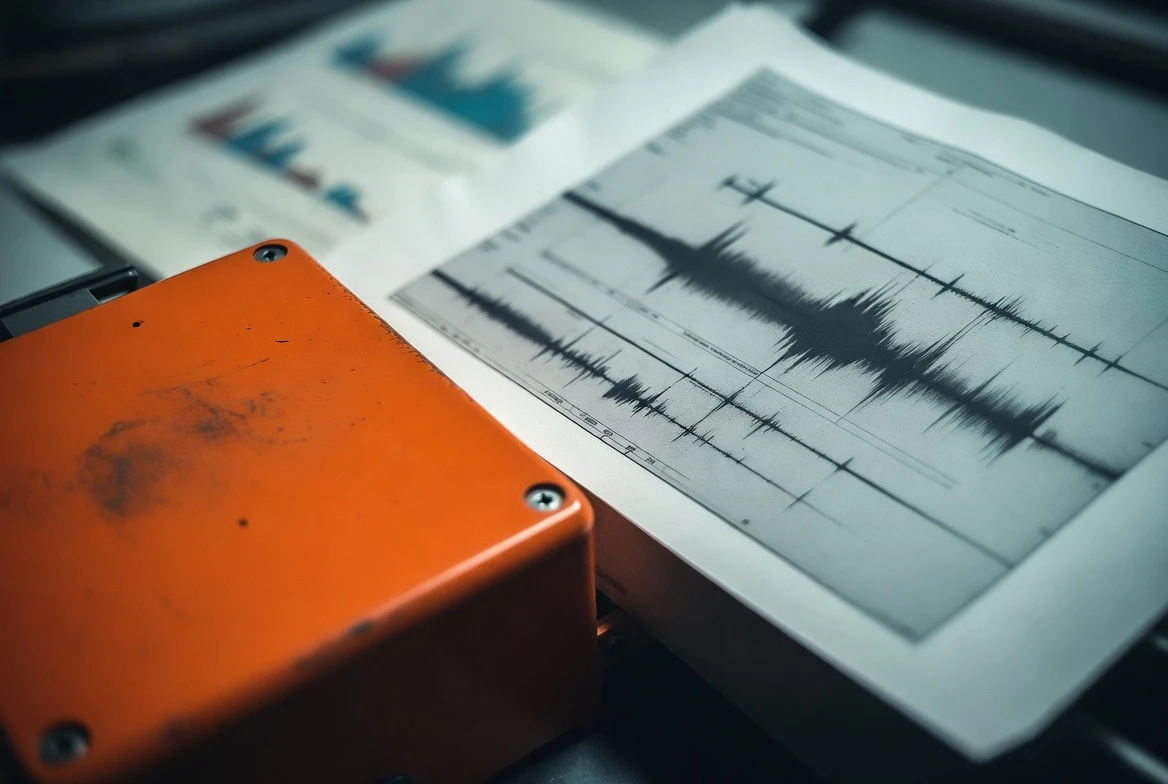
The NTSB artificial intelligence (AI) audio case began with a document, not a recording: a public sound spectrum image from the UPS Flight 2976 docket that could be turned back into an approximation of cockpit voice recorder (CVR, the protected device that records flight deck voices and sounds) audio. The National Transportation Safety Board, the independent U.S. accident investigator, responded through the NTSB docket status notice by pausing access while it checks which evidence can reveal protected voices.
For crash investigators, the discovery lands at a bad moment: Congress has pushed more public docket material online, while the Federal Aviation Administration (FAA, the U.S. aviation regulator) is requiring longer voice recordings in new aircraft. More evidence is being preserved, and more evidence is being digitized. The old privacy line now runs through file formats.
A Docket Built for Transparency Met an Audio Inversion Problem
The board did not post raw cockpit audio from the United Parcel Service cargo crash in Louisville, Kentucky. It posted a sound spectrum image, a visual representation of frequency, time and intensity. That distinction once looked safe enough. The image was still derived from the underlying recording.
The agency said advances in image recognition and computational methods made it possible for outsiders to reconstruct approximations from sound spectrum imagery. Research makes the leap easier to understand: spectrogram inversion tries to recover time-domain sound from frequency-domain pictures, and Google’s Tacotron 2 research note describes a speech system that turns spectrogram features back into a waveform.
The Louisville crash already carried enormous public weight. Jennifer Homendy, the board’s chair, said in the UPS Flight 2976 hearing remarks that three crew members and 12 people on the ground died, including one person who succumbed to injuries 51 days after the accident.
- 15 deaths made the case a national aviation tragedy before the AI reconstruction spread.
- One public image type exposed the gap: a sound spectrum plot, not the raw recording.
- One agency docket system became the emergency lever because the issue could extend beyond a single crash file.
The Legal Wall Around Cockpit Voices Has a Spectrogram-Sized Gap
Federal law already treats cockpit recordings differently from most accident evidence. The board may release relevant transcripts at a public hearing or when factual reports go into the docket, but recordings are kept from public disclosure because they capture private speech at the worst moment of a flight.
The agency’s own cockpit recorder and flight data primer explains why the material is so useful. A CVR captures pilot voices, radio calls, engine noise, warnings, gear movements, clicks and pops. A flight data recorder (FDR, the companion device that records aircraft performance parameters) captures altitude, airspeed, heading and other operating data.
The NTSB does not release cockpit audio recordings. Federal law prohibits such public release due to the highly sensitive nature of verbal communications inside the cockpit.
That sentence from the status notice is the whole privacy bargain in plain language. The weakness exposed in Louisville is that a derived artifact can carry enough information to behave like the thing the law meant to keep private. Recordings remain off limits, but some pictures of recordings may no longer be harmless.
| Evidence Type | Normal Public Role | Privacy Risk After This Case |
|---|---|---|
| Raw CVR audio | Used by investigators and transcript committees | Highest risk, barred from public release |
| CVR transcript | Shows relevant words, timing and sound cues | Lower voice risk, but context can still be painful |
| Sound spectrum image | Shows frequency patterns for timing and technical analysis | Newly obvious risk if it can be inverted into approximate audio |
| FDR output | Shows aircraft state and movement data | Lower voice privacy risk, but still sensitive in active probes |
Why the Same Data Helps Investigators
Removing every audio-derived image would make the docket safer, but also thinner. Sound spectrum work can help investigators identify alarms, engine signatures and the precise timing of events. In some cases, the question is not what a pilot said. It is whether a system made a sound, when it made that sound, and what that says about the failure sequence.
That is why the answer cannot be a simple purge. The public docket is not only for curiosity. Families, local officials, pilots, manufacturers, journalists, lawyers and safety researchers use it to understand what evidence exists before the probable cause report arrives. A public record that hides too much can look like institutional self-protection, even when the motive is privacy.
- Mechanical sound analysis can help confirm whether an engine, pump, warning bell or switch was active.
- Precise timing can align cockpit sounds with radar, surveillance video and flight data.
- Public technical exhibits let outside experts test whether the official narrative fits the evidence.
- Transcripts preserve words but often lose tone, overlapping sounds and nonverbal cues that matter to investigators.
The hard part is separating information that supports safety analysis from information that lets the internet rebuild a dead crew’s last seconds as audio. That split did not matter as much when the reconstruction tools were crude, expensive or obscure. It matters now because image files can behave like evidence containers.
A Larger Recorder Debate Now Has a Privacy Counterweight
The timing is uncomfortable for regulators. The FAA’s 25-hour cockpit recorder final rule, published in February, increases required CVR retention from two hours to 25 hours for affected future manufactured aircraft. The rule concerns preservation rather than publication.
Safety investigators have wanted that longer window because a two-hour loop can overwrite vital context before a recorder is secured. The Alaska Airlines door plug accident in January 2024 became the public example: the relevant cockpit audio was gone before investigators could use it. Longer recordings can answer questions a shorter loop erases.
Louisville adds the other side of the same technological shift. More hours of retained cockpit sound mean more context for investigators, but also a larger pool of sensitive speech if any derived artifact leaks, gets over-shared or is posted without enough technical review.
The FAA rule says the agency is barred from using CVR information for civil penalties or certificate action, and that its handling of acquired CVR data would not change. It also states that the FAA does not control CVR data once a recorder is returned to the owner or operator. That line now reads less like a footnote and more like a warning label.
Pilot groups have long worried that longer recordings could become workplace surveillance. Families worry about last words becoming public material. Safety officials worry about losing the context needed to prevent the next crash. The AI reconstruction case puts all three concerns in the same room.
Open Records Will Need a New Technical Filter
The public access mandate points in the opposite direction from a lockdown. A statutory note in the cockpit recording disclosure statute gave the board 24 months from May 16, 2024, to make public docket records electronically available. The AI case arrived almost exactly as that deadline matured.
So the new review cannot be only legal. Lawyers can decide whether a recording may be released. Engineers now have to decide whether a chart, image or data file can regenerate enough of that recording to defeat the law’s purpose. File formats are policy when software can reverse a document into sound.
- Classify high-resolution speech-bearing spectrograms separately from charts that show only machine sounds.
- Publish derived measurements when a full spectrum image would add privacy risk without adding public safety value.
- Use delayed or controlled access for exhibits that outside experts may need but casual viewers do not.
- Add a machine-readability review before audio-derived PDFs, images and attachments go live.
None of those fixes is clean. Lower-resolution images can damage legitimate analysis. Derived tables force readers to trust the agency’s calculations. Controlled access creates gatekeepers. But doing nothing would invite a repeat, and the next reconstruction may come from an older docket with less public attention and fewer people watching the harm.
The Louisville Case Sets the Boundary Test
The underlying investigation is still about a Boeing MD-11F cargo aircraft that was destroyed shortly after takeoff from runway 17R at Louisville Muhammad Ali International Airport. The hearing focused on fleet safety processes, pylon design requirements, maintenance reporting and communications to operators. Those subjects should not be swallowed by the online audio fight.
Yet the boundary test now sits beside the crash investigation. United Parcel Service, Boeing, the FAA, ST Engineering San Antonio Aerospace and labor representatives all have a stake in the technical record. So do families who were promised that cockpit voices would not become public audio, and communities that rely on open dockets to judge whether safety agencies are asking hard questions.
A narrow fix would remove a few spectrum images and reopen the files. A durable fix would treat every public artifact as something a model might transform. That does not mean every technical exhibit becomes secret. It means the release review has to ask a new question before upload: what can this file become?
If the board strips too much from future dockets, families, local communities and technical observers lose trust in the public record. If it leaves derived audio artifacts untouched, the legal promise that cockpit recordings stay private weakens with every new tool.

-
 TECH1 year ago
Where Garmin Watches are Made and How They are Assembled
-

 AUTO3 months ago
Tesla’s Roadster Is ‘a Few Weeks Away,’ Says Its Chief Designer
-
 NEWS10 years ago
Samsung Releases Galaxy Note7 TV Ad as Reddit AMA Leaks Specs
-
 NEWS10 years ago
Android 7.0 Nougat Rolls Out To Nexus Devices With New Emoji, Features
-
 FINANCE9 years ago
Cardano Price Surges as ADA Enters the Crypto Top Ten List
-
 NEWS10 years ago
Pre-Order the First Camera Made for Facebook Live Streaming Video
-
 FINANCE1 year ago
Binance Suspends Trading and Withdrawals for a System Upgrade
-
 FINANCE9 years ago
RChain Price Jumps Nearly 150% to a New All-Time High of $2.03