
BUSINESS
IEA Chief Birol Warns Hormuz Crisis Threatens Global Energy Security
IEA chief Fatih Birol warns global oil security is at risk unless US and Iran ease attacks around the Strait of Hormuz within weeks.

Fatih Birol, the International Energy Agency’s executive director, warned Thursday the world should be worried if oil stops flowing normally through the Strait of Hormuz within weeks. The IEA, the Paris-based energy watchdog for oil-importing nations, has tracked the war’s toll since February. His comments followed a sixth consecutive night of US strikes on Iran and fresh Iranian missile attacks on American allies across the Gulf.
Brent crude is trading near $80 a barrel, a fraction of the wartime peak above $188 it hit in April. The calm looks real. It is mostly borrowed time, built on emergency stockpiles that are draining with no way to refill while the fighting continues.
Birol’s Deadline Is Weeks, Not Months
Birol, the IEA’s executive director, made his starkest comments yet at a Council on Foreign Relations event, Al Jazeera reported. “Oil security is still a critical issue,” he said.
We should be worried, and I am worried if the situation does not improve in the next few weeks.
Birol said, according to Al Jazeera’s reporting on the event.
It is not the first time he has reached for extreme language. In April, with the war at its worst, he told CNBC the world was facing “the biggest energy security threat in history” after losing 13 million barrels a day of supply. Thursday’s remarks carried a tighter deadline: weeks, not the months of runway officials assumed the June ceasefire had bought.
The White House put the blame squarely on Tehran. “The reason for the recent strikes is because Iran violated the MoU that we struck with them; specifically, in the MoU that they signed, they were not to fire on commercial vessels moving through the Strait of Hormuz,” White House press secretary Karoline Leavitt said, referring to the memorandum of understanding (MoU) the two countries signed last month.
The IEA itself has been flagging the regional fallout for months. A separate agency report on Southeast Asia found the crisis had exposed major energy vulnerabilities across the region, pushing several governments to rethink how much they depend on a single waterway.
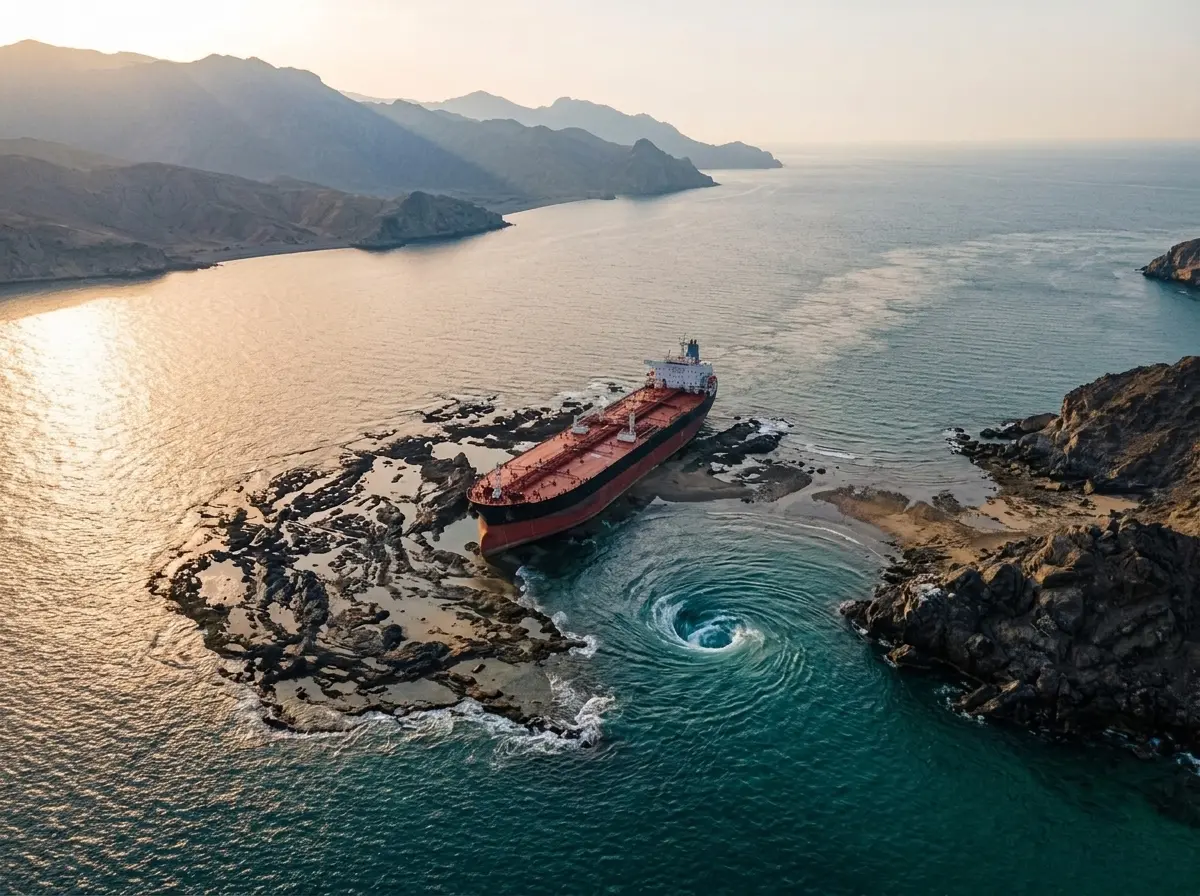
A Truce Signed in Pakistan Collapses in Six Nights
The memorandum of understanding was signed in Pakistan a month ago, aimed at ending the war and reopening the strait to normal traffic, according to Al Jazeera. It held, unevenly, for about three weeks before Iran struck multiple commercial vessels on July 8 and declared the waterway closed again.
- February 28, 2026: The United States and Israel launch coordinated air strikes on Iran, killing Supreme Leader Ali Khamenei and prompting Iran’s Revolutionary Guard to threaten shipping through the strait.
- March 4, 2026: Iran declares the Strait of Hormuz closed to any vessel tied to the United States, Israel or their allies.
- April 23, 2026: Birol tells CNBC the world has lost 13 million barrels a day, calling it the biggest energy security threat in history.
- June 17, 2026: The US and Iran sign the memorandum of understanding meant to end the war and reopen the strait.
- July 8, 2026: The truce breaks down after Iran strikes multiple commercial ships transiting the strait.
- July 13 to 14, 2026: Trump proposes a 20 percent toll on cargo moving through Hormuz, then withdraws it, reimposing a naval blockade on Iranian ports instead.
- July 15 to 16, 2026: Birol tells the Aspen Security Forum and a Council on Foreign Relations audience that markets have weeks, not months, before the crisis deepens.
By this week, the sixth consecutive night of US strikes had hit Bandar Abbas, Ahvaz and Iranshahr, while Iran fired missiles and drones at American allies in Kuwait, Bahrain and Jordan, with explosions also reported in Qatar. Iran’s Fars news agency put the death toll from a US strike on the Bandar-e Khamir bridge in Hormozgan province at seven.
US Central Command (CENTCOM) said five vessels had tried to run its reimposed blockade on Iranian ports since it took effect. Three turned around. One was disabled, though the military did not explain how. Marines also boarded an oil tanker; it was unclear whether the vessel remained in US custody.
The Calm in Oil Prices Is Borrowed Time
Brent crude changed hands near $80 a barrel this week, up from about $69 in June and briefly touching $83 on Monday, according to NPR and CNBC. That is nowhere near the $188 a barrel wartime peak reached in late April.
The gap looks like relief. It mostly reflects arithmetic, not resolution.
Oil never revisited triple digits for long after the strait first shut entirely, a gap traced at the time to stockpiles cushioning the initial shock. That same mechanism, not a resolved conflict, is what is holding prices down now.
- 14 million barrels a day: the peak flow Birol says the world has lost, up from the 13 million he cited in April.
- 400 million barrels: released from IEA emergency stocks in March, of which 80 percent remains untouched.
- 1 to 2 million barrels a day: the rise in US output since the war began, which Birol said cannot scale to the 10 million needed to replace what Hormuz normally carries.
- 56 incidents, 17 deaths: confirmed attacks on shipping and seafarer fatalities tracked by the data firm Kpler since the war began.
None of those buffers regenerate on their own. China’s stockpile is a finite hedge, not a supply line, and the 80 percent of IEA stocks still sitting in tanks is real, but Birol has already warned that releasing them again would only ease the pain, not fix the underlying shortage.
Asia’s Uneven Burden
Birol has been direct about where the pain lands hardest. “It is mainly Asia, because Asia was getting 80 to 90 percent of this energy from the Strait of Hormuz,” he said, according to Arab News.
| Importer | Share of Hormuz Crude Flows | Exposure |
|---|---|---|
| China | 37.7% | Largest single buyer of crude moving through the strait |
| India | 14.7% | Government has told shipping firms to avoid deploying Indian seafarers in the strait |
| South Korea | 12.0% | Kospi index plunged as much as 9% in a single session as strikes resumed |
| Japan | 10.9% | Refiners have asked Tokyo to release stockpiled oil as Gulf supply tightened |
| United States | 2.5% | Smallest exposure among major importers, cushioned by domestic production |
China, India, South Korea and Japan together take in more than three-quarters of everything the strait carries, according to Visual Capitalist’s analysis of shipping data. China entered the war holding a stockpile of more than 1 billion barrels, one of the reserves Birol has credited with easing the pain so far.
The countries missing from that chart are often the most exposed. Bangladesh, Pakistan and India are far more vulnerable to the disruption than wealthier importers like Japan and South Korea, Birol said, pointing to thinner currency reserves and less room to subsidize fuel, Business Standard reported.
India’s own markets showed the whiplash. The Sensex swung 493 points before closing almost flat as traders weighed the same oil-security risk Birol was describing that day.
The Strait’s Old Rules Are Already Gone
Birol frames this crisis against the exact yardstick the IEA was created to watch: the twin 1970s oil shocks that led to the agency’s founding in 1974. Combined, he has said, those two crises cost the world about 10 million barrels a day. This one has already lost more than 14 million barrels a day, and Europe has shed more gas supply than it did when Russia cut deliveries after invading Ukraine.
Shipping executives argue the strait itself has changed, ceasefire or not. “Before this war, Iran really had no power or say over what goes through the Strait of Hormuz,” said Nikos Petrakakos, managing director of investments at Tufton Investment Management. “That is a status quo that’s changed going forward. I don’t see Iran going back to where it was before,” he told CNBC.
The cost of insuring a transit has moved too. Shipping-industry data show war-risk premiums for the strait climbing from 0.125 percent of a vessel’s insured value to as much as 0.4 percent in the days around the first strikes, adding roughly a quarter of a million dollars to the cost of moving a single supertanker through.
OPEC+, the group of oil exporters and allied producers, has felt the same shift. Its output has fallen more than 30% since the war began, and the United Arab Emirates left the group entirely on May 1, a defection Brookings researchers say leaves OPEC with less sway over prices going forward.
What Happens If the Strait Stays Shut?
If the standoff outlasts Birol’s own deadline, the world falls back on options that cannot fully replace Hormuz. Idle pipelines in Saudi Arabia and the UAE, US shale that adds barrels slowly, and new ports built to dodge the strait entirely all help, but none comes close to the roughly 20 million barrels a day the waterway moves when open.
- Saudi Arabia’s East-West pipeline can carry up to 5 million barrels a day to the Red Sea, a line Aramco briefly expanded to 7 million barrels in 2019.
- The UAE’s Fujairah pipeline moves up to 1.5 million barrels a day to the Gulf of Oman, skipping the strait entirely.
- DP World, the Dubai government’s ports operator, is reportedly in talks to build a new Fujairah port that would give the emirate another shipping route around Hormuz, according to OilPrice.com.
Even fully used, those pipelines add up to about 2.6 million barrels a day of spare capacity, according to the US Energy Information Administration (EIA), a fraction of what Hormuz carries at full flow. The wider Middle East still produces more than 30% of the world’s crude oil, per a Congressional Research Service report, which is why diplomats keep circling back to the negotiating table as the only real fix.
Iran’s position is not ambiguous. “The situation in the Strait of Hormuz will not return to what it was before the war,” Abolfazl Shekarchi, a spokesman for Iran’s armed forces, said this week. Birol’s draining stockpiles are what stand between that statement and the rest of the world’s fuel supply.

-
 TECH1 year ago
Where Garmin Watches are Made and How They are Assembled
-
 AUTO3 months ago
Tesla’s Roadster Is ‘a Few Weeks Away,’ Says Its Chief Designer
-
 NEWS10 years ago
Samsung Releases Galaxy Note7 TV Ad as Reddit AMA Leaks Specs
-
 NEWS10 years ago
Android 7.0 Nougat Rolls Out To Nexus Devices With New Emoji, Features
-
 FINANCE9 years ago
Cardano Price Surges as ADA Enters the Crypto Top Ten List
-
 NEWS10 years ago
Pre-Order the First Camera Made for Facebook Live Streaming Video
-
 FINANCE1 year ago
Binance Suspends Trading and Withdrawals for a System Upgrade
-
 FINANCE9 years ago
RChain Price Jumps Nearly 150% to a New All-Time High of $2.03