
GAMING
Acer Predator Atlas 8 Puts Intel in the Ally X Fight

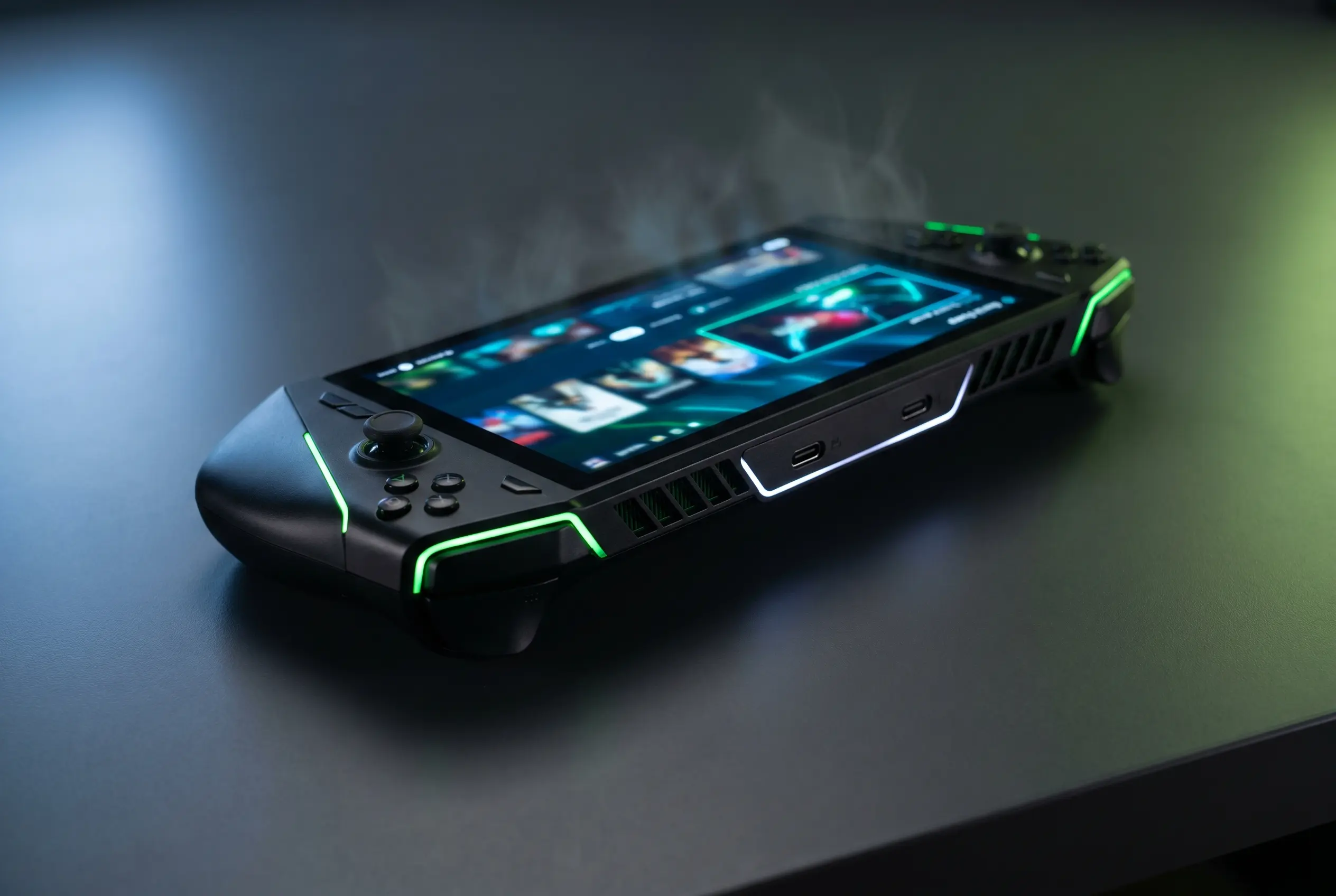
The Acer Predator Atlas 8 is the Taiwanese PC maker’s new Predator branded Windows gaming handheld, announced May 28 for an October launch in North America, Europe, the Middle East and Africa, and Australia, according to Acer’s May 28 announcement. Intel, the US chipmaker, supplies the pitch: an 8-inch 120Hz screen, an Arc G3 Extreme option, up to 24GB of memory and an 80Wh battery.
That puts Acer in a crowded premium tier rather than a novelty lane. Microsoft, the Windows and Xbox owner, has pushed its console style interface onto more Windows handhelds, and Intel is trying to prove that its new handheld chip family can stand beside AMD-based rivals. The device now has to answer a buyer question that a spec sheet cannot settle: how much trust is a first generation Arc G-Series handheld worth at checkout?
The Specs Put Acer Beside the Ally X
Acer did not pick the low end. The Atlas 8 starts from the same premium checklist that made the ROG Xbox Ally X, the handheld from ASUS, the Taiwanese hardware maker, and Microsoft, a reference point: a large battery, 24GB class memory, fast storage and high-refresh display support. The comparisons are not perfect, because Acer has not named final regional configurations or pricing. They are close enough to show intent.
Two details matter before the table. Variable Refresh Rate (VRR, display timing that cuts tearing) has become table stakes on premium handhelds, and Low Power Double Data Rate 5X (LPDDR5X, mobile system memory) is now the common memory pool shared by the processor and graphics. Display tech splits too: In-Plane Switching (IPS, liquid crystal display panel tech) on Acer and ASUS, organic light emitting diode (OLED, self-lit panel tech) on Valve, the Steam operator.
| Device | Silicon | Display | Battery And Weight | Software Angle |
|---|---|---|---|---|
| Acer Predator Atlas 8 | Up to Intel Arc G3 Extreme with Arc B390 graphics | 8-inch 1920 x 1200 IPS-level touch panel, 120Hz, 500 nits, VRR | Up to 80Wh, under 810g with large battery | Windows 11 Home, PredatorSense, Xbox Game Bar button, Game Pass trials |
| ASUS ROG Xbox Ally X specifications | AMD Ryzen AI Z2 Extreme | 7-inch 1920 x 1080 IPS-level panel, 120Hz, 500 nits, FreeSync Premium | 80Wh, 715g | Xbox branded controls and full-screen Xbox experience |
| Valve Steam Deck OLED specifications | 6 nanometer AMD accelerated processing unit | 7.4-inch 1280 x 800 OLED, up to 90Hz | 50Wh, about 640g | SteamOS and Deck Verified library cues |
The 80Wh ceiling matters because battery size has become the clearest hardware shorthand for premium handhelds. Acer matches the Ally X on capacity, but the top Atlas configuration is heavier than ASUS’ device and uses an IPS type panel rather than OLED. That is a trade-off buyers can feel before they load a benchmark.
Intel Gets a Flagship Customer at Launch
Intel’s timing is the bigger reason the Atlas 8 matters. In its Intel Arc G-Series processor announcement, Intel introduced Arc G3 and Arc G3 Extreme for Windows 11 handhelds, built from Core Ultra Series 3 architecture code named Panther Lake. It also named Acer’s device, MSI, the Taiwanese gaming hardware vendor, and OneXPlayer, the handheld maker, as early system partners.
The feature list is aimed at the two weak spots of Windows handhelds: tuning and battery use. Intel Xe Super Sampling 3 (XeSS 3, Intel’s artificial intelligence upscaling, frame generation and latency suite) is supposed to raise perceived smoothness in supported games. Precompiled shaders are meant to cut loading hitches in selected titles. Endurance settings are meant to keep power use from becoming a hobby.
- 14 processing cores – Intel lists two performance cores, eight efficiency cores and four low-power efficiency cores.
- 40 gigabits per second – Thunderbolt 4 support gives the platform room for high-speed docks and external storage.
- three launch partners – Acer, MSI and OneXPlayer give Intel more than a single proof device.
That gives Acer a useful story, but it also gives Intel a public scorecard. If frame pacing, driver updates or anti-cheat behavior stumble, the blame will not stay inside a spec table. It will land on the new chip family.
Windows Handhelds Are Losing Their Software Excuse
For years, Windows handhelds had a simple problem: the game library was broad, the operating system felt built for a keyboard. Microsoft has been trying to close that gap through the Xbox full screen gaming experience, a controller-led Windows 11 interface for handhelds and other form factors.
Acer’s choices track that shift. The Atlas 8 has an Xbox Game Bar Widget button, PredatorSense controls and bundled access to Xbox Game Pass Premium for two months and PC Game Pass for three months where the offer applies. The subscription trial is modest, while the button placement shows where the market is moving.
The software gap has narrowed because ASUS no longer owns the whole Xbox-style Windows story. The ROG Xbox Ally X still has contoured grips, Xbox branded buttons and a tighter marketing tie. Acer can now sell a similar library pitch without selling an Xbox branded device.
- Acer gains a ready-made interface story for Windows handheld buyers.
- Microsoft gains another hardware partner pushing its gaming shell.
- ASUS keeps the controller shape and brand tie, but loses part of the software contrast.
That matters more than a trial code. A Windows gaming handheld is a friction machine when sleep, launchers, driver panels and storefronts all compete for the small screen. The Atlas 8 is betting that Windows feels less like a compromise by October.
The Hardware Bet Has a Weight Problem
Battery capacity has a physical bill. Acer lists the Atlas 8 at under 810g with the 80Wh battery and under 770g with the 60Wh pack. ASUS lists the ROG Xbox Ally X at 715g, while Valve lists Steam Deck OLED at about 640g. Those gaps are not abstract in a device held at chest height on a couch.
Acer is trying to buy that weight back with thermals and screen size. It says the Predator AeroBlade setup uses one metal fan and one plastic fan, with Vortex Flow tuning, and that its internal testing showed more than 10% airflow improvement for the metal fan versus a plastic fan. The fine print matters: that is Acer’s own test, not a third-party benchmark.
The screen choice cuts both ways. An 8-inch 1920 x 1200 panel gives more vertical space than a 7-inch 1080p panel, which helps Windows menus and strategy games. But OLED competitors can sell contrast and black levels in one glance. Acer will need brightness, cooling noise and battery curves to make the bigger IPS panel feel worth the mass.
Storage is less risky. The M.2 2280 slot, a common gumstick-sized solid state drive format, should make upgrades less awkward than short-drive designs. An Ultra High Speed II microSD reader also gives buyers a slower but simple overflow lane for indie games, emulation libraries and media.
Acer Still Has to Price the Argument
Pricing is the hole in the launch. Acer says final specifications, prices and availability will vary by region, which leaves the most important retail question open. ASUS’ US page listed the ROG Xbox Ally X at $999.99 as of publication, and that number is the wall Acer keeps walking toward.
No price means no verdict because the Atlas 8 aims above the budget Steam Deck buyer. A top configuration with Arc G3 Extreme, 24GB memory, 1TB storage, dual Thunderbolt 4 ports and an 80Wh battery sounds like a premium shelf product. If Acer comes in too close to laptop money, it has to sell something more durable than novelty.
The buyer questions are concrete:
- Will Acer publish battery life by wattage mode, not just battery capacity?
- Will Intel’s drivers keep pace with new releases after the review window?
- Will the 80Wh model ship widely, or become a hard-to-find halo configuration?
- Will the Game Pass bundle matter once the trial period ends?
Those questions are harsher for Acer than for ASUS because ASUS already had two Ally generations and a Microsoft partnership behind the Xbox model. Acer has the Predator name, a strong laptop history and a spec sheet that reads correctly. It still has to prove support pace, repair access and retail confidence.
October Turns the Spec Sheet Into a Market Test
The October window gives Acer time to tune firmware, gather game profiles and let Intel’s first Arc G-Series systems reach reviewers. It also gives rivals time to cut prices, refresh bundles or lean harder on software. In handhelds, launch timing can change a product from premium to late very quickly.
For Intel, the Atlas 8 is a cleaner test than a thin laptop repurposed for gaming. The chip family was announced for handhelds, with power management, graphics and docking features sold around that use case. If performance looks good only at high wattage, the story weakens. If it holds frame rates at sensible power levels, Acer gives buyers a visible Intel alternative to AMD-based Windows flagships.
Acer’s risk is different. The company can win attention at Computex with a bold spec list, but buyers in October will compare store prices, return policies and community battery charts. The first reviews will matter less for peak frames than for the boring stuff: heat on the grips, fan pitch, sleep behavior, controller dead zones and driver updates.
If Acer lands near the Ally X while keeping drivers clean, Intel finally gets a credible premium shelf. If it overshoots, the Predator Atlas 8 becomes another reminder that handheld specs are easy to announce and hard to hold for two hours.

-
 TECH1 year ago
Where Garmin Watches are Made and How They are Assembled
-
 AUTO3 months ago
Tesla’s Roadster Is ‘a Few Weeks Away,’ Says Its Chief Designer
-
 NEWS10 years ago
Samsung Releases Galaxy Note7 TV Ad as Reddit AMA Leaks Specs
-
 NEWS10 years ago
Android 7.0 Nougat Rolls Out To Nexus Devices With New Emoji, Features
-
 FINANCE9 years ago
Cardano Price Surges as ADA Enters the Crypto Top Ten List
-
 NEWS10 years ago
Pre-Order the First Camera Made for Facebook Live Streaming Video
-
 FINANCE1 year ago
Binance Suspends Trading and Withdrawals for a System Upgrade
-
 FINANCE9 years ago
RChain Price Jumps Nearly 150% to a New All-Time High of $2.03