
NEWS
Southern Votes Will Decide Delhi’s 850-Seat Lok Sabha Push
The winter session push for women’s reservation is a second try at expanding the Lok Sabha to 850 seats while freezing 1971 state shares.

The government is lining up a December sitting of Parliament to lift the Lok Sabha toward 850 seats and start the 33 percent women’s quota before the 2029 election. The winter session is likely in the first week of December, government sources said, though by 16 November the dates had still not been notified.
The 2023 women’s reservation law is already on the statute book. What still needs a two-thirds vote is a fresh Constitution amendment that redraws the House, and the parties that can supply the missing votes sit mostly in the south.
A Law That Still Has No Reserved Seats
Parliament passed the Constitution (106th Amendment) Act, 2023, known as the Nari Shakti Vandan Adhiniyam, and President Droupadi Murmu signed it on 28 September 2023. It reserves about one-third of seats in the Lok Sabha, the state assemblies and the Delhi assembly for women, including inside the Scheduled Caste and Scheduled Tribe quotas, for 15 years from the date it actually starts.
The start date is the hitch. Article 334A says the quota does not begin until seats are redrawn after the first census taken after the Act. The census now under way has a reference date of 1 March 2027. PRS Legislative Research has said a redraw based on that count is unlikely to be finished before 2029, which would leave the next Lok Sabha without reserved seats for women.
The provisions of the Constitution relating to the reservation of seats for women in the House of the People, the Legislative Assembly of a State and the Legislative Assembly of the National Capital Territory of Delhi shall come into effect after an exercise of delimitation is undertaken for this purpose after the relevant figures for the first census taken after commencement of the Constitution (One Hundred and Sixth Amendment) Act, 2023 have been published.
Article 334A, Constitution (106th Amendment) Act, 2023
That is why reservation begins only after delimitation, and why Delhi is trying to change the trigger. The Constitution (131st Amendment) Bill, 2026, introduced on 16 April, would raise the Lok Sabha ceiling from 550 members to 850, with up to 815 from the states and 35 from the Union territories. A companion Delimitation Bill would let the Centre appoint a commission and use the latest published census, which in April meant the 2011 count, so the quota could start in time for 2029.
The current House has 543 elected members. Adding seats toward 850 would create hundreds of new constituencies. That is the feature sitting MPs can live with, because one-third reservation inside a 543-seat House would force many of them off the map.
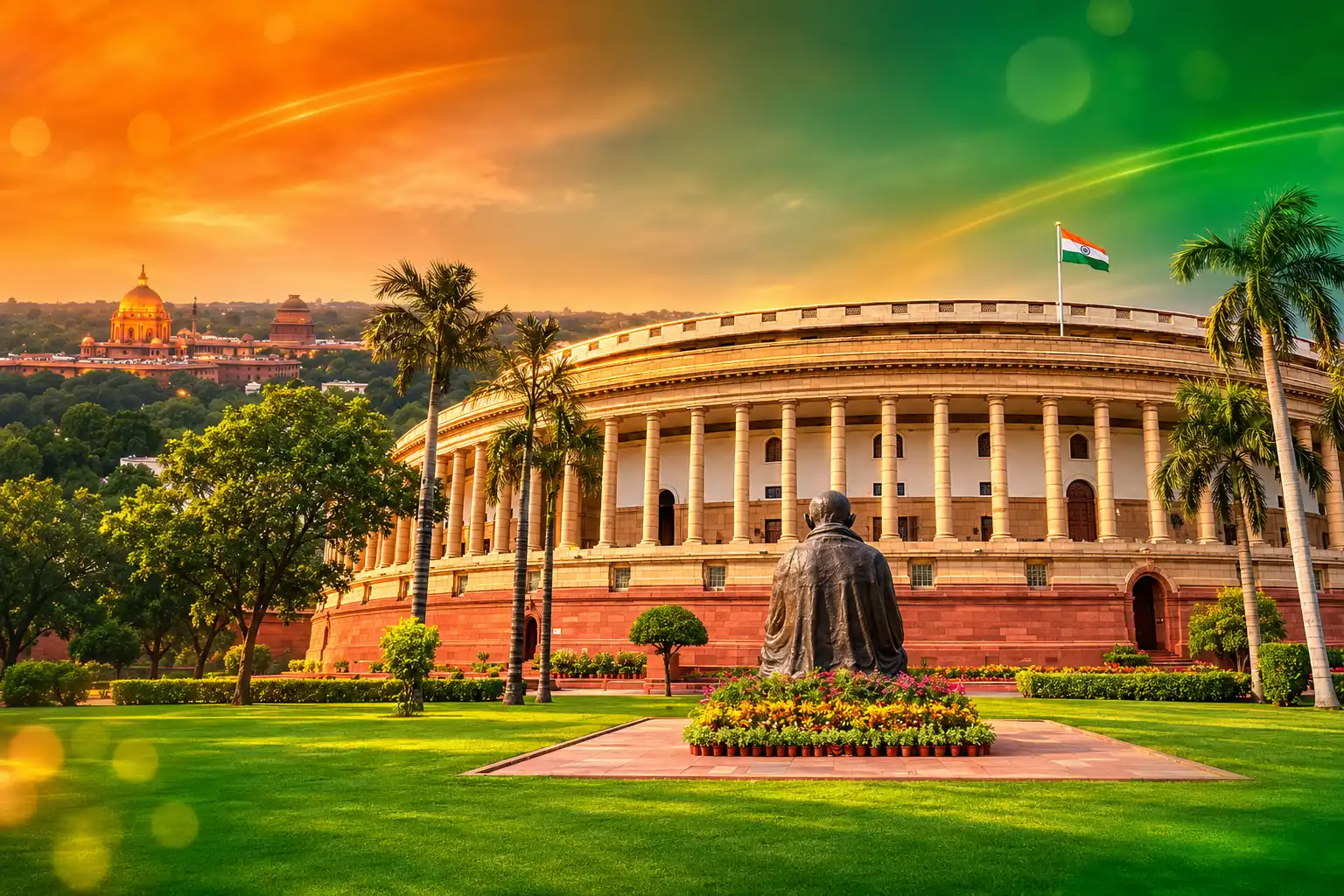
298 Ayes Still Left the Bill 54 Short
The package went to a vote on 17 April during a three-day special sitting. Of 528 members who voted, 298 supported the 131st Amendment and 230 opposed it. A Constitution amendment needs two-thirds of members present and voting. Two-thirds of 528 is 352. The bill was 54 votes short.
It was the first government bill defeated in the Lok Sabha since 2014. After the result, Parliamentary Affairs Minister Kiren Rijiju asked Speaker Om Birla not to take up the Delimitation Bill, 2026, and the Union Territories Laws (Amendment) Bill, 2026, saying they were tied to the amendment that had just fallen. Rijiju told the House the opposition had lost a historic chance to give women 33 percent of the seats.
THE ROAD FROM THE 2023 LAW TO THIS WINTER
- 28 September 2023: The 106th Amendment receives presidential assent, with the women’s quota locked to a future census and a future redraw.
- 16 April 2026: Law Minister Arjun Ram Meghwal introduces the 131st Amendment, the Delimitation Bill and the Union Territories bill in the Lok Sabha.
- 17 April 2026: The 131st Amendment is defeated 298 to 230, with 352 votes required, and the two linked bills are dropped.
- 12 August 2026: The Tamil Nadu Assembly asks the Centre to keep the Lok Sabha at 543 seats and to apply the women’s quota on those seats in 2029.
- 13 August 2026: Both Houses are adjourned sine die. The Monsoon session is still not formally closed.
Home Minister Amit Shah, closing the April debate, said the 2023 law had tied the quota to a post-2026 census and that the opposition was blocking the step that would put women in the House by 2029. Leader of the Opposition Rahul Gandhi called the defeat a stop on an attack on the Constitution. The argument on the floor was never only about women. It was about which census would set each state’s share of the next Lok Sabha.
Tamil Nadu Wants the House Frozen at 543
Southern parties treated the April draft as a penalty for slower population growth. The 42nd Amendment in 1976 froze each state’s Lok Sabha seats on the 1971 census so that states which cut fertility would not lose voice in Delhi. The 84th Amendment in 2001 extended that freeze until the first census after 2026.
The April bills would have lifted that freeze and let Parliament pick the census by ordinary law. PRS ran the 2011 population figures on today’s 543-seat House and Tamil Nadu falling from 39 seats to 32, with Kerala going from 20 to 15. Uttar Pradesh would have risen from 80 to 89 and Bihar from 40 to 46. Even if the House grew by about half, PRS found those shares would still shift: Uttar Pradesh to 133 seats, Tamil Nadu to 48.
On 12 August, Tamil Nadu Chief Minister Vijay moved a resolution that the Assembly adopted after about two hours of debate. The DMK, Congress, CPI, CPM, IUML and VCK backed it. The AIADMK, PMK and BJP opposed it. Tamil Nadu now holds 39 of 543 seats, or 7.18 percent of the House, and the resolution said that share must not fall.
The 33 per cent reservation for women should be implemented in the 2029 Lok Sabha elections itself, based on the existing 543 constituencies. The 33 per cent reservation for women should not be delayed any further.
Vijay, Chief Minister of Tamil Nadu, Tamil Nadu Assembly, 12 August 2026
WHAT THE TAMIL NADU RESOLUTION ASKED FOR
- House size: Keep the Lok Sabha permanently at 543 members, rather than lifting the ceiling toward 850.
- State shares: Freeze the present inter-state split, which still follows the 1971 census, including Tamil Nadu’s 7.18 percent.
- The two Houses: Hold the Lok Sabha to Rajya Sabha ratio at 2.2 to 1, which would slip toward 3.3 to 1 if the lower House grew to about 815 seats and the upper House stayed at 250.
- Women’s quota: Apply 33 percent reservation on the existing 543 seats in 2029, without waiting for a larger map.
DMK working president Udhayanidhi Stalin, Leader of the Opposition in the Assembly, said there should be no constituency redraw for the next 25 years and that Tamil Nadu’s 7.18 percent must not be cut. DMK chief M.K. Stalin has 22 Lok Sabha MPs, enough to move a two-thirds count if they ever switch. They have not.
What the 50 Percent Formula Protects
After April, the Centre began talking about a different bargain: raise every state’s seats by about 50 percent and keep the 1971 inter-state ratios. Under that arithmetic Uttar Pradesh would go from 80 to 120, Bihar from 40 to 60, Tamil Nadu from 39 to about 59, Karnataka from 28 to 42, Maharashtra from 48 to 72 and Kerala from 20 to 30. Each state’s share of the House would stay where it is. No final text has been published, and government sources have said this is one of several options.
Prime Minister Narendra Modi, speaking after the April defeat, said the government had been clear that no state’s share of participation would change and that no state’s representation would be reduced. He said the seats of all states will increase in equal proportion, and that Congress, the DMK, the Trinamool Congress and the Samajwadi Party still would not accept it.
HOW A 2011 CENSUS WOULD MOVE A 543-SEAT HOUSE
| State | Seats now | If 2011 Census, 543 seats | Difference |
|---|---|---|---|
| Uttar Pradesh | 80 | 89 | 9 more |
| Bihar | 40 | 46 | 6 more |
| Maharashtra | 48 | 50 | 2 more |
| Tamil Nadu | 39 | 32 | 7 fewer |
| Karnataka | 28 | 27 | 1 fewer |
| Kerala | 20 | 15 | 5 fewer |
Those figures are PRS projections from the April bills, not a notified map. They explain why a flat 50 percent rise is being shopped as a southern reassurance. They also leave a second-order cost that the Tamil Nadu resolution already flagged. If the Lok Sabha grows toward 815 seats and the Rajya Sabha stays at 250, the lower House’s weight in a joint sitting and in the presidential electoral college rises. PRS also noted that the Council of Ministers is capped at 15 percent of Lok Sabha strength, so a House of 815 could support 122 ministers instead of 81.
The last national redraw ran under the Delimitation Act of 2002. That commission was set up in 2002 and finished its orders in 2008. A new commission built the same way would be chaired by a Supreme Court judge, with the Chief Election Commissioner or an Election Commissioner and the state election commissioner of the state concerned. Opposition parties already want CEC Gyanesh Kumar out over the Special Intensive Revision of electoral rolls, which makes his place on any new commission another fight inside the same sitting.
Sule, the DMK and a 40-Vote Gap
The NDA has 320 members in a House of 543 with three vacancies, so 540 MPs can sit. If all 540 vote, two-thirds is 360. That leaves the alliance 40 votes short, and those votes have to come from outside the NDA.
THE LOK SABHA COUNT AS IT STANDS
- Sitting members: 540, after three vacancies in a 543-seat House.
- NDA tally: 320, which is a simple majority and not a two-thirds majority.
- Two-thirds line: 360 if every sitting member votes, 40 more than the NDA holds.
- April result: 298 yes votes, 54 short of 352 among 528 who voted that day.
A senior government functionary has said the amendment would still pass with a margin of 15 to 18 votes. That claim is the government’s, not a whip count. On 15 November, NCP (SP) working president Supriya Sule said her party could be open to a redraw if every state gained about 50 percent more seats, and that she wanted to talk it through with INDIA bloc allies. The party has a small Lok Sabha group. It is a signal, not a majority.
A Samajwadi Party leader said Uttar Pradesh might gain seats in raw numbers but that the party did not want a map that piles seats into a few north Indian states. Congress has argued for starting the women’s quota on the present 543 seats. YSR Congress voted with the government in April and still was not enough. The DMK’s 22 votes remain the largest single opposition bloc that Delhi has been trying to peel away, and Stalin has kept the CEC’s resignation as a non-negotiable demand.
SIR Can Keep the Amendment off the Floor
The numbers are only the second problem. Opposition parties have taken the Special Intensive Revision of electoral rolls, and their demand that Chief Election Commissioner Gyanesh Kumar resign, into street protests and say they will bring the same fight into the House. A ruling alliance MP said debate and voting on a Constitution amendment cannot happen unless the House works in order.
That is how a winter session can sit and still never reach the clause-by-clause vote. The April sitting lasted long enough to divide. A session that is spent on adjournment motions over SIR never gets that far. The women’s quota then stays where Article 334A left it: written into the Constitution, unused on the ground.
Calling the winter bill a women’s reservation bill is itself part of the argument. The 2023 Act already created the quota. The 131st Amendment would change how the country draws seats, which census counts, and how large the Lok Sabha can be. Parties that voted for women in 2023 voted against that map in April. Parties that lost in April now say the same MPs denied women their due. Both lines will be back on the first day the House sits.
Ninety-Four Days Without a Prorogation
The Monsoon session was adjourned sine die on 13 August and, in the mid-November count the government has been working from, had stayed unprorogued for 94 days. That broke the previous mark of 87 days in 2008, when the Lok Sabha was kept open around a confidence vote and later brought back. Records also show long gaps in 1987 (76 days), 1989 (54 days), and 49 days each in 2006 and 2013.
Rijiju wrote to Congress president Mallikarjun Kharge, who is Leader of the Opposition in the Rajya Sabha, that the Constitution sets no time limit for proroguing a House after an indefinite adjournment, and that the gap is not by itself a breach. Congress general secretary Jairam Ramesh said this gap, unlike 2008, was being used to find a two-thirds majority for the delimitation bills. An extended sitting of the open session needs two days’ notice. A fresh session needs at least 14.
WHAT WE KNOW
- The law on the books: The 2023 Act still ties the women’s quota to a post-commencement census and a redraw, unless Parliament amends Article 334A.
- The April score: 298 votes for the 131st Amendment, 230 against, 54 short of two-thirds among 528 who voted.
- The present gap: NDA 320, 360 needed if 540 members vote, 40 votes still to find.
WHAT IS UNCONFIRMED
- The dates: The first week of December is the window sources have described; no notification had been issued by 16 November.
- The formula: A 50 percent rise that keeps 1971 shares is under discussion and has not been locked in a bill.
- The 15 to 18 vote margin: That is a government functionary’s forecast, not a published whip.
Article 85 says no more than six months may pass between the last sitting of one session and the first sitting of the next, so a December sitting is still inside the outer constitutional line after 13 August. The political line is tighter. If the amendment fails a second time, the quota stays chained to a census counted in 2027 and to a redraw that last time took from 2002 to 2008, which would leave 2029 as another election without reserved seats for women.

ADNOC Ship Hit in Hormuz Leaves One Crew Missing

SpiceJet’s Rs 5,500 Crore Plan Follows a Rescue That Failed

Hasina’s Return Fight Sets Fire to Yunus’s Bank

Bancroft Recants the 2018 Inquiry and Names the Team

Adhikari Ties the Saffron Saree Row to School Licences

Clancy Juror Says the Holdout Never Cited Evidence

The iPhone 18 Pro Max Splits Apple’s Fall in Two

OpenAI Calls GPT-6 Astra AGI Then Locks Its Exploits

Trump Claims Hormuz Control as Oil Holds Near $96

Russia Closes the Goethe-Institut Berlin Tried to Save

 NEWS2 months ago
Clancy Juror Says the Holdout Never Cited Evidence
- NEWS3 months ago
The iPhone 18 Pro Max Splits Apple’s Fall in Two
- NEWS3 months ago
OpenAI Calls GPT-6 Astra AGI Then Locks Its Exploits
- BUSINESS3 months ago
Trump Claims Hormuz Control as Oil Holds Near $96
- LIFESTYLE3 months ago
Russia Closes the Goethe-Institut Berlin Tried to Save
- AUTO3 months ago
Volkswagen’s Job Cuts Leave Four Plants Without Cars
- NEWS3 months ago
Dyson Puts Nurovi Robots on Sale Without the UV Flagship
- BUSINESS2 months ago
US Destroys Five Iranian Tankers as the Shock Hits Jordan










