
NEWS
Hoax Emails Send European Flights Into Fighter Escorts
Hoax bomb emails diverted European flights and scrambled fighters on November 5, with no explosives found.

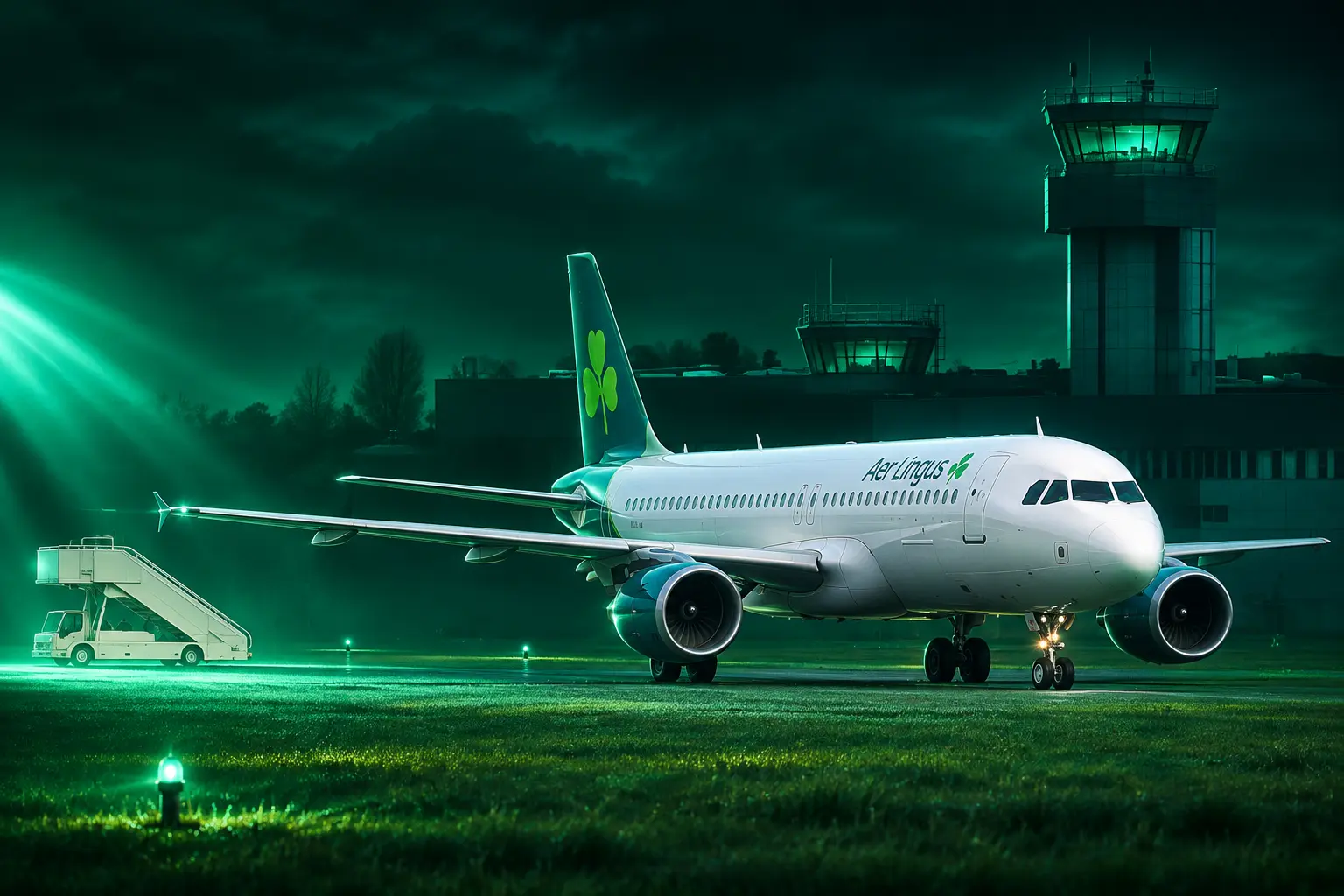
A single emailed bomb warning on November 5 pushed an Aer Lingus Airbus A320 off the Dublin-Rome route and onto a French fighter base, with 151 passengers still in their seats. No device was found. A Rafale had already been launched to meet the jet, and military bomb teams still had to clear it.
The same morning, at least 25 passenger flights across 16 countries took similar alerts. Searches found no explosives. The response was still a continental security operation.
A Dublin Flight Lands at a French Air Base
Aer Lingus flight EI402 left Dublin at 6:24 a.m. Irish time for Rome Fiumicino. Over France it squawked 7700, the general emergency code, and turned toward Normandy. French Prime Minister Sébastien Lecornu’s office said the A320 was sent to Evreux air base, about 100 km west of Paris, with 151 passengers and six crew on board.
The office also said the prime minister ordered fighters up because the crew “did not cooperate as expected.” It gave no further detail on that point. A Rafale left Saint-Dizier at 8:53 a.m., joined the airliner south of Paris at 9:16, then handed the close escort to a Mirage 2000 while remaining in a shadowing position. The A320 landed at 10:04 a.m.
The passengers are safe. Specialist teams can now inspect the aircraft.
French Air Force spokesman, after the Evreux landing
Evreux prosecutor Rémi Coutin later said no explosive device was found on the A320. Passengers were taken by coach that evening to Paris Charles de Gaulle to continue toward Rome. Aer Lingus called the landing a security precaution and said it would reaccommodate customers.
THE EI402 MORNING
- November 5, 6:24 a.m. Irish time: EI402 departs Dublin for Rome.
- 8:53 a.m.: A Rafale launches from Saint-Dizier under France’s standing air-police mission.
- 9:16 a.m.: The fighter joins the A320 south of Paris.
- 10:04 a.m.: The jet lands at Evreux; bomb teams move in; Coutin later reports the hold empty.
That 71-minute stretch from scramble to landing is the specimen. An email named the flight. A fighter still had to fly.
At Least 25 Flights, No Explosives
Airline and police accounts compiled by Thursday evening put the day’s total at at least 25 passenger flights, after seven flights and a cruise ship were warned on November 3 and a Wizz Air service from London Luton to Sofia was diverted to Budapest on November 2. Counted together, the four days produced at least 33 threatened flights. Nothing that inspectors opened was a bomb.
The Thursday warnings reached Italy, Ireland, Britain, Spain, Bulgaria, Romania, Poland, Finland, Austria, Denmark, Belgium, Portugal, France, Greece, Serbia and Czechia. Carriers included Ryanair, Aer Lingus, Wizz Air, Finnair, easyJet, Aegean Airlines, Iberia, Sky Express, Air Serbia and LOT Polish Airlines. Ryanair took at least seven of the week’s alerts, the heaviest load on one airline.
Rome-Bound Jets Drew the Fighters
A Finnair service from Helsinki to Rome landed at Fiumicino under two Italian Air Force Eurofighters launched from Grosseto. Police bomb technicians searched the aircraft and found nothing. Aeroporti di Roma, which runs the city’s two airports, said an email written in Italian had named that inbound flight and EI402 and claimed devices would explode in 60 minutes.
The message, signed as fighters of the Male State, attacked what it called a “feminist regime” and said the sky would turn red. Italian jets had already escorted a Ryanair Dublin-Rome arrival on November 3 after a similar warning. Fiumicino paused departures while the Thursday checks ran.
Ryanair, Wizz Air and the Eastern Diversions
Bulgaria’s air force said it escorted three airliners down. A Ryanair flight from London Stansted to Sofia was sent to Plovdiv. Flights from Copenhagen and Madrid landed in Sofia. A Wizz Air Milan-Warsaw service was rerouted to Vienna. Romania’s intelligence service said a bomb warning hit a flight that landed safely in Bucharest.
Czech police said four aircraft bound for Prague, two of them easyJet services from Newcastle and Glasgow, received emailed threats they judged to have low credibility. They still ordered pyrotechnic inspections after landing. Nothing was found. Spanish police logged three emails in 20 minutes covering Air Europa departures from Madrid and inbound Iberia flights; several aircraft were held or returned to stand. Cork Airport took an anonymous phone threat and delayed a flight by 90 minutes. London Heathrow and Birmingham received warnings British officials assessed as not credible.
THURSDAY’S CONFIRMED DIVERSIONS AND ESCORTS
| Airline | Route | What crews did | Search result |
|---|---|---|---|
| Aer Lingus | Dublin to Rome | Diverted to Evreux under French fighters | No explosives |
| Finnair | Helsinki to Rome | Italian Eurofighters into Fiumicino | No explosives |
| Ryanair | London Stansted to Sofia | Diverted to Plovdiv, Bulgarian escort | No explosives |
| Wizz Air | Milan to Warsaw | Diverted to Vienna | Inspected after the threat |
| easyJet and others | Four flights into Prague | Police met the aircraft | No explosives |
| Aegean Airlines | Thessaloniki-Milan and Athens-Vienna | Full protocol, then continued | Airline called the warnings baseless |
Aegean said both of its threatened flights left Milan and Vienna once checks were finished. A separate Finnair flight from Helsinki, operated by charter carrier Jettime, landed as scheduled in Vienna after a warning. LOT had a Warsaw service land in Brussels. The map was wide. The yields were identical: delay, escort, search, empty hold.
Why a Hoax Email Still Scrambles Fighters
Joji Waites, director of flight safety, policy and regulation at the British Airline Pilots’ Association, said airlines use assessment teams to grade a threat’s credibility. If a warning is treated as credible, crews are told and an airborne jet’s job is to land as soon as it can do so safely. Czech police could call four emails low-grade and still roll a bomb squad. British officials could dismiss Heathrow traffic as not credible. France, Italy and Bulgaria still launched fighters.
That split is the opening the sender uses. A message that looks specific, names flight numbers and gives a 60-minute fuse is expensive to ignore and cheap to write. NATO quick-reaction aircraft exist to launch when something in the sky is unclear. A bomb warning counts as unclear. The fighters are there to look at the airliner, confirm it is flying normally, and stay with it until it is on the ground. Passengers see an intercept. The air force sees a standard unclear-track procedure.
WHAT ONE EMAIL CAN SET IN MOTION
- The grade: Airline and police teams decide if the wording is specific enough to treat as real.
- The sky: Air traffic control, a possible 7700 squawk, a diversion, and in France, Italy, Hungary and Bulgaria a fighter escort.
- The ground: Airport holds, passenger offload, police, dogs and military bomb technicians.
- The bill: Crews time out, aircraft sit on the wrong field, and the state pays for jets that would otherwise wait on alert.
Eliran Almog, chief executive of aviation cybersecurity firm Cyviation, told interviewers the repeated warnings can disrupt operations and also show how airlines, airports and governments answer them.
These aviation threats are also occurring in the same period as cyberattacks on supermarket refrigeration systems across Europe. Different essential services are experiencing disruption that carries economic costs and can undermine public confidence.
Eliran Almog, chief executive, Cyviation
Matthew Borie, co-founder and chief intelligence officer at Osprey Flight Solutions, laid out three live explanations: copycats after a first warning, one person or group sending many messages, or hybrid work by a state or its fans. He did not pick a winner. Eric Schouten, who runs aviation security group Dyami, noted that most of the countries hit back Ukraine, and said any planner has to keep a hybrid campaign on the list, from railways and shops to blood banks and now airliners.
The European Union Aviation Safety Agency, in an emailed note after the alerts, said it would keep watching for aviation safety effects from this kind of security threat. The agency has already studied how security steps can affect flight safety, which is the bind crews are in: a full response protects the next real device and still hands a hoaxer a military-scale show. Europol deputy spokesperson Claire Georges said the agency can help national police, if asked, when threats tie to serious crime or terrorism, including by matching incidents across borders.
Passengers on a diverted intra-EU hop are owed meals, hotel rooms and rerouting rights while they wait. Cash compensation is another matter. EU rules allow flat-rate pay for long delays of €250 to €600, but airlines can refuse that money if they prove extraordinary circumstances. A bomb warning is the kind of event carriers will try to park in that column. Care still has to be provided. The state still has to fly the Rafale.
British Transport Secretary Heidi Alexander called Thursday’s wave “malicious hoax threats” and said the country has established processes for dealing with them. Apostolos Tzitzikostas, the European commissioner for sustainable transport and tourism, said any threat against civilians was unacceptable and that it was “too early to draw conclusions on whether the reported incidents are linked.” He also said there was no information yet to show a cyberattack sat behind the warnings. National inquiries were still open.
The Male State Signature on Two Rome Flights
The Rome email is the only Thursday warning with a published political costume. Airport officials said it went to several addresses at Fiumicino and Milan Malpensa, with the subject line of a threat report, and named the Helsinki-Rome and Dublin-Rome inbounds. A matching text went to Sofia Airport about three Ryanair flights into Bulgaria, according to the message seen there, and added that recipients were “accomplices in a criminal conspiracy.”
Male State is a Russian ultra-right, anti-feminist movement set up in 2016 by activist Vladislav Pozdnyakov. A Moscow court banned it as extremist in the fall of 2021. Pozdnyakov received two years’ probation in 2018 after a conviction for inciting hatred toward women. The network kept a large Telegram following and cheered Russia’s full-scale invasion of Ukraine. In 2022 his name surfaced around bomb threats to schools in Montenegro; no devices were found, and he denied a role.
A banned group’s name on an email is not the same as the group pressing send. Investigators have not shown that Pozdnyakov, or anyone inside the old Male State channel, wrote the Rome or Sofia messages. The wording can be copied. It has been copied before.
WHAT WE KNOW
- The Rome text: An Italian-language email named EI402 and the Finnair Helsinki-Rome flight, gave a 60-minute fuse, and signed off as fighters of the Male State.
- The searches: Inspectors have found no explosives on the aircraft checked since November 2.
- The military answer: French, Italian, Bulgarian and, on November 2, Hungarian fighters were scrambled around civilian jets.
WHAT IS UNCONFIRMED
- One sender: Tzitzikostas said it is too early to treat the incidents as linked.
- The group: Male State’s past and the signature match; police have not tied the account that sent the mail to the banned movement.
- A state hand: Several governments have blamed Russia for other deniable hits; Moscow and Tehran deny any role here, and no service has presented a technical attribution for these emails.
Osprey analyst Rhys Jones has warned that a likely follow-on is heavier airport security, more press attention and more public worry about flying, even after empty searches. That is another return for whoever wrote the messages. They do not need a blast if the queue at security is the prize.
Fridges and Plasma Stores Get the Same Cheap Trick
The flight warnings arrived in the same few days as remote attacks on refrigeration. The French Blood Establishment said that overnight on November 1-2, temperature and defrosting thresholds were pushed to very high levels at three cold-storage sites holding plasma. The kit belonged to a contractor, not to the blood service itself. Alarms tripped in time. Staff moved products. The service said no blood products or samples were lost, and France’s cybersecurity agency was called in.
Shop refrigeration in at least 11 European countries was hit in the same window, after a mid-October wave in France in which officials said about 700 of the country’s 10,000 supermarkets had thermostats overridden and food spoiled. No public inquiry has tied those hacks to the aviation emails. The method rhymes. A low-cost remote act spoils food, threatens plasma, or sends a passenger jet to a fighter base. The target is the duty to respond.
French security officials talking after the Evreux landing put the hoaxer on a short list that ran from a crank to a coordinated move “in the image” of the recent cyber hits. They did not name a country. The inquiry, they said, had only started.
The Summit Ireland Has Never Policed Before
Irish Defence Minister Helen McEntee, speaking as the Thursday alerts landed, called the flight warnings “extremely concerning.” Ireland hosts the ninth European Political Community meeting at the Convention Centre in Dublin on November 12, then an informal meeting of EU heads of state or government on November 13. Gardaí describe the gathering as the largest heads-of-state event the country has ever hosted, with around 50 European leaders and heads of international organisations expected, and the largest policing and security operation in the history of the state.
That operation, already named for the public, ramps up from November 10. It includes public-order units, the special detective unit, emergency response, air support and the national drone unit. McEntee said everything that needs to be done to protect the visitors will be done. Tánaiste Simon Harris had already said in late October that Dublin was taking the security of the two meetings “extraordinarily seriously,” including the risk of drone incursions.
FOUR DAYS OF ALERTS, THEN A SUMMIT
- November 2, 2026: A Wizz Air Luton-Sofia flight diverts to Budapest under a Hungarian Gripen escort after a bomb warning.
- November 3, 2026: Seven passenger flights and a cruise ship are warned; a LOT Heathrow-Warsaw jet goes to Modlin and the field closes for the search; Italian fighters escort a Ryanair Dublin-Rome arrival.
- November 5, 2026: At least 25 flights are warned; EI402 lands at Evreux; Italian jets take the Finnair service into Rome; Bulgarian fighters meet three airliners.
- November 12, 2026: Dublin opens the European Political Community summit, with the informal EU leaders’ meeting the next day.
Leaders will arrive on the same routes that just had to treat anonymous mail as a possible bomb. Airport screening, fighter alert and bomb teams cannot stand down because the last 33 holds were empty. The next message can be another hoax. It can also be the first real device. The rulebook does not get to guess in the air.
Coutin said the A320 at Evreux carried no explosive. The Rafale had still left Saint-Dizier at 8:53 a.m. That scramble is what the email bought.

ADNOC Ship Hit in Hormuz Leaves One Crew Missing

SpiceJet’s Rs 5,500 Crore Plan Follows a Rescue That Failed

Hasina’s Return Fight Sets Fire to Yunus’s Bank

Bancroft Recants the 2018 Inquiry and Names the Team

Adhikari Ties the Saffron Saree Row to School Licences

Clancy Juror Says the Holdout Never Cited Evidence

The iPhone 18 Pro Max Splits Apple’s Fall in Two

OpenAI Calls GPT-6 Astra AGI Then Locks Its Exploits

Trump Claims Hormuz Control as Oil Holds Near $96

Russia Closes the Goethe-Institut Berlin Tried to Save

 NEWS2 months ago
Clancy Juror Says the Holdout Never Cited Evidence
- NEWS3 months ago
The iPhone 18 Pro Max Splits Apple’s Fall in Two
- NEWS3 months ago
OpenAI Calls GPT-6 Astra AGI Then Locks Its Exploits
- BUSINESS3 months ago
Trump Claims Hormuz Control as Oil Holds Near $96
- LIFESTYLE3 months ago
Russia Closes the Goethe-Institut Berlin Tried to Save
- AUTO3 months ago
Volkswagen’s Job Cuts Leave Four Plants Without Cars
- NEWS3 months ago
Dyson Puts Nurovi Robots on Sale Without the UV Flagship
- BUSINESS2 months ago
US Destroys Five Iranian Tankers as the Shock Hits Jordan










