
BUSINESS
Iran Restates Hormuz Freeze After Kremlin Talks With Putin
Iran restated seven unmet Hormuz conditions in Moscow, tying any talks to a freeze while asking Russia for gas pipelines after the US midterms.

Iran’s security chief told Vladimir Putin on Thursday that the Strait of Hormuz stays shut until Washington meets seven conditions. Mohsen Rezaei, secretary of the Supreme National Security Council, said there would be no talks either. He delivered that line in Moscow after handing the Russian president a message from Supreme Leader Mojtaba Khamenei.
Those seven terms have been with mediators since September. Rezaei restated them at the Kremlin two days after US midterm elections that handed both chambers to Democrats, and in the same meeting he discussed piping Russian gas into Iran.
Tehran Took Its Terms to the Kremlin
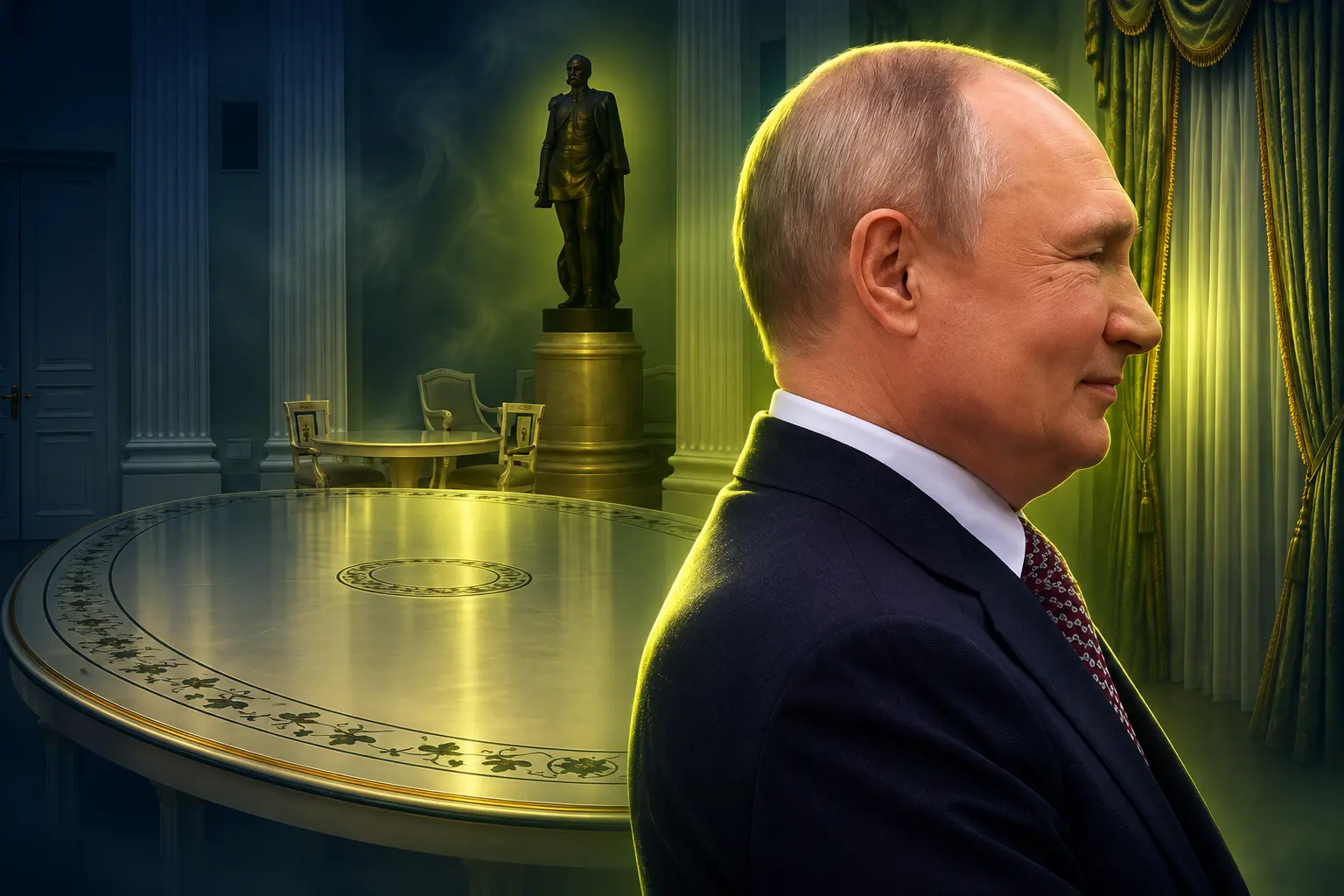
The presidential site recorded that Putin received Rezaei at the Kremlin on November 5. Kremlin spokesman Dmitry Peskov confirmed the session. Putin’s foreign policy aide Yuri Ushakov sat in, as did Igor Kostyukov, head of Russian military intelligence. Rezaei said the trip had been delayed about a month and that Khamenei wanted the letter delivered as soon as possible. The letter’s contents were not disclosed.
On Wednesday, Khamenei had already written that there should not be “even the slightest inclination towards submission” to the United States. Rezaei then told reporters that Putin had condemned US and Israeli attacks on Iran, including strikes on nuclear sites, and had called the war unjust. “Mr Putin said he will do everything he can to help bring the war to an end,” Rezaei said.
We told Mr. Putin that, on the diplomatic front, we had communicated seven conditions to the Americans. Until they meet these conditions, the Strait of Hormuz will not be reopened, and there will be no negotiations.
Mohsen Rezaei, Secretary of the Supreme National Security Council, after the Kremlin meeting
Rezaei also briefed Putin on a four-country meeting held in Tehran and on post-war security in the region. He said the Russian president welcomed that report and, like China, wanted regional security arrangements without foreign countries interfering. Current diplomacy, Rezaei added, was aimed at securing payment of Iran’s rights by the United States.
Seven Conditions, Unchanged Since September
The package is not a document that appeared on Thursday. Iranian officials have tied any reopening of Hormuz to seven conditions since early autumn, and they have sent that list through Qatar, Pakistan and Iraq. Rezaei said in October that Washington had replied, accepted some points, and left others unclear. He called that answer insufficient then. On Thursday he did not publish a new text. He repeated the lock: all seven, then the strait, then talks.
Speaker Mohammad Bagher Ghalibaf, Iran’s chief negotiator, had already told mediators that progress comes only once the seven conditions are agreed. An Iranian source described the late-October package as a ceasefire on every front including Lebanon, the unfreezing of Iranian assets, an end to the naval and oil blockade, the removal of economic and political sanctions, a pullback of US naval and air forces from waters near Iran, payment for war damage, and an end to US threats and insults. Rezaei did not recite those points in Moscow. He treated them as one switch.
WHAT WE KNOW
- The lock: Rezaei says Hormuz stays closed and talks stay off until the seven conditions are met together.
- The channel: Tehran says the list went to Washington through Qatar, Pakistan and Iraq, not as a public white paper.
- The last US reply: In October Rezaei said America had accepted some conditions and left others unclear, a response he judged insufficient.
- The sequencing fight: Iran says it opened the strait first under the June deal and will not hand that lever over again before political and economic pledges are kept.
WHAT IS UNCONFIRMED
- The official text: Tehran has not released the signed seven-point paper Rezaei says sits with the Americans.
- The letter: Khamenei’s message to Putin has not been published.
- The next US reply: No public American answer has followed the November 5 restatement.
That gap is the whole tactic. A list that is firm in Tehran and foggy in public cannot be bargained down in a press conference. It can only be accepted, or not.
Hormuz Traffic Is Still a Tenth of Normal
The waterway is not empty, and it is not normal. Independent AIS tracking puts live status at restricted on day 252 of the crisis, counted from the US and Israeli strikes of February 28, 2026. Visible commercial traffic is about 10% of the pre-war run, with 8.4 crossings a day against 84.8 before the crisis. Ships that do cross move under US naval coordination. Iran claims control and requires transit permits. The official threat level is severe.
The US Energy Information Administration has put pre-war flows at 20.9 million barrels of oil a day in the first half of 2025, about a fifth of world oil use and a quarter of seaborne oil trade, most of it headed for Asia. About a fifth of world LNG trade, much of it from Qatar, also used the strait. At its narrowest the passage is 21 nautical miles (39 km), with lanes two miles wide each way.
Over the past seven days the tracker counted 17 tankers and zero LNG or LPG carriers. Four LNG ships sit in the region. Some 390 large tankers are in the area, 42 of them VLCCs, and 608 commercial ships are stationary. June 2026 was the busiest month since the war began, at 12.9 AIS-visible transits a day, still far below 84.8. The UK maritime agency UKMTO recorded 35 vessel hits in October, the highest month of the war, and at least five vessels have reported incidents since November 1.
GULF PORT CALLS VERSUS PRE-CRISIS LEVELS
| Port | Country | Share of normal calls |
|---|---|---|
| Ras Tanura | Saudi Arabia | 66% |
| Fujairah | United Arab Emirates | 80% |
| Ras Laffan | Qatar | 24% |
| Jebel Ali | United Arab Emirates | 19% |
| Mina al Ahmadi | Kuwait | 0% |
Those shares come from a month of IMF PortWatch chokepoint shipping data and measure port calls, not barrels. Fujairah sits on the Gulf of Oman and can load from the Habshan pipeline, which is why it is near normal while Mina al Ahmadi is idle on this count and Ras Laffan, Qatar’s LNG hub, is at 24%. The strait still sets the price of getting Qatari gas out. It does not freeze every UAE east-coast berth.
Iran’s own crude is the cargo most tightly stopped. The United States reimposed a naval blockade of Iranian ports on July 14 after a short-lived June opening collapsed. Other producers still push some oil through US-escorted transits and overland pipes. That is why a closed Hormuz is a weapon that also cuts Tehran’s own export cash, which is the other half of Thursday’s agenda.
Moscow’s Other Agenda Was Iranian Gas
Rezaei said he and Putin discussed building gas pipelines from Russia to Iran so Tehran could cover domestic shortages and sell Russian gas to neighbouring countries. Iran is a large gas producer. It is also a winter importer of its own problem. The war hit gas plants in the first intense weeks, and the national grid still runs short when heating demand jumps.
Saeed Tavakoli, chief executive of the National Iranian Gas Company, has warned of winter supply stress and has cited peak-day gaps of 250 to 300 million cubic meters between supply and demand in previous years. Those figures are old peak days, not this week’s burn, but they are why a security chief spent part of a war meeting on pipes. Rezaei also said the security council had approved the Rasht-Astara railway on the North-South corridor, with the roads minister due to sign.
A pipeline that lets Iran take Russian gas and pass some of it to neighbours is a hedge against a strait Iran is using as a lock. It gives Moscow a sanctioned export path that does not need Hormuz. It gives Tehran heat if the diplomatic freeze lasts through winter. Putin can call the war unjust and still talk about a corridor that pays while the freeze holds.
What Washington Has Already Answered
Vice President JD Vance sent Rezaei a letter in late October, passed by Qatari mediators, offering to restart diplomacy. The American outline put nuclear commitments, including highly enriched uranium, at the front of any process, with Hormuz opening inside seven days in return for sanctions relief. Ghalibaf answered on X that Iran’s conditions had been “repeatedly and clearly stated to the mediators.” “The carrot-and-stick approach has no effect on Iran,” he wrote. “Progress can only be achieved once Iran’s seven conditions have been agreed upon.”
That is the same sequencing fight that broke the Islamabad Memorandum of June 17. Rezaei has said Iran opened the strait and shipping resumed, then watched the other side’s political and economic pledges fail to arrive. He has said Iran will not again hand over first the lever that brought Washington to the table. In September, Foreign Minister Abbas Araghchi floated a seven-day plan at the United Nations: the United States would lift the blockade, waive oil sanctions and release frozen funds, and the strait would open with talks inside a week. President Donald Trump rejected that plan on September 26 as unacceptable.
So Thursday’s line was not a fresh bid. It was a refusal to reverse the order of operations after an American letter that still wanted nuclear steps first. Rezaei’s October read of the US reply, “partial and insufficient,” still stands as the last detailed Iranian verdict on paper from Washington.
Democrats Now Hold Both Chambers
Voters on November 3 gave Democrats the House and the Senate. Vance said the next day that “the reason we lost is the war,” and he said that if anyone wanted to argue the war was worth losing the Senate for six years, they should do so. Trump treated the war as one cause among several. The split in public is real. The calendar is tighter either way.
THE ROAD TO THURSDAY’S VETO
- February 28, 2026: The United States and Israel launch strikes on Iran. The Hormuz crisis clock starts as day 1.
- March 2, 2026: The Revolutionary Guards confirm the strait is closed to hostile shipping.
- June 17, 2026: The Islamabad Memorandum commits Iran to a staged reopening and the United States to ending its blockade.
- July 8, 2026: The ceasefire collapses. The United States reimposes the naval blockade of Iranian ports on July 14.
- September 24-26, 2026: Araghchi tables a seven-day UN plan. Trump rejects it.
- October 11, 2026: Rezaei says the United States has accepted some of Iran’s seven conditions and left others unclear.
- Late October 2026: Vance’s letter reaches Rezaei through Qatar. Ghalibaf holds the seven conditions as the price of any progress.
- November 3, 2026: Democrats win both chambers. Around the same date, American officials say US forces struck air-defence sites on Qeshm Island in a limited defensive action.
- November 4, 2026: Khamenei warns against “even the slightest inclination towards submission.”
- November 5, 2026: Rezaei delivers Khamenei’s letter in the Kremlin and restates the Hormuz freeze.
On the eve of the vote, Vance had said the United States felt “pretty good” about the chances of a settlement. Trump had also talked about another round of strikes after the midterms. The election did not produce a deal. It produced a restated Iranian price, issued from Moscow, on a day when tankers were still being hit in the Gulf.
Qatar, Oman and the Same-Day Calls
While Rezaei sat with Putin, Araghchi worked the phone with his counterparts in Qatar, Saudi Arabia and Oman, the three capitals that have spent the year trying to keep a corridor open and a wider war off their shores. Qatar has been the main go-between on the Vance letter and on earlier drafts. Oman shares the strait and has discussed a maritime corridor with Iran that Rezaei has described as running largely through waters under Iranian administration. Saudi Arabia needs Ras Tanura working and does not need another campaign over the waterway.
Those calls do not read as a government at ease. They sit beside a supreme leader’s letter to Putin, a public ban on submission, and a security chief who will not open Hormuz until a list Washington has already called, in part, unclear is met in full. Putin offered to help end the war. He did not take the seven conditions off the table, and he talked gas while they stayed on it.
Rezaei left the Kremlin with Russian political cover, a pipeline conversation, and the same lock he brought in. Hormuz remains restricted. The seven conditions remain unmet. The strait, on present Iranian terms, opens after Washington performs, not before.

ADNOC Ship Hit in Hormuz Leaves One Crew Missing

SpiceJet’s Rs 5,500 Crore Plan Follows a Rescue That Failed

Hasina’s Return Fight Sets Fire to Yunus’s Bank

Bancroft Recants the 2018 Inquiry and Names the Team

Adhikari Ties the Saffron Saree Row to School Licences

Clancy Juror Says the Holdout Never Cited Evidence

The iPhone 18 Pro Max Splits Apple’s Fall in Two

OpenAI Calls GPT-6 Astra AGI Then Locks Its Exploits

Trump Claims Hormuz Control as Oil Holds Near $96

Russia Closes the Goethe-Institut Berlin Tried to Save

 NEWS2 months ago
Clancy Juror Says the Holdout Never Cited Evidence
- NEWS3 months ago
The iPhone 18 Pro Max Splits Apple’s Fall in Two
- NEWS3 months ago
OpenAI Calls GPT-6 Astra AGI Then Locks Its Exploits
- BUSINESS3 months ago
Trump Claims Hormuz Control as Oil Holds Near $96
- LIFESTYLE3 months ago
Russia Closes the Goethe-Institut Berlin Tried to Save
- AUTO3 months ago
Volkswagen’s Job Cuts Leave Four Plants Without Cars
- NEWS3 months ago
Dyson Puts Nurovi Robots on Sale Without the UV Flagship
- BUSINESS2 months ago
US Destroys Five Iranian Tankers as the Shock Hits Jordan










