
BUSINESS
Trump Bets a Broke Iran Will Fold Before New Bombs
Trump says he is in no rush to restart the Iran war, oil falls, and the siege camp’s bet is now policy even after jets hit Qeshm.

President Donald Trump said on November 2 he is in no rush to resume fighting in Iran. Hours later, U.S. aircraft struck Qeshm Island in the Strait of Hormuz, and January Brent crude settled at $104.77 a barrel, down 7.6%.
He told an interviewer that Tehran has no money and no gasoline, and that Iran wants a deal more than it ever has. The pause that was supposed to break after the November 3 midterms is, for now, the policy: keep the blockade, keep talking, and leave the big air campaign on the shelf.
Trump Is Betting Empty Tanks Beat New Bombs
The line he used in the Monday phone interview was blunt. “One way or the other, we will do something, but there is no rush. We crippled them financially. They have no money, no gasoline and their people are getting very tired of it,” Trump said.
That is the wager CIA Director John Ratcliffe has been selling him: keep the economic pain on long enough and Iran either concedes more or starts to crack from the inside. Treasury Secretary Scott Bessent has been running the same clock in public. Vice President JD Vance is the one talking up a settlement. The president is letting both lines run, and he has not set a date to choose.
“We are talking to them. It’s going fine. The problem with them is they try and tap, tap, tap us along. There’s less urgency on the Iranian side than you think there would be, but they want to make a deal more than they ever wanted,” Trump said.
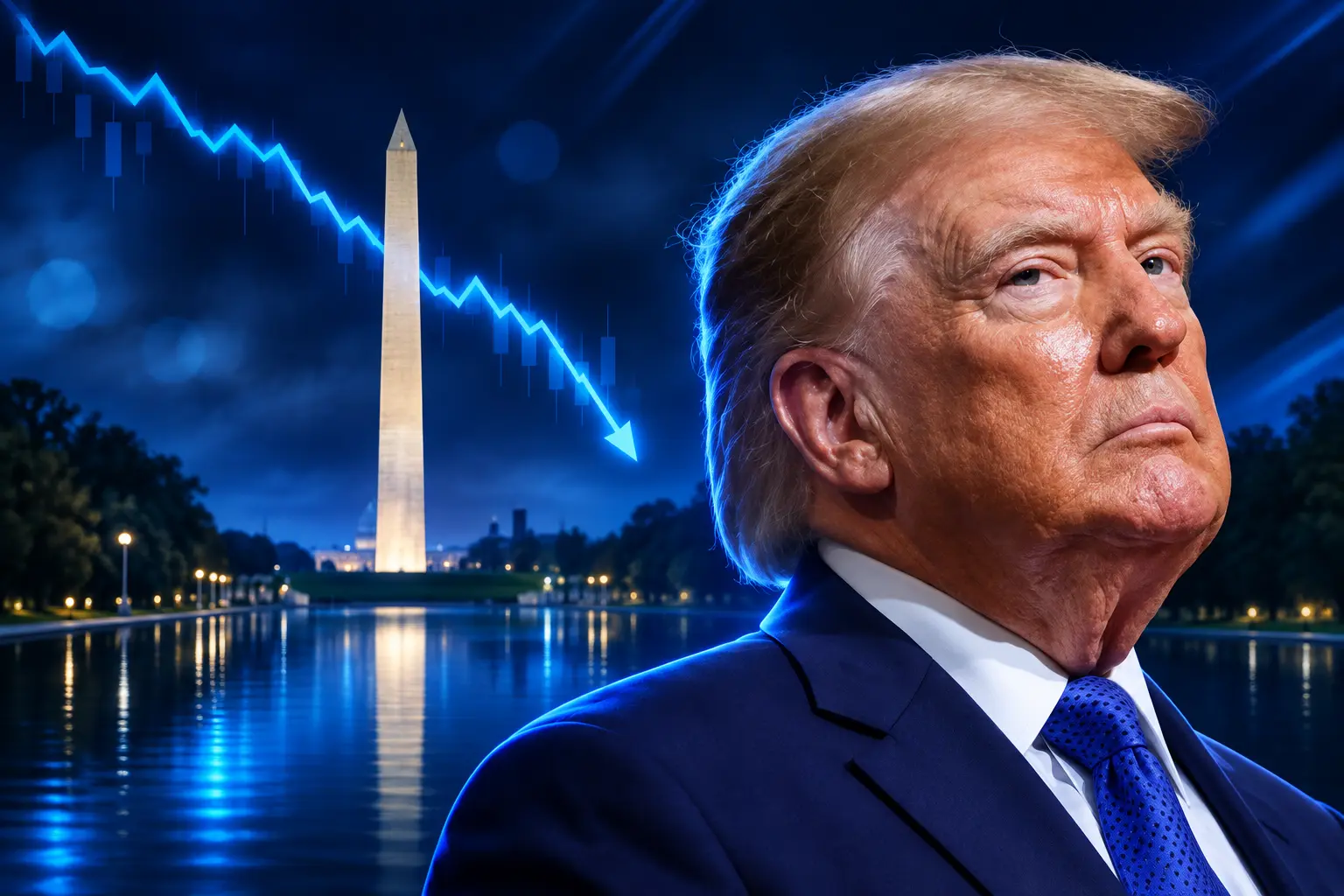
Hours after that interview he posted that oil prices were “DROPPING LIKE A ROCK, down almost $10 a Barrel,” and that Iran wanted a settlement “as soon as possible.” At the Lincoln Memorial Reflecting Pool he put the same thought in fewer words: “It looks like that’s coming together very nicely. That’s why I guess the oil prices dropped. People found out about it.”
The market move was real even if his round number was looser than the tape. December West Texas Intermediate settled at $96.46 a barrel, down 7.4%, and both contracts had their biggest one-day percentage drop since July 27. People priced in a pause. They did not price in a finished war.
Qatar’s Three-Day Draft Versus Iran’s Two-Day Plan
Qatari mediators have been shuttling a draft that sketches three days of confidence-building steps, meant to get the United States and Iran back in the same room. A diplomat briefed on the talks said Ali al-Thawadi, the Qatari mediator, was in Tehran on November 2 to keep that paper alive, and that both capitals still owed him answers.
Iranian negotiators had already left Doha on November 1. Officials briefed on those talks said the walkout was not a collapse. A draft had been circulating for about eight days, and a follow-up meeting was still possible. Foreign Ministry spokesman Esmaeil Baghaei said the basis of the talks remains a seven-step plan Tehran wrote in September to reopen the strait and end the U.S. naval blockade, now compressed so it can run in two days if Washington meets Iran’s terms.
Baghaei called the offer “condensed and can be implemented within two days.” Foreign Minister Abbas Araghchi, speaking in Ashgabat, tied the whole file to one switch. “By accepting these conditions, the Strait of Hormuz will be opened, and negotiations will resume. Otherwise, the current situation will continue, and Iran will not bow down.”
President Masoud Pezeshkian said Supreme Leader Mojtaba Khamenei had “granted the government certain authorities” to chase a diplomatic deal. Araghchi said the exchanges had become “very intensive,” with Qatar and Pakistan both active as mediators. He also warned that if Washington chose “deception and military operations,” Iran’s reply would be “more painful and severe than in the past.”
TEHRAN’S PRICE FOR REOPENING HORMUZ
- The blockade: End the U.S. naval blockade of Iranian ports before any final deal starts.
- The oil: Lift oil sanctions and grant a waiver so Iranian barrels can move again.
- The money: Unfreeze Iranian assets held abroad.
- The shooting: Halt military action against Iran and its regional allies, including a wider ceasefire that Tehran wants to cover Lebanon.
- The troops: Pull U.S. forces back from the areas around Iran.
- The bill: Pay compensation for war damage.
Baghaei said none of that is optional. “No final agreement can be initiated, nor can the Strait of Hormuz be reopened or secured, unless the US naval blockade is brought to an end, Iran’s demands are respected, and Iran’s legitimate requirements are addressed.” Trump already rejected the first version of that plan. The two-day rewrite has not been accepted either.
Who Is Pulling Him Toward a Deal?
Vance and White House envoy Steve Witkoff want a settlement, arguing that a new round of bombing may not improve the facts on the ground. Most Gulf governments have told Trump the same thing. On the other side, Israeli Prime Minister Benjamin Netanyahu and Defense Secretary Pete Hegseth want combat resumed, on the view that Iran will not make a deal it will keep. A third group, Bessent, Ratcliffe, and Secretary of State Marco Rubio, wants neither a war restart nor a quick deal, and prefers to let the squeeze run.
THE THREE BETS ON THE PAUSE
| Bet | Who is selling it | What they want Trump to do |
|---|---|---|
| Make a deal | Vance, Witkoff, Gulf governments | Close a settlement and reopen Hormuz under verification |
| Go back to battle | Netanyahu, Hegseth | Restart a major air campaign after the vote |
| Keep the siege | Bessent, Ratcliffe, Rubio | No new war, no deal yet, more economic pain |
Vance told reporters at Joint Base Andrews that he and Trump “feel pretty good about the prospect of reaching a settlement.” He said there had been “a number of good conversations with the Iranians,” then added the condition that still sits under every draft. “We want to make sure the Iranians don’t rebuild or try to rebuild their nuclear program. We do think there is a pathway there, but it requires a firm and verifiable commitment that they don’t rebuild their nuclear program.”
Asked if Washington had set a deadline to resume strikes, Vance said, “No, we haven’t set deadlines.” That answer is the siege camp’s operating system. A deal can be discussed for weeks. The blockade does not need a speech to keep working.
After the Interview, Qeshm Took Five Explosions
The strait has been closed to normal traffic since February 28, when the eight-month war that started with U.S. and Israeli attacks in late February turned the waterway into a shooting gallery. Some Gulf crude still moves, including on alternate routes, but the risk never left. UK Maritime Trade Operations logged fresh projectile hits on vessels on November 1, a day after a Qatari LNG carrier was struck nearby.
U.S. officials said the November 2 strikes on Qeshm, the large island that sits on the strait, were limited and defensive. One official said Iran had used surface-to-air missiles against U.S. assets. Another said a U.S. fighter destroyed a launcher after the Islamic Revolutionary Guard Corps fired at an American aircraft. Iranian state news described five explosions in succession and residents who saw two planes overhead. The Pentagon pointed questions to U.S. Central Command, which did not comment.
Officials also said Washington had been hitting Iranian launchers in recent weeks without announcing the shots, on purpose, so the quiet campaign would not be read as a return to the major combat of February through April. The last publicly known U.S. attacks had been in early September. Thousands of U.S. troops still sit on the blockade line, and a third aircraft carrier is on its way to the region.
THE 72 HOURS AROUND THE PAUSE
- November 1: Iranian negotiators leave Doha. Trump says the war will end “very soon, one way or the other,” and that Tehran will get a deal or “the hammer.” UKMTO reports more vessel hits in and near Hormuz.
- November 2: Trump says he is in no rush. Oil sells off. Al-Thawadi is in Tehran with the three-day draft. U.S. aircraft then strike Qeshm. IRNA reports the blasts.
- November 3: Americans vote in the midterms that were billed as the inflection point for a new bombing wave.
- November 4: Gulf officials, speaking earlier, said they had been told to be ready for short, intense U.S. strikes as soon as this date if talks fail.
He still tried to shrink the war in public. “I don’t know if you even call it a war, because we haven’t been doing any fighting for months,” Trump said in Washington on November 2. The Qeshm hits do not restart the February campaign. They also do not match the peace premium the oil market just bought. The pause he is selling is a pause on the big wave, not a ceasefire in the strait.
WHAT WE KNOW
- The strike: U.S. officials call it defensive and limited, aimed at a surface-to-air launcher after Iranian fire at a U.S. aircraft.
- The island: Qeshm sits on the Strait of Hormuz; IRNA reported five blasts and two aircraft overhead.
- The talks: Qatar is still carrying a three-day draft; Iran is still carrying a two-day Hormuz plan; neither has been signed.
WHAT IS UNCONFIRMED
- The damage: CENTCOM has issued no public battle-damage account, and there is no confirmed casualty count on Qeshm.
- The next wave: No presidential decision has been announced on a post-vote air campaign, despite the November 4 warning to Gulf allies.
- The paper: The Qatari draft has not been published, and it is not clear how it maps onto Iran’s two-day timetable.
Assistant Secretary of State Donald Blome said the negotiating hand was still out, and that the other direction was still open. “We just can’t allow Iran to take this region and the global economy hostage,” he said. U.S. Central Command has redirected 144 vessels trying to slip the blockade reimposed on July 14, after Trump declared a June 17 memorandum of understanding with Pezeshkian to be “over” on July 8.
Empty Ports and a Winter Gas Warning
Bessent has already named the campaign. Operation Economic Outcast, announced on August 24 and billed inside Treasury as Economic D-Day, is the peacetime half of the bet. In an October action against the remaining shadow fleet, he said Treasury was “starving the tyrannical regime in Tehran of the money it uses to wage war in the region.”
I would predict that from March of ’26 until March of ’27, the economy would contract more than 25 percent, which is more than the Soviet Union contracted after its collapse.
Scott Bessent, Treasury secretary, October 26, 2026
He told Iranians to fill gasoline tanks now and to stock heating fuel for a hard winter. “Iran, for the first time, probably since oil was discovered, has no oil on the water,” Bessent said. “There have been no loadings at Kharg Island. Production is starting to falter.” He added that the next eight weeks of the campaign would be “even more intense,” and that midterms would not change Trump’s calculus on the blockade.
THE SQUEEZE ON THE CLOCK
- Kharg Island: No crude loadings since late August, per Bessent, which cuts off the main export terminal.
- The revenue hole: U.S. Central Command estimates the blockade has already denied Tehran at least $25 billion in oil income.
- The cutoff: Energy tracker Kpler projects seaborne oil payments could dry up by mid-December as the last cargoes settle.
- The winter: First Vice President Mohammad Reza Aref has warned of a natural-gas shortfall and told households to cut use as war damage meets old imbalances.
Ratcliffe’s version of the same bet is uglier. A person with direct knowledge said the CIA director told Trump that a long squeeze would force more concessions, or create enough unrest that Iranians revolt. The CIA declined to comment. Bessent said some IRGC commanders still do not grasp how bad the books look, and that money men holding regime cash abroad are already refusing to send it home.
The war itself has a domestic bill in the United States. Associated Press reporting put the cost to U.S. taxpayers at least $47 billion, and gasoline prices have been a drag on Republicans heading into the November 3 vote. Trump has called higher oil prices “a very small price to pay.” Monday’s drop was the first time in weeks he could point at the tape and call it proof that a settlement was near.
Netanyahu Pressed for Strikes After the Vote
Netanyahu used a weekend call to push for a new wave of U.S. strikes after the midterms, according to people briefed on the conversation. Trump would not commit. Two regional officials said the Israeli prime minister has been working with senior Americans on a short, heavy air campaign, and that Trump still has not chosen. Other U.S. allies in the Gulf have been warning that a restart would shake the region again and could pull Yemen’s Houthis and Iraq’s militias into a wider fight.
The leftover military argument has a name Trump has already used. On October 31 he said, “We still have to take care of, I would say, one or two sites, but we can do that in 10 minutes,” and he pointed at Pickaxe Mountain. That is the site the war camp keeps in play, the unfinished piece after the first rounds of bombing. A loud public argument now treats that mountain as the reason to go big again. The administration has not announced any such plan. What it has announced, through Trump’s own mouth, is that the mountain is still on his list.
The Letter Vance Sent and the One Tehran Has Not Answered
Vance sent a letter last week to Mohsen Rezaei, secretary of Iran’s Supreme National Security Council, a man close to Khamenei. Rezaei said he had read it and had not answered, and that “the tone has completely changed.” Trump told reporters the letter was about medical supplies. Officials who have described the outreach say it offered a path back to talks, with nuclear commitments up front and a Hormuz reopening measured in days, not months.
Rezaei has also said Tehran will not bargain on the nuclear file or reopen the strait until the United States accepts Iran’s demands. Baghaei, asked on November 2 whether Iran would ship its enriched uranium to a third country, said, “No, we will not agree to it.” That refusal sits directly on top of the other offer still in the air from Moscow.
Putin Still Wants the Uranium in Russia
Russian President Vladimir Putin spoke by phone on November 2 with Rezaei about a diplomatic end to the war. Russia has offered to take Iran’s enriched uranium onto its own soil, a replay of an older idea. Putin has said the Iranians, the Americans, and the Israelis first agreed, then Washington insisted the material had to go to the United States, and Tehran hardened. Deputy Foreign Minister Andrei Rudenko said the offer remains on the table if all sides want it.
Rezaei’s deputy was in Beijing the same day, meeting China’s foreign minister. Beijing is urging direct U.S.-Iran talks. Chinese Foreign Ministry spokesperson Mao Ning said China would send a special envoy to Iran, Oman, and Saudi Arabia in early to mid-November. Gulf states have already told Trump they want a deal, not a second campaign, because their economies have been living with eight months of insurance risk, missile alerts, and a strait that is never quite closed and never quite safe.
On November 3, Americans are voting with Brent under the $105 mark, with Qatari mediators still waiting on answers, and with Qeshm Island absorbing a strike that officials insist was not the restart. The bet Trump is running does not need a speech after the polls close. It needs Iran’s ports to stay dark and the big bombers to stay home a little longer.

ADNOC Ship Hit in Hormuz Leaves One Crew Missing

SpiceJet’s Rs 5,500 Crore Plan Follows a Rescue That Failed

Hasina’s Return Fight Sets Fire to Yunus’s Bank

Bancroft Recants the 2018 Inquiry and Names the Team

Adhikari Ties the Saffron Saree Row to School Licences

Clancy Juror Says the Holdout Never Cited Evidence

The iPhone 18 Pro Max Splits Apple’s Fall in Two

OpenAI Calls GPT-6 Astra AGI Then Locks Its Exploits

Trump Claims Hormuz Control as Oil Holds Near $96

Russia Closes the Goethe-Institut Berlin Tried to Save

 NEWS2 months ago
Clancy Juror Says the Holdout Never Cited Evidence
- NEWS3 months ago
The iPhone 18 Pro Max Splits Apple’s Fall in Two
- NEWS3 months ago
OpenAI Calls GPT-6 Astra AGI Then Locks Its Exploits
- BUSINESS3 months ago
Trump Claims Hormuz Control as Oil Holds Near $96
- LIFESTYLE3 months ago
Russia Closes the Goethe-Institut Berlin Tried to Save
- AUTO3 months ago
Volkswagen’s Job Cuts Leave Four Plants Without Cars
- NEWS3 months ago
Dyson Puts Nurovi Robots on Sale Without the UV Flagship
- BUSINESS2 months ago
US Destroys Five Iranian Tankers as the Shock Hits Jordan










