
BUSINESS
Coal India Sells 10% of SECL and Keeps the Cash
SECL’s draft IPO is a 10% Coal India offer for sale, so the parent keeps the cash while the Korba miner still has to fund a rise to 245 million tonnes.

Coal India Limited told exchanges on November 2, 2026, that South Eastern Coalfields had filed draft IPO papers a day earlier. The issue is an offer for sale of up to 668,056,100 shares of Rs 2 each, a 10% slice, and every rupee goes to the parent.
Coal India stock rose as much as 5% in that session and changed hands at Rs 406.7 around 2:20 p.m., against a Rs 389 close. SECL raises nothing. The Korba miner still has to lift output to 245 million tonnes by FY30 on its own books.
Coal India Keeps 90% and the Cash
B. P. Dubey, Coal India’s executive director (company secretary), signed a Regulation 30 filing dated November 2 covering a draft red herring prospectus dated November 1, 2026, lodged with SEBI, BSE and NSE. The letter says the IPO remains subject to approvals, market conditions and other considerations.
Coal India now holds all 668.06 crore paid-up SECL shares. Selling 668,056,100 of them is exactly 10%, and the parent would still own 90% if the whole offer goes through. There is no fresh issue. The draft papers name SBI Capital Markets, ICICI Securities, IDBI Capital Markets and Motilal Oswal Investment Advisors as book-running lead managers, with KFin Technologies as registrar, and the shares are meant to list on BSE and NSE through book building.
Mahanadi Coalfields, the other big producer in the group, already used the same template in September: an offer for sale of 661,836,300 shares, also about 10%, also sold only by Coal India.
TWO 10% SALES, ZERO RUPEES TO THE MINES
| Company | Shares on offer | Stake sold | Who receives proceeds |
|---|---|---|---|
| South Eastern Coalfields | 668,056,100 | 10% | Coal India |
| Mahanadi Coalfields | 661,836,300 | about 10% | Coal India |
Together those two names accounted for 51.35% of Coal India’s output in FY26 (SECL 22.95%, MCL 28.4%). Listing them does not change who runs the pits. It puts a public price on a tenth of each, and it puts the cash in Kolkata.
The Three Mines That Make SECL
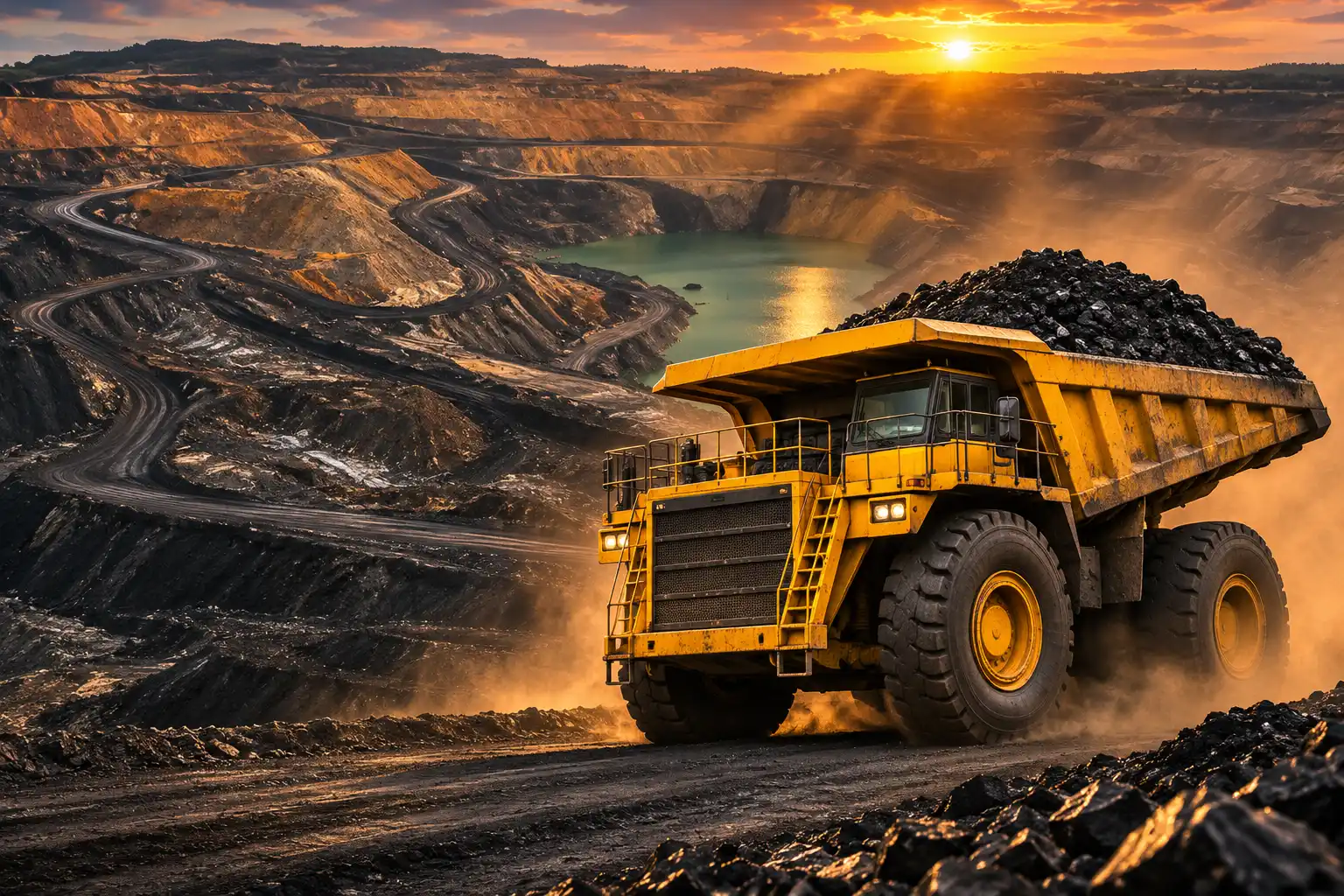
SECL is a Mini Ratna Category-I company, conferred that status on March 15, 2007, and it was incorporated on November 28, 1985, with headquarters in Bilaspur. It is Coal India’s second-largest producing arm, not the country’s largest miner, a distinction the first wave of IPO copy blurred. The draft papers, citing a CRISIL report, put FY26 output at 176.29 million tonnes, 16.94% of India’s coal and 22.95% of Coal India’s, up 5.25% from 167.49 million tonnes in FY25, the fastest rise among the parent’s producing companies that year.
As of September 30, 2026, it ran 53 producing mines, 19 opencast and 34 underground, across the Korba, Mand-Raigarh and Central India coalfields in Chhattisgarh and Madhya Pradesh. Opencast mines supplied 93.64% of FY26 output. Coal India’s daily production board still treats SECL as one of the group’s two heavy hitters, alongside Mahanadi Coalfields.
KORBA’S THREE OPENCAST PITS
- Gevra: 55.80 million tonnes in FY26, the largest coal mine in India and in Asia, second globally by capacity, with environmental clearance to 70.00 million tonnes a year.
- Dipka: 37.50 million tonnes, the third-largest coal mine in India.
- Kusmunda: 32.70 million tonnes, fifth in India and fourth globally by capacity, cleared to 62.50 million tonnes a year.
Those three pits produced about 126 million tonnes, 71.48% of SECL, and hold combined environmental clearance of 172.5 million tonnes a year. Under Coal India’s revised one-billion-tonne roadmap, SECL is supposed to contribute 245 million tonnes in FY30, a 68.8 million-tonne step-up from FY26 that the IPO will not finance.
Audited reserves were 4.61 billion tonnes as of April 1, 2026, enough for about 26 years at FY26 rates. Geological resources were about 47.55 billion tonnes, roughly 11.5% of India’s, of which about 11 billion tonnes have been projectised. Mahanadi Coalfields sat on 9,840.31 million tonnes of audited reserves on the same date, about 45 years of life, which is why the two listings are not the same coal story even though they share a parent and a 10% script.
Why the Issue Sends Nothing Into the Pits
In an offer for sale, existing holders sell stock they already own. SECL will not receive proceeds, the draft papers say; Coal India will. The company still has sanctioned capital of Rs 44,571 crore across 73 approved projects and a public target of 245 million tonnes in FY30. That capex sits on SECL’s own cash and on whatever the parent and the ministry already budget, not on IPO money.
Our Company expects that listing of the equity shares will enhance our visibility and brand image, provide liquidity and a public market for the equity shares in India
South Eastern Coalfields, Draft Red Herring Prospectus, November 1, 2026
That is the official use of proceeds: there isn’t one for the issuer. Visibility, a public market, and a brand name on the ticker. The President of India, acting through the Ministry of Coal, and Coal India are named as promoters. As of September 2026 the President of India still held 61.13% of Coal India, so most of any OFS cheque is, in economic terms, a government cheque routed through a listed parent.
The net offer is carved on familiar SEBI lines: not more than 50% for qualified institutional buyers, not less than 35% for retail, not less than 15% for non-institutional buyers. On top of that sit a 5% employee reservation and a 10% quota for eligible Coal India shareholders. None of those buckets changes where the money lands.
After MCL, the Rest of the 2030 Queue
This filing is the next step in a listing programme the ministry ordered, not a one-off float. Coal India has eight arms: Bharat Coking Coal, Central Coalfields, Eastern Coalfields, Western Coalfields, South Eastern Coalfields, Northern Coalfields, Mahanadi Coalfields and Central Mine Planning and Design Institute.
THE LISTING PATH TO THIS DRHP
- December 16, 2025: The Ministry of Coal, in an office memorandum, asks Coal India to take concrete steps to list Mahanadi Coalfields and South Eastern Coalfields in the coming financial year.
- December 23, 2025: Coal India’s board, by circular resolution, gives in-principle approval for both listings and says the decision will go to the ministry for onward submission to DIPAM.
- December 2025: Officials said the Prime Minister’s Office had asked the coal ministry to map and list all eight arms by 2030, with Bharat Coking Coal and CMPDI first in line.
- September 2026: Mahanadi Coalfields files its own draft papers, an offer for sale of 661,836,300 shares by Coal India, recorded among the company secretary announcements on MCL.
- November 1, 2026: South Eastern Coalfields files its draft red herring prospectus for 668,056,100 shares.
Bharat Coking Coal had already filed an offer for sale of up to 46.57 crore shares, and both BCCL and CMPDI were in the 2026 listing pipeline. The pattern is consistent: peel about 10% of an operating company, keep control, send the cash to Coal India. After two such filings in two months, the parent starts to look less like a single miner and more like a listed holding company for pits that will each have their own ticker.
Holders who already own Coal India are being told, in effect, that the value locked in Korba and Odisha can be priced in public without the parent giving up the board. That is the trade the 5% bounce is pricing. It is also why a Coal India tag on an IPO is not, by itself, a verdict. Two earlier group names in the same pipeline produced very different books and very different investor hunts; SECL’s size will not erase that split.
A 10% Slice for Coal India Shareholders
The reserved 10% for eligible Coal India shareholders is the detail retail desks locked onto first. Hold at least one parent share before the red herring date and you can bid in that bucket, a one-share parent quota in a crowded pool once the category fills. Allotment then follows the usual oversubscription maths, not a guaranteed lot. Employees have a separate 5% window, capped in the usual way at Rs 2 lakh per application in that class.
The quota does not make the offer a growth issue. It is a distribution preference among buyers of stock Coal India already owns. Used that way, it can pull demand into the parent in the weeks before the record date, which is one reason the listed stock can rally on a subsidiary filing even when the subsidiary itself is not selling new shares.
WHAT WE KNOW
- Issue shape: A 100% offer for sale of up to 668,056,100 shares of Rs 2, with no fresh issue and proceeds only to Coal India.
- Control after: Coal India would still hold 90% if the whole offer is sold, and the President of India remains a named promoter through the Ministry of Coal.
- Reservations: Up to 50% of the net offer for institutions, at least 35% retail, at least 15% non-institutional, plus 5% for employees and 10% for eligible Coal India shareholders.
WHAT IS UNCONFIRMED
- Price and size in rupees: The draft papers carry no price band and no rupee issue size.
- Calendar: No opening date, closing date or listing date has been set, and SEBI’s comments are still ahead.
- Final approvals: The November 2 letter repeats that the IPO depends on approvals and market conditions.
Until a red herring prospectus names a band and a record date, the shareholder window is a structure, not a live bid. Chasing Coal India stock only for that reservation is a bet on a date that does not yet exist.
Books That Recovered, Then Stopped Short of FY24
FY26 looked better than FY25 and worse than FY24. Revenue from operations was Rs 32,956.52 crore, against Rs 29,998.36 crore a year earlier and Rs 32,783.62 crore in FY24. Profit after tax was Rs 4,754.59 crore, up 4.72% from Rs 4,540.42 crore in FY25, and 31.4% below the FY24 peak of Rs 6,930.77 crore, when e-auction premiums were fatter. Return on net worth slid from 60.56% in FY24 to 29.07% in FY25 and 25.70% in FY26.
SECL’S THREE-YEAR P&L, FROM THE DRAFT PAPERS
| Particulars | FY24 | FY25 | FY26 |
|---|---|---|---|
| Revenue from operations (Rs crore) | 32,783.62 | 29,998.36 | 32,956.52 |
| Profit after tax (Rs crore) | 6,930.77 | 4,540.42 | 4,754.59 |
| Return on net worth (%) | 60.56 | 29.07 | 25.70 |
The six months to September 30, 2026, were stronger on profit than on sales. Revenue from operations was Rs 16,593.7 crore, against Rs 15,090.2 crore a year earlier, a rise of 9.96%. Net profit nearly doubled to Rs 2,174.3 crore from Rs 1,140.9 crore. That H1 jump is the figure some desks shortened to a 91% profit story; it is a half-year comparison, not the full-year 4.72% rise.
Power-sector fuel supply agreements under the SHAKTI policy and linkage auctions brought in 66.39% of FY26 operating revenue. E-auctions added 21.53%. The top 10 customers, among them NTPC, Maharashtra’s generation company, Adani Power and Chhattisgarh’s generation company, accounted for 52.31% of operating revenue. The book is a thermal-coal book with long contracts, not a merchant miner chasing spot prices every week.
Where the Rakes Fall Short
The same draft papers that sell visibility also list the constraints the public market will price. In FY26 SECL wanted 65 rakes a day and received 53.25, an 18.07% shortfall, with Korba route congestion still in the way. Rail, merry-go-round systems and belt conveyors together moved 62.69% of dispatch, so the company is less road-tied than it was, but the railway gap sits right on the growth path to 245 million tonnes.
WHAT THE DRAFT PAPERS FLAG
- One coalfield: More than 71% of output comes from Gevra, Dipka and Kusmunda, inside a tight cluster in Chhattisgarh, so weather, clearances or local unrest there hit the whole company.
- Tax claims: Contingent liabilities were Rs 15,164.27 crore as of September 30, 2026, equal to 72.08% of net worth, of which Rs 12,846.82 crore is income-tax disputes before the Chhattisgarh High Court.
- Contractors: The top 10 vendors took 66.71% of contractual expenses in FY26, mostly overburden and extraction work SECL does not keep in house.
MCL’s longer reserve life and SECL’s faster FY26 growth are the two facts that make these twins a poor copy-paste. One has about 45 years of audited coal at last year’s rate; the other has about 26, a 245 million-tonne FY30 target, and a rake shortfall already in double digits. The IPO prices a 10% slice of that mix for Coal India. It does not put a single extra conveyor in Korba.
SEBI still has to clear the draft, a price band still has to be set, and the November 2 letter still hedges on market conditions. Until then the listed parent has a new sum-of-the-parts story, and the miner that has to find another 68.8 million tonnes by FY30 has the same balance sheet it had on November 1.
Disclaimer: This article is news reporting and analysis of a draft IPO filing and is for information only. It is not investment advice, a solicitation to buy or sell SECL or Coal India shares, or a recommendation on any offer for sale. Readers should consult a SEBI-registered investment adviser or their broker before applying in an IPO or trading the listed parent. Figures and status reflect the November 1, 2026 draft papers and the November 2, 2026 exchange filing and will change with SEBI comments, the price band, and market conditions.

ADNOC Ship Hit in Hormuz Leaves One Crew Missing

SpiceJet’s Rs 5,500 Crore Plan Follows a Rescue That Failed

Hasina’s Return Fight Sets Fire to Yunus’s Bank

Bancroft Recants the 2018 Inquiry and Names the Team

Adhikari Ties the Saffron Saree Row to School Licences

Clancy Juror Says the Holdout Never Cited Evidence

The iPhone 18 Pro Max Splits Apple’s Fall in Two

OpenAI Calls GPT-6 Astra AGI Then Locks Its Exploits

Trump Claims Hormuz Control as Oil Holds Near $96

Russia Closes the Goethe-Institut Berlin Tried to Save

 NEWS2 months ago
Clancy Juror Says the Holdout Never Cited Evidence
- NEWS3 months ago
The iPhone 18 Pro Max Splits Apple’s Fall in Two
- NEWS3 months ago
OpenAI Calls GPT-6 Astra AGI Then Locks Its Exploits
- BUSINESS3 months ago
Trump Claims Hormuz Control as Oil Holds Near $96
- LIFESTYLE3 months ago
Russia Closes the Goethe-Institut Berlin Tried to Save
- AUTO3 months ago
Volkswagen’s Job Cuts Leave Four Plants Without Cars
- NEWS3 months ago
Dyson Puts Nurovi Robots on Sale Without the UV Flagship
- BUSINESS2 months ago
US Destroys Five Iranian Tankers as the Shock Hits Jordan










