
NEWS
Eisenkot’s 67 Recommendations Still Leave Israel Without a Government
Gadi Eisenkot holds 67 Knesset recommendations to form a government, but Arab and Haredi vetoes leave him short of a cabinet and Netanyahu in office.

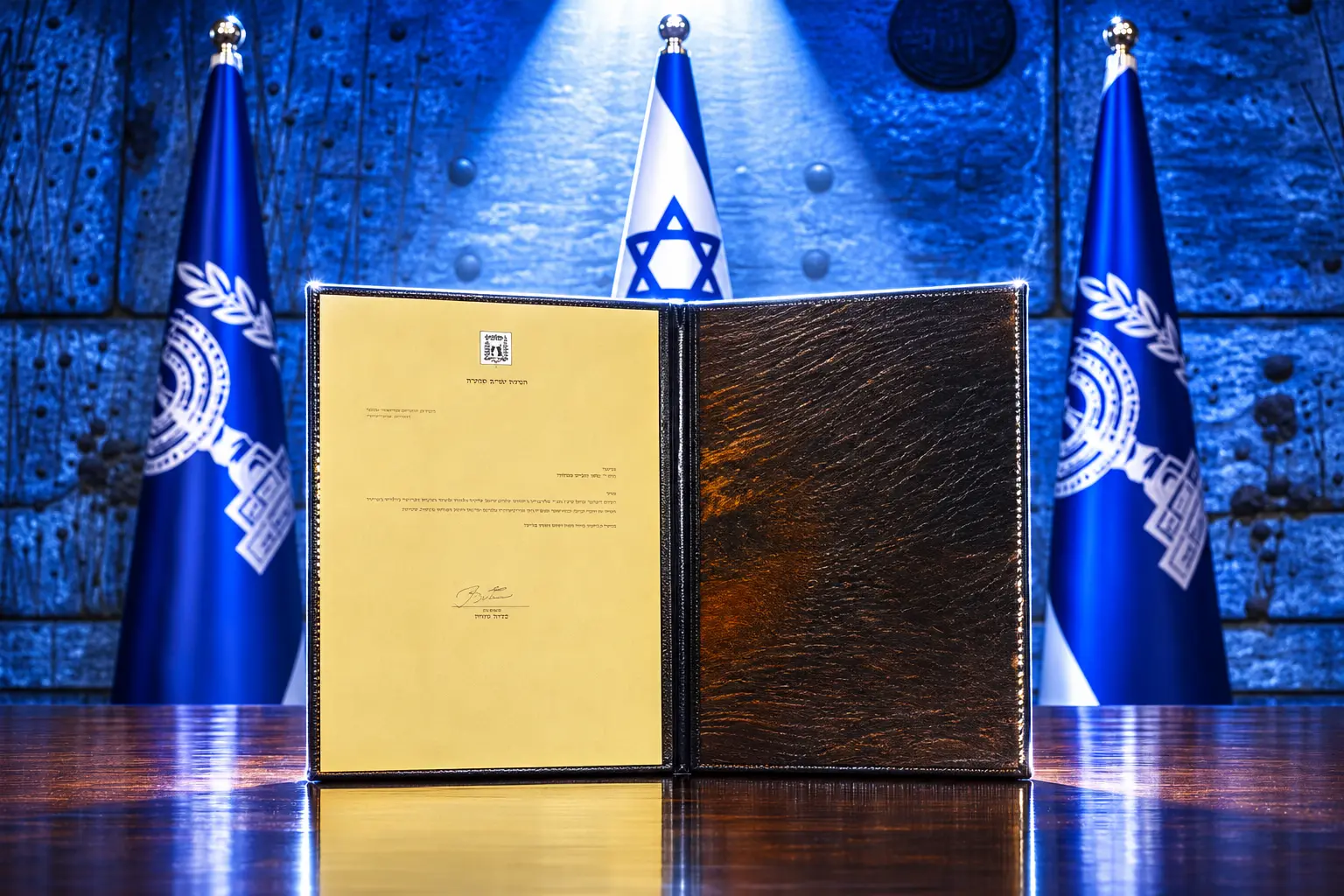
President Isaac Herzog tasked Yashar leader Gadi Eisenkot with forming a government on November 8 after 67 of 120 Knesset members recommended him. Eisenkot, the former IDF chief of staff, has 28 days to win a confidence vote.
The 67 recommendations include 19 Arab lawmakers that Naftali Bennett and Avigdor Liberman will not sit with, while Eisenkot’s Jewish partners hold 48 seats. Prime Minister Benjamin Netanyahu’s bloc has 53 and remains in office as caretaker.
Eisenkot’s 67 Votes Stop at the Cabinet Door
Israel voted on October 27, 2026 for the 26th Knesset. Final results on the official 26th Knesset seat tally give Likud 27 seats and Yashar 21. No list reached 61, the majority in the 120-seat house.
The Central Elections Committee recorded 77.9 percent voter turnout from 7,331,981 registered voters. Valid votes were 5,691,396, and the 3.25 percent threshold sat at 184,971. Turnout in 2022 was 70.6 percent.
THE 26TH KNESSET BY LIST
| List | Seats | Valid votes | Bloc at the count |
|---|---|---|---|
| Likud | 27 | 1,167,591 | Netanyahu |
| Yashar | 21 | 913,629 | Eisenkot |
| Be’Yahad | 12 | 532,018 | Eisenkot |
| Joint List | 11 | 500,755 | Arab-led |
| Democrats | 8 | 366,278 | Eisenkot |
| United Arab List (Ra’am) | 8 | 337,720 | Arab-led |
| Yisrael Beitenu | 7 | 337,450 | Eisenkot |
| Otzma Yehudit | 7 | 326,793 | Netanyahu |
| United Torah Judaism | 7 | 312,632 | Netanyahu |
| Shas | 6 | 299,533 | Netanyahu |
| Religious Zionism and Zehut | 6 | 290,549 | Netanyahu |
Add the columns the way the party leaders do. Likud plus Otzma Yehudit, United Torah Judaism, Shas, and Religious Zionism and Zehut equals 53, eight short of 61. Yashar plus Be’Yahad, the Democrats, and Yisrael Beitenu equals 48, thirteen short. The Joint List and Ra’am hold 19. The outgoing coalition had 68 seats.
Herzog then counted recommendations, not campaign blocs. Factions totaling 67 names backed Eisenkot. Factions totaling 46 backed Netanyahu. United Torah Judaism’s 7 members recommended no one. 67 plus 46 plus 7 is 120, and 67 is a majority of the house on paper. It is also 48 Jewish opposition seats plus the 19 Arab seats Bennett and Liberman have already ruled out as coalition partners.
Two Paths to 61, Each With a Price
Only two sums reach a governing majority without a defection from Likud, Otzma Yehudit, or Religious Zionism. Both sums run through parties Eisenkot’s own camp spent the campaign promising to hold at arm’s length.
TWO ARITHMETIC PATHS TO 61
- The Haredi sum: 48 Jewish opposition seats plus United Torah Judaism’s 7 and Shas’s 6 equal 61, if both ultra-Orthodox parties leave Netanyahu and accept Eisenkot as prime minister.
- The Arab sum: 48 plus the Joint List’s 11 and Ra’am’s 8 equal 67, if those 19 vote for an Eisenkot government from inside the cabinet or as a safety net from outside.
- The investiture wrinkle: The Israel Democracy Institute notes that a confidence vote needs more yeses than nos, not 61 yeses, so a minority cabinet could in theory pass if its opponents do not all vote no.
Liberman has also rejected a minority government. Democrats leader Yair Golan is the only Jewish-led partner who has openly backed sitting with Arab parties. That leaves Eisenkot trying to build 61 from Haredi parties that want yeshiva students shielded from the draft, or from Arab parties his other partners will not accept, while the law’s softer investiture rule sits unused.
Bennett and Liberman Drew the Arab Line
Former Prime Minister Naftali Bennett, now at the head of Be’Yahad’s 12 seats, and Liberman, whose Yisrael Beitenu holds 7, both served in the 2021 government that included Ra’am. After the Hamas-led attack of October 7, 2023 they closed that door. Liberman wrote that his party “will not sit with supporters of terrorism,” citing Joint List MK Ofer Cassif’s support for South Africa’s case against Israel at the International Court of Justice, Ra’am MK Yasser Hujirat’s remarks on Hamas, and a Joint List election-night dedication “to our people in the Gaza Strip, the West Bank and occupied Jerusalem.”
He added that anyone who wants to rely on “supporters of terrorism” is welcome to do so, and that Yisrael Beitenu will not be there. Eisenkot has set his own tests for any party that wants in: recognition of Israel as a Jewish and democratic state, some form of national service, and a commitment to dismantle Hamas’s military and governing capabilities. The Joint List has offered a safety net, not cabinet seats. Ra’am chairman Mansour Abbas told Herzog that Arab society was a bridge and asked that it not be destroyed. He later denied, in Arabic, that he had agreed to designate Hamas a terrorist organization, which is one of the tests Eisenkot has named.
Netanyahu has spent the days since the count pressing that point in public, arguing that Eisenkot, Bennett, and Liberman would form a government with Ra’am and the Joint List and calling instead for national unity.
התקווה לא, המנון פלסטיני כן.
איזנקוט, בנט, ליברמן – איתם אתם רוצים להקים ממשלה?
אחדות לאומית זה צו השעה! pic.twitter.com/hvAURf2sYV— Benjamin Netanyahu – בנימין נתניהו (@netanyahu) November 11, 2026
In light of this, and following talks I have held with various figures in recent days, it is therefore evident that Mr. Eisenkot has received the clear and unequivocal support of a majority of Members of Knesset on the most central question: who has the better chance of forming the next government that will win the confidence of the Knesset.
Isaac Herzog, President of Israel, President’s Residence, November 8, 2026
Herzog said he was well aware that Likud is the largest faction, then still handed Eisenkot the letter. Recommendations do not bind the president by law. They did, in this round, decide who got the first clock.
The Draft Is the Price of 13 Seats
United Torah Judaism and Shas are the only other road to 61. Together they hold 13 seats. Eisenkot and Liberman agreed after a November 9 meeting to try that road before they even discuss a minority cabinet resting on Arab votes, and Liberman dropped an older ban on sitting with Haredi parties in order to make the math work.
The price is the draft. Eisenkot has said service should apply to all. UTJ MK Yaakov Asher set three conditions for joining any government: regulating the status of yeshiva students, independence for Haredi education, and keeping the religion-and-state status quo. “Without these conditions, we will not be partners. Period,” he said. Early talk has included a one-year, perhaps 18-month, stretch with no real enlistment and no arrests of draft dodgers, which would have to survive legal review. Shas, for its part, put out a statement that it recommended Netanyahu on the instruction of its Council of Torah Sages, after he committed to pass a law on yeshiva students, and that it “is not conducting negotiations with any other party.”
Haredi factions also refused to help replace Knesset Speaker Amir Ohana when Eisenkot’s bloc looked for an early show of control. That vote was a small test. They declined it.
WHAT WE KNOW
- The mandate: Herzog tasked Eisenkot on November 8, after 67 recommendations to 46, with UTJ naming no one.
- The Arab veto: Bennett and Liberman have ruled out a coalition that includes the Joint List or Ra’am, and Liberman has also ruled out a minority government.
- Shas’s line: The party says it still backs Netanyahu and is not negotiating with anyone else.
WHAT IS UNCONFIRMED
- UTJ’s next step: Senior rabbis have been described as open to talks, but no signed deal on yeshiva status has been published.
- A draft law before a cabinet: Haredi parties want legal cover that may require a sitting government and a Defense Ministry bill, which they do not yet have.
- A 48-seat minority: Golan backs using Arab outside votes; Liberman says he will not.
Likud has treated even the rumor of a Haredi walk as a threat, and Netanyahu has met UTJ figures to keep the 13 in his column. If they stay, Eisenkot’s 48 never becomes 61.
Netanyahu Still Holds the War Cabinet
Until a new government wins confidence, the outgoing cabinet stays on with the same legal authorities it had before the vote, including diplomacy and the use of force. That is the part of a hung Knesset that does not hang. Netanyahu remains prime minister. Itamar Ben-Gvir remains at national security and Bezalel Smotrich remains in the finance slot unless and until a new slate is sworn.
Eisenkot has told the caretaker to hold off on military moves that can wait, and the two men said they would meet on November 12 for a security and diplomatic briefing. A live argument has opened over how far a caretaker can go on Iran while the mandate sits with someone else. Liberman’s public line has been that a transitional government should not drag the country into a war. Netanyahu does not need 61 seats to keep issuing orders from the office he already occupies.
That is why the recommendation tally and the governing tally have parted company. Eisenkot won the argument about who should try first. Netanyahu still holds the building.
How the Formation Clock Works
Herzog tasked Eisenkot with forming a government at a November 8 ceremony in Jerusalem. Basic Law: The Government gives that MK 28 days, so the first deadline is December 6. The president may add periods that together do not exceed 14 days, which would push the last day of the first try to December 20.
The Israel Democracy Institute, in its note on the president’s discretion in the first assignment, stresses that the statute does not force him to pick the leader of the largest list, and that “recommendations” do not even appear in the law. Herzog met factions from smallest to largest starting at 17:00 on November 4, beginning with Religious Zionism-Zehut, then chose the MK who had 67 names. If Eisenkot fails, tells Herzog he cannot do it, or loses a confidence vote, the president has three days to give a second MK 28 days with no extension, or to tell the speaker he sees no path. After that, at least 61 members may, within 21 days, name someone in writing for a final 14-day try. If that fails, the Knesset is dissolved and a new election is set for the last Tuesday before 90 days have passed.
THE FORMATION CLOCK
- October 27, 2026: Israel holds elections for the 26th Knesset.
- November 4, 2026: Justice Noam Sohlberg, chair of the Central Elections Committee, presents official results to Herzog, who opens consultations at 17:00 with the smallest faction first.
- November 8, 2026: Herzog assigns Eisenkot the task of forming a government after 67 recommendations.
- November 10, 2026: The 26th Knesset opens and members are sworn in, with Amir Ohana still in the speaker’s chair.
- December 6, 2026: First 28-day deadline, unless Herzog grants extra time.
- December 20, 2026: Last day of a full 14-day extension on the first mandate.
A second nominee, if there is one, would then get 28 days with no extra time. Netanyahu can wait through all of that as caretaker. He does not need the first letter to keep the job he already has.
The 2021 Coalition Lasted Just Over a Year
Only one Israeli government has ever included an Arab party as a full partner. Ra’am joined the eight-party cabinet that replaced Netanyahu in 2021, with Bennett as prime minister, and that government fell a little more than a year later. Bennett now says he will not repeat it. Liberman says the same. The Joint List’s 11 seats in this Knesset are the most an Arab-led list has brought into a hung house in this cycle, and they still buy a recommendation, not a ministry, unless Eisenkot’s Jewish partners reverse themselves.
The Haredi alternative copies a different old bargain: ultra-Orthodox parties trade their 13 votes for protection on the draft and on schools. Eisenkot ran against that bargain. His 48 seats cannot absorb it without breaking a campaign promise, and cannot ignore it without staying at 48.
On December 6, unless Herzog adds time, the first mandate expires. If no cabinet has won confidence by then, the letter can move. The outgoing government does not move with it. Netanyahu remains caretaker, with 53 seats, eight short of a majority and still in the chair, until someone else actually forms a government that the Knesset will vote to accept.

ADNOC Ship Hit in Hormuz Leaves One Crew Missing

SpiceJet’s Rs 5,500 Crore Plan Follows a Rescue That Failed

Hasina’s Return Fight Sets Fire to Yunus’s Bank

Bancroft Recants the 2018 Inquiry and Names the Team

Adhikari Ties the Saffron Saree Row to School Licences

Clancy Juror Says the Holdout Never Cited Evidence

The iPhone 18 Pro Max Splits Apple’s Fall in Two

OpenAI Calls GPT-6 Astra AGI Then Locks Its Exploits

Trump Claims Hormuz Control as Oil Holds Near $96

Russia Closes the Goethe-Institut Berlin Tried to Save

 NEWS2 months ago
Clancy Juror Says the Holdout Never Cited Evidence
- NEWS3 months ago
The iPhone 18 Pro Max Splits Apple’s Fall in Two
- NEWS3 months ago
OpenAI Calls GPT-6 Astra AGI Then Locks Its Exploits
- BUSINESS3 months ago
Trump Claims Hormuz Control as Oil Holds Near $96
- LIFESTYLE3 months ago
Russia Closes the Goethe-Institut Berlin Tried to Save
- AUTO3 months ago
Volkswagen’s Job Cuts Leave Four Plants Without Cars
- NEWS3 months ago
Dyson Puts Nurovi Robots on Sale Without the UV Flagship
- BUSINESS2 months ago
US Destroys Five Iranian Tankers as the Shock Hits Jordan










