
NEWS
Alamgir Wins Bangladesh Presidency in First Contested Vote Since 1991
BNP’s Mirza Fakhrul Islam Alamgir takes the presidency 255-88 in the first contested race in 35 years, a ritual that still leaves real power with the prime minister.

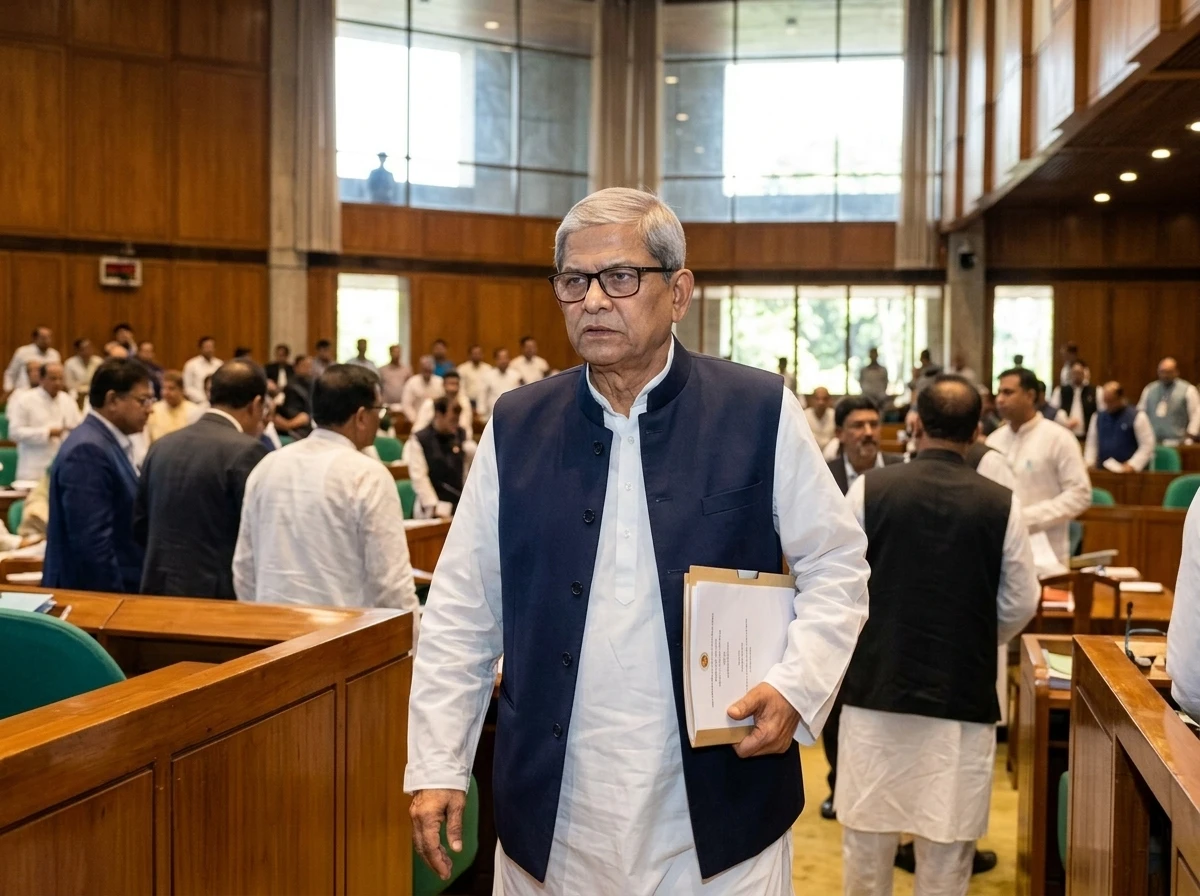
Mirza Fakhrul Islam Alamgir secured 255 votes to retired Colonel Oli Ahmad’s 88 on Thursday and became Bangladesh’s 23rd president, the first time lawmakers chose between two names for the post since 1991. Of 349 eligible MPs, 343 cast valid ballots after six went unused; Chief Election Commissioner AMM Nasir Uddin announced the tally after polling closed at the Jatiya Sangsad.
The numbers tracked the seat arithmetic almost exactly. The ruling Bangladesh Nationalist Party holds 247 of those seats and the Jamaat-e-Islami-led 11-party alliance holds 90. Alamgir, 78, the BNP secretary-general and local government minister, entered as the clear favourite once Prime Minister Tarique Rahman nominated him.
How the Ballots Lined Up
Voting ran from morning into the afternoon in the parliamentary chamber. All 349 lawmakers were issued ballots; 343 were used and counted valid, with four replaced under the Presidential Election Act. Three transparent boxes held the votes. Nasir Uddin said three commissioners and the EC secretary watched the count.
| Candidate | Party/Alliance | Votes | Parliamentary Seats |
|---|---|---|---|
| Mirza Fakhrul Islam Alamgir | BNP | 255 | 247 |
| Oli Ahmad | Jamaat-led 11-party | 88 | 90 |
| Unused/invalid | – | 6 | – |
The last contested race came in October 1991, when BNP’s Abdur Rahman Biswas beat Awami League nominee Badrul Haider Chowdhury 172 to 92. Every presidential election after that was unopposed until today.
Two Veterans, One Safe Math
Alamgir spent the Hasina years as BNP’s public face in Dhaka while Tarique Rahman remained in London and Khaleda Zia faced jail and illness. He became acting secretary-general in 2011 and took the full post in 2016. Party sources put his arrests at least at 11 and time behind bars around three and a half years, with more than 100 cases filed against him. After the BNP’s February 2026 landslide he took the local government portfolio. At a parliamentary party meeting the day before the vote he thanked Rahman and pledged to guard independence and sovereignty; Rahman told MPs to back him.
Oli Ahmad, 85, is a Bir Bikrom holder and one of the first Bengali officers to revolt against Pakistani forces in March 1971. He fought under Ziaur Rahman, joined the BNP in 1980, served as communications minister under Khaleda Zia, and founded the Liberal Democratic Party in 2006. His nomination by the Jamaat-led alliance carried its own irony: Jamaat opposed independence in 1971 while Ahmad fought for it. The alliance called him experienced and broadly acceptable, ensuring the race would not go uncontested.
- Alamgir: long-time BNP organiser, integrity praised by some constituency visitors, reform promises questioned by others.
- Ahmad: Liberation War veteran, six-time MP, LDP chairman, once close to Ziaur Rahman.
- Public split: a former Bangladesh Bank official cited Alamgir’s local affection and rare integrity; a Dhaka construction manager preferred Ahmad’s experience and said the BNP had not delivered on state reforms.
Anwarul Islam, the former bank official, told Al Jazeera that people in Alamgir’s area, “irrespective of race or religion, have enormous affection for him.” Abdul Baten said simply he would “definitely prefer Oli because he is a seasoned politician.”
The Office Still Follows the Prime Minister
Bangladesh’s constitution names the president head of state and supreme commander of the defence services. In practice the job stays narrow. Article 48(3) requires the president to act in accordance with the advice of the Prime Minister except when appointing the prime minister and the chief justice. The full text of the Bangladesh constitution leaves little independent room for the Bangabhaban.
It’s good to see that someone who has been at the forefront of the democratic movement and fought against a fascist regime will be occupying the office of the president. However, the presidential election has very little significance due to the limited powers of the president.
Ali Riaz, political scientist and former co-chair of the National Consensus Commission, to Al Jazeera
Riaz called the vote “more of a ritual than substantive in terms of governance and politics.”
July Charter Promises Still Waiting
The July National Charter reform proposals, signed in 2025 by the Yunus interim government and dozens of parties including the BNP and Jamaat, sketched a different presidency. Parties agreed the president should gain freer rein over appointments to the National Human Rights Commission, Information Commission and other bodies. They also floated an upper house of parliament with real teeth over constitutional and statutory appointments, secret-ballot presidential elections, and the abolition of Article 70’s ban on floor-crossing.
- Bicameral parliament with a 100-seat upper house elected by proportional vote share.
- Stronger presidential role in selecting election commissioners, the ombudsman, PSC and ACC chiefs.
- Prime ministerial term limit of ten years and restored caretaker system for elections.
- Article 70 scrapped so MPs could vote their conscience without losing their seats.
None of the structural pieces, especially the upper house, has been built. The referendum that accompanied the February general election ratified the charter’s direction, yet the new parliament has not turned the text into operating institutions. Alamgir’s own party filed multiple notes of dissent during the drafting. Riaz noted the charter’s plan for election by both houses remains unimplemented.
Article 70 and the Free-Choice Complaint
Mohammed Shahabuddin, elected unopposed in 2023 as an Awami League nominee, resigned in July citing health reasons halfway through his term. He had stayed in office through Hasina’s fall in August 2024, the Yunus interim period, and the BNP’s return. Families of the more than 1,400 killed by security forces in the 2024 uprising saw his exit and a new election as overdue.
Sanjida Khan Deepti, whose 17-year-old son Shahriar Khan Anas died in the uprising, told Al Jazeera it should have happened earlier but was still welcome. She then asked the sharper question: “If an MP cannot vote for the person they believe is best for the country, then what is the point of holding a vote? Our children gave their lives for democracy.” The debate over whether Article 70 binds MPs in a presidential contest revived immediately. In practice the tallies stayed close to the party seat counts.
What Alamgir’s Move Into Bangabhaban Carries
Alamgir leaves active party leadership for a post that could grow if the charter’s remaining pieces ever land. Daily Star reporting noted he spent years holding the BNP together under pressure when many leaders went quiet or underground. Supporters in his Thakurgaon base celebrated the nomination as recognition of that stretch. Critics on the ground and online treated the result as the expected outcome of majority arithmetic rather than a genuine contest of ideas.
The new president will swear in and take residence while the government under Tarique Rahman faces the ordinary grind of power: economy, Rohingya returns, banking clean-up, and the unfinished reform list. The 1991 precedent shows a contested vote can happen and still leave the office ceremonial. The 2026 version arrived with the same arithmetic and the same constitutional limits, even after an uprising that was supposed to rewrite the rules.
Lawmakers left the chamber with two names on a ballot for the first time in more than three decades. The man who kept the BNP standing through its hardest years now occupies Bangabhaban. The powers he actually holds will tell whether the ritual was the start of something larger or simply the latest confirmation that the presidency still follows the prime minister’s advice.

-
 TECH1 year ago
Where Garmin Watches are Made and How They are Assembled
-

 AUTO2 months ago
Tesla’s Roadster Is ‘a Few Weeks Away,’ Says Its Chief Designer
-
 NEWS10 years ago
Samsung Releases Galaxy Note7 TV Ad as Reddit AMA Leaks Specs
-
 NEWS10 years ago
Android 7.0 Nougat Rolls Out To Nexus Devices With New Emoji, Features
-
 FINANCE9 years ago
Cardano Price Surges as ADA Enters the Crypto Top Ten List
-
 NEWS10 years ago
Pre-Order the First Camera Made for Facebook Live Streaming Video
-
 FINANCE1 year ago
Binance Suspends Trading and Withdrawals for a System Upgrade
-
 FINANCE9 years ago
RChain Price Jumps Nearly 150% to a New All-Time High of $2.03