
NEWS
YouTube Premium Auto Speed Turns Podcasts Into Price Defense

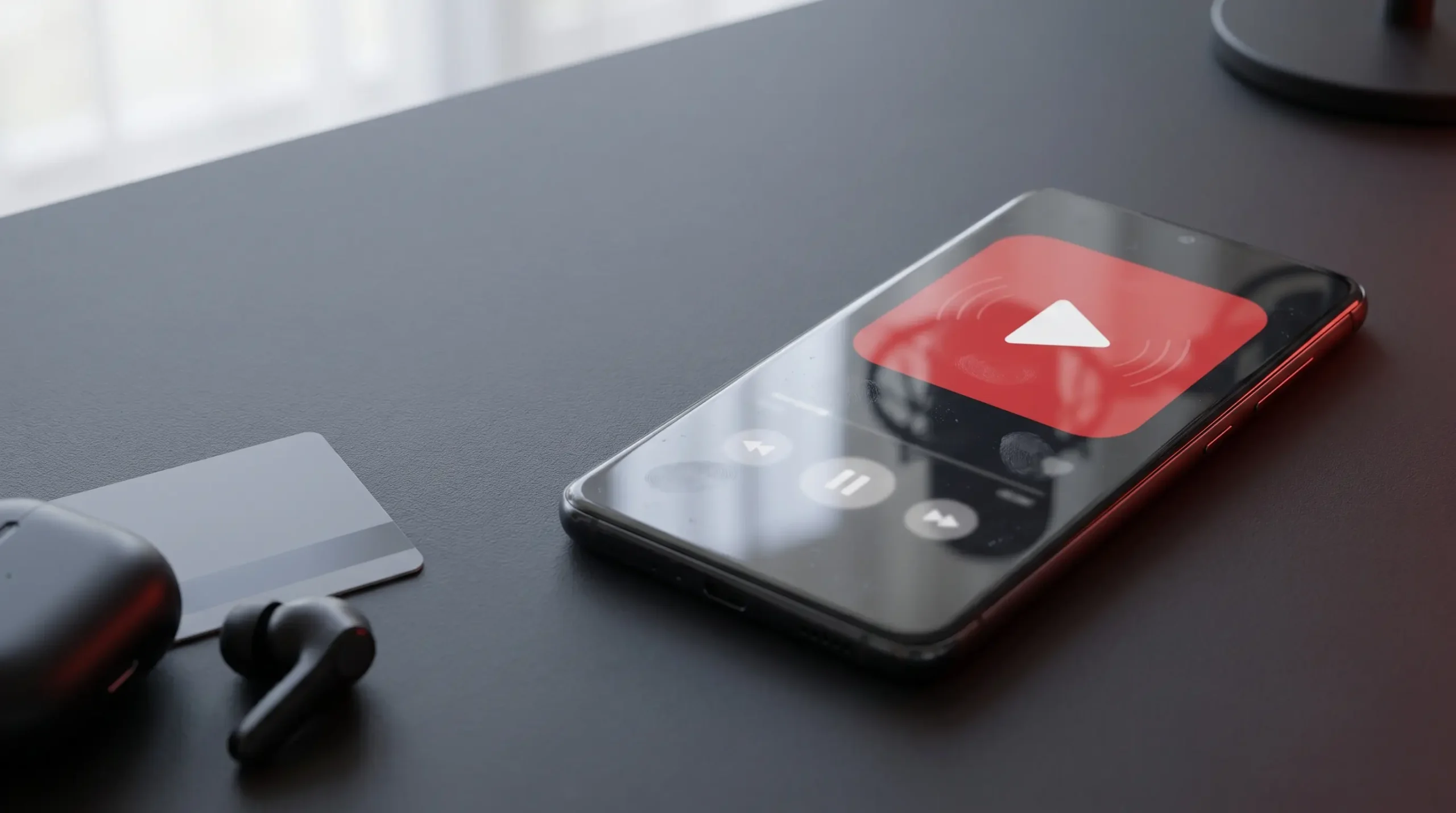
YouTube Premium auto speed and podcast updates are the new perks YouTube wants subscribers to notice before the June price rise hits. Auto speed adjusts playback pace on its own, on-the-go mode turns the main app into larger audio controls, and Ask Music now recommends podcasts from prompts.
The timing gives the release its edge. YouTube says podcasts draw more than 1 billion monthly active viewers, and Premium users watched over 800 million podcast hours in April. A niche listening toolkit has become a subscription defense for a mass video app.
The Podcast Perks Land at the Price-Rise Moment
The rollout is narrow in device support and broad in intent. Steve McLendon, YouTube Podcasts product lead, and Jack Greenberg, YouTube Premium product management director, announced the three tools on May 28, with Android support first and iOS support due in the coming months. Rather than a full podcast-app overhaul, the release targets the moments when YouTube is already playing but the viewer is no longer staring at the screen.
In the U.S., the YouTube Premium signup page now starts the individual plan at $15.99 per month or $159.99 per year. That is the backdrop for the podcast push: YouTube has to make Premium feel less like ad removal and more like a daily-use bundle. For users who already treat interviews, explainers, debates, and sports shows as audio, these controls are easier to feel than another abstract perk in the subscription menu.
- 3 Premium tools: automatic speed changes, a simplified listening screen, and prompt-based podcast recommendations.
- 800 million hours: podcast time watched by Premium users, including trials, in April, according to YouTube internal data.
- 1.0x to 4x: the selectable baseline range for the speed tool on supported videos.
The package also lands at a time when video podcasts have blurred old categories. A show can be filmed for YouTube, clipped for Shorts, heard with the phone locked, and still called a podcast by the audience. That gives YouTube a path that Apple Podcasts and old RSS players never had: turn video scale into audio loyalty.
Audio apps win by getting out of the way. YouTube cannot fully do that because comments, recommendations, and video thumbnails are part of the product, so these changes try to quiet the interface without giving up the platform behind it.
Auto Speed Moves YouTube Toward the Power-Listener Lane
the Premium benefits guide for auto speed says the speed tool adjusts playback during slower speech and lengthy introductions, then slows for information-dense segments. The same guide says it is currently limited to English content in the Android mobile app, with Shorts, premieres, live streams, music, movies, and shows excluded. Once enabled, the setting lasts for the app session and has to be turned on again after closing and reopening the app.
Dedicated podcast apps have trained heavy listeners to expect time-saving audio controls. Overcast’s Smart Speed feature shortens silences in talk shows, while Pocket Casts has long offered speed, silence trimming, and volume boost. YouTube’s move matters because those habits are entering a default video app with far more casual reach. That turns a power-listener feature into a mass-market retention tool.
| Premium Listening Job | Older YouTube Pattern | New Podcast Layer |
|---|---|---|
| Speed | User manually picks a rate | System adjusts pace during a session |
| Background use | Playback continues when the screen is off | Larger controls make audio use easier |
| Discovery | Search, feeds, and recommendations do most of the work | Prompts can ask for shows by mood, genre, or similarity |
| Format | Video remains the default surface | Controls lean toward listening without looking |
The table shows the strategic difference. YouTube is adding knobs for people who already listen at high speed, then placing those knobs where users may have arrived for a clip, a livestream replay, or a creator interview and stayed for an hour-long episode.
On-the-Go Mode Turns Video Into Background Audio
The commute mode is the least flashy addition and probably the most practical. Instead of asking a listener to manage comments, suggestions, likes, and the normal video chrome, it pushes the player toward skip buttons, chapters, queue access, a download button, speed control, and a toggle between audio and video. That matters because most podcast time is not spent with two hands on a phone.
YouTube says the feature can detect motion such as walking or running and, after at least 60 seconds with the phone unlocked, show a prompt to switch modes. Once enabled, the controls can work while the phone is locked or unlocked. The feature also replaces the older Premium controls on Android, so the change reaches deeper than a cosmetic overlay for people who use the app outdoors.
- Best fit: long interviews, true-crime episodes, talk shows, and creator conversations where the video matters only some of the time.
- Weak fit: visual tutorials, reaction videos, and chart-heavy shows that lose meaning when the screen is off.
- Platform limit: Android gets it first, while iPhone and iPad support is still scheduled for later.
Ask Music Gives Discovery a Prompt Box
Ask Music already had a clear job in YouTube Music: describe a mood or activity, then get a generated mix. The podcast extension points the same habit at talk content, which is messier than music because listeners often search by host trust, topic depth, episode length, and the mood they are willing to sit with for an hour.
Ask Music podcast recommendation rules say the feature uses a large language model, meaning a machine-learning system that interprets natural language prompts, to generate recommendations. For podcasts, users can ask by topic, genre, or mood, then refine suggestions with follow-up chips and save recommended episodes or shows for later.
The restrictions are meaningful. The feature is mobile-only, requires YouTube Premium or YouTube Music Premium, works when the app language is English or Spanish, and is available in markets including the U.S., United Kingdom, Canada, Australia, Ireland, New Zealand, Mexico, and Latin American countries excluding Brazil.
That makes prompt-to-podcast search less universal than YouTube’s main recommendation system, at least for now. But it gives the company a new lane between typed search and passive feeds. A user can ask for a gentle history show, a harsh football debate, or something close to a favorite creator without knowing the title first.
The Google Podcasts Decision Hangs Over the Rollout
These tools also read like the next installment of a decision Google made years earlier. Google Podcasts was pushed aside in favor of YouTube Music, with listeners offered migration and export tools, and YouTube promised a central destination built around discovery, community, and switching between audio and video. The new Premium layer is what that promise looks like after the migration dust settled.
That was a strange fit for people who wanted a plain queue and a clean list of subscriptions. It made more sense for Google, which already had video creators, comments, subscriptions, ad sales, and a paid bundle sitting in the same family of apps. The company did not need another small audio app; it needed podcasts to work inside YouTube’s main consumption loop.
The audience case has strengthened since then. podcast platform preference data found that 31 percent of weekly U.S. podcast listeners age 13 and older used YouTube most often, ahead of Spotify at 27 percent and Apple Podcasts at 15 percent. Video podcasts turned a corporate migration into a user behavior YouTube could defend with product changes. That ranking also explains why the company is polishing listening features in the main app rather than treating podcasts as a side room in YouTube Music.
Creators Get a New Listening Promise, With Caveats
For creators, the update changes the pitch around long episodes. A two-hour interview can now be watched, heard in the background, sped through automatically, paused at the lock screen, and discovered through a natural-language request. That is a cleaner sales pitch for camera-on shows that used to ask viewers for full attention.
The benefit is clearest for shows that already treat YouTube as the primary home. It is less clear for podcasters who still depend on Really Simple Syndication (RSS, the open feed format that lets episodes move across podcast apps), because YouTube’s best tools work best when the audience is inside YouTube or YouTube Music.
Control remains the caveat. A creator gains reach from YouTube’s recommendation engine, but the listener’s relationship is mediated by a platform that can change surfaces, search behavior, and paid features. A classic podcast app sends the user to a feed; YouTube sends the user into a graph of video, community, subscriptions, and ads.
The new tools may still pull more audio time toward YouTube because they reduce the penalty for publishing a camera-on version first. When the screen can go dark without breaking the session, the video habit stops asking for full visual attention, which helps creators who already shoot every episode.
The User Test Is Simple
Subscribers will judge the release in the small moments when podcasts are usually consumed: walking to transit, making dinner, cleaning, exercising, or half-listening at a desk. A long feature list matters less than whether the app saves time and attention there. The best version of these tools should almost disappear.
For non-subscribers, the calculus is harsher. Ad-free viewing remains the core benefit, and YouTube Music still has to compete with Spotify, Apple Podcasts, Pocket Casts, Overcast, and the muscle memory of whatever app already owns the morning commute. A smarter speed button will not convert every listener who has built a queue elsewhere.
If the speed tool saves minutes without making interviews feel clipped, and if the commute mode keeps listeners inside YouTube when the screen is locked, the higher U.S. bill will feel less lonely. If the tools feel like polish around the same video app, podcast fans will keep a second player on the phone.

-
 TECH1 year ago
Where Garmin Watches are Made and How They are Assembled
-

 AUTO2 months ago
Tesla’s Roadster Is ‘a Few Weeks Away,’ Says Its Chief Designer
-
 NEWS10 years ago
Samsung Releases Galaxy Note7 TV Ad as Reddit AMA Leaks Specs
-
 NEWS10 years ago
Android 7.0 Nougat Rolls Out To Nexus Devices With New Emoji, Features
-
 FINANCE9 years ago
Cardano Price Surges as ADA Enters the Crypto Top Ten List
-
 NEWS10 years ago
Pre-Order the First Camera Made for Facebook Live Streaming Video
-
 FINANCE1 year ago
Binance Suspends Trading and Withdrawals for a System Upgrade
-
 FINANCE9 years ago
RChain Price Jumps Nearly 150% to a New All-Time High of $2.03