
NEWS
Windows 12 Denial Puts NVIDIA Arm PCs in the Spotlight

Windows 12 is off Microsoft’s immediate operating system (OS) launch script after Pavan Davuluri, Microsoft’s executive vice president for Windows and Devices, used the May 29 Build teaser to say the coming reveal is "not a new OS version." The stronger bet now sits in Windows on Arm, local artificial intelligence (AI) workloads and a coordinated personal computer (PC) tease from NVIDIA, the AI chipmaker, tied to Taipei.
That makes the next few days less about a Windows nameplate and more about whether Microsoft can make a new class of PCs feel worth buying before the old Windows compatibility questions return.
The Teaser Points Away From Version Theater
Davuluri’s wording mattered because Microsoft could have let the rumor cycle run until Build. Instead, he narrowed the lane before keynote week began. Microsoft Build opens June 2 at Fort Mason Center in San Francisco, while NVIDIA is staging its own Taipei event a day earlier. The overlap is too neat to treat as ordinary conference noise.
The phrase doing the work is the one in the official Windows X post, matched by NVIDIA’s own teaser: "A new era of PC" plus the coordinates 25.0528, 121.5990. Those coordinates point to Taipei Music Center, the venue for Jensen Huang, NVIDIA’s founder and chief executive, at GTC Taipei.
A new Windows version would be the cleanest consumer story: new number, new Start menu argument, new upgrade anxiety. Microsoft is guiding the conversation toward developers and devices. That is a harder sell, but it cuts closer to the problem Microsoft has had since the first Arm Surface: silicon can change fast, Windows habits change slowly.
The Windows 12 no-show therefore works as a useful filter. Strip away the version rumor and the remaining clues point to a machine strategy: keep Windows 11 as the base, make Arm hardware more credible, and give local AI a reason to live on the desk instead of in a remote data center.
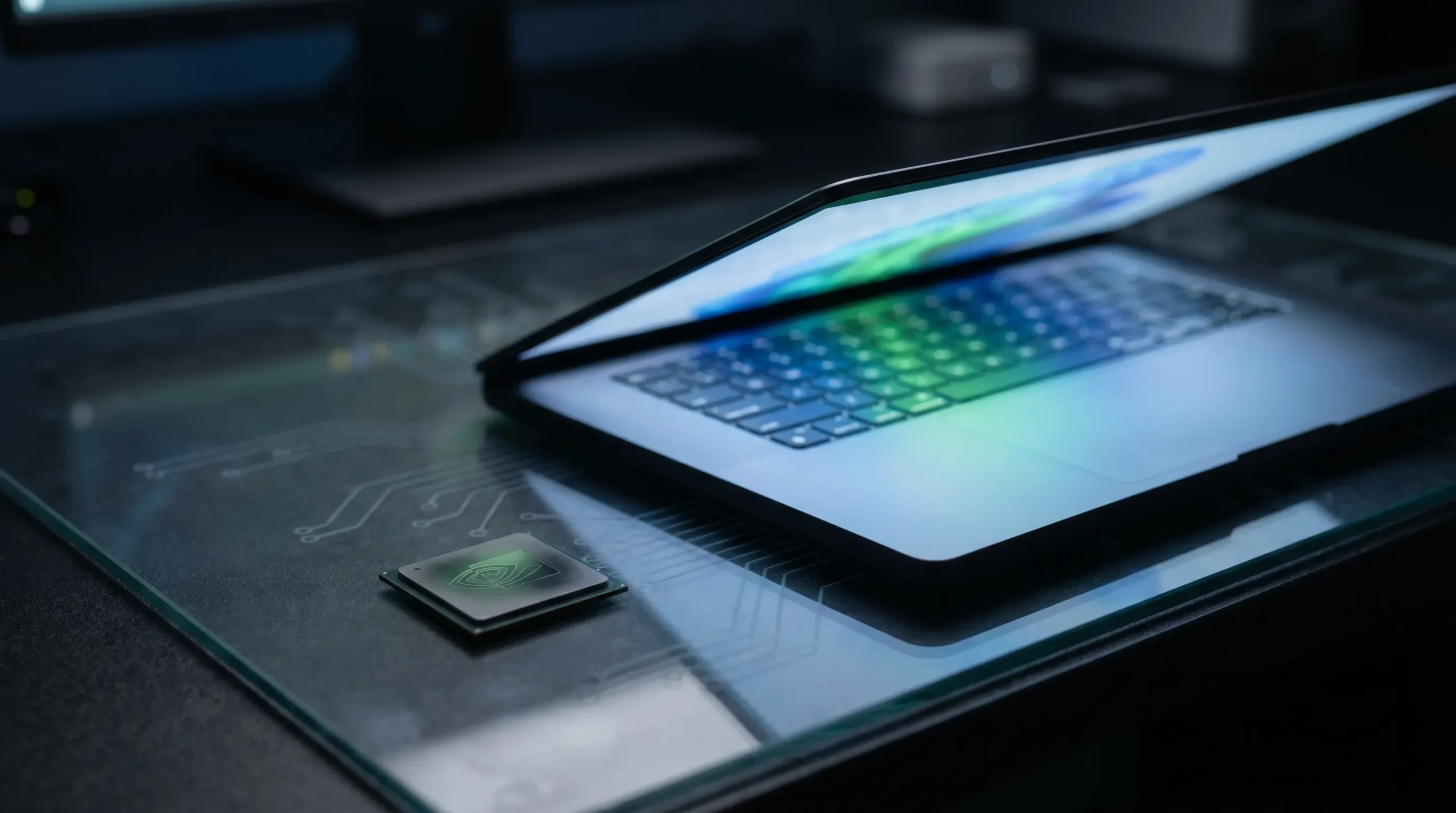
The Calendar Compresses the Hardware Message
NVIDIA’s GTC Taipei keynote page lists Huang’s keynote for Monday, June 1 at 11 a.m. Taipei time. Microsoft’s Build event page lists the developer conference for June 2 and June 3 in San Francisco and online. Those dates put hardware, OS tools and AI developer messaging into one compressed window.
- 11 a.m. Taipei Time: Huang’s keynote is the anchor for the coordinate clue.
- June 2 and June 3: Build gives Microsoft a developer stage right after NVIDIA’s Taipei event.
- Three accounts: Windows, NVIDIA and Arm, the processor-design company, pushed the same PC-era wording on X, with MediaTek amplifying the thread afterward.
The timing also revives an older supply-chain thread. In 2021, NVIDIA said in its Arm computing partnership announcement that it was working with MediaTek, the Taiwanese system on chip (SoC, a processor package that combines CPU, GPU and accelerators) designer, on an Arm PC reference platform with NVIDIA RTX graphics processing units (GPUs, chips that accelerate graphics and AI math) and software kits.
That older plan was easier to treat as a lab project because Windows on Arm had a narrow buyer base. A rumored Windows laptop chip would change the burden. Microsoft would have to show developers why they should target this hardware, original equipment manufacturers would need a flagship story, and buyers would need proof that the new machines are more than battery-life experiments.
Windows on Arm Has Better Tools and Old Scars
Microsoft has tried this turn before. The first Surface with Windows RT shipped in October 2012 with an NVIDIA T30 processor and 2GB of random access memory (RAM, the short-term memory used by running apps), according to Microsoft’s Surface launch details. Less than a year later, Microsoft’s June 2013 quarter included a $900 million charge tied to Surface RT inventory adjustments.
Surface RT failed for more than chip speed. It asked people to buy Windows hardware without the Windows software freedom they expected. That memory still matters. Every Arm PC story has to answer the same plain question before the marketing starts: will the apps, drivers, games and work tools run without drama?
| Windows Arm Moment | What Microsoft Had | What Buyers Still Needed |
|---|---|---|
| Surface RT | Custom Microsoft hardware, NVIDIA Arm silicon and bundled Office apps | Full desktop app freedom and clearer expectations |
| Copilot+ PC Wave | Neural processing unit (NPU, a dedicated AI accelerator) requirements and Windows AI features | Daily reasons to use local AI beyond demos |
| Potential NVIDIA Arm PC | RTX graphics, CUDA software gravity and a new premium laptop hook | Driver maturity, game support and credible pricing |
The technical base is better now. Microsoft says Windows 11 on Arm supports x86 and x64 emulation, with x86 and x64 meaning the main Intel and AMD PC instruction sets, and that Prism in Windows 11 24H2 improves performance while lowering central processing unit (CPU, the main processor) use for emulated apps. The same document still draws a hard line around kernel-mode code: drivers must be compiled for Arm64. That is where printers, security tools, audio gear and some games can still spoil a launch.
The NVIDIA Difference Is the Developer Stack
Qualcomm helped make Windows on Arm credible for thin laptops. NVIDIA would bring a different force: software gravity. Developers already know its tools from gaming, 3D work, machine learning and workstation hardware. For Microsoft, that is the attraction and the risk. The audience would expect more than good sleep resume and long battery life.
CUDA Changes the Ask
Compute Unified Device Architecture (CUDA, NVIDIA’s parallel computing software platform) is why many AI developers already think in NVIDIA terms. If a Windows laptop can run more of that stack locally, the pitch shifts from battery life to work avoided: fewer cloud round trips, fewer remote workstations, smaller bills for test runs and fewer compromises on model size during travel.
Unified Memory Changes the Shape
NVIDIA’s public DGX Spark design shows the kind of hardware logic people are projecting onto the laptop rumors. The DGX Spark specification lists a GB10 Grace Blackwell Superchip with a 20-core Arm CPU, Blackwell GPU blocks, up to one peta floating point operation per second (PFLOP, a measure of AI math throughput) of 4-bit floating point (FP4, a compact AI number format) AI performance, 128GB of low-power double data rate 5X (LPDDR5X, high-speed laptop memory) unified memory and 273 GB per second of memory bandwidth. A laptop part would not need to match that desktop box to borrow the idea: keep CPU, GPU and memory close enough that local models feel natural.
Games and Drivers Still Need Receipts
A GPU-heavy Arm laptop would also invite gaming expectations. Microsoft should be careful there. Windows game stores, anti-cheat systems, controller utilities and capture software depend on pieces that can break outside the normal x86 path. That is why the 32GB RAM threshold Microsoft briefly promoted matters as a sibling issue: buyers judge AI PCs by ordinary PC promises first.
Windows 11 Repair Work Now Carries the Brand
Keeping the Windows 11 name raises the standard for polish. In March, Davuluri used Microsoft’s Windows quality post to promise faster responsiveness in Start, more Windows UI Library 3 (WinUI 3, Microsoft’s modern interface framework) work, taskbar changes and stronger driver and app reliability.
Windows touches more people’s lives than almost any technology on Earth.
Davuluri wrote that line as a quality pledge, not a product tease. For this week, it reads like a warning label. Any NVIDIA Arm machine would inherit every unresolved Windows grievance, from inconsistent settings pages to upgrade distrust.
That is why the Windows 11 base matters. The company can ship a better silicon story and still lose the room if the shell feels uneven. Security choices also have to be explained plainly; our earlier coverage of the Windows 11 backup app block showed how quickly trust drains when Microsoft changes behavior that power users rely on.
Enterprise information technology teams may be even harder to convince than consumers. They do not refresh fleets for a clever conference line. They refresh when app compatibility, driver support, management tools and security controls line up cleanly. Without a Windows 12 banner, there is no reset button for that conversation.
Microsoft is choosing continuity, and continuity puts more weight on polish. A new chip can win attention in Taipei. The Windows team has to keep that attention after the first reboot.
Local AI Has to Earn Trust Before It Sells PCs
The local AI argument is coherent. Microsoft says Recall processes content locally on Copilot+ PCs, lets users opt in to snapshots, and lets them pause, filter apps and delete saved data. The same support material ties Recall to Windows Hello sign-in and local storage. That is the trust case Microsoft will have to keep making.
It also explains why more powerful Arm hardware matters. A background agent that reads documents, searches past activity or drafts a morning brief has to run close to the user’s data. Sending every step to a remote server would make the privacy argument harder.
- Privacy, because personal documents and work messages are easier to defend when processing stays on the device.
- Latency, because local models can respond without waiting for cloud capacity or network quality.
- Cost, because fewer remote inference calls can matter at enterprise scale.
- Developer control, because local application programming interfaces give software makers a clearer target than a shifting cloud service.
The catch is that local AI still needs a daily habit. Recall became controversial because it touched the most sensitive surface on a PC: the screen. Any next agent will face the same test. Microsoft has to show useful automation without making users feel watched, and NVIDIA hardware would only raise expectations for what that automation can do.
If NVIDIA’s Taipei stage produces a Windows Arm laptop with serious local AI horsepower, Microsoft gets a sharper PC story without renaming Windows. If the software story arrives as another half-finished Copilot layer, the Windows 12 rumor will look like the easier product to explain.

-
 TECH1 year ago
Where Garmin Watches are Made and How They are Assembled
-
 AUTO2 months ago
Tesla’s Roadster Is ‘a Few Weeks Away,’ Says Its Chief Designer
-
 NEWS10 years ago
Samsung Releases Galaxy Note7 TV Ad as Reddit AMA Leaks Specs
-
 NEWS10 years ago
Android 7.0 Nougat Rolls Out To Nexus Devices With New Emoji, Features
-
 FINANCE9 years ago
Cardano Price Surges as ADA Enters the Crypto Top Ten List
-
 NEWS10 years ago
Pre-Order the First Camera Made for Facebook Live Streaming Video
-
 FINANCE1 year ago
Binance Suspends Trading and Withdrawals for a System Upgrade
-
 FINANCE9 years ago
RChain Price Jumps Nearly 150% to a New All-Time High of $2.03