ENTERTAINMENT
Rajat Bedi Backs AI in Films as India Tightens Synthetic Media Rules

Veteran actor Rajat Bedi has thrown his weight behind artificial intelligence as a force multiplier for cinematic beauty, telling IANS on April 26, 2026 that AI will render Indian landscapes in ways that are “more powerful, more beautiful, and even unimaginable.” The endorsement from the Koi… Mil Gaya actor, who plays sidelined star Jaraj Saxena in Aryan Khan’s Netflix debut The Ba***ds of Bollywood, lands as Indian regulators tighten the screws on synthetic media and as two High Courts have moved within a single week to shield top stars from AI exploitation.
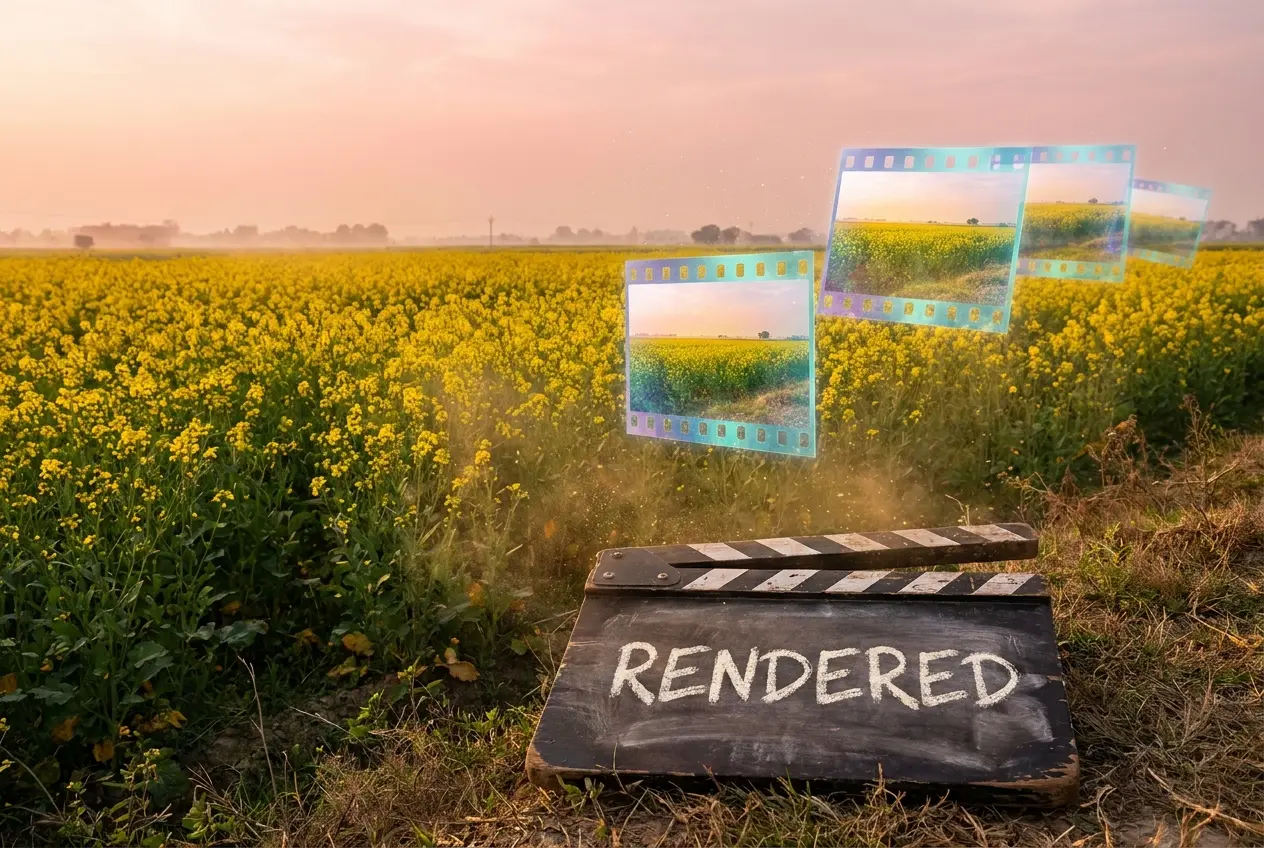
Bedi was responding to a question about whether AI filmmaking could do justice to Punjab’s mustard fields, the sarso ke khet that defined a generation of Yash Raj romances. His answer doubled as a working actor’s vote of confidence in a technology many of his peers fear.
What Rajat Bedi Actually Said About AI on Screen
Bedi told IANS in an exclusive interview published April 26, 2026 that AI “ends up making everything more beautiful.” He singled out Punjab’s mustard fields as already “pure heaven on the screen” and predicted machine-generated cinematography would push that imagery into territory the human eye cannot yet picture.
The remark is significant because Bedi is one of the few mid-career Bollywood actors who has publicly cheered the technology rather than warned about it. Most A-list voices in the past 90 days have pulled the other way.
Why His Timing Is Awkward for the Industry
Bedi’s enthusiasm arrives at a regulatory inflection point. On October 22, 2025, India’s Ministry of Electronics and Information Technology released a draft amendment to the IT Rules that would force any synthetic visual to carry a label covering at least 10 percent of the screen, or run audibly through the first 10 percent of any audio file.
That single number, 10 percent, has rattled VFX houses across Mumbai. A mustard-field sequence rendered through generative tools would, under the draft, have to wear a permanent on-screen disclosure during theatrical and streaming release. Studios have until the comment window closes to push back.
The Two Court Orders Studios Cannot Ignore
Within a single week in April 2026, two High Courts drew bright lines around how AI may use a star’s likeness.
- The Bombay High Court granted Kartik Aaryan a sweeping interim injunction protecting his personality and publicity rights, ordering Meta, Google and Amazon to take down AI-generated impersonations within 36 hours of notice.
- The Delhi High Court extended comparable protection to Telugu superstar Allu Arjun, restraining unnamed defendants from exploiting his name, voice, gestures and image through deepfakes or AI-driven merchandise.
- India still has no dedicated personality-rights statute, so both benches stitched their orders together from Article 21 privacy doctrine, IP principles and the common-law tort of passing off.
The Show That Made Bedi Relevant Again
Bedi’s commentary carries weight precisely because of his second act. He plays Jaraj Saxena in The Ba***ds of Bollywood, the seven-episode satire that Aryan Khan directed for Netflix and that premiered on September 18, 2025. The character, a faded star clawing his way back into the industry, was written for Bedi after Aryan Khan grew up on his Koi… Mil Gaya performance.
Bedi has since confirmed a second season is in the works.
The Viveck Vaswani Flashpoint
Producer Viveck Vaswani publicly attacked the show earlier this month for a sequence in which a director kicks a woman to the ground. “You are showing a woman being kicked to the ground by a director,” Vaswani told an interviewer, calling the scene unrepresentative of the Bollywood he has known for four decades.
“If you are making something called The Ba***ds of Bollywood and want to show the darker side, that’s fair, but let there be a Yash Chopra, who has been decent. Let there be a Yash Johar, or let there be a Viveck Vaswani who has always helped people. Let there be good people too,” said Viveck Vaswani, producer and longtime Shah Rukh Khan associate.
Bedi, in his own response, distanced himself from the row. He framed the offending sequence as fiction, even as a dream sequence Aryan Khan chose to stage. That defense, fiction as shield, is the exact line studios are now trying to draw around AI-generated imagery.
The Economics Pulling Studios Toward AI
The numbers explain why Bedi’s optimism resonates inside production offices even when stars publicly hedge.
- One-fifth. The share of traditional production cost that AI-driven mythology and fantasy projects now require, according to industry estimates compiled in Reuters reporting circulated by Indian outlets in April 2026.
- 75 percent. The estimated cut in production timelines for VFX, dubbing and lip-sync correction once generative pipelines replace manual passes.
- Two endings. Eros Media World re-released its 2013 hit Raanjhanaa with an AI-rewritten finale in which the protagonist survives, opening his eyes to a tearful smile from his lover.
The Director Who Disagrees
Anurag Kashyap, speaking to Reuters in the same reporting cycle, conceded the economic case but warned about the absence of guardrails. “In India, cinema isn’t about art. It’s purely business, so studios are going to use it to make mythologicals,” Kashyap said.
That sentence is the unresolved tension at the heart of Bedi’s interview. One actor sees beauty. One director sees a market that will not stop to ask whether it should.
How Bollywood’s AI Push Compares Globally
| Market | Primary AI Use Case (2026) | Regulatory Brake |
|---|---|---|
| India | Mythology, dubbing, scene enhancement, ending rewrites | MeitY draft IT Rules, October 2025; High Court personality-rights orders |
| United States | De-aging, voice clone, background extension | SAG-AFTRA 2023 contract, state-level NO FAKES bills |
| European Union | Localization, restoration, previs | EU AI Act transparency duties, in force from August 2026 |
India is the only one of the three markets where the labeling rule could force a visible on-screen badge during entertainment playback. That makes the Indian draft the most consumer-facing AI disclosure regime under serious consideration anywhere in the world.
What Punjab Looks Like in a Generative Pipeline
Bedi chose his example deliberately. Punjab’s mustard fields are a load-bearing visual in Hindi cinema, from Dilwale Dulhania Le Jayenge to Veer-Zaara. Replacing or extending those shots with diffusion-generated frames raises a specific question: does a synthetic sarso ke khet need a 10 percent label slapped across it under the draft IT Rules?
VFX supervisors in Mumbai who have reviewed the draft believe the answer is yes. The rule, as written, does not exempt entertainment.
That is the policy collision Bedi did not address in his interview, and the one his optimism may eventually have to confront.
A lot of things will be visually more powerful, more beautiful, and even unimaginable.
The Quiet Backstory: Bedi’s Comeback
Bedi was largely absent from leading Bollywood projects between his villain turn in Koi… Mil Gaya in 2003 and his casting in the Netflix series in 2024. Aryan Khan reportedly auditioned no other actor for Jaraj Saxena, telling industry colleagues the role would not exist without him.
The role pulled Bedi back into the press cycle. His AI comments are, in effect, his first public stance on a technology debate that did not exist when his career began. For context on the show’s own AI-adjacent push, see our earlier reporting on Netflix’s vertical video feed and AI rollout in early 2026.
Frequently Asked Questions
What did Rajat Bedi say about AI in films?
Bedi told IANS on April 26, 2026 that AI will make visuals “more powerful, more beautiful, and even unimaginable,” specifically citing Punjab’s mustard fields as imagery that AI could elevate further on screen.
Which Netflix show is Rajat Bedi part of in 2026?
Bedi plays Jaraj Saxena, a sidelined actor, in Aryan Khan’s directorial debut The Ba***ds of Bollywood, which premiered on Netflix on September 18, 2025. He has confirmed a second season is in production.
What is the Viveck Vaswani controversy about?
Producer Viveck Vaswani publicly criticized the show for a scene depicting a director kicking a woman to the ground, calling it an exaggerated portrayal of the Hindi film industry. Bedi defended the scene as fiction.
What are India’s new rules on AI-generated content?
The Ministry of Electronics and Information Technology released draft IT Rules on October 22, 2025 requiring synthetic visuals to carry labels covering at least 10 percent of the screen and synthetic audio to be flagged in the first 10 percent of playback.
Are Indian courts protecting actors from AI deepfakes?
Yes. In April 2026 the Bombay High Court protected Kartik Aaryan’s personality rights with 36-hour takedown orders against Meta, Google and Amazon, and the Delhi High Court extended similar protection to Allu Arjun.
The Wider Stakes
Bedi’s small interview snippet sits inside a much larger story: an industry that earns its money from human faces is racing toward technology that can replicate them. Studios chasing five-times cost reductions, regulators drafting on-screen labels, and High Courts handing out injunctions are all moving on different clocks. The actor who returned from a two-decade career drought to play a faded star has chosen, for now, to bet on the cameras of the future being kinder to Punjab than the ones he grew up with.

-
 TECH1 year ago
Where Garmin Watches are Made and How They are Assembled
-
 AUTO3 months ago
Tesla’s Roadster Is ‘a Few Weeks Away,’ Says Its Chief Designer
-
 NEWS10 years ago
Samsung Releases Galaxy Note7 TV Ad as Reddit AMA Leaks Specs
-
 NEWS10 years ago
Android 7.0 Nougat Rolls Out To Nexus Devices With New Emoji, Features
-
 FINANCE9 years ago
Cardano Price Surges as ADA Enters the Crypto Top Ten List
-
 NEWS10 years ago
Pre-Order the First Camera Made for Facebook Live Streaming Video
-
 FINANCE1 year ago
Binance Suspends Trading and Withdrawals for a System Upgrade
-
 FINANCE9 years ago
RChain Price Jumps Nearly 150% to a New All-Time High of $2.03