
BUSINESS
Bank of America Bets on 30,000 Veterans Beyond 4,000 Interns
Bank of America hires nearly 4,000 summer interns in 2026 while its three-channel talent strategy reaches military veterans and community college graduates.

Bank of America will welcome nearly 4,000 summer interns and full-time campus recruits this summer, the bank announced June 3, drawing from more than 500 colleges and universities. Bloomberg reported roughly 315,000 applications competed for those spots, close to 79 candidates for every seat. The incoming class splits roughly in half: about 2,000 summer interns on ten-week rotations and 2,000 campus hires taking full-time positions across technology, finance, and operations at the nation’s second-largest bank by assets.
Beyond the selection math, the bank committed in September 2025 to 10,000 additional veteran hires, a doubling of its annual community college intake, and financial center expansion into four states where major banks have had thin retail presence.
315,000 Candidates for 4,000 Seats
Goldman Sachs CEO David Solomon told Bloomberg’s Odd Lots podcast this week that Goldman’s entry-level hiring may “contract a little” over the next three years as AI reshapes what junior analysts do. His bank is taking at least 2,400 interns this summer. Bank of America is moving the other direction. CEO Brian Moynihan appeared on Fox Business this week to address college students’ concerns about AI’s effect on entry-level roles, arguing the firm treats campus programs as a long-term investment the bank continues to grow.
Bloomberg’s figure of roughly 315,000 submissions for the nearly 4,000 slots shows how persistent student demand remains even as some peers trim. Sheri Bronstein, Bank of America’s chief people officer, said in the press release the approach is “intentional and long term,” built on attracting candidates with the right skills and career commitment and developing them through multi-year tenures. The incoming interns and campus hires will work across consumer banking, wealth management, corporate and investment banking, and technology operations. With approximately 59 million verified digital banking users, the bank’s technology businesses constitute one of the largest financial-services technology operations in the country, and that function is pulling in engineering and computer science graduates from outside the traditional finance-degree pipeline.
- ~4,000: summer interns and campus recruits for 2026, split roughly 2,000 summer rotations and 2,000 full-time campus hires
- 315,000: applications received for those seats, per Bloomberg
- 500+: colleges and universities sourcing the cohort
- 2,400: Goldman Sachs interns this summer, with CEO David Solomon projecting possible long-term contraction as AI reshapes junior analyst roles
Several Wall Street firms have quietly trimmed intern classes this cycle, citing AI tools that compress the deal modeling, research preparation, and draft-work that once required large junior benches. At BofA, the figure holds or grows. The sourcing network of 500-plus schools signals a departure from the dozen-or-so target institutions that fed elite banking roles for decades, and that breadth reflects a sourcing philosophy the bank has been extending across three separate hiring channels for years.
A Veteran Pipeline That Began in 2015
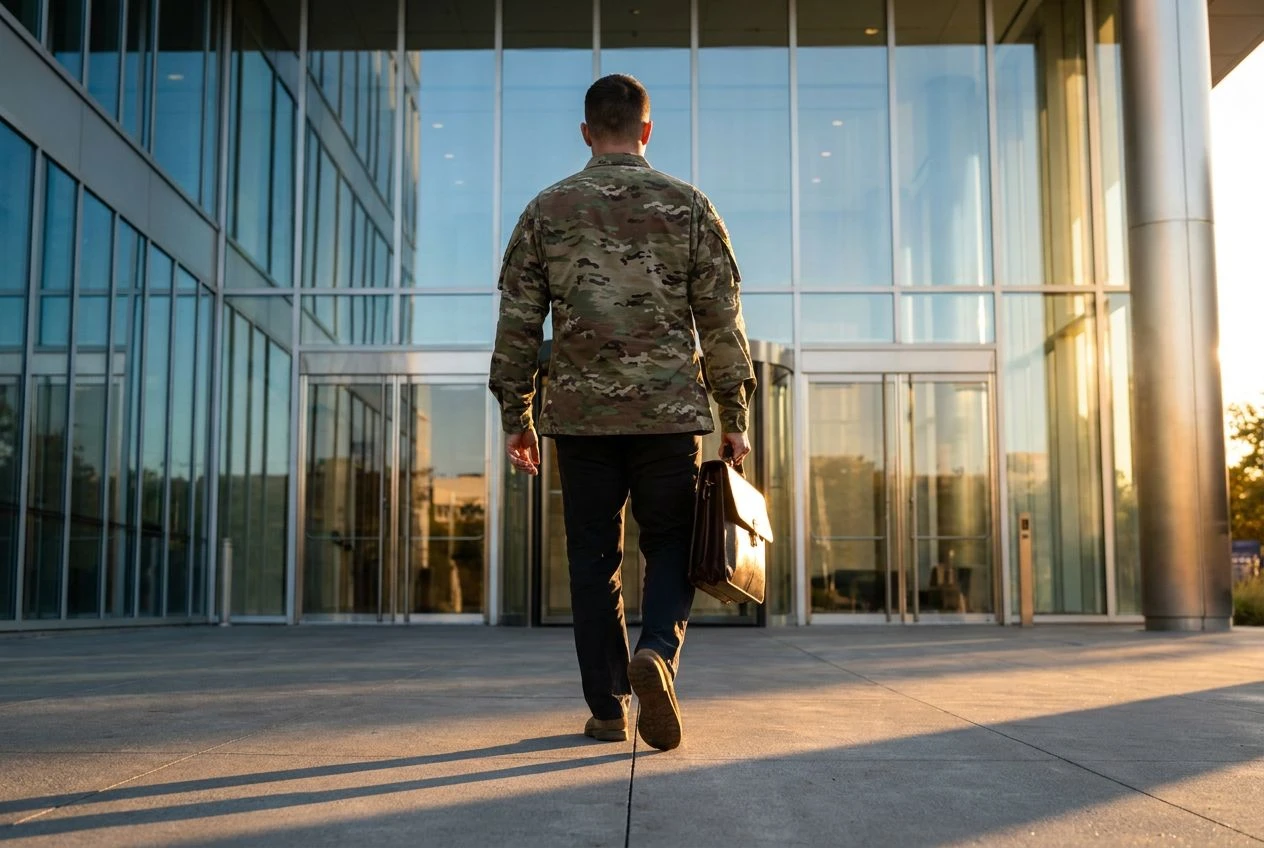
Bank of America’s Military Veteran Program has produced more than 20,000 hires since the bank first made a formal public commitment in 2015. A September 2025 announcement extended the goal by 10,000, setting the cumulative target at over 30,000 veteran hires, per the bank’s veteran hiring commitments page.
The Veteran Onboarding Initiative pairs each newly hired veteran with a tenured colleague within the first 90 days, easing the adjustment from active-duty service to a corporate environment. The bank’s Military Support and Assistance Group spans 43 chapters with more than 22,000 members, providing peer networking, mentoring, and career navigation resources across its businesses. For officers seeking a competitive institutional track, the two-year Veterans Associate Program runs rotational assignments across investment banking, capital markets, commercial banking, sales and trading, and research. Veterans in the program land in those business lines alongside peers who entered through elite MBA pipelines, with placements historically spanning global risk management and public finance as well.
Entry into the Veterans Associate Program requires prior service as a Junior Military Officer, Warrant Officer, or Non-Commissioned Officer, followed by an honorable discharge. The program opens with an intensive week of technical and organizational training before placing participants in year-long assignments across two different business lines, a rotation structure that parallels the career development model active-duty officers already know from field assignments.
In November 2025, the bank expanded a grant to American Corporate Partners (ACP), a veteran mentorship nonprofit. ACP’s program data, cited in BofA’s grant announcement, showed an average post-mentorship salary of $90,000 and an 80 percent retention rate for veterans who completed the program, against 56 percent nationally for veterans entering new corporate roles. The 24-point gap shows what structured transition support removes from the attrition equation.
The bank’s relationship with military communities stretches further than the 2015 commitment. Banking services at Fort Sam Houston in San Antonio, Texas represent one of the bank’s earliest recorded connections to U.S. military installations, part of a history the bank describes as spanning more than a century. A program targeting 30,000 cumulative veteran hires is drawing on institutional relationships that predate the public announcement by generations.
Community Colleges Move into the Talent Stack
The community college channel is the newest of the three pipelines and, in percentage terms, the fastest-growing. The bank’s September 2025 announcement doubled the annual hire rate from 800 per year to 1,600, with a commitment to 8,000 total community college hires over five years. Employees entering through that route join the bank’s Academy, an internal development program providing structured training, on-demand education, and skill-building resources designed to close gaps a two-year curriculum doesn’t always address.
Community college graduates often arrive with specific preparation: financial services licensing readiness, customer relationship workflows, data management skills. These qualifications map to the functional requirements of financial center jobs directly. The four-year degree is the credential for analyst-track and institutional banking positions. At the financial center level, a two-year qualification covers the actual job requirements, and the bank’s commitment to 1,600 annual community college hires reflects a decision to hire to those requirements. The September 2025 package also included a minimum hourly wage increase to $25, which the bank framed as part of the same workforce development philosophy.
| Hiring Pipeline | Previous Annual Rate | Current Target Rate | Five-Year Commitment |
|---|---|---|---|
| Traditional campus recruiting | ~4,000 | ~4,000 | ~20,000 (ongoing) |
| Military veteran hiring | ~2,000 (est.) | ~2,000+ (est.) | 10,000 additional |
| Community college hiring | 800 | 1,600 | 8,000 |
Most of the bank’s community college partnerships operate in regional markets outside the coastal financial hubs, communities where the traditional path into banking required clearing an educational hurdle designed for a different economic context. That geographic concentration connects directly to the financial center expansion announced alongside it.
Four States That Major Banks Largely Skipped
The September 2025 package earmarked 700 financial center jobs in Alabama, Idaho, Louisiana, and Wisconsin, backed by a specific build schedule: 26 new financial centers over 18 months and 37 more in those states through 2027, totaling 63 new locations in markets where BofA’s presence has been limited relative to its national network of approximately 3,500 branches.
BofA’s own framing describes these four states as “new growth markets,” a designation that positions the expansion as demand-driven. Idaho and Wisconsin lack the concentrated financial center networks found in the bank’s legacy Southeast and mid-Atlantic footprints. Louisiana and Alabama carry large military installation concentrations and well-developed community college systems, tying the geographic expansion directly to the two talent pipelines the bank is scaling simultaneously.
Bank of America is the largest small business lender in the United States by Federal Deposit Insurance Corporation (FDIC) metrics, providing financing to approximately 4 million small business households. Adding 63 financial centers to four states where the bank has had limited presence extends that small business lending capacity, along with home loans, wealth management, and digital banking infrastructure, to communities that have had limited access to the full range of what a national bank at BofA’s scale provides.
World Cup Tickets and the Full Scope of Military Support
Tickets Through Vet Tix
The same week as the intern announcement, Bank of America confirmed a $2 million donation to Veteran Tickets Foundation, Vet Tix, a national nonprofit distributing free event tickets to military communities. With an additional $250,000 contributed by Vet Tix, the combined $2.25 million funds 4,547 FIFA World Cup 2026 tickets across all 11 U.S. host cities for veterans, active-duty military, first responders, and their families. The tickets span every stage of the tournament from group-stage matches through the final at MetLife Stadium in East Rutherford, New Jersey, on July 19, with 250 slots reserved for U.S. Men’s National Team matches in honor of the country’s 250th anniversary.
Veterans and active-duty service members can claim tickets by registering at vettix.org; first responders, including law enforcement officers, firefighters, emergency medical technicians, and 911 dispatchers, register at 1sttix.org. Eligibility for both programs is verified through ID.me. The partnership extends a precedent from the FIFA Club World Cup in 2025, when the bank helped distribute more than 53,000 free tickets to veterans and active-duty service members through the same channel.
A Bank-Military Relationship Spanning a Century
Bank of America is the official bank sponsor of FIFA World Cup 2026 and is hosting a BofA Fan Experience on the National Mall in Washington, D.C., from June 11 through July 19 as part of the FIFA World Cup Fan Zone organized by FIFA and Freedom 250. In the joint announcement with Vet Tix and FIFA, Larry Di Rita, the bank’s head of global public policy and president of its Greater Washington, D.C. market, said:
We wanted to ensure our military, first responders and their families have the opportunity to celebrate the biggest sporting event in the world during our country’s 250th birthday.
Di Rita also cited the bank’s history of donating thousands of homes to wounded warriors and first responders through charitable housing programs, a commitment that sits in a different category from ticket donations but reflects the same sustained relationship with military communities. Vet Tix, founded in 2008 by U.S. Navy veteran Michael A. Focareto III, has provided more than 37 million free event tickets to more than 2.6 million military community members since its founding.
The hiring commitment and the ticket donation share the same institutional foundation: a bank-military relationship traceable to Fort Sam Houston and formalized into a 30,000-hire target that still has four years to run.

-
 TECH1 year ago
Where Garmin Watches are Made and How They are Assembled
-

 AUTO2 months ago
Tesla’s Roadster Is ‘a Few Weeks Away,’ Says Its Chief Designer
-
 NEWS10 years ago
Samsung Releases Galaxy Note7 TV Ad as Reddit AMA Leaks Specs
-
 NEWS10 years ago
Android 7.0 Nougat Rolls Out To Nexus Devices With New Emoji, Features
-
 FINANCE9 years ago
Cardano Price Surges as ADA Enters the Crypto Top Ten List
-
 NEWS10 years ago
Pre-Order the First Camera Made for Facebook Live Streaming Video
-
 FINANCE1 year ago
Binance Suspends Trading and Withdrawals for a System Upgrade
-
 FINANCE9 years ago
RChain Price Jumps Nearly 150% to a New All-Time High of $2.03