
NEWS
Smartphone Prices Jump Up To ₹6,000 In India: Full List, Reasons

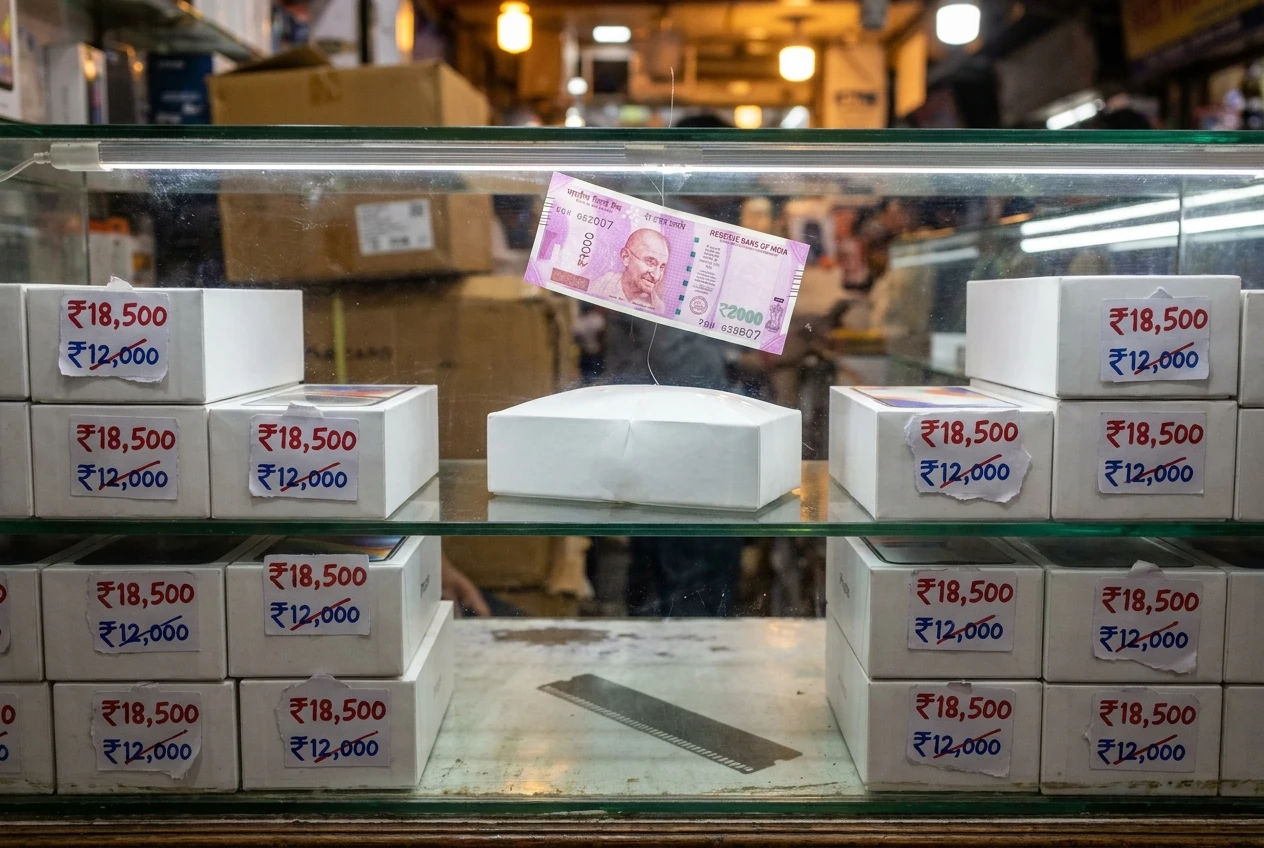
Smartphone prices across India jumped between ₹1,000 and ₹6,000 on May 1, 2026, as OnePlus, Nothing, Realme, Xiaomi and Samsung all rewrote their sticker prices in the same 24-hour window. The trigger is not a tariff or a tax. It is a global memory crunch that has pushed DRAM contract prices up 58 to 63 percent quarter-on-quarter and NAND flash up 70 to 75 percent, according to TrendForce’s 2Q26 memory price forecast. AI data centres are eating the wafer supply that used to feed budget Android phones.
Buyers feel it most in the ₹15,000 to ₹50,000 band, where margins were already thin. The OnePlus 15 base model now retails at ₹77,999, up ₹5,000. The Nothing Phone (4a) Pro starts at ₹44,999, up ₹5,000 from its launch price five months ago. Realme has nudged at least nine models up by ₹1,000 each, and Samsung has quietly raised seven Galaxy M and F variants by the same amount.
And this is only the first wave. Counterpoint Research is forecasting a further 15 to 20 percent rise in Q2 alone.
The Damage At A Glance
Five brands moved on the same Friday, and the math is harsher than a single line in a press note suggests. Memory now costs nearly as much as the system-on-chip in a typical mid-range phone, a flip that has not happened since 2017.
- ₹6,000. The biggest single-variant hike, on the OnePlus 15 16GB+512GB version, now ₹85,999.
- 58 to 63 percent. Quarter-on-quarter rise in conventional DRAM contract prices for Q2 2026, per TrendForce.
- 3 percent. India smartphone shipments fell year-on-year in Q1 2026, the weakest quarter in six years, according to Counterpoint Research’s Q1 2026 tracker.
- 80+. Number of smartphone models that already saw average price hikes of 15 percent before May 1.
The wider context: India is the world’s second-largest smartphone market, and any sustained 15 percent ASP move flows directly into household discretionary spend. Vivo led Q1 2026 with a 21 percent share, followed by Samsung and Oppo, but every one of those brands is now shipping into a softer demand curve.
Why Memory Suddenly Costs As Much As The Chip
The story behind the sticker is the AI buildout. Hyperscalers like Microsoft, Google, Meta and Amazon are signing long-term agreements with Samsung Electronics, SK Hynix and Micron Technology for high-bandwidth memory (HBM) stacks that go onto Nvidia GPUs. Every wafer pulled toward HBM is a wafer not making LPDDR5X for a Realme C71 or a Galaxy M17.
The supply-demand gap is the part most coverage has glossed over. IDC’s 2026 memory shortage analysis pegs DRAM supply growth at 16 percent year-on-year and NAND at 17 percent. Demand is running near 35 percent. That gap does not close in a quarter.
HBM is now consuming 23 percent of total DRAM wafer capacity, leaving the remaining 77 percent to feed servers, PCs, and every smartphone shipped on Earth. PC DRAM contract prices crossed a 100 percent QoQ rise in Q1 2026, the steepest single-quarter move on record.
For phone makers, the choice is binary: raise prices, or strip specs. Most brands have chosen door number one. A few are doing both quietly, dropping a RAM tier or trimming base storage on refreshed SKUs without changing the model name.
Brand By Brand: The New Sticker Prices
The hikes are not uniform. Premium models took the biggest absolute jumps, while sub-₹20,000 phones absorbed flatter ₹1,000 increases that still bite first-time buyers. Here is the consolidated picture across the five brands that moved on May 1, drawn from official websites and listings tracked by Smartprix’s brand-level price audit.
| Model | Old Price (₹) | New Price (₹) | Increase (₹) |
|---|---|---|---|
| OnePlus 15 (12/256) | 72,999 | 77,999 | 5,000 |
| OnePlus 15 (16/512) | 79,999 | 85,999 | 6,000 |
| OnePlus 15R | – | – | 2,500 |
| Nothing Phone (4a) Pro base | 39,999 | 44,999 | 5,000 |
| Nothing Phone (4a) | – | – | 3,000 |
| Nothing Phone (3a) Lite (128GB) | 24,999 | 27,999 | 3,000 |
| Realme 16 Pro+ (12/256) | 48,999 | 49,999 | 1,000 |
| Redmi Note 15 Pro | ~29,999 | 31,999 | ~2,000 |
| Redmi Note 15 Pro+ | ~37,999 | 39,999 | ~2,000 |
| Galaxy M36 (6/128) | 20,999 | 21,999 | 1,000 |
| Galaxy M17 5G (4/128) | 15,999 | 16,999 | 1,000 |
Realme issued the only on-record statement, calling out an “unavoidable increase in memory, chipset, and overall smartphone ecosystem costs” in a note to retailers. Samsung’s price changes hit the Galaxy M36, F36, M17, M17e, F70e, M06 and F06, per a My Mobile India breakdown of Samsung’s revised list prices, and were pushed to e-commerce partners with no public press release.
Carl Pei Saw This Coming In January
Most outlets framed Nothing’s hike as the shock entry on the list. It should not have been. Nothing CEO Carl Pei posted to LinkedIn in January 2026 that the era of stacking flagship specs into a sub-₹40,000 chassis was finished.
“The ‘more specs for less money’ model that many value brands were built on is no longer sustainable in 2026,” Carl Pei wrote, citing memory and component inflation as the structural cause.
Pei’s message was both a signal and a hedge. Nothing has chosen to keep margin instead of cutting RAM, even though the Phone (4a) Pro is reportedly outselling the company’s own targets by 150 percent. The Phone (3a) Lite jumping from ₹24,999 to ₹27,999 in five months is a lot of demand curve to test in one move.
OnePlus took a different path on visibility. The OnePlus 15 hike landed without a public statement, but the company immediately layered limited-time bank offers of ₹3,000 on the 15 and ₹2,000 on the 15R, which partially offsets the increase if you transact in the next two weeks.
India’s Buyers Are Already Voting With Their Wallets
The cost shock is colliding with a market that was already cooling. Counterpoint’s Q1 2026 India tracker shows shipments down 3 percent year-on-year, the worst opening quarter since 2020. Q2 is expected to slip into a double-digit decline.
The premiumisation story that propped up India’s smartphone ASP for three straight years is now stalling. Sub-₹20,000 buyers, who account for roughly half of all shipments, are the most price-elastic segment, and a ₹1,000 hike on a Galaxy M17 or a Realme C71 is enough to push first-time upgraders into another six months on their existing handset.
Used and refurbished demand is climbing in lockstep. Cashify and Yaantra have both reported sharp month-on-month traffic spikes since mid-April, with refurbished iPhone 13 and Galaxy A54 listings clearing within hours.
What The Numbers Mean For Specs On The Next Phone You Buy
The under-reported angle is what happens to phone hardware itself if memory stays expensive into 2027. Three things are already visible in the supply chain.
- Base RAM tiers will quietly disappear. The 6GB and 8GB entry SKUs are being phased out on several mid-range refreshes, with brands resetting the base at the next tier up and pricing it like the old base.
- UFS 2.2 storage is making a comeback. Several Q3 2026 launches in the ₹15,000 band are tipped to step down from UFS 3.1 to save NAND cost, a regression buyers will only spot in benchmark numbers.
- Launch cadence is slowing. Two India-specific refreshes that were on the Q2 calendar have already slipped to Q4, per supply chain notes flagged in TrendForce’s December 2025 memory market bulletin.
For Indian buyers, the practical translation is simple. The phone you buy in October 2026 may carry a higher sticker for less internal hardware than the phone you would have bought in February 2026. The marketing copy will not say so.
How To Soften The Hit If You’re Buying This Month
The May hike has already shipped, but a few buying levers still work in the consumer’s favour. Most are time-boxed and stack only if you read the fine print.
- Stack bank offers fast. OnePlus is running ₹3,000 off on the 15 and ₹2,000 off on the 15R via HDFC, ICICI and SBI cards. The bank promo expires before month-end on most listings.
- Buy the outgoing model. OnePlus 13R, Nothing Phone (3a) and Realme 15 Pro stocks at offline retail are still tagged at pre-hike prices in many stores. Online inventory has already updated.
- Skip the launch SKU. Mid-tier RAM/storage variants are absorbing smaller absolute hikes than the maxed-out top SKU, so 8/256 gives better price-per-spec than 12/512 right now.
- Watch for end-of-fiscal exchange bonuses. Several brands are reportedly preparing aggressive trade-in valuations for older flagships in late May to clear pre-hike channel stock.
- Refurbished is no longer a compromise. A 12-month-old Galaxy S24 or iPhone 14 refurbished unit now lands ₹15,000 to ₹20,000 below an equivalent new mid-ranger after the hike.
One workaround that has not landed yet: importing from the UAE or Singapore. Customs duty plus the 18 percent IGST on personal imports kills any apparent saving on phones above ₹50,000.
Frequently Asked Questions
Why did smartphone prices increase in India on May 1, 2026?
The hikes were driven by a global shortage in DRAM and NAND memory chips. AI data centre operators are buying high-bandwidth memory in volume, which has pushed Samsung, SK Hynix and Micron to redirect wafer capacity away from smartphone-grade memory. TrendForce expects DRAM contract prices to rise 58 to 63 percent in Q2 2026 alone, and brands are passing the cost through.
Which smartphone brands raised prices in India this month?
OnePlus, Nothing, Realme, Xiaomi (Redmi) and Samsung all changed list prices on or around May 1, 2026. Hikes range from ₹1,000 on entry Galaxy M and Realme C models to ₹6,000 on the OnePlus 15 16GB+512GB variant. Apple’s iPhone 17 lineup has not changed yet, but Counterpoint expects a global Apple ASP move in Q3.
How much did the OnePlus 15 price go up in India?
The OnePlus 15 base 12GB+256GB variant moved from ₹72,999 to ₹77,999, a ₹5,000 hike. The 16GB+512GB variant moved from ₹79,999 to ₹85,999, a ₹6,000 hike. The OnePlus 15R rose by about ₹2,500. Limited bank offers on HDFC, ICICI and SBI cards currently knock ₹3,000 off the OnePlus 15.
Will smartphone prices keep rising in 2026?
Yes, in all likelihood. Counterpoint Research is forecasting a further 15 to 20 percent rise in Q2 2026 across more than 80 models. IDC expects DRAM and NAND supply growth in 2026 to lag demand by nearly 20 percentage points, and the imbalance is unlikely to ease before late 2027 because HBM contracts and fab capacity are already locked.
Is it a good time to buy a new phone in India?
If you need a phone now, the cheapest path is the outgoing model at offline retail, where pre-hike inventory is still being honoured at older sticker prices. Stack a bank card discount and an exchange bonus. If you can wait, refurbished mid-flagships from 2024 are pricing 25 to 30 percent below comparable new mid-rangers post-hike.
Are flagship iPhones affected by the memory shortage too?
Apple has long-term memory contracts that insulate it through Q2 2026, but Counterpoint analysts expect Apple to lift global ASPs by Q3 if NAND prices stay elevated. iPhone 17 India prices have not changed in May, although Apple has trimmed promotional bank offers on the lineup, which has the same net effect for buyers.
The memory cycle has turned, and India is on the wrong side of it. For the first time since the pandemic, the gap between what a phone offers and what a buyer pays has narrowed, and the next 12 months will test whether brands can keep selling specs that cost more to build than buyers want to pay.
The takeaway for anyone holding off: this is not a one-month adjustment. It is the start of a multi-quarter reset in how Android phones get priced in India.

-
 TECH1 year ago
Where Garmin Watches are Made and How They are Assembled
-
 AUTO2 months ago
Tesla’s Roadster Is ‘a Few Weeks Away,’ Says Its Chief Designer
-
 NEWS10 years ago
Samsung Releases Galaxy Note7 TV Ad as Reddit AMA Leaks Specs
-
 NEWS10 years ago
Android 7.0 Nougat Rolls Out To Nexus Devices With New Emoji, Features
-
 FINANCE9 years ago
Cardano Price Surges as ADA Enters the Crypto Top Ten List
-
 NEWS10 years ago
Pre-Order the First Camera Made for Facebook Live Streaming Video
-
 FINANCE1 year ago
Binance Suspends Trading and Withdrawals for a System Upgrade
-
 FINANCE9 years ago
RChain Price Jumps Nearly 150% to a New All-Time High of $2.03