
BUSINESS
ADB Stakes $70 Billion on Asia’s Power Grids and Digital Backbone by 2035

The Asian Development Bank on May 3, 2026, opened its 59th Annual Meeting in Samarkand with a $70 billion pledge to wire Asia and the Pacific together, both literally and digitally. Half of the package, $50 billion, is earmarked for cross-border power transmission under a new Pan-Asia Power Grid Initiative. The other $20 billion will fund subsea cables, fiber backbones, satellite links and data centers under an Asia-Pacific Digital Highway. Both run to 2035.
That headline number is the single biggest cross-sector connectivity push the multilateral lender has ever made. It also lands at a moment when the region’s actual transmission deficit, by ADB’s own earlier analysis, is several times larger than what is being announced.
The Numbers Behind ADB’s $70 Billion Promise
President Masato Kanda framed the announcement as a generational bet on regional integration. He told governors gathered in Uzbekistan that linking grids and networks is now the prerequisite for growth, not a bonus on top of it.
“By linking power grids and digital networks across borders, we can lower costs, expand opportunity, and bring reliable power and digital access to hundreds of millions of people,” Kanda said in the May 3 statement.
Strip out the rhetoric and the targets are sharply specific. By 2035, the bank wants to wheel 20 gigawatts of renewable electricity across borders, lay 22,000 circuit-kilometers of new transmission, give 200 million people first-time broadband, and improve speeds for another 450 million. Job creation alone is pegged at 4.84 million across the two pillars.
- $50 billion. Pan-Asia Power Grid Initiative spend through 2035, half from ADB’s own balance sheet.
- $20 billion. Asia-Pacific Digital Highway spend, with $15 billion from ADB and $5 billion in cofinancing.
- 200 million. People to gain new electricity access, plus another 200 million for first-time broadband.
- 15%. Targeted cut in regional power-sector emissions tied to cross-border renewables.
- 40%. Expected drop in connectivity costs for remote and landlocked communities.
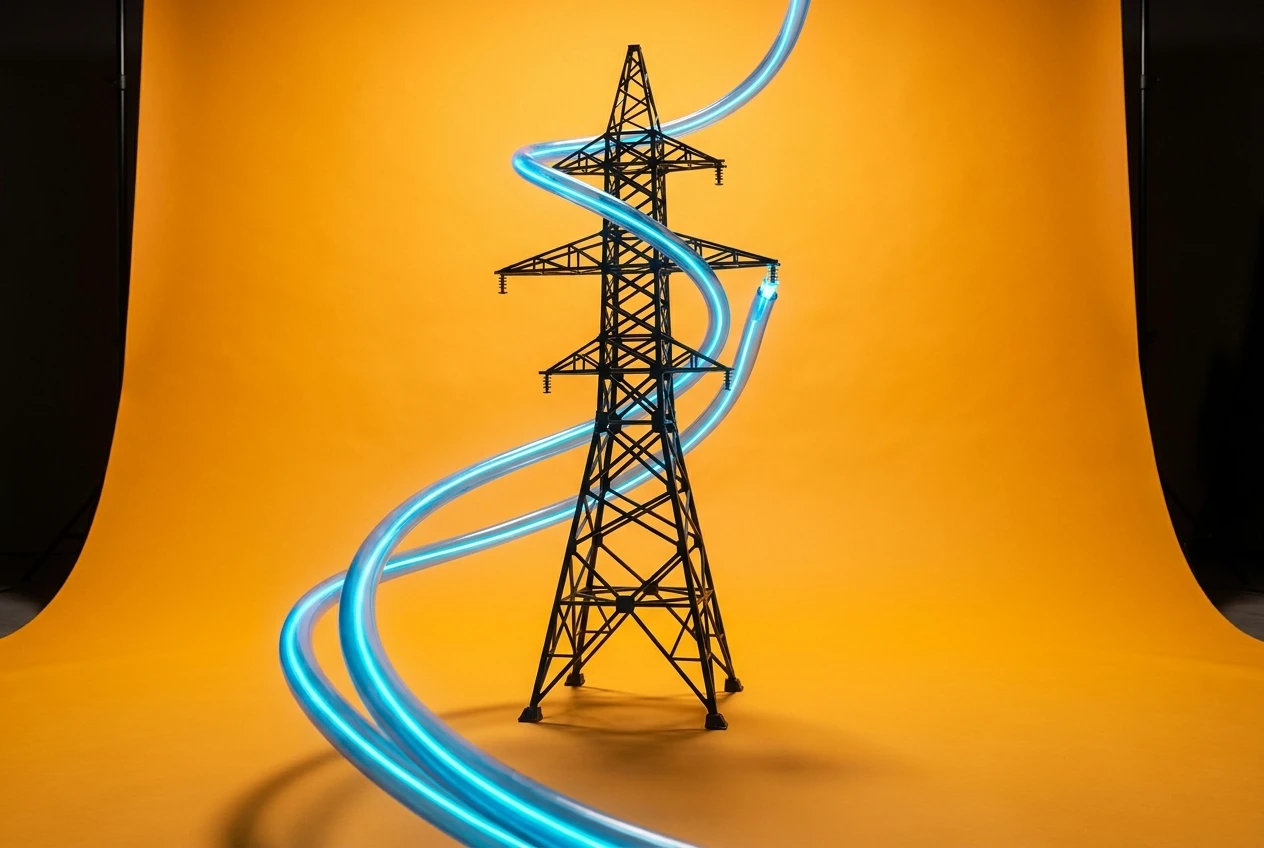
Inside the Pan-Asia Power Grid Initiative
The grid pillar is the heavier lift. ADB plans to finance roughly $25 billion from its own resources, with the remainder pulled in through cofinancing partners and the private sector. Up to $10 million in technical assistance will pay for regulatory alignment, common technical standards and feasibility work that has historically stalled cross-border power deals.
Unlike past country-to-country interconnections, the new initiative is designed as a regional architecture from the start. It targets three layers at once: transmission and grid integration, generation tied directly to electricity trade, and digital control systems that can balance flows in real time.
A dedicated Governors’ Seminar titled “Powering a Connected Future: Can Asia Build a Super Grid” is scheduled at the Samarkand Congress Center for May 5, 2026, where finance ministers will pressure-test the financing model.
The 22,000-Kilometer Question
The arithmetic is where the story gets uncomfortable for the announcement’s optimists. ADB’s own internal modeling, cited in earlier ASEAN Power Grid work, put the transmission shortfall in Southeast Asia alone at Eco-Business reporting on the bank’s $100 billion ASEAN transmission gap. The Pan-Asia program is meant to cover all of Asia and the Pacific, not just ASEAN.
So 22,000 circuit-kilometers across an area stretching from the Caspian to the Pacific is more catalytic than comprehensive. It is enough to anchor flagship corridors, like the Caspian Sea Green Energy Corridor and Bay of Bengal interconnections, but not enough to build the dense mesh that lets renewable surpluses in Mongolia or Laos reliably reach demand centers in Manila or Mumbai.
The bigger constraint, analysts argue, is not steel and copper. It is governance. Writing on April 13, 2026, in an East Asia Forum analysis on ASEAN power grid institutions, regional energy researchers argued that the multilateral system already has the engineering blueprints; what it lacks is enforceable rules on tariffs, dispute resolution and grid codes. The $10 million technical assistance line in the new ADB package is squarely aimed at that gap.
Inside the Asia-Pacific Digital Highway
The digital pillar is smaller in headline value but arguably more aggressive in pace. ADB will channel $15 billion from its balance sheet and raise $5 billion through cofinancing, with investments split across four buckets:
- Terrestrial and subsea fiber backbones, including the kind of trans-regional links the region already needs to handle hyperscaler cloud traffic.
- Satellite connectivity for landlocked and island economies where fiber economics fail.
- Regional data centers built closer to demand to reduce latency for AI workloads.
- Skills and policy work, including cybersecurity risk frameworks and AI readiness training.
Context matters here. By the end of 2025, only 57.2% of Asia-Pacific households subscribed to fixed broadband, according to S&P Global’s PTC’26 analysis on the Asia-Pacific digital divide. India, Indonesia, the Philippines and Pakistan all sit below 40% household penetration, even as Singapore and South Korea cleared 100%.
Closing that gap is a $20 billion job at minimum. Hyperscalers are already throwing comparable money at it: around $6 billion in new subsea cables alone are scheduled to enter service in 2026, much of it driven by Google, Meta and NTT, which means ADB’s role is more catalyst than monopoly funder.
Seoul’s New AI Center and the Korea Play
Tucked inside the digital pillar is a smaller line item with outsized geopolitical weight. ADB will set up a new Center for AI Innovation and Development in Seoul, backed by a $20 million contribution from the Republic of Korea. The center is tasked with promoting responsible AI adoption and training roughly 3 million people in digital and AI skills by 2035.
Seoul has spent the past 18 months racing to position itself as a regional AI training hub, both for export of Korean platforms and to anchor ADB-aligned skilling programs. Korea’s pitch is that AI literacy, not just AI compute, is the bottleneck.
The choice of Seoul also signals the cofinancing arithmetic ADB needs. With the bank covering only 75% of digital-pillar spend from its own resources, donor governments writing technical-assistance checks become the difference between a press release and a delivered program.
Stitching Subregional Grids Together
What is genuinely new about the announcement is its ambition to braid together initiatives that have, until now, been run as separate tracks. The Pan-Asia Power Grid Initiative explicitly builds on:
- The South Asia Subregional Economic Cooperation (SASEC) program, which has been pushing India-Bangladesh-Nepal interconnections for over a decade.
- The Bay of Bengal Initiative for Multi-Sectoral Technical and Economic Cooperation (BIMSTEC) grid interconnection planning.
- The ASEAN Power Grid, where ADB is already a co-anchor of the financing initiative announced with the World Bank in 2025.
- The Central Asia Regional Economic Cooperation Energy Strategy 2030, which is gaining urgency as Uzbekistan, Kazakhstan and Kyrgyzstan accelerate renewables build-out.
The International Energy Agency, in its commentary on realising the ASEAN Power Grid vision, argued that the binding constraint across all four programs has been technical-standard fragmentation rather than capital. Different voltage protocols, settlement systems and reserve-margin rules make every cross-border line a custom engineering project.
If ADB can use the technical-assistance line to harmonize even a handful of those standards, the $50 billion goes further than its size suggests. If it cannot, the corridors will function more as showcases than as a true super grid.
Comparing the Two Pillars
The two initiatives share a 2035 horizon and a regional logic, but the numbers underneath them tell different stories. One is steel-heavy and slow; the other is fiber-light and fast.
| Metric | Pan-Asia Power Grid | Asia-Pacific Digital Highway |
|---|---|---|
| Total spend by 2035 | $50 billion | $20 billion |
| ADB own resources | About $25 billion | $15 billion |
| Cofinancing target | About $25 billion | $5 billion |
| People reached | 200 million (energy access) | 650 million (new or upgraded broadband) |
| Job creation target | 840,000 | 4 million |
| Headline emissions/cost cut | 15% regional power emissions | 40% connectivity cost in remote areas |
Frequently Asked Questions
When will ADB’s $70 billion be spent?
The full $70 billion is committed to be mobilized by 2035, giving ADB and partners a nine-year build-out window from May 2026. Half of the Pan-Asia Power Grid spend and 75% of the digital highway spend will come from ADB’s own balance sheet, with the rest pulled in through cofinancing partners.
Which countries benefit first?
Early corridors are expected to flow through ASEAN members, Central Asian republics anchored to Uzbekistan and Kazakhstan, and South Asian links involving Bangladesh, Nepal, Bhutan and India. Pacific island nations are tagged for the digital pillar’s satellite component, where fiber economics break down.
How does this compare to ASEAN’s actual transmission needs?
ADB previously estimated ASEAN alone needs over $100 billion in transmission investment over two decades. The new $50 billion Pan-Asia program covers a much larger geography, so it functions as catalytic capital rather than a comprehensive solution to the regional grid deficit.
What is the Center for AI Innovation and Development?
It is a new ADB-affiliated center to be set up in Seoul, backed by a $20 million Korean government contribution. Its mandate is to promote responsible AI adoption across Asia-Pacific and train about 3 million people in digital and AI skills by 2035, complementing the Asia-Pacific Digital Highway’s infrastructure spend.
Will the private sector actually invest alongside ADB?
ADB needs roughly $30 billion in private and partner cofinancing across both pillars. Hyperscalers are already deploying comparable capital into Asian subsea cables independently, including Google’s TalayLink project in Thailand. The harder ask is private capital for transmission lines, where regulated returns and political risk have historically deterred non-utility investors.
How is this different from the ASEAN Power Grid?
The ASEAN Power Grid is a sub-regional initiative covering 10 Southeast Asian countries. The Pan-Asia Power Grid Initiative is a wider umbrella that connects ASEAN, South Asia, Central Asia and the Pacific into a single financing and standards framework, with the ASEAN grid functioning as one of four anchor programs.
The political stakes are higher than the dollar figures suggest. Cross-border electricity trade and shared digital backbones lock countries into long-term technical interdependence, which is hard to unwind once it is built. Whether the Samarkand pledge ages into Asia’s defining piece of soft infrastructure or into another headline-rich regional ambition will depend less on the $70 billion than on the $10 million in standards work that nobody put in the press release headline.

-
 TECH1 year ago
Where Garmin Watches are Made and How They are Assembled
-

 AUTO3 months ago
Tesla’s Roadster Is ‘a Few Weeks Away,’ Says Its Chief Designer
-
 NEWS10 years ago
Samsung Releases Galaxy Note7 TV Ad as Reddit AMA Leaks Specs
-
 NEWS10 years ago
Android 7.0 Nougat Rolls Out To Nexus Devices With New Emoji, Features
-
 FINANCE9 years ago
Cardano Price Surges as ADA Enters the Crypto Top Ten List
-
 NEWS10 years ago
Pre-Order the First Camera Made for Facebook Live Streaming Video
-
 FINANCE1 year ago
Binance Suspends Trading and Withdrawals for a System Upgrade
-
 FINANCE9 years ago
RChain Price Jumps Nearly 150% to a New All-Time High of $2.03