
BUSINESS
Brazil Bans Crypto FX Rails as Meta Pays Creators in USDC

Three crypto moves in Latin America in the last seven days have rewritten how dollars move across the region. Brazil’s central bank banned crypto and stablecoins inside its regulated cross-border payment system through Banco Central do Brasil Resolution No. 561 on April 30. A day before, Meta started paying creators in USDC in Colombia and the Philippines. And Bitso’s 2025 Crypto Landscape report, drawn from nearly 10 million users, showed stablecoins now make up 40% of all crypto purchases in the region, with Circle’s USDC outpacing bitcoin for the first time.
The three announcements landed within 72 hours of each other. Read together, they describe a region where users have already voted for digital dollars, a US tech giant is finally building rails to move them, and the largest economy in Latin America is now trying to dictate where those rails plug in.
The week marks the first time a G20 central bank has restricted stablecoins in regulated FX flows in the same cycle that a Big Tech platform began paying citizens of an emerging market in those same tokens.
What Brazil’s Resolution 561 Actually Bans
Resolution BCB No. 561, published April 30 and effective October 1, 2026, blocks fintechs and payment firms operating under the country’s eFX framework from settling international transfers in bitcoin, USDT, USDC, or any other virtual asset. Settlements must now move through a traditional foreign exchange operation or through a non-resident’s Brazilian real account held inside the country.
The rule rewrites Resolution BCB No. 277 from 2022 and follows Public Consultation 124/2025. It does not touch retail. Brazilians can still buy, hold, custody, and transfer crypto. What changes is the back-end plumbing that licensed payment institutions use to move money across borders for clients.
The numbers explain the urgency. According to CoinDesk’s reporting on Brazilian central bank data, crypto transactions in Brazil hit 227 billion reais, roughly $42.8 billion, in the first half of 2025 alone. USDT made up two-thirds of that volume. Almost 90% of crypto remittances out of Brazil now ride on dollar-pegged tokens.
Here is what Resolution 561 does and does not allow under the new eFX framework:
- Banned. Settling cross-border eFX flows between a Brazilian institution and a foreign counterparty using bitcoin, USDT, USDC, or any other virtual asset.
- Allowed. Classic FX operations, or transfers through a non-resident’s Brazilian real account held in Brazil.
- Newly permitted. eFX transfers tied to financial and capital market investments inside or outside Brazil, capped at $10,000 per transaction.
- Compliance deadline. Authorized institutions must register the eFX modality in the central bank’s Unicad system by October 30, 2026. Unlicensed providers must apply for authorization by May 2027.
- Out of scope. Individual purchases, holdings, custody, peer-to-peer transfers, and exchange trading.
Lawyers at Mattos Filho noted in a client memo that the resolution recognizes virtual assets as a special transaction category for reporting purposes, even while excluding them from the rail. The central bank wants visibility into where crypto is being used in international flows, just not inside its own pipes.
The Bitso Data Behind the Dollarization Wave
Bitso’s 2025 Crypto Landscape in Latin America report, released the same week, gives the regulator’s nervousness an evidentiary base. Of every 10 crypto purchases on the exchange last year, 4 were stablecoins. Speculation has lost to savings.
- 40%. Share of all 2025 Bitso purchases that were dollar-pegged stablecoins.
- 23%. USDC’s share of purchases, the first time it surpassed bitcoin in the region.
- 18%. Bitcoin’s share of purchases, down from prior years.
- 16%. USDT’s share, still a near tie with bitcoin.
- 52%. Bitcoin’s share of total portfolio value, showing it remains the long-term store while stablecoins handle the flow.
The data covers nearly 10 million customers across Argentina, Brazil, Colombia, and Mexico. Mexico alone processed more than $63.3 billion in remittances in 2025, and stablecoins now account for 36% of crypto purchases there, according to regional remittance tracking aggregating Reuters and central bank figures. The region’s $142 billion annual remittance market is the prize.
Why USDC Pulled Ahead of Bitcoin
Three things flipped the chart. Argentina’s peso lost roughly half its purchasing power against the dollar over 2025, pushing more retail savers into USDC instead of bitcoin’s volatility. Colombia’s bancarized middle class adopted stablecoins for online purchases as merchants started accepting them. And Brazilian SMEs began using USDC for supplier payments to Asia, sidestepping correspondent banking delays.
The shift is what Bitso CEO Daniel Vogel described in a recent This Week in Fintech podcast appearance as crypto moving from speculation into invisible infrastructure. The customer who buys USDC at lunch to pay a Shanghai supplier on Tuesday is no longer a crypto trader. She is a small business owner using a better wire.
Meta’s Quiet Crypto Comeback
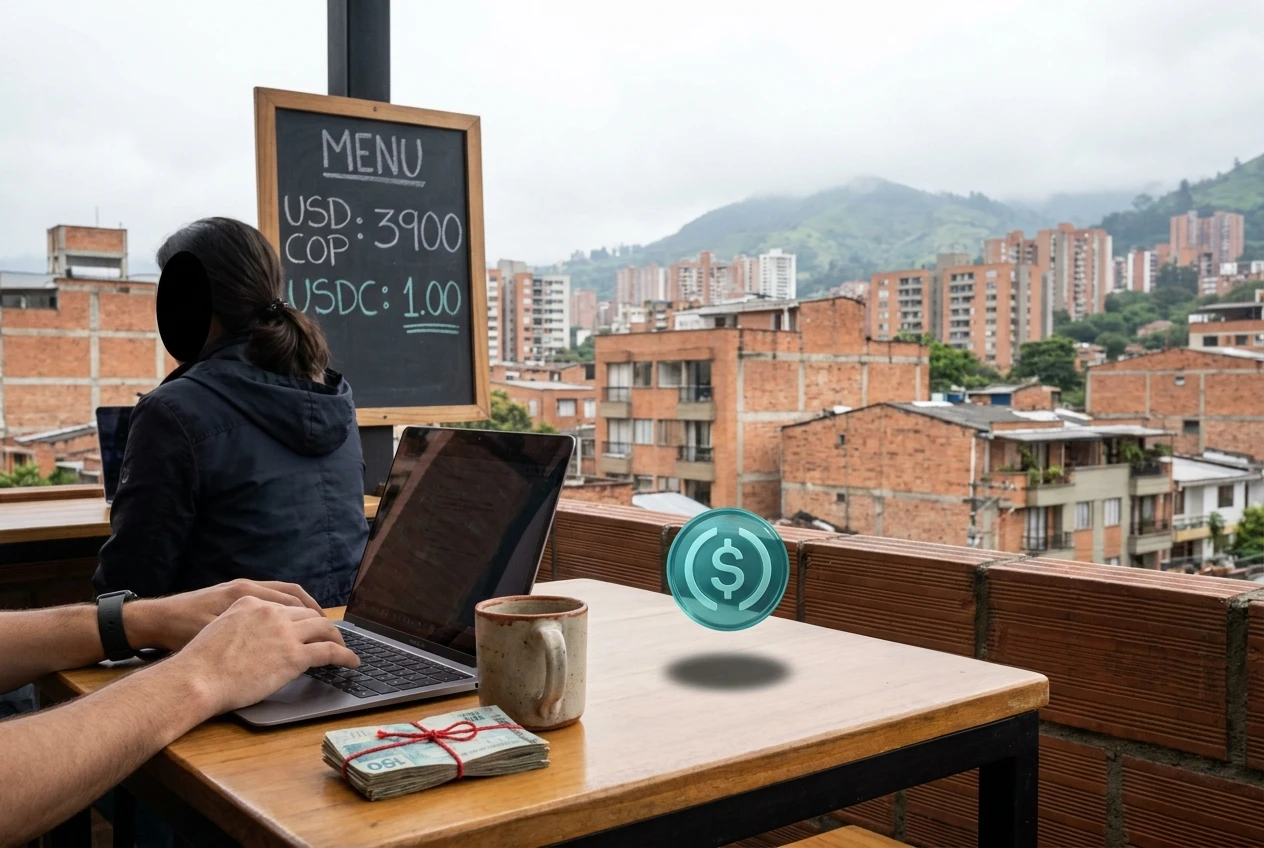
On April 29, Meta confirmed that select creators in Colombia and the Philippines can now opt to receive their Facebook payouts in USDC on either the Solana or Polygon networks. Wallets like MetaMask and Phantom can be linked directly to a creator’s payout account. Stripe powers the rail through its 2025 acquisition of stablecoin infrastructure firm Bridge.
The pilot is small but the symbolism is large. Meta walked away from its own stablecoin attempt four years ago after Washington and Brussels killed the Libra and Diem projects. Fortune reported that Meta sent requests for proposals to third-party providers in February, with Stripe winning the contract. Zuckerberg has dropped the ambition to issue currency. He now wants to use someone else’s.
The road back to crypto for Meta has clear milestones:
- June 2019. Meta unveils the Libra Association, planning a basket-backed global currency with 27 launch partners.
- October 2019. Visa, Mastercard, PayPal, Stripe, and eBay quit the consortium under regulatory pressure.
- December 2020. Libra rebrands to Diem, scales back to a single dollar-pegged token.
- January 2022. Diem sells its assets to Silvergate Bank for $182 million and folds.
- February 2025. Stripe completes a $1.1 billion acquisition of Bridge, its largest deal ever.
- February 2026. Meta sends RFPs to third-party stablecoin providers.
- April 29, 2026. USDC creator payouts go live in Colombia and the Philippines on Solana and Polygon.
Bridge, founded by Coinbase and Square alumni Zach Abrams and Sean Yu, built an API that lets companies receive and send stablecoins without ever holding the assets directly. That detail is what makes the Meta deal possible. Meta does not touch crypto. Stripe does the conversion, the on-chain transfer, and the tax reporting on both ends.
Why Stripe and Bridge Are the Real Story
The bigger pattern is which token won. Visa, BlackRock, Stripe, and now Meta have all converged on Circle’s USDC for stablecoin integration rather than the larger USDT. Circle is publicly listed in the United States, regulated under the GENIUS Act framework signed in mid-2025, and holds a French electronic money license that brings it inside Europe’s MiCA regime.
For creators in Bogotá or Manila, the practical change is concrete. A YouTube or Facebook payout that once took 5 to 12 days through correspondent banking, with FX losses of 3% to 7%, can now arrive in minutes for cents per transaction. The catch is the wallet. Recipients still need to hold a self-custody wallet, manage seed phrases, and file local tax forms generated jointly by Meta and Stripe.
The Tension Three Moves Create
Brazil’s regulator and Meta’s product team have walked into the same room from opposite doors. One is trying to keep regulated FX flows visible. The other is offering a creator in Cartagena a wallet that bypasses those flows entirely. The Bitso data is the receipt showing users have already chosen the second door.
The ban does not stop a Brazilian freelancer from receiving USDC into a personal wallet. It stops the licensed payment institution that would have done the conversion at scale on her behalf. That distinction will push more flow into peer-to-peer rails and self-custody, the very segment regulators have the least visibility into.
“During 2026, cryptocurrencies will integrate more deeply into banking and consolidate as part of traditional financial infrastructure, driven by stablecoins, tokenization and artificial intelligence,” Bitso CEO Daniel Vogel said in a January 2026 interview with La Nación. The boundary between crypto and traditional finance, he added, “blurs, giving way to a more automatic, efficient and almost invisible system for the end user.”
If the Bitso numbers hold, the Brazilian central bank is fighting last cycle’s battle while Meta is shipping next cycle’s product. The remaining question is whether other Latin American regulators follow Brazil’s restrictive line or Colombia’s permissive one. Mexico, where stablecoin remittance volume already rivals Western Union, has not yet signaled which way Banxico will lean.
Frequently Asked Questions
When Does Brazil’s Resolution 561 Take Effect?
Resolution BCB No. 561 was published on April 30, 2026, and takes effect on October 1, 2026. Authorized institutions must register their eFX activities in the central bank’s Unicad system by October 30, 2026. Unlicensed firms currently providing eFX services have until May 2027 to apply for Banco Central do Brasil approval.
Can Brazilians Still Buy and Hold USDC and Bitcoin?
Yes. Resolution 561 only bans crypto and stablecoins from being used as settlement assets inside the regulated eFX cross-border payment rail. Individuals and companies can still buy, sell, custody, and transfer bitcoin, USDC, USDT, and other digital assets through licensed exchanges, self-custody wallets, and peer-to-peer platforms under existing rules.
Which Countries Can Now Receive Meta Payouts in USDC?
As of April 29, 2026, Meta has started rolling out USDC stablecoin payouts to selected creators in Colombia and the Philippines. The feature is in pilot phase. Eligible creators receive USDC on either Solana or Polygon, after linking a compatible wallet such as MetaMask or Phantom to their Facebook payout account. Meta plans broader expansion through 2026.
Why Did USDC Overtake Bitcoin in Latin America?
According to Bitso’s 2025 report, USDC reached 23% of all purchases versus 18% for bitcoin because retail users in Argentina, Brazil, Colombia, and Mexico now treat dollar-pegged stablecoins as everyday savings and payment instruments rather than speculative bets. Currency depreciation, expensive correspondent banking, and merchant adoption pushed users toward stability over upside.
How Much Crypto Volume Flows Through Brazil’s eFX System?
Crypto transactions across Brazil hit 227 billion reais, about $42.8 billion, in the first half of 2025, up roughly 20% year over year. USDT alone accounted for two-thirds of that flow, and almost 90% of crypto-based remittances leaving Brazil rode on dollar-pegged tokens, which is the share Resolution 561 is now redirecting away from regulated payment institutions.
The week’s three moves do not settle the question of who controls the dollar in Latin America. They sharpen it. Whichever way Mexico, Argentina, and Colombia move next will decide whether the region’s stablecoin economy keeps building inside the official rails or routes around them.

-
 TECH1 year ago
Where Garmin Watches are Made and How They are Assembled
-

 AUTO2 months ago
Tesla’s Roadster Is ‘a Few Weeks Away,’ Says Its Chief Designer
-
 NEWS10 years ago
Samsung Releases Galaxy Note7 TV Ad as Reddit AMA Leaks Specs
-
 NEWS10 years ago
Android 7.0 Nougat Rolls Out To Nexus Devices With New Emoji, Features
-
 FINANCE9 years ago
Cardano Price Surges as ADA Enters the Crypto Top Ten List
-
 NEWS10 years ago
Pre-Order the First Camera Made for Facebook Live Streaming Video
-
 FINANCE1 year ago
Binance Suspends Trading and Withdrawals for a System Upgrade
-
 FINANCE9 years ago
RChain Price Jumps Nearly 150% to a New All-Time High of $2.03