
NEWS
Boeing’s New AI Scanner Cuts 17 Hours Off Every 737 Inspection

Boeing has rolled out an in-house artificial intelligence tool that lets factory inspectors photograph a part instead of typing its serial number, automatically loading the data into the aircraft’s traceability record and cutting roughly 17 hours of inspection labor from every 737 it builds. As of April 2026, the optical character recognition system is live on production lines in Renton and Everett, Washington, supports more than 1,400 individual parts, and is queued for deployment on the 787 line in North Charleston, South Carolina, according to Boeing’s December 2025 engineering disclosure.
The tool arrives at a charged moment for the manufacturer. The Federal Aviation Administration only lifted its 38-jet-per-month cap on 737 MAX output in October 2025, and Boeing is now pushing to hit 42 a month by year-end while regulators keep watching every nonconformance.
Photo, Validate, Log: How the Tool Actually Works
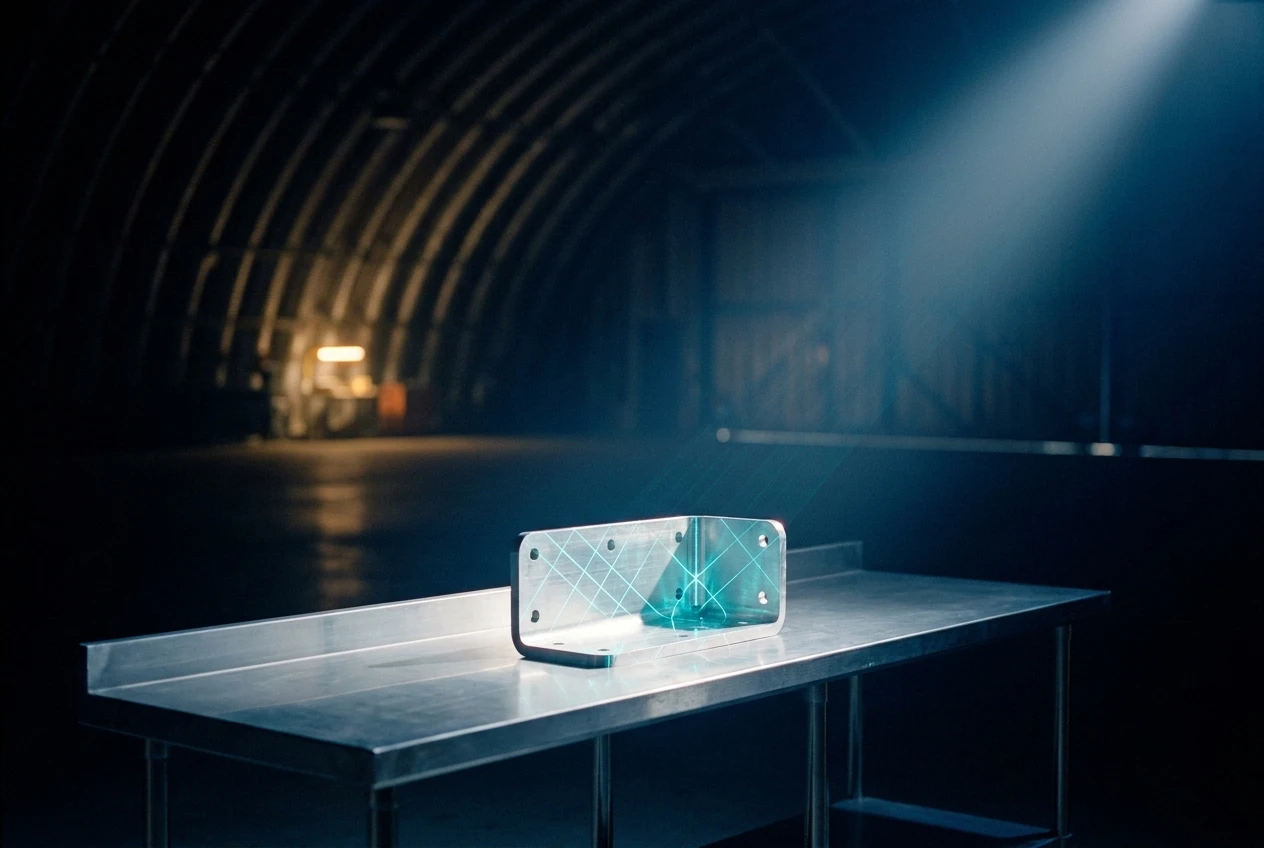
The device is a handheld scanner running an embedded OCR model that reads printed or stamped serial numbers, checks them against a master part dictionary, and writes the validated string into the Aircraft Readiness Log, the master document tracking every component fitted to a specific airframe.
Before the tool, more than 70% of 737 part serials were keyed in by hand. Long alphanumeric strings, smudged stamps, and curved metal surfaces produced typos that triggered downstream rework, slowing the line and creating gaps in traceability records that regulators increasingly scrutinize.
The shift is not a robotic vision rig perched over a conveyor; it is a phone-sized device an inspector already carries, designed to be invisible to the existing workflow. That design choice was deliberate, according to internal accounts.
“Engineers spent weeks on the factory floor, meeting with Quality inspectors daily, running workshops and iterating on the tool to minimize disruption to long-standing processes,” said Hector Silva, Boeing’s Vice President of Regulatory Compliance and Core Quality.
Why 17 Hours Per Aircraft Is a Production-Rate Story
Seventeen hours saved per airframe sounds modest until it is multiplied by Boeing’s stated 2026 production trajectory. At the current 38-jet monthly run rate, the OCR tool returns roughly 646 inspector-hours a month to the 737 program, or about 7,750 hours a year.
Boeing’s Safety & Quality Plan submitted to the FAA in May 2024 committed to four pillars: simplifying processes, eliminating defects, investing in training, and elevating safety culture. The OCR tool sits squarely inside the first two, replacing a manual step that the company itself flagged as defect-prone.
That matters because the FAA is still running enhanced oversight at Renton. The agency’s public accountability tracker on Boeing requires sustained compliance metrics before any further rate increases. Defect-free part logging is exactly the kind of metric inspectors-on-site can verify in real time.
The Numbers Behind the Tool
- 1,400+ parts currently supported by the OCR validation system across 737 final assembly.
- 17 hours of inspection time saved per aircraft, according to Boeing’s December 2025 engineering report.
- 70% of 737 part serials previously entered manually, the baseline the tool replaces.
- 38,100 text boxes hand-labeled by Boeing engineers in Seoul to train the initial computer vision model.
How a Seoul Lab Trained the Model on 38,100 Hand-Labeled Boxes
The model that powers the tool was built largely outside the United States. Engineers from the Boeing Korea Engineering & Technology Center, known as BKETC, traveled to Renton, photographed 2,250 individual parts in working factory conditions, then manually labeled nearly 38,100 text bounding boxes to teach the computer vision model to read part stamps under glare, paint overspray, and oblique angles.
The team delivered a working prototype in eight months, an unusually short cycle for a tool that has to clear Boeing’s internal regulatory compliance reviews before touching a 737 in production.
“Quality inspectors identified challenges in their current process and guided our design,” said Wanbin Song, Boeing AI team lead at BKETC. “Their insights guided us through the development journey and helped minimize disruption to existing workflows.”
BKETC, opened in Seoul in 2019, is one of Boeing’s growing offshore AI hubs and has also produced an offline speech-to-text captioning concept for cabin announcements. Boeing’s Commercial Airplanes unit named the OCR tool a 2024 Safety & Quality Award winner in the Improvement Solutions category, an internal honor that typically precedes wider rollout.
The Counterfeit-Parts Backdrop Boeing Will Not Mention
The tool’s quieter contribution is to traceability, the paper trail linking every screw, bracket, and bleed-air valve to a verified manufacturer. That trail came under unprecedented stress in 2023 when UK distributor AOG Technics was caught selling thousands of CFM56 engine parts with forged FAA 8130-3 and EASA Form 1 release certificates.
More than 180 engines on aircraft operated by Southwest, United, Ryanair, and Virgin Australia were eventually identified as containing the suspect components. AOG Technics director Jose Alejandro Zamora Yrala pleaded guilty to fraudulent trading on December 1, 2025, closing a two-year international investigation but leaving the industry with a structural problem: roughly 2% of the global aviation parts pool, by some industry estimates, may carry questionable paperwork.
Automatic OCR validation against a master part dictionary at the point of installation does not stop counterfeit parts from entering a supply chain, but it does create a digitally signed installation record that auditors and operators can replay years later. That capability is now showing up in airline maintenance procurement language.
The European Union Aviation Safety Agency’s 2023 safety information bulletin on suspect unapproved parts specifically urged operators and manufacturers to strengthen receiving inspection and digital traceability, the gap Boeing’s tool partially addresses on the assembly side.
What Comes Next at South Carolina’s 787 Line
Boeing’s stated next step is migrating the OCR system to North Charleston, where every 787 Dreamliner is now built following the closure of the Everett wide-body line. The 787 has a different parts mix, more composite-cured assemblies, fewer stamped metal serials, more laser-etched and label-printed identifiers, which means the BKETC team must retrain segments of the vision model.
Beyond the 787, internal teams are evaluating other OCR applications, including receiving inspection at supplier docks and outgoing quality records. The pattern echoes a broader pivot inside Commercial Airplanes toward instrumented documentation, similar in spirit to the AI-assisted compliance tools large language model providers are now embedding into enterprise workflows.
For pilots and operators, the practical effect will not show up in a flashy product launch. It will surface in cleaner delivery paperwork, fewer post-delivery part discrepancies, and a faster turnaround when an airline asks Boeing to confirm the provenance of a specific bracket on a specific tail number.
Automatic OCR validation does not stop counterfeit parts from entering a supply chain, but it creates a digitally signed installation record that auditors can replay years later.
Frequently Asked Questions
What is the Aircraft Readiness Log?
The Aircraft Readiness Log, or ARL, is Boeing’s master document listing every component installed on a specific airframe along with its origin, manufacturing details, and maintenance history. It is the primary record used to confirm an aircraft was built with approved parts and is the document regulators audit when investigating suspect or counterfeit components.
How Does Boeing’s New AI Tool Differ From a Barcode Scanner?
A barcode scanner reads a printed code; the OCR tool reads any printed, stamped, or etched serial number, including stamps applied long before barcoding became standard. It then validates the captured string against a master part dictionary before logging it, which a barcode scanner does not do on its own.
Will the OCR Tool Be Used Outside the 737 Program?
Yes. As of April 2026, Boeing has confirmed plans to deploy the tool on the 787 final assembly line in North Charleston, South Carolina, and is evaluating additional applications including supplier receiving inspection and outgoing quality records.
Did Boeing Build the AI in the United States?
The model was built primarily by the Boeing Korea Engineering & Technology Center in Seoul, working with Boeing Artificial Intelligence and US-based quality teams. Boeing engineers traveled to Renton to capture training images on the actual factory floor.
Does This Tool Affect 737 MAX Production Rates?
Indirectly, yes. The FAA capped 737 MAX output at 38 aircraft per month after the January 2024 Alaska Airlines door-plug incident, and removed the cap in October 2025 only after Boeing demonstrated sustained quality compliance. Tools that reduce inspection rework and improve traceability are part of the metrics regulators continue to monitor.
Boeing has not disclosed the unit cost of the tool, the number of devices currently deployed, or the licensing model for the underlying computer vision stack. Internal teams say the OCR system continues to learn with every part scanned, which means the 38,100 hand-labeled text boxes that started the project in Seoul are now a small fraction of the data the model trains on every working day.

-
 TECH1 year ago
Where Garmin Watches are Made and How They are Assembled
-

 AUTO2 months ago
Tesla’s Roadster Is ‘a Few Weeks Away,’ Says Its Chief Designer
-
 NEWS10 years ago
Samsung Releases Galaxy Note7 TV Ad as Reddit AMA Leaks Specs
-
 NEWS10 years ago
Android 7.0 Nougat Rolls Out To Nexus Devices With New Emoji, Features
-
 FINANCE9 years ago
Cardano Price Surges as ADA Enters the Crypto Top Ten List
-
 NEWS10 years ago
Pre-Order the First Camera Made for Facebook Live Streaming Video
-
 FINANCE1 year ago
Binance Suspends Trading and Withdrawals for a System Upgrade
-
 FINANCE9 years ago
RChain Price Jumps Nearly 150% to a New All-Time High of $2.03