
NEWS
Sinceerly, the Anti-Grammarly, Adds Typos to Hide AI Writing

An AI startup called Sinceerly, built by a Harvard Business School student, now scrubs ChatGPT’s fingerprints off your emails by adding typos, killing em-dashes, and roughing up the grammar. As of April 2026, the free web tool offers three rewrite modes named Subtle, Human, and CEO, and its developer, Dan Horwitz, calls the whole thing satire. Users are treating it as a product anyway.
The launch lands at a strange inflection point. Roughly half of all new web articles are now machine-written, according to a Graphite analysis of 65,000 URLs published in late 2025, and the global AI-detector category sits at roughly $580 million heading into 2026, per MarketsandMarkets’ 2025 sizing report. Sinceerly is the punchline waiting at the end of that cycle.
What Sinceerly Actually Does to Your Writing
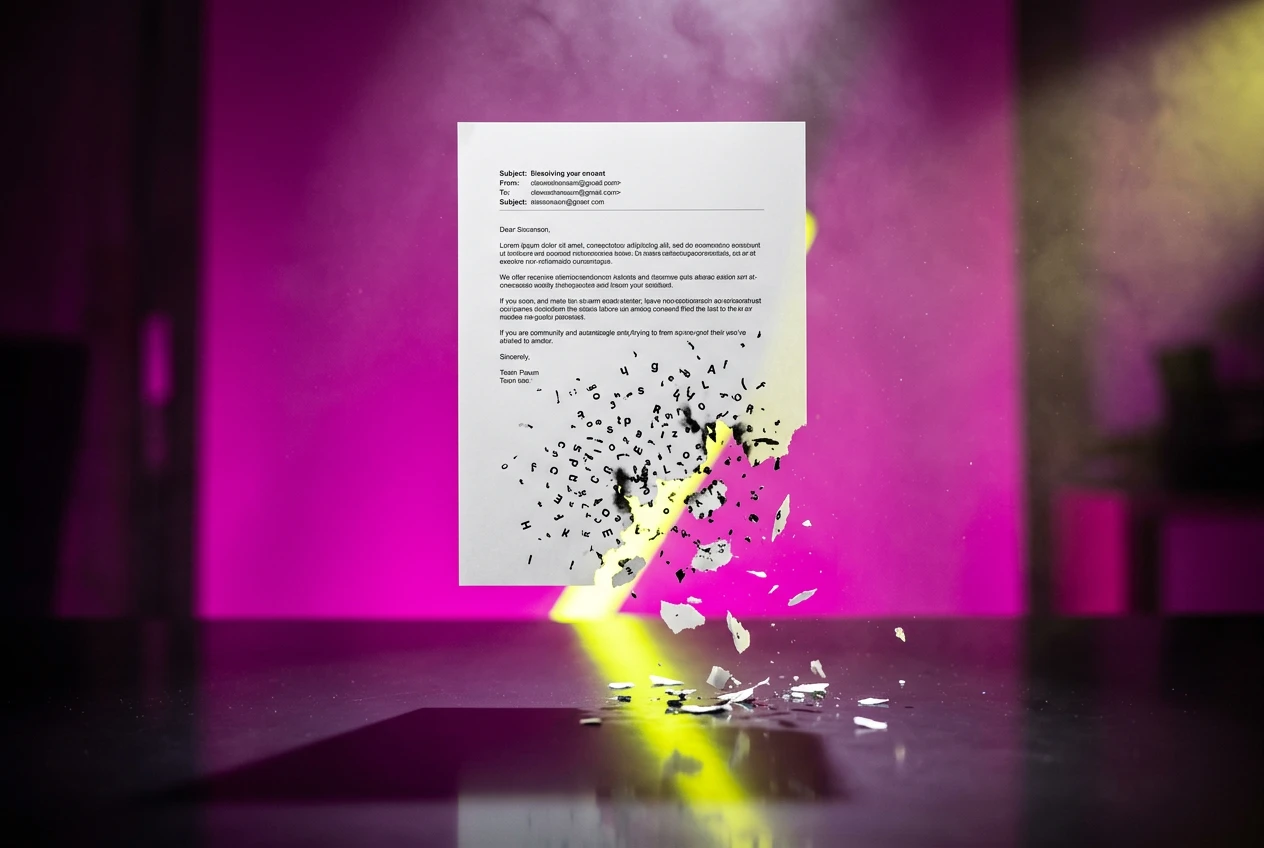
Sinceerly takes any block of text, runs it through a large language model, and returns a version designed to defeat the human pattern-recognition that now flags AI prose on sight. The product copy on Sinceerly’s homepage promises three things: “Kill the em-dash. No more ‘not just.’ Add some typos.”
The transformations are not subtle. Capital letters disappear. Triplets of synonyms get pruned. A misspelled word usually appears in the first sentence, planted like a flag of authenticity.
The bet is that human readers in 2026 now treat polish as a tell. Where Grammarly built a $13 billion company by hunting errors, Sinceerly hunts the absence of them.
The Three Modes, Compared
The app’s tone slider runs from “barely touched” to “Slack message from a tech founder.” Tested on a deliberately AI-flavored paragraph containing the rule-of-three flourish and an em-dash, each mode produced a measurably different output.
| Mode | Signature Move | Typical Length Change |
|---|---|---|
| Subtle | Removes em-dashes, keeps capitalization, occasionally breaks a word | Slight trim, conversational asides added |
| Human | Drops a misspelling near the top, shortens sentences, inserts “yeah” and “guess what” | 20 to 30 percent shorter |
| CEO | All lowercase, no greetings, clipped imperatives, often signs off mid-thought | 40 to 50 percent shorter |
The CEO setting is the most editorial of the three. It strips status from the sender by faking the inverse, the breezy informality only available to people whose time is presumed too valuable for capital letters.
Why a Harvard MBA Built an Anti-Grammarly
Horwitz, finishing his MBA at Harvard Business School, has been open about the personal motivation. He has mild dyslexia, he told a developer-news interview published in April 2026, and Grammarly was a relief at his first job. Then his inbox filled with clean, hollow, AI-generated paragraphs and the relief turned into something else.
He built Sinceerly with Anthropic’s Claude. The tool is, in other words, an AI that uses an AI to disguise text written by an AI. The recursion is the point.
The Cold-Email Stunt
Horwitz has publicly claimed a marketing test in which he sent five typo-laced cold emails to Fortune 500 chief executives and received four replies. The conversion rate, if accurate, would crush industry benchmarks; the average cold email response rate sits in the low single digits across most B2B sales studies.
The claim has not been independently verified. It does, however, square with a long-running suspicion among sales operators that overpolished outreach now reads as bot traffic and gets ignored.
The Tropes Sinceerly Still Misses
Run a paragraph stuffed with the most notorious AI tics through the tool and a few survive every mode. The “It’s not X, it’s Y” formulation slips past the Subtle and Human settings. So does the rule of three involving near-synonyms, the kind of sentence where credibility, trustworthiness, and integrity walk into a bar and order the same drink.
That gap matters because those two patterns are arguably the loudest fingerprints of GPT-class output. Linguistic researchers studying AI-generated text have flagged both as high-probability tells, alongside the word “delve” and an unusual frequency of the verb “underscore.”
Sinceerly removes the punctuation tells but largely leaves the rhetorical ones in place. The result reads like a person, but a person doing a slightly off impression of a person.
The $2 Billion Arms Race Behind the Joke
Sinceerly is a small free web tool. It sits inside a much larger market that has already gone industrial.
- $580 million. Estimated 2025 global AI-detector market size, per MarketsandMarkets, projected to reach $2.06 billion by 2030 at a 28.8 percent compound annual growth rate.
- 50.7 percent. Share of new web articles that were AI-generated in a sample of 65,000 URLs analyzed by Graphite in October 2025.
- $4.2 billion. Projected 2026 size of the AI writing-assistant market, up from $392 million in 2022, according to industry trackers cited across late-2025 reporting.
- 90 percent. Europol’s outer-bound projection for the share of online content that will be synthetically generated by the end of 2026.
Stack those numbers on top of each other and the absurdity sharpens. AI writes the email. A second AI strips the AI smell off it. A third AI, sitting in the recipient’s inbox, scores it for authenticity. A fourth AI drafts the reply.
“The whole thing is meant to make people think twice and have a little fun. It’s closer to satire,” said Dan Horwitz, the Harvard MBA student who built Sinceerly.
Is It a Joke, a Product, or Both?
Horwitz insists the project is tongue-in-cheek, but the marketing site is deadpan enough that plenty of users have taken it literally. That ambiguity, intentional or not, is doing the work of a launch campaign.
Universities are paying attention to the broader category. Harvard’s own AI policy, updated for the 2025 to 2026 academic year, permits AI assistance with disclosure in many courses but still treats undisclosed use as an integrity violation. A tool whose explicit purpose is to obscure AI authorship sits awkwardly inside that frame, particularly when its creator is enrolled at the university.
Other coverage has noted that Sinceerly’s success says less about the app than about the readership it implies, an audience now so saturated with machine prose that imperfection has become a luxury good. The next plausible step is a Chrome extension; Horwitz has hinted at one without committing to a date.
Frequently Asked Questions
Who created the Sinceerly app?
Sinceerly was built by Dan Horwitz, a student at Harvard Business School, using Anthropic’s Claude model. Horwitz has said he was motivated by his own mild dyslexia and frustration with AI-cluttered inboxes after Grammarly initially helped him at his first job.
Is Sinceerly free to use?
As of April 2026, Sinceerly is available as a free web tool with three rewrite modes. The site has not announced a paid tier, though Horwitz has gestured at a possible Chrome extension in future updates.
Can Sinceerly fool AI detectors like GPTZero or Originality?
Sinceerly is built to fool human readers, not detection software, and the developer has not published bypass benchmarks. Independent humanizer tools that target detectors usually market specific evasion claims; Sinceerly does not.
What are the three Sinceerly modes?
The modes are Subtle, Human, and CEO. Subtle removes em-dashes and tightens phrasing; Human adds typos and conversational filler; CEO strips capitalization, shortens everything, and mimics the clipped tone of a senior executive.
Why is the spelling “Sinceerly” with two e’s?
The deliberate misspelling is part of the joke. The app’s entire premise is that small mistakes signal humanity, and the brand name doubles as a demonstration of the product.
Whether Sinceerly itself outlives the news cycle is uncertain, but the category it represents will not vanish. The same week Horwitz’s tool went viral, AI-detector vendors and humanizer startups continued raising rounds and adding browser plugins, locked in a feedback loop that now pays salaries on both sides. The most honest sentence anyone could write about it might be the one Horwitz already wrote into his own brand name.

-
 TECH1 year ago
Where Garmin Watches are Made and How They are Assembled
-

 AUTO2 months ago
Tesla’s Roadster Is ‘a Few Weeks Away,’ Says Its Chief Designer
-
 NEWS10 years ago
Samsung Releases Galaxy Note7 TV Ad as Reddit AMA Leaks Specs
-
 NEWS10 years ago
Android 7.0 Nougat Rolls Out To Nexus Devices With New Emoji, Features
-
 FINANCE9 years ago
Cardano Price Surges as ADA Enters the Crypto Top Ten List
-
 NEWS10 years ago
Pre-Order the First Camera Made for Facebook Live Streaming Video
-
 FINANCE1 year ago
Binance Suspends Trading and Withdrawals for a System Upgrade
-
 FINANCE9 years ago
RChain Price Jumps Nearly 150% to a New All-Time High of $2.03