NEWS
YouTube’s Gemini Remix Launch Hits a Regulatory Countdown
YouTube’s Gemini Omni shipped in Shorts Remix with remixing on by default, two days before New York’s AI synthetic performer law takes effect on June 9, 2026.

YouTube’s Gemini Omni model can now restyle any creator’s Short into a new scene or insert users alongside them using nothing more than a text prompt, and the feature launched May 19, 2026, free across a platform where Shorts log 200 billion daily views. New York’s Synthetic Performer Disclosure Law takes effect June 9, two days from now, requiring brands and creators who produce commercial advertisements containing AI-generated human visuals to conspicuously disclose that fact.
Watermarks and attribution links accompany every Omni remix. Creators who haven’t adjusted their settings are already opted in.
The Consent Gap in a Feature Built for Trends
YouTube’s formal protections are documented. Per the company’s May 19 Google I/O announcement, every Short remixed through Gemini Omni carries SynthID digital watermarks and identifying metadata, and links back to the original video. SynthID, Google DeepMind’s imperceptible watermarking system, has been applied to more than 100 billion AI-generated images and videos globally. Likeness detection, which lets creators identify and request removal of unauthorized AI-generated videos of their face, expanded to all creators aged 18 and older on May 16. Creators can opt out per clip or in bulk. Beginning in May 2026, YouTube also started automatically placing a visible AI label directly on Gemini-generated Shorts as an overlay, making the disclosure viewer-visible without requiring creator action.
The opt-out architecture is where the consent debate concentrates.
If you have to opt out to stop your content from being used, that’s not consent. The creator economy runs on trust between a real person and their audience. The second a platform can remix your likeness without an explicit yes, it kills the authenticity that made the content valuable in the first place.
Donatas Smailys, CEO of creator marketing platform Billo, told Digiday in May 2026. His objection is structural: remixing defaults open on eligible Shorts and stays open until a creator disables it, either per clip or in bulk. YouTube’s bulk toggle is a genuine improvement over the per-video architecture that blew up at TikTok in April, but the default position is the same.
That April collapse is instructive. TikTok paused its AI Meme Remixer after a 10-day creator revolt driven by opt-in by default, per-video opt-out, and no account-wide kill switch. A creator with 1,000 uploads needed 1,000 individual toggles to exit. The platform pulled the feature before its pilot period ended.
Jacquie Kostuk, vice president of strategy at advertising agency FUSE Create, told Digiday the system is “encouraging on-platform generative AI inside a controlled, attribution-safe wrapper,” and that creators can opt out “to, fingers crossed, control their likeness and IP.” In February 2026, YouTube had coupled its AI remix opt-out to the opt-out for all forms of remixing, a design that drew immediate criticism from creator communities. The Gemini Omni rollout decouples them. YouTube did not respond to Digiday’s request for comment on the opt-out architecture.
What Gemini Omni Can Do to a Short
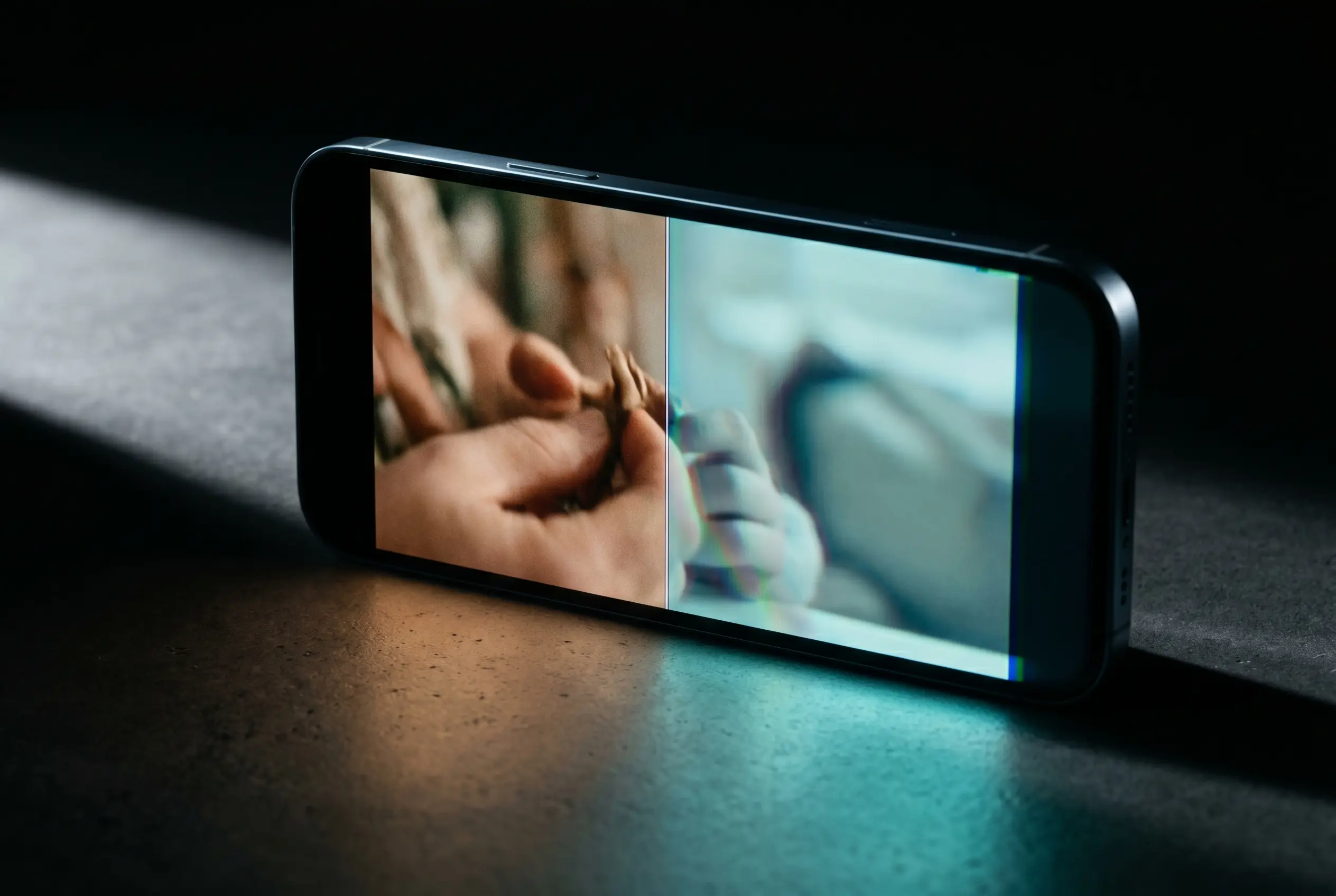
The Shorts Remix tool has existed since late 2023. The model changes the nature of the operation: before, users could reuse audio or clip short segments from another creator’s video; with Omni, the feature supports scene reconstruction from a prompt, a qualitatively different capability.
According to YouTube’s Google I/O announcement, the Gemini-powered feature supports:
- Scene restyling: changing a clip’s setting, era, or aesthetic using a text prompt, such as converting footage into a 90s visual style
- Self-insertion: placing the remixer alongside the original creator using a reference photo, with the model handling visual coherence between real and generated content
- Contextual continuation: adding generated footage to the original clip’s narrative while preserving the source video’s context and framing
- Setting transformation: altering the visual environment of a scene entirely while keeping the original content’s subject in frame
The resulting Short may look and sound materially different from the source. Attribution links back, but whether that link drives viewers to the original creator or simply marks the derivation chain is a separate question from who benefits commercially from the derivative content.
Jonathan Chanti, CEO and cofounder of creator management firm Reign Maker Group, told Digiday the technology’s reach creates liability alongside its potential. “AI changes remixing from basic editing into highly realistic manipulation at scale,” Chanti said. “That creates potential issues around misinformation, brand safety, sponsorship conflicts, audience trust and ownership of identity, especially as creators increasingly operate as businesses and public brands.”
Copyright Without a Clear Owner
The ownership question runs deeper than brand positioning. Frank Poe, an attorney and founder of Poe Law, a creator-focused legal firm, raises a specific structural risk for any creator who posts Gemini-generated content.
“As a creator, if you’re using Gemini, it’s unclear that you are posting content that is 100% yours and free from any claims a third-party might make,” Poe told Digiday, adding that this uncertainty “might put whoever posts it on YouTube at odds with its terms of service, which still has the three-strike policy.” That policy terminates accounts after three copyright infringement findings. “There’s no safe harbor on the Google/Gemini side to protect you from that,” Poe said.
Google has already restricted one of Omni’s more sensitive capabilities at launch. The model can alter people’s speech as part of video editing, but that function is currently off-limits while Google studies safer release paths, per its own documentation. The restriction signals how much the consent and likeness question hangs over even the features that haven’t shipped yet.
For the source creator whose Short gets remixed, the exposure arrives from a different angle. A Gemini-powered transformation can shift the tone, context, or commercial associations of a video without any action by the original creator. A sponsored post restyled into satirical content still carries the attribution link back to the source creator, even if that creator never saw the result. Agency teams running influencer campaigns have begun writing AI-remix permissions explicitly into talent contracts, treating platform opt-out settings as insufficient coverage of consent.
Mustafa Aijaz, vice president of SoaR Gaming, an esports and gaming content organization, described the tool to Digiday as a specific benefit for newer creators who can build content they otherwise couldn’t, particularly with b-roll or storytelling assets. Lily Comba, founder and CEO of influencer marketing agency Superbloom, sees the commercial effects differently. “Being creative under internet pressure is very difficult,” Comba told Digiday. “Not everyone is going to be a good content creator,” she said, adding that AI-assisted creation “is also perpetuating this idea that you have to show up online perfectly, which is incredibly problematic.”
New York Leads the Regulatory Cascade, Starting Tuesday
The May 19 launch lands inside a three-stage regulatory sequence. The first deadline is in two days.
| Jurisdiction | Law | Effective Date | Core Obligation | Civil Penalty |
|---|---|---|---|---|
| New York | S.8420-A, GBL § 396-b | June 9, 2026 | Conspicuous disclosure in ads containing synthetic performers | $1,000 first violation; $5,000 subsequent |
| California | AI Transparency Act (SB 942 / AB 853) | August 2, 2026 | Manifest label on AI-generated content; free AI detection tool required | $5,000 per violation per day |
| European Union | EU AI Act, Article 50 | August 2, 2026 | Machine-readable marking of AI-generated audio, image, and video | Member-state enforcement; legacy systems given until December 2, 2026 for machine-readable marking |
New York’s June 9 Obligation
June 9 brings the first law of its kind in the United States. New York’s Synthetic Performer Disclosure Law, signed by Governor Kathy Hochul as S.8420-A on December 11, 2025, requires any person or entity that produces a commercial advertisement containing a “synthetic performer” to conspicuously disclose that fact, where they have actual knowledge of its inclusion. A synthetic performer is defined as a digitally created asset using generative AI or a software algorithm intended to create the impression of a human performer not recognizable as any natural person. First violation carries a $1,000 civil penalty; each subsequent violation, $5,000.
The disclosure obligation runs to the producer or creator of the advertisement, not to the platform that publishes it. YouTube itself sits behind Section 230 protections. Brands and influencers who post commercial content do not. YouTube’s automatic AI overlay label applied to Gemini-generated Shorts provides machine-readable and viewer-visible disclosure, but it does not satisfy the creator’s own legal obligation as the advertisement’s producer under New York law. The statute does not specify what “conspicuous” looks like in practice, leaving advertisers to establish their own standard before enforcement begins.
California and the EU in August
California’s AI Transparency Act, the original SB 942 amended by AB 853 signed October 13, 2025, applies to generative AI systems with more than one million monthly users or visitors accessible within California. Operative date: August 2, 2026, set deliberately to align with the EU AI Act. Required: a free, publicly accessible AI detection tool; a manifest disclosure option allowing users to label AI-generated content; and a latent, machine-readable mark embedded in AI-generated image, video, or audio. The civil penalty runs to $5,000 per violation per day.
The EU AI Act’s Article 50 transparency obligations enter force on the same calendar date, requiring providers of AI systems generating synthetic audio, image, video, or text to ensure outputs are marked in a machine-readable format and detectable as AI-generated. A May 2026 omnibus agreement extends the machine-readable marking requirement specifically for systems already on the market to December 2, 2026, while broader transparency obligations begin in August. Gemini Omni remixing is not currently available in the EU or UK, but the regulatory framework applies to any provider deploying generative video tools in European markets.
“In the next few months, we’ll know whether New York actually enforces their rules,” Smailys told Digiday. “A year from now, brands that went fully AI to cut costs will be dealing with compliance risks, platform rules and audience trust problems all at once.”
The Authenticity Gap in Consumer Sentiment
Consumer data was already moving against AI-generated creator content. A November 2025 study from Billion Dollar Boy, an influencer marketing agency that surveyed 4,000 consumers, 1,000 creators, and 1,000 senior marketing decision-makers across the US and UK, found:
- 58% of creators said they are interested in exploring copyright protection for their face, identity, and voice
- 55% of marketers said AI has led to more copyright infringement and IP theft in the creator economy
- 53% of creators said the same
- 32% of US and UK consumers said AI is negatively disrupting the creator economy, up from 18% in 2023
A separate Ipsos and Syracuse University study testing 20 advertisements across 10 major brands, with both human-made and AI-generated versions, found that 38% of participants considered human-made ads more creative, and 46% found them more emotionally engaging than their AI equivalents.
Brands are factoring that into their contracts. Poe described the current market posture as “a mutual avoidance of AI in the deliverables by the brands and the creator, the former because they won’t want to pay for something artificial, and the latter because they don’t want to be replaced.” Brand-safety teams at agencies running influencer campaigns have written AI-remix permissions explicitly into talent agreements, treating platform opt-out settings as insufficient evidence of consent.
The platform landscape is sending mixed signals. TikTok, despite pulling its Meme Remixer, still carries AI-generated fake influencers pushing dropshipped products, per Digiday. Meta has committed to cracking down on unoriginal content while Instagram carries AI avatars promoting merchandise, according to The Verge. “These tech platforms are just chasing each other when it comes to the next innovation, the next feature,” Comba told Digiday. “People don’t want to hear from robots. AI robots don’t have wallets, they’re not wearing the product, they’re not a personal testimonial from a consumer’s perspective.”
YouTube’s Shorts Remix feature launched its generative update 21 days before New York’s disclosure law applies to any brand or creator who produces a commercial advertisement containing a synthetic performer with actual knowledge of that fact.

-
 TECH1 year ago
Where Garmin Watches are Made and How They are Assembled
-

 AUTO3 months ago
Tesla’s Roadster Is ‘a Few Weeks Away,’ Says Its Chief Designer
-
 NEWS10 years ago
Samsung Releases Galaxy Note7 TV Ad as Reddit AMA Leaks Specs
-
 NEWS10 years ago
Android 7.0 Nougat Rolls Out To Nexus Devices With New Emoji, Features
-
 FINANCE9 years ago
Cardano Price Surges as ADA Enters the Crypto Top Ten List
-
 NEWS10 years ago
Pre-Order the First Camera Made for Facebook Live Streaming Video
-
 FINANCE1 year ago
Binance Suspends Trading and Withdrawals for a System Upgrade
-
 FINANCE9 years ago
RChain Price Jumps Nearly 150% to a New All-Time High of $2.03