
GAMING
Viractal’s Switch Port Hides a Voice-Warping Betrayal Twist

Viractal, the board-game-style RPG that quietly earned a Very Positive rating on Steam this winter, is heading to Nintendo Switch and Nintendo Switch 2 on September 30 in the West, with a Japanese launch the following day on October 1. The base port costs $19.99, and Switch 2 owners can pay $4.99 more for an enhanced version of the same game. It comes from Sting, a Japanese studio with a long history of bending the RPG into strange shapes.
Most of the wire coverage led with that date. The detail worth your attention sits inside the online co-op: a hidden contract system that can quietly turn one of your own teammates against the rest of the party, with a sound trick to match.
Sting Locks a Late-September Window for the Switch Port
The announcement closes a gap that has existed since the game left early access. Viractal first appeared on Steam through Early Access on September 19, 2025, then reached its full 1.0 release on January 26, 2026. The console versions arrive roughly eight months after that, landing in the West on September 30 and in Japan on October 1.
Pricing is simple. The Switch edition runs $19.99, the same nineteen-dollar bracket the genre tends to live in, and the Switch 2 upgrade adds a separate $4.99 charge for players who want the enhanced build on Nintendo’s newer hardware. Both console versions are slated to keep receiving the post-launch content that the PC release has been getting since January, including new characters and stages.
Here is how the three releases line up.
| Platform | Release | Price |
|---|---|---|
| PC (Steam) | Jan 26, 2026 (full launch) | Standalone purchase |
| Nintendo Switch | Sep 30 (West) / Oct 1 (Japan) | $19.99 |
| Nintendo Switch 2 | Sep 30 (West) / Oct 1 (Japan) | $19.99 plus $4.99 upgrade |
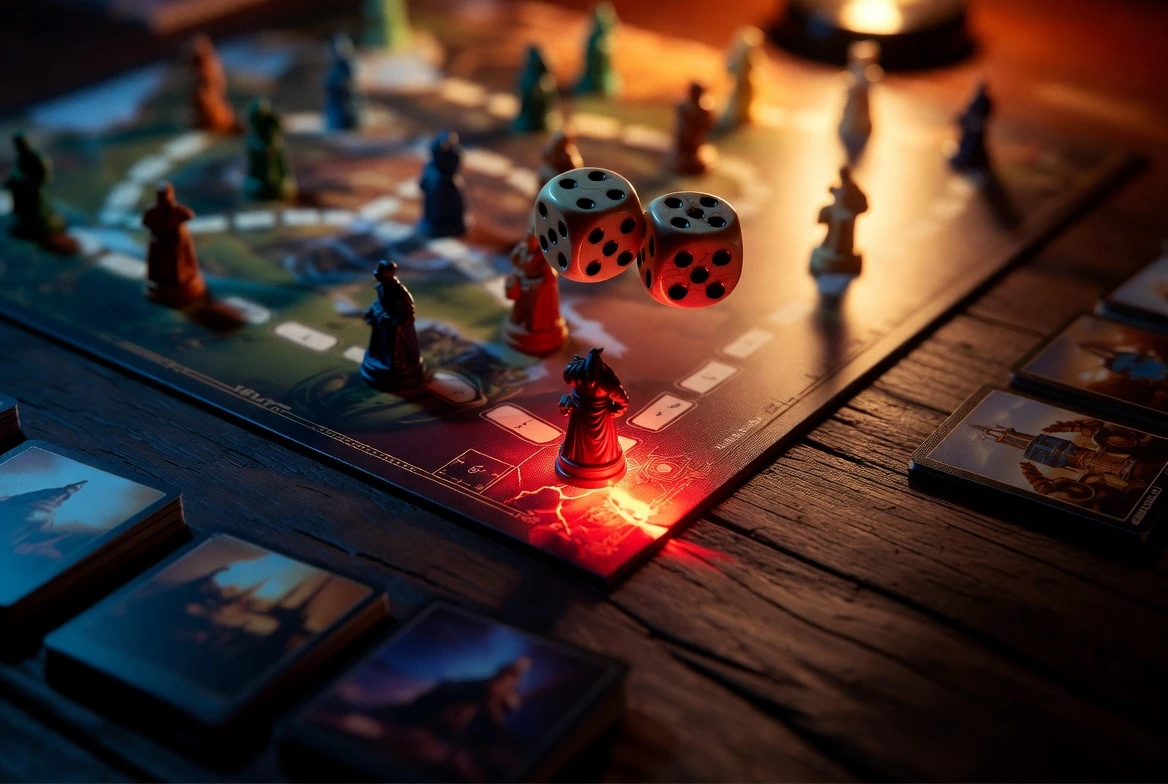
Devil’s Whisper Turns a Co-op Party Into a Table of Suspects
The game’s full title asks the question directly: Will You Trust Your Party? The mechanic behind that question is the part that turns a friendly co-op session into a table of suspects, and it is the reason the title is more than a generic deckbuilder with dice.
How the Pact Escalates
During online play, a single player can suddenly see a private message that no one else at the table can read. That is the Devil’s Whisper. It offers a pact: take an extra reward now, at a cost that lands on your teammates rather than on you. Accept once and the contract returns, each new offer demanding more than the last.
It is a social-deduction layer grafted onto a cooperative board game, closer in spirit to a hidden-traitor party game than to a standard online RPG. Sting laid the system out in its own developer breakdown of the betrayal mechanic, and it is the feature that gives the game its identity in a crowded card-battler field.
The Voice Swap Built on Audio Middleware
There is a clever wrinkle to keep betrayal from being obvious. When a player accepts one of the secret contracts, the game can temporarily alter that person’s in-game voice. The effect gives the betrayal an audio cue without yanking the traitor out of normal party chat, so suspicion has to be earned rather than handed to you by a flashing label.
Under the hood, that runs on CRI ADX (an audio middleware engine widely used in Japanese games) and CRI TeleXus, paired with Yamaha’s Sound xR spatial-audio technology. It is a lot of plumbing for one mechanic, and it tells you where the studio thinks the game’s hook lives.
Dice, Decks, and the DP Resource Loop
Strip away the betrayal and the core is a tidy fusion of two tabletop traditions: roll-and-move board games and collectible card battles. Each run drops you into a small, procedurally generated world that reshuffles every time you play, so the map, the enemies, and the events are never quite the same twice.
The moment-to-moment loop rests on a handful of systems that stack together.
- Procedural worlds that rebuild on every playthrough, with a time limit that pushes you to gamble on which paths to explore.
- Card battles where you collect a wide pool of cards and assemble a custom deck built around combos.
- Dice movement tied to a banked resource the game calls DP; leftover movement points convert into DP, which you spend to power up events or tilt a fight in your favor.
- Branching events that hand out new abilities or send your run somewhere unexpected based on the choices you make.
- Solo or online co-op, with the betrayal layer reserved for the online mode.
The roguelike-deckbuilder shape will be familiar to anyone who has played the wave of card games that followed Slay the Spire onto every platform, including the roguelike that headlined a subscription service this spring. What Viractal adds is the board, the dice, and a party that might not have your back.
A Studio With Board-Game RPGs in Its DNA
This is not a first-time indie throwing mechanics at a wall. Sting was founded in Tokyo in 1989 by former Compile staff, and it has spent more than three decades building RPGs that refuse to sit still. Its catalog is a tour of cult favorites: the survival-horror dungeon crawler Baroque on the Sega Saturn, the tactical Dept. Heaven titles Riviera and Yggdra Union, and later work on the Utawarerumono series.
The most telling line in that resume is Dokapon, a long-running party RPG built on a literal game board where players move by dice and routinely sabotage one another. The betrayal in Viractal is not a one-off experiment; it is the same studio returning to a well it has drawn from for years, now wired for online play. In 2009, Sting also struck a publishing deal that put its games under Atlus in Japan, a sign of how much weight its design work carried even in its niche.
That heritage matters for a Switch buyer trying to gauge whether a $20 indie is worth the slot. The studio knows how to make a board game feel like an RPG, and how to make sabotage feel fun rather than mean.
Why a Very Positive Game Stayed Invisible
By the numbers, Viractal earned its reputation the honest way. The Steam version holds a Very Positive rating, with 87% of 373 user reviews coming back positive, a strong ratio even if the raw review count is modest. You can see that record on the game’s official Steam store listing.
The catch is the audience size. The game launched into a brutally crowded first half of 2026, when bigger releases arrived almost weekly, and a niche Japanese board-game RPG with a small marketing budget simply did not surface for most players. A high score on a few hundred reviews is the signature of a sleeper: loved by the people who found it, invisible to everyone who did not.
The Switch and Switch 2 release is the obvious fix. Nintendo’s install base is where this exact genre, the cozy-but-cutthroat party game, tends to find its real crowd, and where a couch full of friends can spin up the betrayal mode without anyone reading a hidden screen over a shoulder. It is the same path other PC indies are taking, like the cyberpunk Metroidvania confirmed for Switch 2 alongside its PC build.
If the hidden-contract hook lands with Nintendo’s living-room co-op players the way it did with the Steam faithful, Sting has a genuine breakout on its hands by year’s end. If it stays a curiosity, the studio still walks away with a clever party game and a bigger audience than it had in January.
Frequently Asked Questions
When does Viractal release on Nintendo Switch and Switch 2?
Viractal launches on both Nintendo Switch and Nintendo Switch 2 on September 30, 2026 in Western regions and on October 1, 2026 in Japan. It is already available on PC via Steam, where the full version released on January 26, 2026.
How much does Viractal cost on Switch, and what is the Switch 2 upgrade?
The Nintendo Switch version is priced at $19.99. Players who want the enhanced Switch 2 build pay an additional $4.99 upgrade fee on top of the base purchase.
What is the Devil’s Whisper system?
Devil’s Whisper is a betrayal mechanic in Viractal’s online co-op. A single player can receive a private offer, invisible to teammates, granting extra rewards at the group’s expense, and accepting it can temporarily alter that player’s in-game voice as a hidden tell.
Does Viractal support online multiplayer?
Yes. The game supports online co-op, and the PC version also lists LAN and shared or split-screen play, with solo play available throughout. The betrayal layer is tied specifically to online sessions. Cross-platform play between PC and Switch has not been confirmed.
Who developed Viractal?
Viractal was developed by Sting, a Japanese studio founded in Tokyo in 1989 and known for Baroque, the Dept. Heaven tactical RPGs, the Utawarerumono series, and the board-game party RPG Dokapon.

-
 TECH1 year ago
Where Garmin Watches are Made and How They are Assembled
-

 AUTO3 months ago
Tesla’s Roadster Is ‘a Few Weeks Away,’ Says Its Chief Designer
-
 NEWS10 years ago
Samsung Releases Galaxy Note7 TV Ad as Reddit AMA Leaks Specs
-
 NEWS10 years ago
Android 7.0 Nougat Rolls Out To Nexus Devices With New Emoji, Features
-
 FINANCE9 years ago
Cardano Price Surges as ADA Enters the Crypto Top Ten List
-
 NEWS10 years ago
Pre-Order the First Camera Made for Facebook Live Streaming Video
-
 FINANCE1 year ago
Binance Suspends Trading and Withdrawals for a System Upgrade
-
 FINANCE9 years ago
RChain Price Jumps Nearly 150% to a New All-Time High of $2.03