
NEWS
Myanmar Takes a Genocide Verdict the Junta Will Not Pay
The ICJ named Myanmar for Rohingya genocide, the first state finding, then set a two-year bill the junta is unlikely to pay.

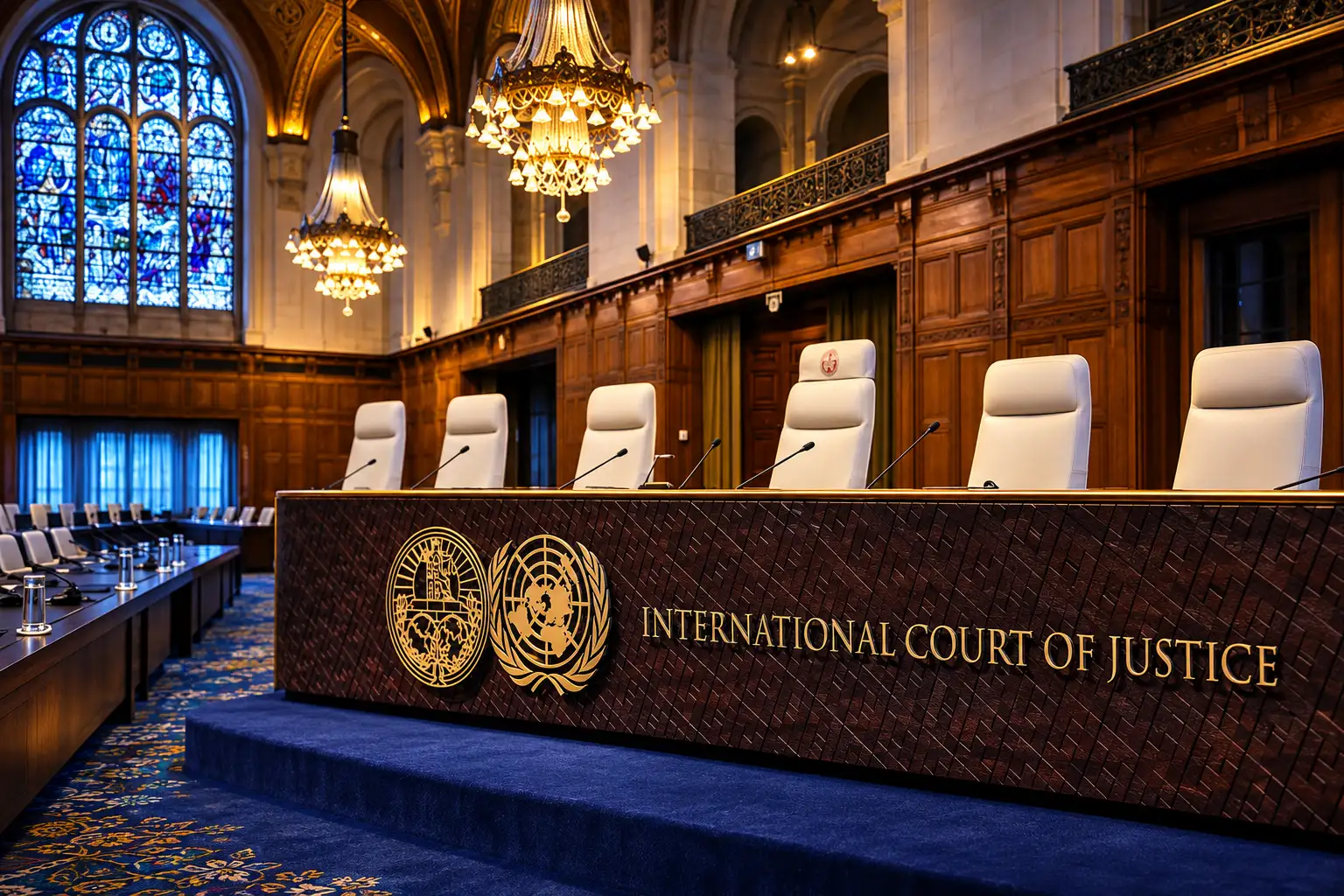
The International Court of Justice ruled on November 19 that Myanmar committed genocide against the Rohingya, the first time it has held a state responsible. By 9 to 6, the bench found that security forces in northern Rakhine State acted in 2017 with intent to destroy a substantial part of the group.
About 1.2 million Rohingya still live in camps in Bangladesh. The court ordered restitution and compensation, then gave Naypyitaw two years to say how it will pay. It has no police of its own.
A First Finding Against a State
President Yuji Iwasawa read the decision for about three hours in the Peace Palace. The 191-page judgment on the merits holds that Myanmar’s security forces and other state organs committed acts listed in Article II of the 1948 Genocide Convention: killing members of the group, causing serious bodily or mental harm, and imposing measures intended to prevent births.
The court adopted a United Nations fact-finding figure of at least 10,000 Rohingya killed in the 2017 “clearance operations,” and said the record supported it. Killings included the direct targeting of civilians, women and very young children, attacks with knives, people burned in houses, and widespread indiscriminate shooting.
The execution of Rohingya men and boys in some locations, the widespread sexual violence, including gang and mass rape, the targeting of children and babies, the methodical burning of villages and attacks on fleeing civilians are not consistent with an intent to conduct counter-insurgency operations.
Yuji Iwasawa, President, International Court of Justice
Adil Ahmad Haque, a Rutgers law professor who summarised the findings, wrote that the court counted at least 1,834 acts of rape and found that approximately 326,000 Rohingya had their homes burned. Approximately 700,000 people were forced to flee. Many who fled have not been allowed to return.
The court posted the full text after the sitting.
LEARN MORE: The full text of the #ICJ Judgment in the case concerning Application of the Convention on the Prevention and Punishment of the Crime of Genocide (The #Gambia v. #Myanmar: 11 States intervening).https://t.co/IEAfHOc2Te pic.twitter.com/Ny8sCWLU9P
— CIJ_ICJ (@CIJ_ICJ) November 19, 2026
Secretary-General António Guterres called the judgment a demonstration of international justice and the first time the Court has found a State responsible for committing genocide. He said Myanmar must comply. Dawda Jallow, The Gambia’s attorney general, put the credit with the witnesses.
The victory belongs to the Rohingya. They survived, they testified, and today they were believed.
Dawda Jallow, Attorney General of The Gambia, The Hague
Mixed Motives Did Not Save Myanmar
Genocide turns on specific intent, the aim to destroy a national, ethnical, racial or religious group intent to destroy, in whole or in part. Direct orders are rare. The court kept its old test: when intent is inferred from conduct, genocide must be the only reasonable inference.
Myanmar argued that the operations were a campaign against the Arakan Rohingya Salvation Army after attacks on security posts in 2016 and 2017. The judges did not deny that other aims can sit beside genocide. They said those other aims did not explain the evidence as a whole.
Janina Dill, chair in global security at Oxford’s Blavatnik School of Government, has put the same point in plainer terms. Genocidal intent can be inferred from a pattern of conduct, and showing that atrocities also served counterinsurgency, punishment or displacement does not wipe that intent away. The court treated counterinsurgency, forced displacement and collective punishment as plausible goals, then found that the totality still could not be explained without genocide as one objective.
It treated the 815,000 Rohingya of northern Rakhine State as a substantial part of the group on numbers alone. Destruction, it said, is not only a body count. Listed acts on a scale that severs a group’s ability to function still count. Restrictions on marriage and birth in Maungdaw Township, where nearly 500,000 Rohingya lived, the denial of legal registration for children, and the rape figures, read against official talk of uncontrolled Rohingya population growth, supported an intent to prevent births.
The court also said Myanmar did not have to take every chance to kill in order for intent to be inferred. Philippe Sands KC, counsel for The Gambia, said the judgment “brings the genocide convention alive” and gives it “practical, real meaning.” Had the other view prevailed, he said, the convention would “essentially become a dead letter.”
That reading will be studied in other dockets, including South Africa’s case against Israel and Ukraine’s case against Russia. Dill warned against treating the Rohingya file as a rehearsal for a conflict the world already watches. Litigation on their plight, she said, is not a test case for somewhere else.
Nine Votes, Six Dissents, Fifteen Opinions
Every judge on the 15-member bench wrote separately. The core genocide finding was the closest of the big votes. Several dissenters still joined orders to investigate suspects or to pay compensation.
HOW THE JUDGES VOTED
| Finding or order | Vote | Against |
|---|---|---|
| Myanmar committed genocide | 9 to 6 | Sebutinde, Tomka, Abraham, Xue, Nolte, Kress |
| Failed to prevent genocide by civilians alongside forces | 9 to 6 | Same six |
| Did not directly and publicly incite private persons | 14 to 1 | Hmoud |
| Failed to punish genocide | 11 to 4 | Sebutinde, Tomka, Abraham, Xue |
| Failed to pass, and must pass, convention laws | 14 to 1 | Xue |
| Must investigate and, if warranted, prosecute | 13 to 2 | Sebutinde, Abraham |
| Must give guarantees it will not happen again | 9 to 6 | Same six as genocide |
| Must take restitution steps, including safe return | 10 to 5 | Sebutinde, Abraham, Xue, Nolte, Kress |
| Must compensate; court will set the sum; report in two years | 10 to 5 | Sebutinde, Abraham, Xue, Nolte, Kress (Iwasawa and Aurescu joined the dissent on the report procedure) |
| Broke the 2020 order to preserve evidence | 11 to 4 | Sebutinde, Abraham, Xue and a fourth recorded with that bloc |
The nine in the genocide majority were Iwasawa, Hilary Charlesworth, Leonardo Brant, Juan Manuel Gómez Robledo, Sarah Cleveland, Bogdan Aurescu, Dire Tladi, Mahmoud Hmoud and judge ad hoc Navanethem Pillay. Cleveland, the American judge, voted with the majority on every finding. Xue Hanqin, the Chinese judge, voted against the lot, including the 14 to 1 holdings on legislation.
Vice-President Julia Sebutinde and five colleagues argued, in dissent, that the majority applied a lower standard of proof than the court’s own precedent and leaned too hard on United Nations fact-finding reports. Iwasawa joined the genocide finding and later argued that The Gambia lacked standing to pursue compensation. The split is the record. It is also a map of how hard this court still finds the word.
Reparations Now Sit on a Two-Year Clock
The judgment is final. There is no appeal. The UN Charter obliges Myanmar to comply. Richard Horsey of the International Crisis Group called the stigma a sanction in itself, because it attaches to the state and to the man who commanded the 2017 operations and is now president, Min Aung Hlaing. That diplomatic cost is real. It is a different bill from the one the camps can spend.
WHAT THE COURT ORDERED
- Legislation: Myanmar must enact laws that give full effect to the convention, a 14 to 1 order.
- Prosecution: It must take immediate steps to investigate everyone reasonably suspected from the 2017 operations and, if warranted, prosecute and punish them.
- Return: Restitution includes safe, voluntary and dignified return of displaced Rohingya, inside Myanmar or abroad, and the reunification of families.
- Property and care: Myanmar must return or replace property, search for the disappeared, provide rehabilitation, and protect Rohingya from discrimination and persecution, including in access to citizenship and freedom of movement.
- Money: Where restitution cannot make good the damage, Myanmar must compensate the group and its members, with the amount set in a later phase.
The Gambia had asked the court to order full citizenship. The judges declined. They also declined to treat their own declaration as enough for the 2020 evidence-order breach, which they recorded as a violation, then stopped short of extra penalties for that count.
If The Gambia later says Myanmar is not complying, it can go to the UN Security Council under Article 94(2) of the Charter. Horsey noted that the Council has never used that power to enforce an ICJ judgment, and that a hard resolution here would almost certainly meet a Chinese or Russian veto. Naypyitaw’s record on the January 2020 provisional measures is the nearest guide: it filed all 13 required reports on time, issued directives against genocidal acts, and still, the court found, failed to preserve evidence. Horsey’s line was that compliance was in form, not in substance. The investigative body Naypyitaw set up has, in the regime’s own later report to the court, been “unable to operate.”
Cox’s Bazar Still Holds 1.2 Million
In the camps, crowds stood at screens while Iwasawa spoke. Cheers carried across Cox’s Bazar. The legal record they wanted is now in the court’s name. The queue for food is the same queue.
THE CAMPS IN NUMBERS
- People: About 1.2 million Rohingya refugees live in Bangladesh, most of them in Cox’s Bazar and on Bhasan Char, on World Food Programme and UNHCR counts.
- Rations: Since April 2026 a targeting system has paid $12, $10 or $7 per person per month in Cox’s Bazar, with $1 more on Bhasan Char, according to the UN country team in Bangladesh.
- Pipeline: A WFP operational update said that without new money, resources for General Food Assistance will be exhausted by December 2026.
- Return: Approximately 700,000 fled in 2017; the court ordered safe return and did not order mass citizenship.
Horsey said nearly 1.2 million Rohingya now live in those camps and that, since April, the lowest transfer has been the equivalent of $7 a month. Survivors posting from Cox’s Bazar called November 19 a long-awaited recognition and kept fundraising for school places the same afternoon. Within hours the verdict was also being used as a stand-in in other wars, which is how a Rohingya case can be won in The Hague and still lose the day’s argument.
How The Gambia Got to The Hague
The Gambia, an Organisation of Islamic Cooperation member, filed in November 2019. It did not claim to be the injured state. It claimed that every party to the convention may sue to prevent and punish genocide, a duty owed to all parties alike.
THE ROAD TO THE HAGUE
- August 25, 2017: The Arakan Rohingya Salvation Army attacks 30 police posts and a military base in Rakhine State; Myanmar’s “clearance operations” follow.
- November 2019: The Gambia files at the ICJ, with OIC backing; 11 states later intervene on the reading of the convention.
- December 2019: Aung San Suu Kyi leads Myanmar’s defence in person at the first hearings, contesting jurisdiction and standing.
- January 2020: The court unanimously orders provisional measures to prevent genocidal acts, preserve evidence and report every six months.
- February 2021: The military seizes power. Suu Kyi remains in detention and is not named in the 2026 merits judgment.
- July 2022: The court rejects Myanmar’s objections and holds that any convention party may bring the case.
- January 12 to 29, 2026: Hearings on the merits, including closed sittings with witnesses from the camps.
- April 2026: Min Aung Hlaing, commander-in-chief in 2017, is installed as civilian president after tightly restricted elections.
- November 19, 2026: The court delivers judgment at 10 a.m. in The Hague.
Three Myanmar authorities defended the file in sequence: Suu Kyi’s elected government, the junta that took power in 2021, and the nominally civilian presidency that followed in April. The court cited Min Aung Hlaing’s wartime language, including a description of the “Bengali problem” as an “unfinished job,” and found his messages capable of fuelling hatred. The ICC prosecutor in November 2024 requested an arrest warrant for Min Aung Hlaing on deportation and persecution as crimes against humanity. Judges have not ruled publicly on that request. A federal court in Argentina issued warrants in February 2025 for 25 people, Min Aung Hlaing and Aung San Suu Kyi among them, on genocide and crimes against humanity. Neither of those files is this judgment. This one names the state.
London Moves, the Veto Does Not
Britain is the Security Council “pen holder” on Myanmar. Foreign Secretary Ed Miliband called the judgment a landmark, condemned the military regime, and ordered the expulsion of the Myanmar Defence Attaché. He said the UK was summoning the chargé d’affaires, calling urgently for a Council session, and would set out further measures in the coming days. Myanmar, he said, must comply fully.
That is the most a pen holder can do in a week: put a diplomat on a plane, book a chamber, and ask colleagues who can veto to pretend they might not. The United States determined in March 2022, under the Biden administration, that the Myanmar military committed genocide against the Rohingya, and it has not rescinded that finding. In October, Mike Waltz, the US ambassador to the UN, still warned the court not to lower the legal threshold for proving genocide, saying he spoke to protect American and allied soldiers. He singled out Pillay, this year’s Nobel Peace Prize recipient and The Gambia’s judge ad hoc, who voted with the majority across the operative clauses.
Myanmar’s military-backed government did not issue a detailed public reply in the hours after the reading. Horsey expected denial and indignation, and said Naypyitaw is unlikely to provide the restitution the court ordered. In 2007 this same court found Serbia responsible for failing to prevent the Srebrenica genocide and not for committing it. The Myanmar file is the first time the state in the dock is named as the author. The name is on the page. The two-year clock is running toward November 19, 2028. The camps will still need a budget before December.
Frequently Asked Questions
Can Myanmar Appeal the ICJ Genocide Judgment?
No. Merits judgments of the court are final and without appeal, and the UN Charter requires parties to comply. If The Gambia later claims non-compliance, Article 94(2) of the Charter lets the Security Council “make recommendations or decide upon measures” to give effect to the judgment. The Council has never used that clause to enforce an ICJ ruling, and Horsey said a hard Myanmar resolution would almost certainly draw a Chinese or Russian veto.
Why Could The Gambia Bring the Case?
In July 2022 the court held that any state party to the Genocide Convention may sue, because the duty to prevent and punish genocide is owed to all parties, a standing lawyers call erga omnes partes. Aung San Suu Kyi’s government had argued that The Gambia was a proxy for the Organisation of Islamic Cooperation, which helped fund the case. The judges rejected that objection. The Gambia did not have to show that it was itself a victim.
How Does the ICJ Case Differ From the ICC File?
The ICJ case is about the responsibility of the state of Myanmar. No individual is convicted in The Hague as a result, and no one is arrested by the world court. The International Criminal Court track, by contrast, is about named people. Its prosecutor has asked judges for a warrant against Min Aung Hlaing for deportation and persecution as crimes against humanity, not for genocide, and those judges have not ruled in public. Argentina’s February 2025 warrants, issued under universal jurisdiction, are a third track again.
Did the Court Restore Rohingya Citizenship?
It did not. The Gambia asked for an order granting full citizenship. The court refused that specific remedy, while still requiring Myanmar to protect Rohingya from discrimination and persecution in access to citizenship and in freedom of movement, and to return or replace property. Rohingya in Myanmar remain largely stateless on Horsey’s account, which is why the missing citizenship order is the gap survivors will feel first if anyone ever tries to go home under this judgment.
Myanmar now has until November 19, 2028, to tell the court what restitution it has carried out and, where return is impossible, how it will compensate. The camps that supplied the witnesses will need a food budget before that date arrives.
Disclaimer: This article is news reporting and analysis of a court judgment and related diplomatic steps. It is for information only and does not constitute legal advice, and it does not determine the rights or duties of any person, government or organisation. Readers with a legal interest in the judgment, reparations or related proceedings should consult a qualified international-law practitioner and the original court documents. Figures, votes and case statuses reflect the official records and public statements cited here and may change as the reparations phase proceeds.

India’s First-Timers and Pant Build a Record 720

Kutch Crash Kills Seven From Army Families After October Toll

Ukrainian Drones Leave Finland Fighting a Russian Ship Fire

ICJ Genocide Order Runs Through Arakan Army Land

CII Asks Patel Panel to Shift Who Funds Indian Credit

Clancy Juror Says the Holdout Never Cited Evidence

The iPhone 18 Pro Max Splits Apple’s Fall in Two

OpenAI Calls GPT-6 Astra AGI Then Locks Its Exploits

Trump Claims Hormuz Control as Oil Holds Near $96

Russia Closes the Goethe-Institut Berlin Tried to Save

 NEWS2 months ago
Clancy Juror Says the Holdout Never Cited Evidence
- NEWS3 months ago
The iPhone 18 Pro Max Splits Apple’s Fall in Two
- NEWS3 months ago
OpenAI Calls GPT-6 Astra AGI Then Locks Its Exploits
- BUSINESS3 months ago
Trump Claims Hormuz Control as Oil Holds Near $96
- LIFESTYLE3 months ago
Russia Closes the Goethe-Institut Berlin Tried to Save
- AUTO3 months ago
Volkswagen’s Job Cuts Leave Four Plants Without Cars
- NEWS3 months ago
Dyson Puts Nurovi Robots on Sale Without the UV Flagship
- BUSINESS3 months ago
US Destroys Five Iranian Tankers as the Shock Hits Jordan