NEWS
IndiGo’s Saudi Freeze Leaves Workers and Pilgrims Stranded
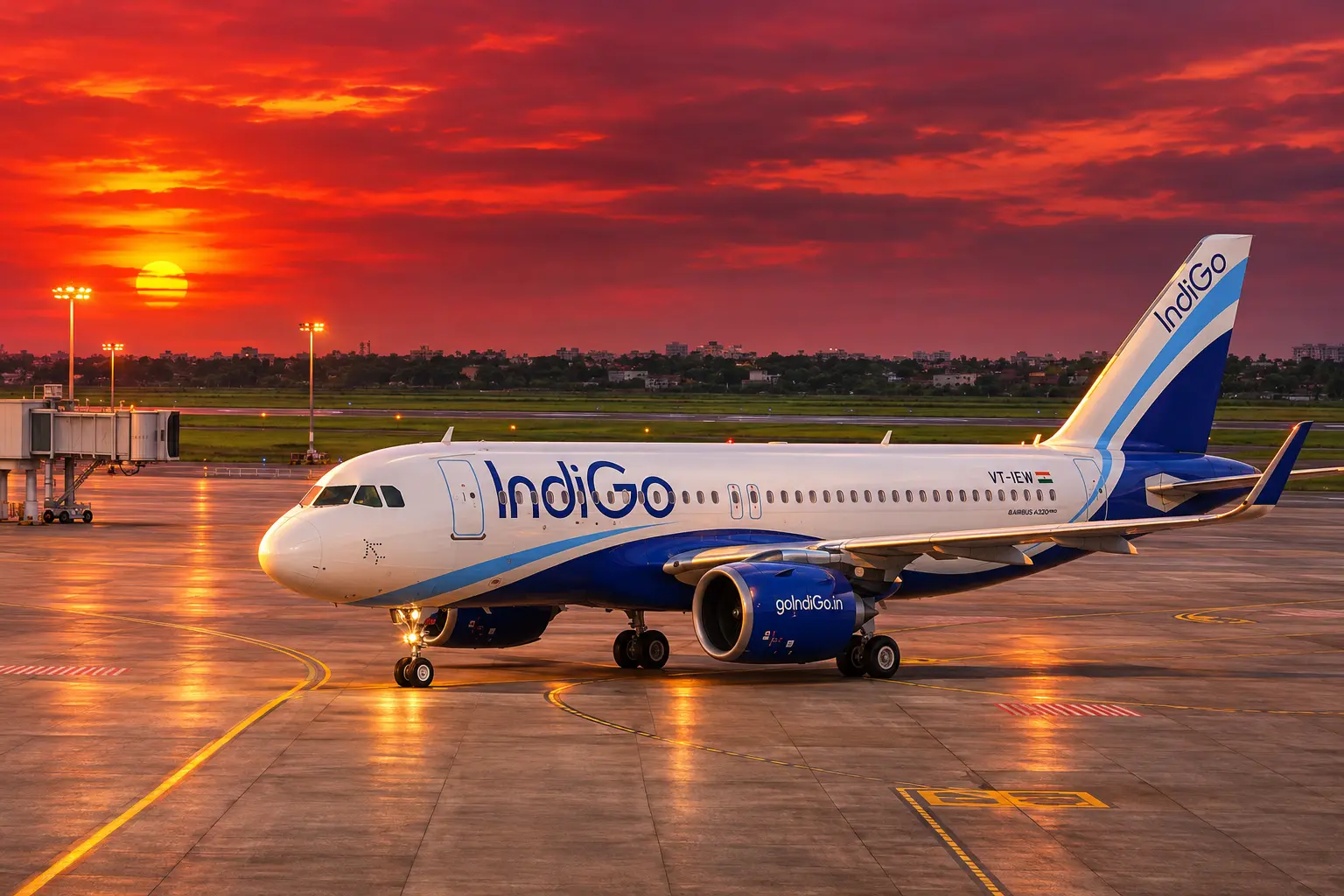
IndiGo has cancelled Jeddah, Madinah, Riyadh and Dammam flights until November 30, extending a month-long Indian-carrier blackout that hits workers and Umrah.

IndiGo has cancelled all flights to and from Jeddah, Madinah, Riyadh and Dammam through November 30, 2026, citing the security situation in Saudi Arabia. The note, posted on Wednesday, November 18, extends Jeddah and Madinah, which had been due to resume on November 21. Riyadh and Dammam were already booked off until month-end.
Jeddah and Madinah are the Umrah gateways. Aligning them with Riyadh and Dammam means IndiGo will not fly any Saudi city for the rest of November.
IndiGo Aligns All Four Saudi Cities to November 30
The airline’s own wording was blunt. “In view of the prevailing security situation in the Kingdom of Saudi Arabia, all flights to and from Jeddah, Madinah, Riyadh and Dammam have been cancelled until 30 November 2026 (inclusive),” IndiGo said. Affected customers, it added, are being told through the contact details they gave at booking, and “necessary assistance” would follow.
Travel Advisory
In view of the prevailing security situation in the Kingdom of Saudi Arabia, all flights to and from Jeddah, Madinah, Riyadh and Dammam have been cancelled until 30 November 2026 (inclusive).
Affected customers are being informed through the contact details…
— IndiGo (@IndiGo6E) November 18, 2026
The Indian Embassy in Riyadh repeated the same dates in a travel alert on the IndiGo halt, and the Consulate General of India in Jeddah posted a matching notice. That is the whole Saudi network IndiGo sells: the two holy-city airports, the capital, and the Eastern Province hub at Dammam. In March 2026, during an earlier Middle East shuffle, the airline said it was still running 126 weekly flights to Saudi Arabia on Jeddah, Riyadh and Madinah, with Dammam already on hold. Those Jeddah banks included daily flights from Mumbai (two), Delhi, Hyderabad, Bengaluru and Kozhikode, plus a daily Mumbai-Madinah pair and daily Riyadh flights from Delhi and Mumbai.
A November 10 advisory had split the map, keeping Jeddah and Madinah cancelled until November 21 and Riyadh and Dammam until November 30. Wednesday’s post erased that split. On Thursday morning, an IndiGo service reply still told a Madinah passenger that the halt ran through November 30, with updates promised on the registered booking contact.
Indian Workers and Pilgrims Who Need Those Seats
The people on those aircraft are not a generic “customer” line. A Ministry of External Affairs reply in Lok Sabha, using Saudi foreign ministry figures as of February 24, 2025, put 2,747,551 Indian nationals in Saudi Arabia, of whom 2,565,464 were working and 182,087 were family members. They sit in Riyadh, Jeddah, Dammam and the pilgrimage belt, in construction, domestic work, health, shops and the Hajj-Umrah trade. When IndiGo opened Bengaluru-Riyadh on November 16, 2025, head of sales Vinay Malhotra called it the fourth non-stop to the capital after Delhi, Mumbai and Hyderabad, and said the route would improve accessibility for business and workforce.
WHO THOSE ROUTES CARRY
- Resident workers: Leave tickets and family visits run on the low-fare India-Saudi city pairs IndiGo built for that traffic.
- Umrah groups: The Indian Embassy in Riyadh has said about 1.5 million Indian pilgrims perform Umrah each year, almost all of them through Jeddah or Madinah.
- Hajj planning: India signed the 2027 Hajj agreement in Jeddah on November 9, locking a quota of 175,025, while Indian-carrier seats into that same city were already cancelled.
- Short-stay visas: Visit, tourist, Umrah and business travellers who outlasted their tickets in October were told Saudi authorities would let them exit without overstay fines once a seat appeared.
Annual-leave bookings made three or four months ahead are now a phone-and-email wait, with no public offer of a confirmed seat on a Saudi airline. Some passengers whose October Dammam flights were cancelled were still chasing refunds in mid-November. That is the product IndiGo grounded: not a rare business route, but the cheap, frequent link that makes a two-year Gulf contract livable.
THE INDIA-SAUDI SEAT COUNT
- Indians in the kingdom: 2,747,551 nationals as of February 24, 2025, including 2,565,464 workers.
- Umrah from India: About 1.5 million a year, per the embassy in Riyadh.
- Hajj 2027 quota: 175,025, signed in Jeddah on November 9, 2026.
- IndiGo Saudi banks: 126 weekly flights in the March 2026 snapshot on Jeddah, Riyadh and Madinah.
On October 22, MEA spokesperson Randhir Jaiswal said about 3,000 stranded Umrah pilgrims had got home in a week on whatever seats were still flying, on top of more than 10,000 regular Umrah travellers who already held tickets on those aircraft. The embassy and the Jeddah consulate ran 24-hour control rooms in Riyadh, Jeddah and Makkah, and asked tour operators to keep passport, visa, Saudi agent and booking files ready. That machinery is still the backstop for anyone whose November ticket just died.
The Freeze Has Rolled Forward Since Mid-October
Wednesday’s note was not a new scare. It was the latest date on a halt that began after a Houthi strike on Riyadh airport on October 10, which killed one Indian national and injured 11 other Indians. Indian airlines first halted Saudi flights around October 13, first to October 17, then in short steps that never quite restored the old timetable.
HOW THE DATES KEPT MOVING
- October 10, 2026: A strike on King Khalid International Airport in Riyadh kills one Indian national and injures 11 other Indians.
- October 13, 2026: Air India, IndiGo and Akasa Air begin cancelling Riyadh, Jeddah and Dammam services, first through October 17.
- October 21, 2026: A strike on King Fahd International Airport in Dammam kills one Indian national and injures two others; another Indian is injured at the Shaybah oil field.
- October 22, 2026: Randhir Jaiswal says about 3,000 stranded Umrah pilgrims have left, plus more than 10,000 regular Umrah travellers in the same week.
- October 28, 2026: IndiGo cites airspace limits and keeps Riyadh, Jeddah, Dammam and Madinah cancelled until November 14.
- November 10, 2026: IndiGo splits the map, Jeddah and Madinah until November 21, Riyadh and Dammam until November 30.
- November 18, 2026: IndiGo puts all four cities on the same November 30, 2026 (inclusive) end date.
From October 13 to November 30, counted on both ends, is 49 days of Indian-carrier disruption on the core Saudi city pairs. Jeddah and Madinah now lose the nine days after November 21 that the November 10 note had still left open. Each extension has used the same safety sentence. Each one has pushed workers and pilgrims onto whoever is still selling a seat.
Who Is Still Flying Between India and Saudi Arabia?
IndiGo is not alone on the ground. Air India and Air India Express said on November 13 that Riyadh and Dammam stay down until November 30, with Jeddah only until November 21. Akasa Air, on November 12, extended Riyadh and Jeddah through November 30. Madinah was always an IndiGo problem more than an Air India one; the November 18 post simply put IndiGo’s holy-city pair on the same month-end clock as the capital.
INDIAN CARRIERS, SAUDI CITIES, END DATES
| Airline | Saudi cities | Cancelled until | Advisory |
|---|---|---|---|
| IndiGo | Jeddah, Madinah, Riyadh, Dammam | November 30, 2026 (inclusive) | November 18 |
| Air India and Air India Express | Riyadh, Dammam | November 30, 2026 | November 13 |
| Air India and Air India Express | Jeddah | November 21, 2026 | November 13 |
| Akasa Air | Riyadh, Jeddah | November 30, 2026 (inclusive) | November 12 |
The airports themselves are not shut. On October 27, the Consulate General of India in Jeddah said Saudi carriers were still flying to India from Jeddah and Madinah, and listed extra flynas flights from Dammam and Riyadh: Dammam to Delhi, Mumbai, Lucknow, Hyderabad, Kozhikode and Kochi, and Riyadh to Delhi, Hyderabad and Kozhikode on selected dates. flyadeal had been listed on Dammam-Mumbai. Other one-stop options ran through UAE, Bahrain, Kuwait and Qatar, subject to visas. flynas still operated Jeddah-Riyadh on November 19, which is a domestic hop, but it is evidence that Saudi cockpits are not grounded. The hole is on the Indian-airline side of the India-Saudi city pairs, which is the side workers and package Umrah groups actually book.
Cruise Missiles Toward Riyadh, Sirens in the South
The Coalition to Restore Legitimacy in Yemen said that on November 18 its air defences destroyed two cruise missiles launched by the Houthis toward Riyadh, in separate morning attacks. Later the same day the coalition said it intercepted two Houthi drones over the Riyadh and southern regions. Saudi Civil Defence had warned of an aerial threat in Jazan, then issued a danger warning for Sharurah in Najran province on the Yemen border. Alerts also went out for Abha and Khamis Mushait. Civil Defence later said the danger had passed in Jazan, Najran and Khamis Mushait.
Houthi military spokesperson Yahya Saree claimed two operations, ballistic missiles against a site in Jazan and a drone against Khamis Mushait air base, and said the group had also fired cruise missiles at King Khalid International Airport and a financial centre in Riyadh. Saudi authorities did not confirm those hits. The coalition said it was striking Houthi drone and missile sites in Yemen on the same day.
Abha and Khamis Mushait sit in the southwest, far from Dammam and well south of the Jeddah-Madinah corridor. Riyadh is the one IndiGo city that was on both the November 18 intercept list and the cancellation list. The airline did not try to fly the western and eastern cities while holding the capital; it took the entire Saudi network down. That is a crew-and-insurance decision as much as a map decision, and it follows airport attacks that have already killed Indian nationals. It is also why a worker flying Dammam-Delhi, or a family flying Kozhikode-Jeddah, loses the seat even when the siren was in Asir.
Assistance Promised, Refund Rules Left Unsaid
IndiGo’s November 18 text promised contact and “necessary assistance.” It did not, in that post, set a refund window, a free-rebook date, or a sister-airline swap. The November 10 extension had at least named re-accommodation, refunds and other travel options. Air India’s November 13 advisory was more specific, and that gap will matter to anyone holding a November ticket.
Guests holding confirmed bookings issued on or before 10 November 2026, with travel dates up to 30 November 2026 for Riyadh and Dammam, and up to 21 November 2026 for Jeddah, may avail a complimentary rescheduling, subject to availability, or opt for a full refund upon cancellation.
Air India, travel advisory, November 13, 2026
Air India said its own guests could rebook to or from any Air India station still open in Saudi Arabia, and that Air India Express guests could use any Air India Express station in Saudi Arabia or Bahrain. Revised Riyadh and Dammam travel could run through December 14, 2026; Jeddah through December 5. IndiGo has not published a matching calendar in the November 18 note. Passengers who booked through an agent were told, in earlier IndiGo advisories, to go back to that agent rather than the airline app.
WHAT A CANCELLED TICKET CAN STILL DO
- Wait for IndiGo contact: The airline says it is writing to the phone and email on the booking, and it wants passengers to check flight status before they leave for the airport.
- Ask for a refund or a later 6E date: Those options were named on November 10; the November 18 post does not repeat the terms, so the booking record is the document that matters.
- Buy a Saudi-carrier seat: The October 27 consulate list still pointed to Saudia from Jeddah, Madinah and Dammam, and to flynas from Dammam and Riyadh, with schedules that change.
- Call a mission control room: The embassy in Riyadh and the consulate in Jeddah have kept 24-hour lines for Indians, including Umrah groups that need visa or hotel help after a missed departure.
A codeshare onto those Saudi metal would have turned the November 18 note into a re-accommodation. What passengers got instead is a monitoring line and a promise to call. Until November 30, 2026, IndiGo’s four Saudi cities stay cancelled, and the workers and pilgrims who filled those cheap seats have to buy a different airline or sit tight.

India’s First-Timers and Pant Build a Record 720

Kutch Crash Kills Seven From Army Families After October Toll

Ukrainian Drones Leave Finland Fighting a Russian Ship Fire

ICJ Genocide Order Runs Through Arakan Army Land

CII Asks Patel Panel to Shift Who Funds Indian Credit

Clancy Juror Says the Holdout Never Cited Evidence

The iPhone 18 Pro Max Splits Apple’s Fall in Two

OpenAI Calls GPT-6 Astra AGI Then Locks Its Exploits

Trump Claims Hormuz Control as Oil Holds Near $96

Russia Closes the Goethe-Institut Berlin Tried to Save

 NEWS2 months ago
Clancy Juror Says the Holdout Never Cited Evidence
- NEWS3 months ago
The iPhone 18 Pro Max Splits Apple’s Fall in Two
- NEWS3 months ago
OpenAI Calls GPT-6 Astra AGI Then Locks Its Exploits
- BUSINESS3 months ago
Trump Claims Hormuz Control as Oil Holds Near $96
- LIFESTYLE3 months ago
Russia Closes the Goethe-Institut Berlin Tried to Save
- AUTO3 months ago
Volkswagen’s Job Cuts Leave Four Plants Without Cars
- NEWS3 months ago
Dyson Puts Nurovi Robots on Sale Without the UV Flagship
- BUSINESS3 months ago
US Destroys Five Iranian Tankers as the Shock Hits Jordan