NEWS
Hazlewood Bets the Attack on Cummins Keeping Captaincy
Josh Hazlewood tied his Test future to Pat Cummins staying captain. Cricket Australia answered with unanimous support ahead of the Perth Test.

Josh Hazlewood said he would have to think about leaving Australia’s Test side if Pat Cummins lost the captaincy, and Cricket Australia then gave Cummins unanimous support.
The interview and the board statement both landed on November 21, with the first Test against New Zealand starting on December 9 in Perth. Hazlewood bowled with Cummins in Cape Town in 2018 and still says he knew nothing about sandpaper on that tour.
Two Questions Stand Between Hazlewood and the Plot
Hazlewood had not given a full public account since Usman Khawaja’s book Sabr reopened the 2018 tour, Cummins spent a 68-minute press conference calling Khawaja’s “everyone knew” line “complete and utter nonsense,” and Cameron Bancroft followed with a 4,000-word statement that put the bowlers back in the frame. In a Saturday interview he went back to the two questions he says still matter, and he answered both the same way.
Two things stand out for me from what’s been said. Was I an architect in the plan to tamper with the ball with sandpaper? And was I aware sandpaper or foreign substances being used on the field? The answer is no.
Josh Hazlewood, Australia quick, Saturday interview
He said he trusts the version he gave investigators in the next day or two after Cape Town more than anything spoken since, because that session ran two to three hours and the tour was still in his head. “Assuming everyone knows and actually knowing everyone knows, that gap is huge. That’s a big chasm,” he said.
Cummins, Nathan Lyon, Mitchell Starc and Hazlewood had already put out a joint denial in 2021 after Bancroft told an interviewer it was “self-explanatory” that the bowlers knew. Hazlewood’s Saturday answers were the same two points, restated under new heat. He is not asking anyone to take a vibe from eight years on. He is asking them to take the interview he gave while the tour was still in his clothes.
He Would Think About Walking From the Test Side
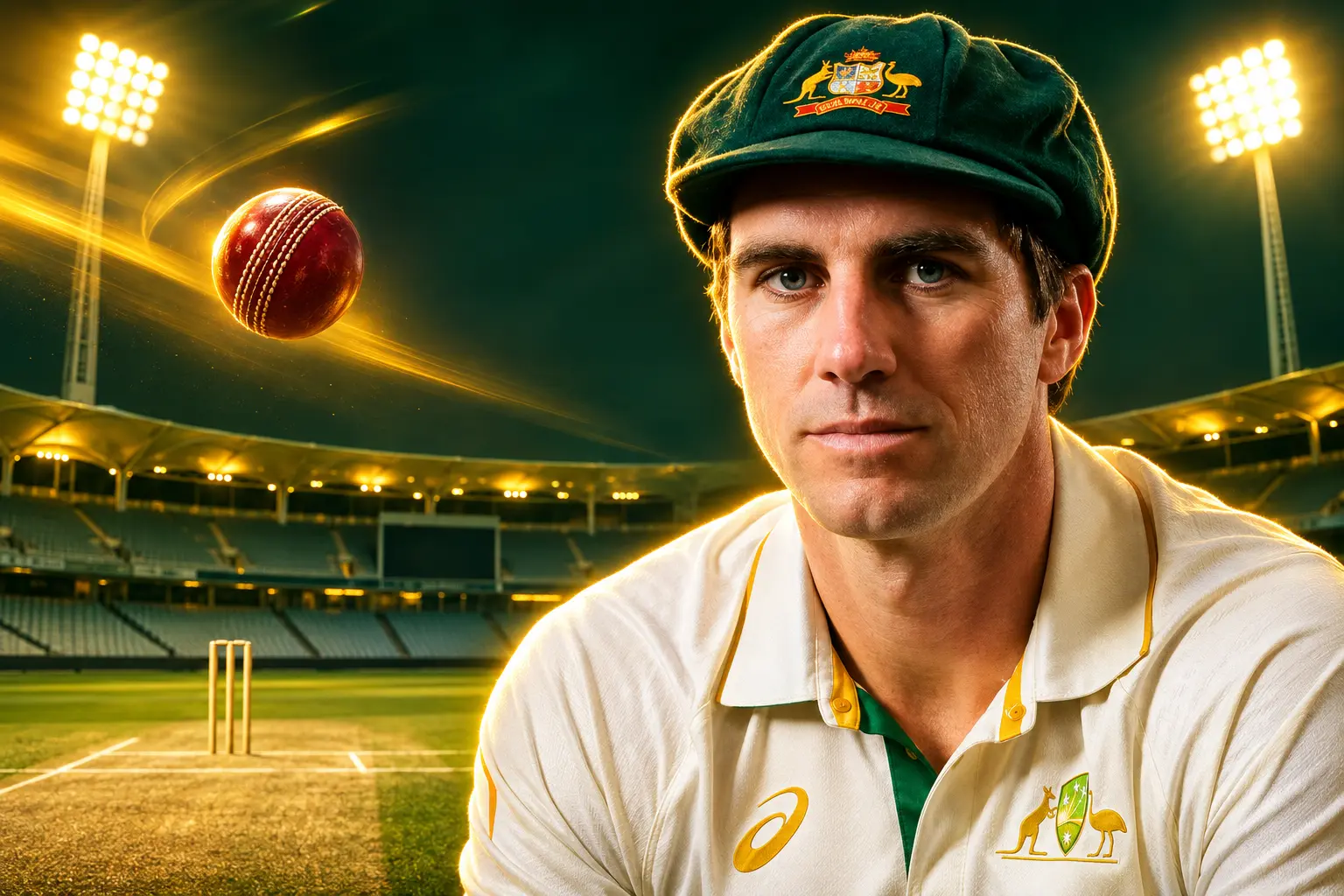
The line that travelled was not the sandpaper denial. It was what Hazlewood said when he was asked whether he would consider quitting if Cummins were removed. “I think I’d have to be put in that position to make a decision, but you’d have to think about it, yeah,” he said.
That is a hedge. Within hours it was recast as a mutiny and a boycott of Perth. He did not promise to stay home, and he did not name Starc or Lyon as fellow walkers. He said he did not know how the group would function if it turned up for the first Test with someone else in charge, and he called Cummins a great leader who had done “a remarkable job” over “five or six years in particular as captain.”
The same bowling group did not threaten to walk when Steve Smith was stripped of the job in 2018. The captain Hazlewood is now prepared to think about following out the door is a fellow quick. Starc and Lyon have not given that hypothetical in public, and the rest of the current side has kept the argument off their feeds, which is how a squad reaches December 9 in one piece. The warning only bites if the board believes the attack might actually stay home.
Hazlewood also called the bans on Bancroft, David Warner and Smith “ridiculous.” Cummins’ manager, Neil Maxwell, made the same comparison in blunter terms, saying the banned players “paid far too high a price,” with year-long bans for an offence other countries had punished with a few games. That grievance is the fuel under the present split. The men who served the time want the net cast wider. The men who did not serve the time will not accept that they were in on it.
Unanimous Support Lands on the Same Saturday
Interim chair David Boon and chief executive Todd Greenberg had already sat with Cummins in Sydney on Friday, November 20, after his place came under pressure. The board then issued its unanimous support for Pat Cummins as Test captain on November 21. A Cricket Australia statement said the board had met “to ensure measures are in place to protect the integrity of Australian Cricket and the welfare of all concerned” and had resolved to back Cummins “given ongoing speculation about his position.”
Boon said the board “unequivocally reject(s) any implication that Pat’s integrity has been compromised,” and he pointed to the culture Cummins and other leaders had built over the past eight years. The 33-year-old captain said the Friday meeting had meant a lot, that the job “carries with it an awesome responsibility,” and that from this point “captaining the Australian team in Perth will be my focus and priority.” He also said he would sit in the new forum.
THE FORTNIGHT THAT FORCED THE VOTE
- Early November 2026: Khawaja’s autobiography Sabr appears, with the claim that every member of the 2018 side knew sandpaper was being used.
- November 18, 2026: Cricket Australia announces a confidential independent forum and says it will not reopen the 2018 investigation or issue new bans.
- November 18, 2026: Hours later, Bancroft publishes a 4,000-word statement saying the whole team knew and that he withheld names in 2018.
- November 20, 2026: Boon and Greenberg meet Cummins in Sydney.
- November 21, 2026: Hazlewood’s interview is published, and the board posts unanimous support for the captain.
- December 9, 2026: The first Test against New Zealand begins at Perth Stadium, 18 days after the Saturday statement.
The sequence matters because the Friday meeting came before the interview hit the papers. Hazlewood did not walk into the boardroom and dictate the vote. He did put a public price on dumping the captain on the same day the board told the country the price would not be paid.
The Long, Thin Room and the 70-30 Split
Khawaja and Bancroft both say the plan was first raised in the dressing room at tea on day two in Port Elizabeth, now Gqeberha. Hazlewood’s reply is about space and time, not about memory of a speech. The room was “quite long and thin,” he said, and with only 20 minutes before the side went back out, the bowlers would mostly have been at their own end getting ready. In his view it was a “genuine assumption” that the two groups kept apart.
Cape Town had a dividing wall of its own, which he said cut the space “70-30,” and he was on the other side from Bancroft and Khawaja. That is a physical alibi. It does not prove he never heard a word about the ball. It does explain how a batter’s memory of a team meeting and a bowler’s memory of a quiet corner can both feel true and still not meet.
Bancroft wrote that he worked the ball with sandpaper over after over in Port Elizabeth while checking with the bowlers about reverse swing. Hazlewood accepts the questions. He rejects the meaning now hung on them. “It’s definitely a normal interaction and I read that part,” he said. “I have no doubt that he was asking us those things about the ball reversing. There’s not one point in his statement where he says ‘Oh, I’m doing this with sandpaper.’”
He read the third-morning meeting, where Bancroft says he was praised for his work on the ball, the same way. “Looking after the ball is crucial in Test cricket especially in conditions like that, but he hasn’t mentioned sandpaper, he hasn’t mentioned taking something on the field,” Hazlewood said. “It’s just well done on looking after the ball.” On the ball itself: “I never remember looking at the ball and going, ‘wow, this is not natural deterioration’. And obviously the umpires didn’t either.”
Bancroft has also said then bowling coach David Saker told him to carry on. Hazlewood would not close that door or open it. “I honestly can’t comment on whether that conversation happened or not. I had no knowledge of it.” He also said he does not remember a meeting after play in Cape Town at which Bancroft, Khawaja and backup bowler Chadd Sayers say the players agreed to take collective blame.
Bancroft and Khawaja Put the Whole Team in It
The other camp is not a rumour mill. Khawaja put it in a book. Hours after the forum was announced, Bancroft’s 4,000-word account said he had not given a complete and truthful version in 2018, that he had withheld when the sandpaper started, how long it ran, and who else was aware. He said he felt angry, betrayed and alone watching Cummins deny the lot. Since the book appeared, Warner has backed Khawaja’s account, and Sayers has said sandpaper was used in Port Elizabeth.
Cummins has not moved. “When he says we all knew, if by that he means that we knew sandpaper was going out on the field, he’s 100 per cent wrong,” the captain said. “I’ve said that consistently for the last eight years, I did not know that was happening.” Greenberg, before Bancroft’s statement, had already pointed to that consistency as the reason the board was not treating Cummins as a man in need of clearing.
THE TWO VERSIONS OF 2018
| Point in dispute | Hazlewood and Cummins | Khawaja, Bancroft, Warner |
|---|---|---|
| Sandpaper on the field | They did not know it was being used | The whole side knew |
| Who designed the plan | Hazlewood says he was not an architect; the 2018 finding named Warner | Blame was not limited to three players |
| Port Elizabeth tea on day 2 | Bowlers were at their end with 20 minutes to get ready | The plan was raised in the dressing room |
| Talk about reverse swing | Normal ball talk, with no mention of sandpaper | Bancroft says he checked the work over after over |
| Meeting after Cape Town | Hazlewood does not remember a pact of shared blame | Bancroft, Khawaja and Sayers recall it |
| The 2018 interviews | Trust the two-to-three-hour session given a day or two later | Bancroft says he withheld names and the earlier start |
Cricket Australia’s 2018 finding still sits in the middle of that table. Investigators charged Smith, Warner and Bancroft under Article 2.3.5 of the CA Code of Conduct, confined prior knowledge to those three, and then handed 12-month bans for Smith and Warner and nine months for Bancroft, plus 100 hours of community cricket each. Warner was named as the man who developed the plan and instructed a junior player. Smith was found to have known of a potential plan and failed to stop it. The ICC had already given Smith a one-match ban and a 100 per cent match-fee fine, and Bancroft a 75 per cent fine and three demerit points, before CA added the year-long bans that Hazlewood now calls ridiculous. Warner’s leadership ban was later lifted.
The Circuit-Breaker Forum Cannot Sack Cummins
On November 18 Cricket Australia announced an independent forum for 2018 tourists, a “circuit-breaker” in Greenberg’s phrase, after the board had met earlier in the week. He said CA is not “re-prosecuting” the Cape Town investigation, that no new sanctions would be handed down, that an independent senior lawyer or former judge would run a confidential process expected to take about a month, and that the board would decide what, if anything, is made public.
Greenberg said 8 of the 11 players who played the Cape Town Test were interviewed at the time, along with a number of staff, and that the original work had been done at speed because the fourth Test in Johannesburg was days away. He also said CA later adopted 36 of 42 recommendations from the Ethics Centre’s culture review. “The game is hurting at the moment,” he said. “We need to find a path through and we need to heal.”
WHAT THE FORUM CAN AND CANNOT DO
- Hear them: Players and support staff from the 2018 South Africa tour can give a version in a confidential room, including people who say they were not properly heard in 2018.
- Take a month: Greenberg said the process should run about a month, which puts it across the start of the New Zealand series if it starts from the November 18 announcement.
- Publish some of it: Testimony stays private unless the board chooses to release a report.
- Cannot ban anyone: Greenberg said no new sanctions will come from the forum, and the 2018 investigation will not be reopened.
- Cannot dump the captain: Captaincy is a board decision, and the board has already posted unanimous support.
Paul Marsh, head of the Australian Cricketers Association, has pushed a different close, arguing that CA, the players and everyone in the 2018 orbit should be able to say they got things wrong. “Some people have paid a significant price for that, and they still are,” he said. Cummins and Bancroft have both said they will take part. Then coach Darren Lehmann has indicated he will too. Khawaja and Warner were cooler when the forum was first unveiled, wanting to know whether it would actually let anyone move on.
Cummins has already given the line the board needed. “I support the Forum 100 per cent. I will be there,” he said. “All of the players and staff I have spoken with are very keen to go and to have their say. There will be a lot of difficult conversations, but that is what’s needed.” Difficult conversations do not, on the terms Greenberg set, change who leads in Perth.
Four New Zealand Tests Open in Perth on December 9
Australia’s next Test is the first of four against New Zealand. Cummins, Starc and Hazlewood were rested from the white-ball series against England so the three of them would be fresh for this stretch. The captain’s public diary now has two items on it, and he has ranked them: sit in the forum, then lead in Perth.
AUSTRALIA V NEW ZEALAND, 2026-27
| Test | Dates | Ground |
|---|---|---|
| First Test | December 9-13, 2026 | Perth Stadium |
| Second Test | December 17-21, 2026 | Adelaide Oval |
| Third Test | December 26-30, 2026 | MCG, Melbourne |
| Fourth Test | January 4-8, 2027 | SCG, Sydney |
A tour of India follows in the new year. Hazlewood’s hypothetical is now a counterfactual unless the board reverses itself, and Greenberg has already said the forum will not hand out new bans. The open question in the dressing room is narrower and harder: whether the men who served the 12-month and 9-month bans, the men who say they were protected by a lie, and the bowlers who still say they were never in the plan can share a room in Perth while a confidential forum is still taking evidence.
Cummins said captaining in Perth is now his focus. Hazlewood, on the terms he set on Saturday, no longer has to choose.

India’s First-Timers and Pant Build a Record 720

Kutch Crash Kills Seven From Army Families After October Toll

Ukrainian Drones Leave Finland Fighting a Russian Ship Fire

ICJ Genocide Order Runs Through Arakan Army Land

CII Asks Patel Panel to Shift Who Funds Indian Credit

Clancy Juror Says the Holdout Never Cited Evidence

The iPhone 18 Pro Max Splits Apple’s Fall in Two

OpenAI Calls GPT-6 Astra AGI Then Locks Its Exploits

Trump Claims Hormuz Control as Oil Holds Near $96

Russia Closes the Goethe-Institut Berlin Tried to Save

 NEWS2 months ago
Clancy Juror Says the Holdout Never Cited Evidence
- NEWS3 months ago
The iPhone 18 Pro Max Splits Apple’s Fall in Two
- NEWS3 months ago
OpenAI Calls GPT-6 Astra AGI Then Locks Its Exploits
- BUSINESS3 months ago
Trump Claims Hormuz Control as Oil Holds Near $96
- LIFESTYLE3 months ago
Russia Closes the Goethe-Institut Berlin Tried to Save
- AUTO3 months ago
Volkswagen’s Job Cuts Leave Four Plants Without Cars
- NEWS3 months ago
Dyson Puts Nurovi Robots on Sale Without the UV Flagship
- BUSINESS3 months ago
US Destroys Five Iranian Tankers as the Shock Hits Jordan