
LIFESTYLE
A WhatsApp Cream Left a Kerala Teen With Kidney Disease
A 17-year-old in Malappuram developed mercury-linked kidney disease from a WhatsApp fairness cream, a channel Kerala’s drugs controller says he cannot police.

A 17-year-old in Malappuram developed membranous nephropathy after a year on a fairness cream that lab tests put at 12,500 ppm of mercury. She had ordered it through a WhatsApp number posted under Instagram ads, and she bought three bottles.
Doctors at Aster MIMS Mother Hospital in Areekode said her blood carried high mercury and that the cream held 1.25% of the metal, against India’s legal trace of 1 ppm in finished cosmetics. The same hospital group, in the same district, had already published this kidney pattern in 2024. Kerala’s drugs controller says the online path that sold her the cream cannot be tracked.
Three Bottles, One Year, Then the ICU
The trouble started in August 2025, when she saw an Instagram advertisement that promised nightly use would clear pimples and pigmentation. Influencers on the app said the cream would lift dark spots. A WhatsApp number sat in the same promotion, and she used it to place the first order.
I first ordered the cream after seeing an advertisement on Instagram. The company claimed that continuous use every night would help remove pimples and pigmentation. It also promised visible results with consistent application. Believing these claims, I continued using the cream and purchased three bottles over the past year.
The 17-year-old patient, Areekode
She is a degree student. The cream seemed to work at first, which is why she kept buying it. Around August 2026 she began to feel unwell in ways she could not explain, and one morning her blood pressure dropped so far that she collapsed on the way to college.
Her legs then swelled until walking and climbing stairs became hard. A local doctor treated the swelling and she did not improve. Follow-up tests showed she was losing large amounts of protein in her urine. She later fainted after passing urine and was taken to intensive care, where doctors asked for a kidney biopsy.
FROM THE INSTAGRAM AD TO THE BIOPSY
- August 2025: Orders the cream after an Instagram advertisement and a WhatsApp number on the same post.
- August 2025 to August 2026: Applies it every night and buys three bottles as the ads demand continuous use.
- Around August 2026: Collapses on the way to college, then develops swelling, sleepless nights and protein loss in urine.
- November 20, 2026: Aster MIMS Mother Hospital holds a press conference on the diagnosis of membranous nephropathy.
- November 21, 2026: She speaks publicly, hands manufacturer papers to Areekode police, and the state child rights panel registers a suo motu case.
Gowri S, senior specialist in nephrology at the hospital, said chronic exposure through daily use drove the toxic build-up, and that the advertisement itself had told her only continuous application would work. The company had also called the formula natural.
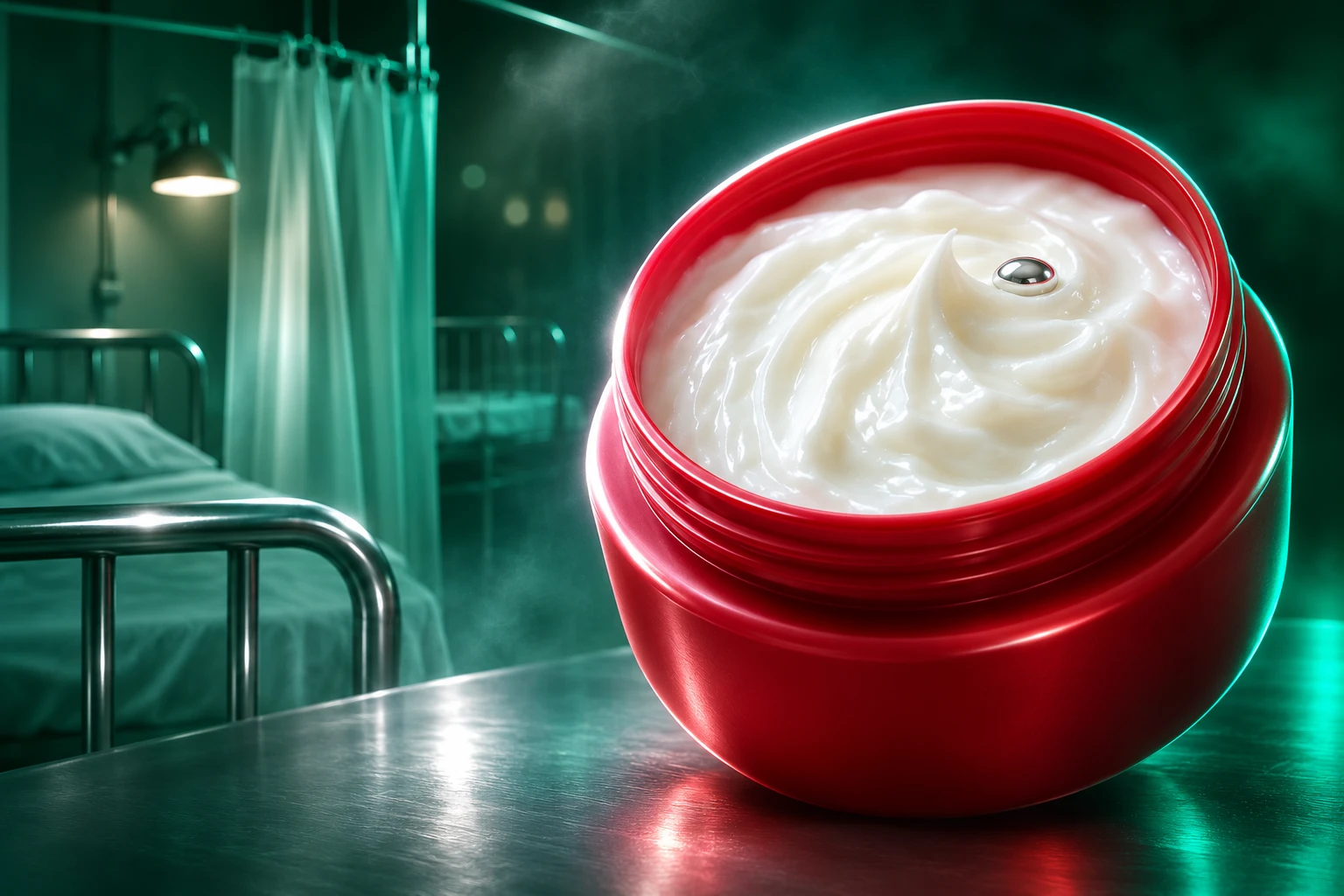
The Cream Tested at 12,500 ppm
Hospital officials said a central government-accredited laboratory measured 1.25% mercury in the cream she had been using. That share is 12,500 ppm, the same quantity written two ways, and it is 12,500 times the trace India allows in ordinary finished cosmetics.
Rule 135A of the Drugs and Cosmetics Rules, as substituted by G.S.R. 56(E) on January 19, 2017 and carried into the Cosmetics Rules, 2020, says unintentional mercury shall not exceed 1 ppm in finished cosmetic products other than eye-area goods. Eye-area products may use mercury as a preservative up to 70 ppm, or 0.007 percent, calculated as the metal. Her cream was a face product, not an eye preservative, so the 1 ppm ceiling is the one that applies.
CDSCO, the Central Drugs Standard Control Organisation, sets that cap for goods made in India and for imports. Adding mercury salts on purpose, to block melanin and lighten skin, is not a legal cosmetic use.
MERCURY IN THE CREAMS, SIDE BY SIDE
| Sample | Mercury (ppm) | Times the 1 ppm cap |
|---|---|---|
| India legal trace, finished cosmetics | 1 | 1 |
| Malappuram patient’s cream, 2026 lab test | 12,500 (1.25%) | 12,500 |
| Youth Face, Kottakkal series, 2024 | 13,200 | 13,200 |
| Luca, Kottakkal series, 2024 | 13,000 | 13,000 |
| Aina, Kottakkal series, 2024 | 10,500 | 10,500 |
| Faiza, Kottakkal series, 2024 | 21,900 | 21,900 |
| Faiza and Goree, Kerala seizures, 2026 | up to 20,000 | 20,000 |
The 2024 and 2026 Faiza figures come from different laboratories in different years, so they are not a single reading. Both sit in the same band: tens of thousands of times the legal trace. Her unnamed cream sits next to Youth Face and Luca from the Kottakkal table.
A Kottakkal Paper Already Named the Pattern
This is not a new disease in Malappuram. In June 2024, Kidney International published a case series from Aster MIMS Hospital, Kottakkal, a campus of the same group, a short drive from Areekode inside the same district. Ranjit Narayanan, Sajeesh Sivadas and Anila Abraham Kurien reviewed every NELL-1 membranous nephropathy diagnosis at that hospital between July 2021 and September 2023.
THE KOTTAKKAL SERIES
- The count: Fifteen patients were NELL-1 positive, seven of them male and eight female.
- The cream history: The paper found 13 of 15 patients used fairness creams that were unlicensed, sold in local shops and on online platforms, and advertised for rapid results.
- The ages: Median age was 30, and the range ran from 14 to 75, which already included teenagers.
- The metal: Creams tested in that series ran from 10,500 ppm to 21,900 ppm of mercury, more than 10,000 times the 1 ppm cap.
The 17-year-old now in Areekode has not been publicly reported as NELL-1 positive. She has the same clinical picture the Kottakkal team described: membranous nephropathy, high mercury, and a cheap cream sold outside the licensed cosmetic trade. In the 2024 series, mercury in blood and urine fell within three months of stopping the cream, and patients improved on standard kidney-protective drugs without needing immune suppression.
Jayant Thomas Mathew, former secretary of the Nephrology Association of Kerala, said he has seen kidney disorders in cream users who noticed symptoms early enough for treatment. He listed swelling in the legs and face, and froth in the urine, as the signs that should send a user to a doctor.
Kerala’s Cosmetic Raids Stop at the Shop Door
K. Sujith Kumar, the state drugs controller, has been running marketplace inspections and student awareness drives aimed at Classes XI and XII, the age band this patient sits in. He is blunt about the gap the Instagram sale walked through.
We have seized cosmetics that have high mercury levels from offline markets. But there is no way to track or regulate online marketplaces.
K. Sujith Kumar, State Drugs Controller, Kerala
That is the operational fact behind this case. The girl never had to walk into a shop the department can enter with a warrant. She watched a video, messaged a number, and received bottles at home.
The department’s shop-floor campaign has a name, Operation Soundarya, and it has been running since 2023. Health minister K. Muraleedharan said in August 2026 that four rounds completed by the end of July had taken spurious cosmetics worth ₹9.64 lakh off shelves, in phases of ₹5.09 lakh, ₹2.50 lakh, ₹1.5 lakh and ₹55,000.
WHAT OPERATION SOUNDARYA HAS ALREADY SEIZED
- The mercury hits: Faiza and Goree face creams, described as Pakistan-made and sold without purchase bills, tested up to 20,000 ppm against the 1 ppm cap.
- The map: Inspectors found the same lines moving through Malappuram, Kozhikode, Kannur and Thrissur, the northern belt that includes this patient’s home district.
- The earlier tally: By January 2025 the operation had already seized goods worth more than ₹7 lakh and filed cases against 33 establishments, with some lipstick and cream samples at 12,000 times the legal mercury level.
Those raids can empty a kirana shelf. They cannot follow a WhatsApp catalogue. M.M. Faizal, former president of the Indian Association of Dermatologists, Venereologists and Leprologists, said people are buying steroid face creams over the counter as well as heavy-metal lighteners, and that the government needs a control mechanism that matches how the products now move. Awareness campaigns for Classes XI and XII treat the buyer as the last filter, because the listing itself sits outside the inspection route.
Who the Child Rights Panel Has Written To
The Kerala State Commission for Protection of Child Rights registered a suo motu case on November 21, 2026, after the hospital briefings. Muraleedharan said advertisements for these creams were pulling in children and that inspections would tighten. The commission’s letters, though, go further than another raid on a shop.
OFFICES ASKED TO EXPLAIN
- Director of Health Services: How a 17-year-old reached membranous nephropathy from a cosmetic sold as a pimple cream.
- State police chief: What criminal process follows a mercury cream sold to a minor through Instagram and WhatsApp.
- Drugs controller: Why online listings of the same class of cream remain outside the seizure net that already caught Faiza and Goree in physical markets.
- Central Consumer Protection Authority: What a national consumer body will do when the seller is a WhatsApp number under an influencer video.
- Hospital superintendent: The clinical record that tied the cream, the blood mercury and the kidney biopsy together.
She has already given the manufacturer’s details and her medical papers to Areekode police, and she plans to take the company to court. The family has not named the brand in public, which is the practical hole in every warning issued since Friday. A post that withholds the product name cannot take the Instagram listing down, and the WhatsApp number can keep filling orders while the letters move between offices.
Liji Coleenz, a Kochi make-up artist and salon owner with 20 years in the trade, said teenagers now chase looks set on social media, including a Korean-skin ideal that no cream will lawfully deliver. Faizal made the same point from the clinic side: people remain obsessed with fair skin, and the creams that promise it fastest are the ones that carry the metal.
Mercury Attacks the Kidney’s Filters
Membranous nephropathy is a disease of the glomeruli, the kidney’s filters. Antibodies attack those filters, protein leaks into the urine, and the legs and face swell. Inorganic mercury, the form used in illegal lightening creams because it shuts down melanin, is hard on those same filters.
The World Health Organization lists mercury among its top ten chemicals of major public health concern. Its fact sheet records kidney effects that run from protein in the urine to kidney failure, and it names skin-lightening products among the goods that still contain the metal. WHO also notes that even where countries ban those products, they are still advertised and sold over the internet.
A 2023 amendment to the Minamata Convention, which India joined in 2018, prohibits manufacture, import or export of mercury-added cosmetics after 2025. The old 1 ppm cosmetics line in the treaty is now an outright product ban for the parties. The bottle that reached Areekode in 2025 and 2026 sat on the wrong side of both the Indian rule and the treaty timetable.
The Centre for Science and Environment’s fact sheet on cosmetics is blunt about the organ at risk: the main harm from inorganic mercury in skin lightening creams is kidney damage. Gowri S told reporters the metal can wreck the kidney’s filtering units, and that untreated disease can move on to kidney failure and nerve injury.
SIGNS DOCTORS TOLD FAMILIES TO WATCH
- Swelling: Legs and face puff up as protein leaves the blood and water follows into the tissue.
- Frothy urine: Persistent foam is a marker of heavy protein leak, the finding that sent this patient back for tests.
- Faints and low pressure: She collapsed on the way to college and later lost consciousness after passing urine.
- Nightly “natural” creams: Ads that demand continuous use, promise fast glow, and sell through a chat number rather than a licensed shop.
Gowri S said unregulated cosmetics pushed hard at teenagers and young adults are becoming a quiet public-health problem. Mathew’s earlier patients recovered because they stopped the cream and sought care before the filters were gone. That is the clinical window this 17-year-old is in now. The hospital says she is recovering under the nephrology team.
A Customer-Care Call Offered a New Discount
The girl had been applying the cream every day, as the advertisement clearly stated that only continuous and consistent use would produce results. The company had also claimed that the product was made using natural ingredients. Unregulated cosmetic products aggressively marketed to teenagers and young adults are fast becoming a silent public health hazard.
Gowri S, Senior Specialist in Nephrology, Aster MIMS Mother Hospital
After she fell ill she tried the company’s customer-care line. Staff said they would call back, then went quiet. A few days before she spoke to reporters, an executive did ring, not to ask about her kidneys, but to tell her about a new offer on the same products.
She said she told that person about her health and about the complaint she was preparing. The reply, in her account, was a defence of the cream and an insistence that its mercury was within the allowed limit. A laboratory acting for her hospital had already put that content at 1.25%, which is 12,500 ppm against a legal trace of 1 ppm.
WHAT WE KNOW
- The diagnosis: Membranous nephropathy, with high mercury in her blood and 12,500 ppm mercury in the cream, after about a year of nightly use.
- The sales path: Instagram influencers, a WhatsApp number, three bottles, no named licensed pharmacy in the public account.
- The local science: Aster MIMS Kottakkal had already tied unlicensed fairness creams to NELL-1 membranous nephropathy in 15 patients, 13 of them cream users.
WHAT IS UNCONFIRMED
- The brand: The family has not named the company in public, citing planned court action, so the listing itself has not been identified for a takedown.
- The influencers: No public file yet names the accounts that promoted the cream as a pimple and pigment treatment.
- Her antigen type: Doctors have not said whether her biopsy is NELL-1 positive, the marker that defined the 2024 Kottakkal series.
She is out of intensive care and still under nephrology watch in Areekode, with a police complaint on file and a child-rights panel waiting on five offices. The number that sold her the cream is a chat thread. The state’s seizure teams are built for shops.
Disclaimer: This article is news reporting and analysis of a documented medical case and of public rules on mercury in cosmetics. It is for information only and is not medical advice, a diagnosis, or a treatment plan for anyone with swelling, urine changes, or a history of fairness-cream use. Readers who have used similar products, or who have symptoms such as swelling or frothy urine, should see a qualified nephrologist or licensed physician and should not start, stop, or change medicine on the basis of this report. Lab figures, legal limits, case counts and the patient’s status are those given by the hospital, the laboratory, the 2024 Kidney International series, CDSCO rules and named officials on the dates cited, and they can change as further tests, court filings or enforcement actions appear.

India’s First-Timers and Pant Build a Record 720

Kutch Crash Kills Seven From Army Families After October Toll

Ukrainian Drones Leave Finland Fighting a Russian Ship Fire

ICJ Genocide Order Runs Through Arakan Army Land

CII Asks Patel Panel to Shift Who Funds Indian Credit

Clancy Juror Says the Holdout Never Cited Evidence

The iPhone 18 Pro Max Splits Apple’s Fall in Two

OpenAI Calls GPT-6 Astra AGI Then Locks Its Exploits

Trump Claims Hormuz Control as Oil Holds Near $96

Russia Closes the Goethe-Institut Berlin Tried to Save

 NEWS2 months ago
Clancy Juror Says the Holdout Never Cited Evidence
- NEWS3 months ago
The iPhone 18 Pro Max Splits Apple’s Fall in Two
- NEWS3 months ago
OpenAI Calls GPT-6 Astra AGI Then Locks Its Exploits
- BUSINESS3 months ago
Trump Claims Hormuz Control as Oil Holds Near $96
- LIFESTYLE3 months ago
Russia Closes the Goethe-Institut Berlin Tried to Save
- AUTO3 months ago
Volkswagen’s Job Cuts Leave Four Plants Without Cars
- NEWS3 months ago
Dyson Puts Nurovi Robots on Sale Without the UV Flagship
- BUSINESS3 months ago
US Destroys Five Iranian Tankers as the Shock Hits Jordan










