
NEWS
Karnataka Must Still Release Cauvery Water After Court Win
The Supreme Court rejected Tamil Nadu’s 11.719 TMC Cauvery claim, yet Karnataka must still send 2.76 TMC while it pushes Mekedatu.

The Supreme Court on November 20 dismissed Tamil Nadu’s claim for 11.719 TMC of extra Cauvery water from Karnataka. Justices Vikram Nath and Aparesh Kumar Singh rejected two applications in open court and said a third filing that morning would go the same way.
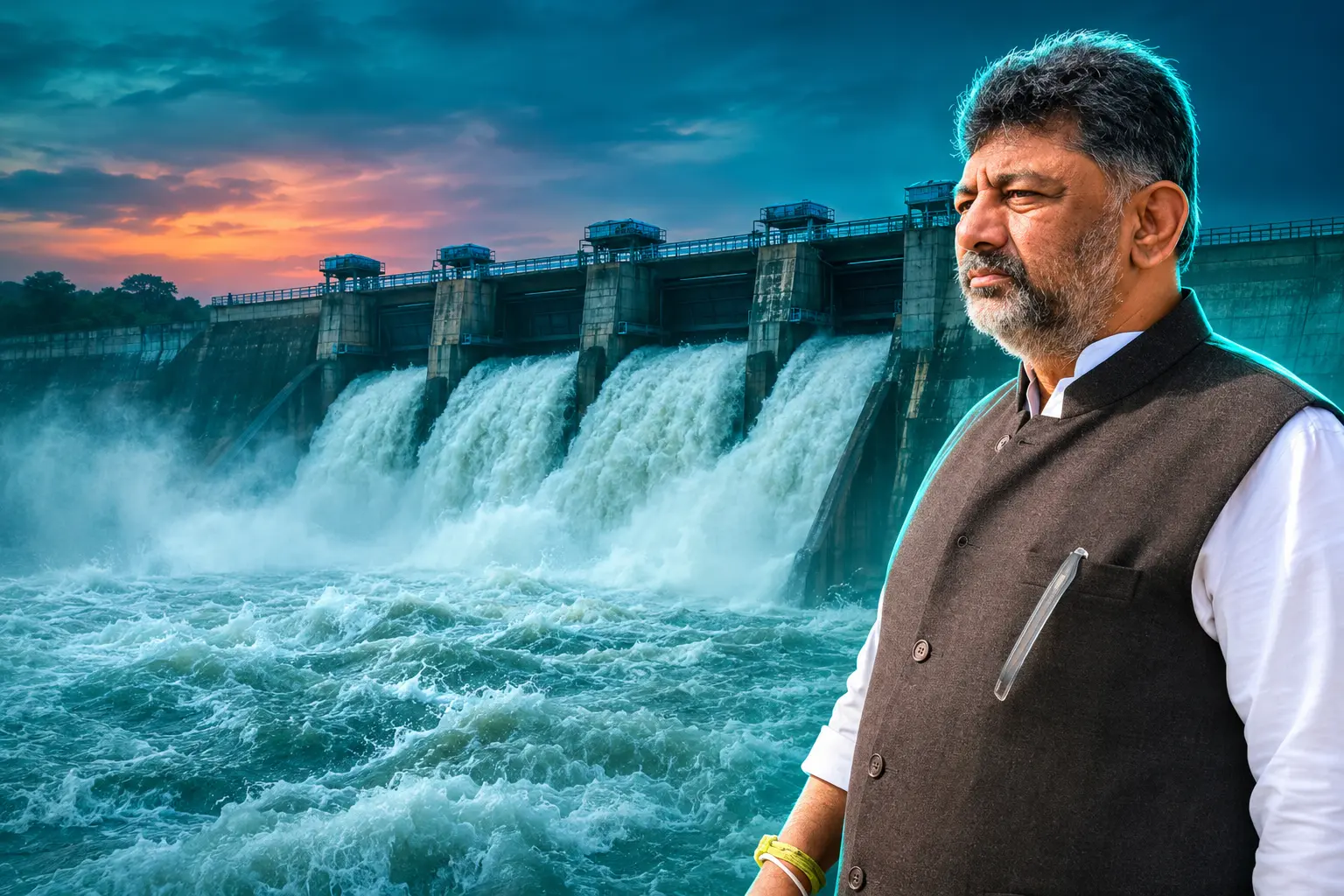
Karnataka chief minister D.K. Shivakumar told reporters the state would send water if it had any to spare, then pointed to drinking-water stress at home and to the Mekedatu reservoir he wants at Kanakapura. The committee that actually times the river did not wait on that speech.
The Court Dismisses Both Applications in Open Court
Tamil Nadu had asked the bench to clear a backlog it put at 16.01 TMC, later modified to 11.719 TMC, as of October 7 at Billigundlu, the gauge on the Karnataka-Tamil Nadu border. It wanted that gap made up at 1.3 TMC a day over 10 days. The court had reserved orders on October 12. The case is State of Tamil Nadu v. State of Karnataka, MA 2445/2026 in Civil Appeal No. 2453/2007.
Justice Nath noted the fresh application before he read the result. “There were two applications. Both the applications are dismissed,” the bench said, then remarked that Tamil Nadu seemed to have ample funds if it was filing again the same morning.
Karnataka’s counsel, senior advocate Mohan Katarki, called the outcome a check on states running to court to second-guess the Cauvery Water Management Authority, the expert body set up under the Inter-State River Water Disputes Act. Tamil Nadu, through senior advocate G. Umapathy, had argued that Karnataka sat on water until its own dams were nearly full, then released in bursts that left delta farmers guessing.
The order is only a reflection of the ground reality. We don’t even have enough water for drinking purposes. It is not as if we are holding back water that is available. I have also told our farmers to be careful. It is something that Tamil Nadu knows, we know and the whole world knows. I could not even make an offering of bagina this year because of the dire water situation.
D.K. Shivakumar, Karnataka chief minister, speaking to reporters in Bengaluru
Water resources minister N. Cheluvarayaswamy said the verdict was justice for Karnataka rather than a blow to Tamil Nadu, then admitted the next problem: the regulation committee had still told the state to keep water moving.
A 2,000-Cusec Order Follows the Same Afternoon
The Cauvery Water Regulation Committee, chaired by Vineet Gupta, sat on November 20 as well. It directed Karnataka to ensure 2,000 cusecs at Billigundlu from 8 a.m. that day, a volume of 2.76 TMC. Cheluvarayaswamy said he was pained that the committee and the authority had again ordered water south, and that this was the order now in force.
That pulse is smaller than the ones that came before it in the 2026-27 irrigation year. It is still a release Karnataka had asked the committee not to make. The state told Gupta’s panel that inflows into its four major Cauvery dams were 53.88 per cent below the 30-year average, that drought had been declared in 55 of 56 taluks in the basin, and that of 57 TMC it expects to hold, 50 TMC is already tagged for priority needs through July 2027, leaving 7 TMC, too little for standing crops.
THE 2026 RELEASE LADDER
- July 28, 2026: The committee, at its 139th meeting, orders a 3,500-cusec flow at Billigundlu from July 29, later backed by the authority at an emergency sitting on July 30.
- August 12, 2026: The recommended daily flow rises to 12,000 cusecs for 15 days, and the authority upholds it; on August 17 the Supreme Court tells Karnataka to comply and file a status report.
- November 6, 2026: The authority backs a 3,000-cusec flow from November 7, about 3.88 TMC over 15 days.
- November 20, 2026: The court rejects the 11.719 TMC makeup plea; the committee, the same day, sets 2,000 cusecs and 2.76 TMC.
Tamil Nadu still put a 16.895 TMC backlog on the table at Friday’s committee meeting and asked for a yield-based reading of distress, not a count of inflows into Karnataka’s four dams. Karnataka answered that rain below Mettur was 23 per cent above normal and that Mettur, Bhavani and Amaravathy together held 37.125 TMC as of November 5, enough, it said, for Samba needs through December 15 if groundwater and monsoon flows are counted.
Four Cauvery Dams Hold 56.77 TMC Combined
Bengaluru’s drinking supply rides the same four Cauvery dams that feed the interstate gauge. Karnataka State Natural Disaster Monitoring Centre figures for November 13 show how thin that stock is against last year.
CAUVERY BASIN STORAGE ON NOVEMBER 13
| Gauge | 13 Nov 2026 | 13 Nov 2025 |
|---|---|---|
| Krishna Raja Sagara | 21.30 TMC | 48.95 TMC |
| Four Cauvery dams combined | 56.77 TMC | 107.32 TMC |
KRS, which can hold 49.45 TMC, was at 43 per cent of capacity. The four-dam total sat 50.55 TMC, or 47.1 per cent, below the same date in 2025. Tamil Nadu had told the court that as of August 3 those four reservoirs still held 77.537 TMC gross and 67.517 TMC live. That was the picture it used to argue Karnataka had water to send. The November 13 reading is a different season.
Kurubur Shanthakumar, president of the Karnataka Sugarcane Growers’ Association, welcomed the court result and asked the obvious farm question. “Where is the water in our reservoirs to release? Our crops are withering,” he said. Shivakumar, on the same day, said drought losses in the state had reached Rs 60,000 crore, that Bengaluru had sought Rs 22,000 crore from the Centre, and that the state was paying farmers Rs 5,000 crore, of which Rs 2,500 crore had already gone out.
Why Karnataka Must Still Release Cauvery Water
The February 16, 2018 Supreme Court judgment still governs a normal year. Karnataka must deliver 177.25 TMC at Billigundlu, down from the tribunal’s 192 TMC, after the court added 14.75 TMC to Karnataka’s own share, 10 TMC because Tamil Nadu has groundwater in the basin and 4.75 TMC for drinking water across Bengaluru, not only the third of the city that sits in the basin. In a distress year those monthly volumes are meant to fall in step with the shortfall, through the Cauvery Water Management Scheme notified on June 1, 2018, which created the authority and the committee. Friday’s bench did not rewrite that scheme. It refused to pile an extra 11.719 TMC on top of what the committee had already set.
SHARES FIXED IN 2018, IN FORCE TILL 2033
| Party | 2007 tribunal | 2018 Supreme Court |
|---|---|---|
| Karnataka | 270 TMC | 284.75 TMC |
| Tamil Nadu | 419 TMC | 404.25 TMC |
| Kerala | 30 TMC | 30 TMC |
| Puducherry | 7 TMC | 7 TMC |
| Due at Billigundlu | 192 TMC | 177.25 TMC |
Those figures sit inside a 740 TMC basin total, with 10 TMC reserved for the river’s environmental flow and 4 TMC for water that reaches the sea. The 2018 bench said the states could ask for a fresh look after 15 years, which lands in 2033. Until then, a dry monsoon does not erase the gauge duty. It hands the arithmetic to the committee, which is why a court loss for Tamil Nadu and a 2,000-cusec order can share a date.
WHERE THE STATES DIVIDE ON DISTRESS
- Tamil Nadu’s method: Distress should be read from basin yield, including water Karnataka uses in minor irrigation, lift schemes and tank filling; on that reading the state told the court the backlog as of September 9 would be about 21 TMC, and it had received 14 TMC against 64 TMC it claimed for the period.
- Karnataka and the committee: Distress is read from inflows into Karnataka’s four major dams against a 30-year average, then applied as a cut to the monthly Billigundlu schedule, which is how Friday’s 2,000-cusec order was framed.
- What the court did: It left that fight with the authority rather than substituting a judicial makeup volume of 11.719 TMC.
Shivakumar’s line that Karnataka has no surplus is true on the November 13 storage chart. It is not a licence to ignore the committee. Surplus and distress are different tests, and Friday’s order applied the second.
The Balancing Reservoir Karnataka Wants at Kanakapura
The project Shivakumar keeps pairing with every Cauvery week is Mekedatu, a concrete gravity dam in a gorge near Kanakapura, about 100 km south of Bengaluru and a few kilometres above the Tamil Nadu border, where the Arkavathi meets the Cauvery. Kanakapura is also his assembly seat. He said on November 19 that nobody could stop the work, that the Supreme Court had already said Karnataka may build a reservoir on its own land if it still sends Tamil Nadu its 177 TMC, and that the detailed project report had been uploaded while the state lines up replacement forest land.
The pre-feasibility report for the Mekedatu Balancing Reservoir and Drinking Water Project puts 67.16 TMC of gross storage behind a 99-metre dam, with 59.46 TMC of live storage, a 400 MW power house (three 120 MW units and one 40 MW unit), and 4.75 TMC marked for Bengaluru’s taps, the same extra drinking slice the 2018 court awarded. Total land listed is 5,267.59 hectares, most of it forest. Karnataka has identified about 5,400 hectares of replacement forest. The new project report puts the bill at more than Rs 14,000 crore, against Rs 4,500 crore when the first report was drawn in 2019 and Rs 9,000 crore in 2024.
WHAT MEKEDATU WOULD CHANGE ON THE RIVER
- The store: A 67.16 TMC pond just above the border gauge, larger than KRS, able to hold monsoon water that now runs through in wet weeks.
- The stated use: 4.75 TMC for Bengaluru drinking water and 400 MW of power, with Karnataka saying there is no new irrigation from the dam.
- The downstream fear: Tamil Nadu says a gated pond above Billigundlu lets Karnataka choose when the 177.25 TMC arrives, which in a year like 2026 is the whole dispute.
- The paper still open: The Central Water Commission has already told Karnataka that the 2019 report cannot be processed after the state raised planned consumptive use, and has asked for a fresh report; wildlife and forest clearances are not in hand.
Shivakumar told reporters the reservoir would serve Mandya, Mysuru, Tumakuru and Hassan in hard months and that Tamil Nadu, not Karnataka, would gain from a regulated flood. Tamil Nadu’s water resources minister, N. Anand, said the opposite in New Delhi on November 18, when he, public works minister Aadhav Arjuna and school education minister Rajmohan met Union jal shakti minister C.R. Patil and asked him not to clear the Karnataka report. Anand said the dam would hit delta farm incomes and run against the 2007 tribunal award and the 2018 judgment, and that Tamil Nadu would go back to court if it had to.
Tamil Nadu Takes the Dam Fight to Delhi
The week before the 11.719 TMC file died, the political argument had already moved off the seasonal ledger. On November 13 in Mysuru, with Prime Minister Narendra Modi present, Shivakumar said no one could stop Mekedatu and that the Union had to give final approval. Former prime minister H.D. Deve Gowda wrote to Modi on November 18 asking the Central Water Commission to hurry that clearance. Manickam Tagore, the Tamil Nadu Congress president, wrote to Modi the other way, saying Karnataka had ignored a string of committee and authority orders since July and that a new dam of this size would intercept surplus water the delta now sees in wet years.
M.K. Stalin, the DMK president, sent his own letter to the Tamil Nadu chief minister’s office, arguing that the state government could not stay quiet after Shivakumar’s Mysuru line.
மேகதாது அணை கட்டுவதை யாராலும் தடுக்க முடியாது எனப் பிரதமர் முன்னிலையில் பேசியுள்ளார் கர்நாடக முதலமைச்சர்.
தமிழ்நாட்டின் உயிர்ப் பிரச்சினையான காவிரி விவகாரத்தில், இனியும் அமைதி காக்காமல் தமிழ்நாடு அரசு செய்ய வேண்டியவற்றை வலியுறுத்தி மாண்புமிகு @CMOTamilnadu அவர்களுக்கு நான்… pic.twitter.com/g3iRjszwxV
— M.K.Stalin (@mkstalin) November 14, 2026
Vaiko, general secretary of the MDMK, spoke in Coimbatore on November 21 after the court result and aimed at the dam, not at the dismissed volume. He said the tribunal and the Supreme Court had barred the upper state from work that hurts the lower state, accused Shivakumar of “ignorance and arrogance” for claiming a right to build at Mekedatu, and called farmers to Thanjavur on November 28. That date is now the next public test, eight days after a court order that Tamil Nadu’s lawyers had treated as urgent for standing crops.
A November 2025 bench led by then Chief Justice B.R. Gavai had already called Tamil Nadu’s earlier challenge to Mekedatu premature, because the project was still with the technical agencies and the commission had made prior nods from the authority and the committee a condition. Friday’s water cases did not lift that pause. They also did not give Karnataka a shovel. What they did was remove the seasonal makeup volume as a lever, which is why both capitals spent November 18 and 19 on Patil, Modi and the project report rather than on 11.719 TMC.
The Bagina Offering the Chief Minister Skipped
Bagina is the ritual gift of grain, turmeric and coin to the Cauvery at the start of the farm year. Shivakumar said he did not make it in 2026 because the river was too low. That is the image he wanted attached to the court result: a chief minister who cannot spare a handful of water for the rite, let alone 11.719 TMC for a neighbour.
The committee still timed 2.76 TMC from 8 a.m. on November 20. Mekedatu remains a report, a forest-land hunt and a political letter-writing contest. Vaiko’s Thanjavur meeting is listed for November 28. Until a new dam is built, or until 2033 reopens the 177.25 TMC schedule, distress years will keep producing the same two documents on the same day, a court order that refuses extra water and a committee order that sends some anyway.

India’s First-Timers and Pant Build a Record 720

Kutch Crash Kills Seven From Army Families After October Toll

Ukrainian Drones Leave Finland Fighting a Russian Ship Fire

ICJ Genocide Order Runs Through Arakan Army Land

CII Asks Patel Panel to Shift Who Funds Indian Credit

Clancy Juror Says the Holdout Never Cited Evidence

The iPhone 18 Pro Max Splits Apple’s Fall in Two

OpenAI Calls GPT-6 Astra AGI Then Locks Its Exploits

Trump Claims Hormuz Control as Oil Holds Near $96

Russia Closes the Goethe-Institut Berlin Tried to Save

 NEWS2 months ago
Clancy Juror Says the Holdout Never Cited Evidence
- NEWS3 months ago
The iPhone 18 Pro Max Splits Apple’s Fall in Two
- NEWS3 months ago
OpenAI Calls GPT-6 Astra AGI Then Locks Its Exploits
- BUSINESS3 months ago
Trump Claims Hormuz Control as Oil Holds Near $96
- LIFESTYLE3 months ago
Russia Closes the Goethe-Institut Berlin Tried to Save
- AUTO3 months ago
Volkswagen’s Job Cuts Leave Four Plants Without Cars
- NEWS3 months ago
Dyson Puts Nurovi Robots on Sale Without the UV Flagship
- BUSINESS3 months ago
US Destroys Five Iranian Tankers as the Shock Hits Jordan










