
NEWS
AI Could Supercharge Warrantless Spying as FISA Section 702 Fight Reignites

The clock on the most consequential warrantless surveillance authority in U.S. law runs out at midnight on April 30, and AI is what changed the stakes. Section 702 of the Foreign Intelligence Surveillance Act lapsed on April 20 before Congress agreed to a 10-day stopgap. House Speaker Mike Johnson, R-La., floated a three-year extension on April 23 with no warrant requirement. The Government Surveillance Reform Act, a bipartisan rival pending in both chambers, would force warrants on U.S.-person queries and ban government purchases from commercial data brokers.
An Expiring Spy Power and a New Kind of Search
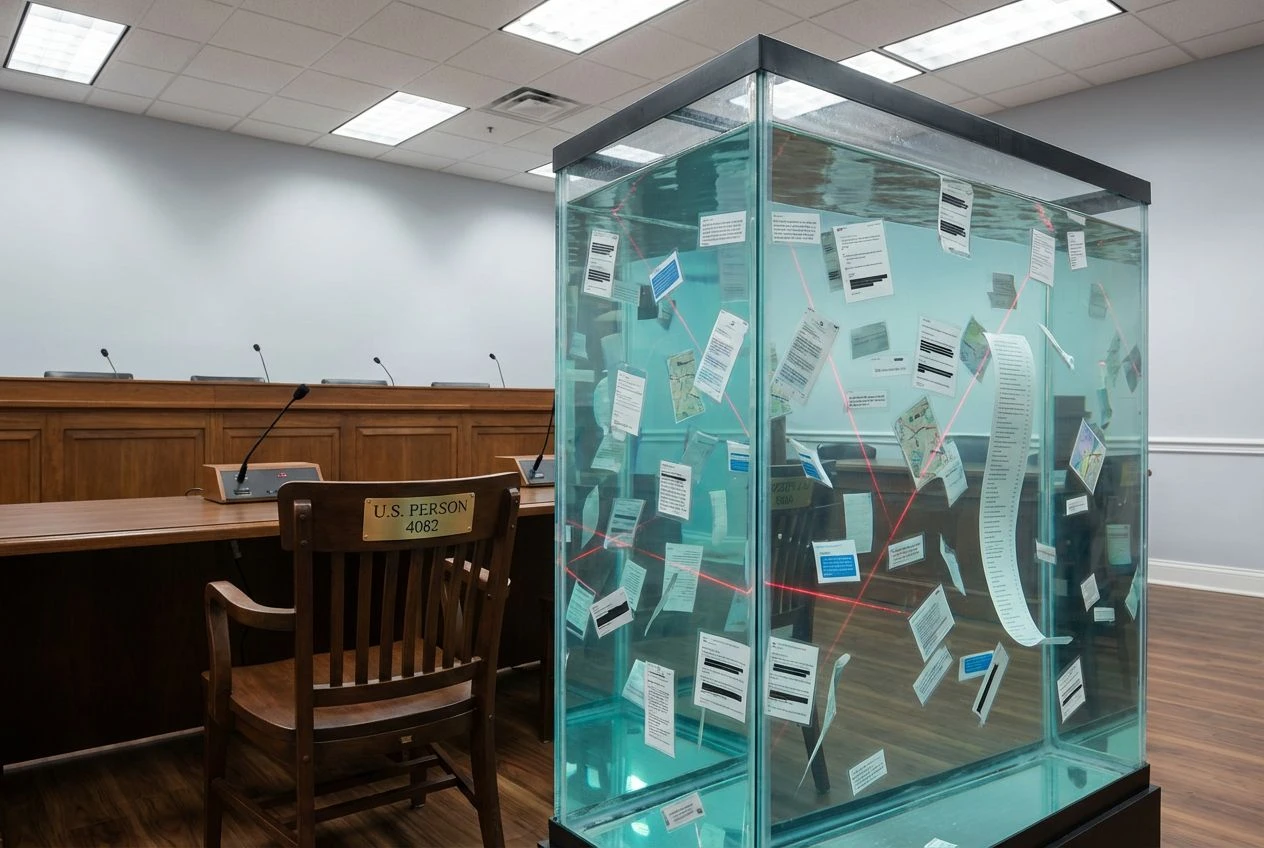
The fight over Section 702 is older than the iPhone. What’s new is the prospect that machine-learning systems will query the warrantless databases at speeds and pattern depths no human analyst can match. The question stops being what one American said to one foreigner and becomes find me everyone who behaves like a person of interest.
Lawmakers say the law has to catch up before that capability fully ships into the FBI, NSA, and CIA. They have three days.
“Imagine instead of doing a query with one person that you turned AI loose on these databases,” Rep. Thomas Massie, R-Ky., said at a Capitol Hill press conference last Thursday. “There’s virtually nothing the government can’t know about you.”
- 278,000+. FBI misuses of the Section 702 database in 2020 and early 2021, per declassified FISA Court opinions.
- 141. Black Lives Matter protesters whose communications the FBI searched without a warrant.
- 19,000+. Donors to a single congressional campaign queried in the same period.
- 8,000. Noncompliant U.S.-person queries the FBI ran in 2022, even after reform pledges.
Why AI Changes the Math on Bulk Data
Section 702, originally passed in 2008, lets the government collect the communications of foreigners abroad. Americans get pulled in whenever they email, message, or call those targets. Once that data sits in agency databases, agents can run U.S.-person queries without going to a judge.
That model was built for an analyst typing one name into a search bar. Generative AI rewrites the script. Modern models scan millions of messages, cross-reference them with location pings, browsing trails, and travel records, and surface every American whose pattern of life resembles a target. The same logic applies to commercial data already covered in broader law-enforcement travel-tracking, except now the matching runs in seconds, not weeks.
“The technology allows basically a panopticon,” said Brendan Steinhauser, CEO of the Alliance for Secure AI, a conservative-leaning nonprofit. “You can just have AI finding the patterns, aggregating data and allowing the government to build this enormous surveillance state that threatens our civil liberties.”
The CIA pushed back hard. A handout circulated to Hill staff last week called Section 702 “the most extensively overseen U.S. intelligence collection tool” and credited it with disrupting an ISIS-linked plot to bomb Taylor Swift’s Vienna concerts in August 2024, a foiled attack that Austrian police followed up on with three arrests. The agency has not addressed how AI tooling, once integrated, will sit inside that oversight regime.
Three Competing Visions Sit on the House Floor
What lawmakers vote on by April 30 will land somewhere on a spectrum from straight reauthorization to deep reform. The White House wants the first. A coalition of libertarian Republicans and progressive Democrats wants the second. Johnson’s draft, released Thursday, attempts a middle path that critics say protects almost nothing.
| Proposal | Length | Warrant for U.S. queries | Data-broker ban |
|---|---|---|---|
| White House straight reauth | Indefinite | No | No |
| Johnson House draft, April 23 | 3 years | No, FBI explains queries monthly | No |
| Government Surveillance Reform Act | 4 years | Yes, with emergency carve-out | Yes |
Rep. Jamie Raskin, D-Md., who voted for the 2024 reauthorization, has said he won’t do it again without amendments. Even if Congress fails to act, Raskin noted, a legislative quirk lets ongoing 702 collection continue under existing certifications until March 2027.
What the FBI Already Did Without AI
The 278,000 figure is not hypothetical. It came out of declassified Foreign Intelligence Surveillance Court opinions documenting how the FBI handled queries between late 2020 and early 2021, before generative AI was deployed at scale anywhere in the federal government. A Justice Department Inspector General review of FBI querying practices described the bureau’s compliance pattern as a cycle of reform, slippage, more reform, more slippage.
Sen. Ron Wyden, D-Ore., reeled off the targets on the Senate floor on April 22. “Government officials have searched through 702 data to find Black Lives Matter protesters, political campaign donors, elected officials, even a state judge who complained about police abuses,” he said.
What worries reformers is the slippage curve in a world where one query can become one hundred thousand. “Section 702 is so vast that it incidentally collects Americans’ information,” said Jason Pye, vice president of the Due Process Institute, a bipartisan legal-fairness nonprofit. “The FBI can then search for a person, for an American, without a warrant. That’s what we’re trying to solve.”
Anthropic’s Quiet Carve-Out for Foreign Intelligence
Wyden’s office sent letters to four leading AI labs in late March asking whether they let the government use their models to surveil Americans. OpenAI and xAI did not reply. Anthropic and Google did. Their answers, reviewed by NBC News, reveal a gap between public AI-safety messaging and government-customer reality.
Anthropic’s North America government affairs lead, Brian Peters, wrote that the company’s usage policy bans “unauthorized surveillance or tracking of individuals” and bars “analysis of the product of bulk domestic collection.” Then came the carve-out. Anthropic has granted an exception to a small number of national-security customers permitting use of its models for foreign intelligence analysis “in accordance with applicable law.” The same exception covers data that “includes incidentally collected U.S.-person information,” Peters wrote, which is the precise category 702 reformers have spent two years trying to wall off.
That’s the same Anthropic whose CEO Dario Amodei publicly drew a line against domestic surveillance two months ago. The company has been at war with the Pentagon since Defense Secretary Pete Hegseth designated it a “supply chain risk” on February 27 over its refusal to grant unrestricted military access. Anthropic sued the administration in March, the same month its Mythos rollout drew a separate user backlash over capability changes inside Claude.
“We support the use of AI for lawful foreign intelligence and counterintelligence missions. But using these systems for mass domestic surveillance is incompatible with democratic values.”
Google’s reply, signed by federal affairs head Anne Wall, did not name a single product or contract. “We recognize that complex challenges can be posed by the intersection of rapidly advancing AI and government operations,” Wall wrote. “Our teams maintain a deep respect for the privacy and civil liberties of individuals.”
Wyden’s staff briefed reporters that the silence from OpenAI and xAI matters more than the careful prose from the two who wrote back. Neither has publicly disclosed restrictions on using its models for analysis of bulk surveillance feeds.
The Data Broker Backdoor That Bypasses 702 Entirely
Section 702 is only half of the AI surveillance story. The other half is commercial data the government buys outright from brokers, no court order required. FBI Director Kash Patel testified on March 18 that the bureau had resumed purchasing Americans’ location histories, the first such confirmation since 2023.
That data is granular. Brokers stitch together advertising IDs, app telemetry, vehicle telematics, and public records into profiles that include a person’s commute, doctor visits, religious worship patterns, and political donations. Plug an AI agent into that warehouse and a single prompt can identify everyone who attended a specific protest, met with a specific lawmaker, or visited a reproductive-health clinic. The Brennan Center has documented how routinely federal agencies buy this data outside the warrant process.
The Government Surveillance Reform Act tries to plug that gap directly. Its provisions:
- Require warrants for federal purchases of Americans’ location, browsing, and chatbot records.
- Force a warrant on any 702 query for a U.S. person, with a narrow emergency exception.
- Repeal a 2024 expansion that lets the government compel cooperation from a wide range of U.S. companies.
- Close the “abouts” collection loophole that lets agencies sweep messages merely mentioning a target.
Two Weeks That Broke the Speaker’s Plan
The April scramble began when Johnson tried to muscle through a five-year reauthorization and ran into 20 House Republicans who joined Democrats to kill it. A 2:07 a.m. fallback vote on an 18-month version also failed. The 10-day patch followed.
- April 17. Senate clears 10-day extension after House passage. Section 702 was set to expire April 20.
- April 18. Five-year reauthorization fails on the House floor as 20 Republicans defect.
- April 19, 2:07 a.m. 18-month extension also fails; Speaker Johnson agrees to renegotiate.
- April 22. Wyden delivers floor speech listing FBI query targets and accusing the administration of “fake reforms.”
- April 23. Johnson unveils three-year reauthorization without warrant requirement, drawing immediate Davidson and Lofgren criticism.
- April 24. Massie joins press conference launching companion data-broker bill.
Frequently Asked Questions
When does Section 702 of FISA expire in April 2026?
The current Section 702 authority expires at midnight on April 30, 2026, after a 10-day stopgap extension passed by the House and Senate on April 17. The original sunset under the 2024 Reforming Intelligence and Securing America Act fell on April 20. Existing 702 certifications can continue under a separate legislative provision until March 2027 even if Congress fails to act.
Does the new House bill require a warrant to search Americans’ data?
No. Speaker Mike Johnson’s three-year reauthorization, released April 23, does not require warrants for FBI searches of Americans’ communications inside the Section 702 database. Instead it requires the FBI to submit monthly explanations for U.S.-person queries to an internal oversight official. Sen. Ron Wyden has called this approach a “rubber stamp” for warrantless searches.
What is the data broker loophole in U.S. surveillance law?
The data broker loophole is the legal gap that lets federal agencies buy Americans’ location data, browsing records, and other commercial data from third-party brokers without a court warrant. The FBI confirmed in March 2026 it had resumed such purchases. The Government Surveillance Reform Act would require warrants for these federal data purchases for the first time.
Did OpenAI respond to Senator Wyden’s letter on AI surveillance?
No. Senator Ron Wyden’s office said only Anthropic and Google replied to his late-March letters asking AI companies whether their models could be used to surveil Americans. OpenAI and xAI did not respond. Anthropic confirmed it had granted an exception allowing a small number of national-security customers to use its models for foreign intelligence analysis.
How many times has the FBI misused Section 702?
FISA Court opinions documented more than 278,000 noncompliant FBI queries of the Section 702 database in 2020 and early 2021, including searches targeting 141 Black Lives Matter protesters, more than 19,000 donors to one congressional campaign, two members of Congress, and a state judge. The bureau ran an estimated 8,000 additional noncompliant U.S.-person queries in 2022.
What lawmakers actually pass before midnight on April 30 will set the rules for a generation of automated intelligence work. The technology will not wait for them. Whether Americans wake up on May 1 with new guardrails or three more years of the same warrantless query door comes down to a few dozen votes this week.

-
 TECH1 year ago
Where Garmin Watches are Made and How They are Assembled
-

 AUTO3 months ago
Tesla’s Roadster Is ‘a Few Weeks Away,’ Says Its Chief Designer
-
 NEWS10 years ago
Samsung Releases Galaxy Note7 TV Ad as Reddit AMA Leaks Specs
-
 NEWS10 years ago
Android 7.0 Nougat Rolls Out To Nexus Devices With New Emoji, Features
-
 FINANCE9 years ago
Cardano Price Surges as ADA Enters the Crypto Top Ten List
-
 NEWS10 years ago
Pre-Order the First Camera Made for Facebook Live Streaming Video
-
 FINANCE1 year ago
Binance Suspends Trading and Withdrawals for a System Upgrade
-
 FINANCE9 years ago
RChain Price Jumps Nearly 150% to a New All-Time High of $2.03