
FINANCE
Gaja Capital IPO funds its own next PE bets
Gaja Alternative’s ₹550 crore IPO seeds sponsor stakes in Fund V and secondaries, offering pure mid-market PE exposure as India AIF commitments hit ₹16.9 lakh crore.

Gaja Alternative Asset Management Limited opens its ₹550 crore IPO today at a price band of ₹152-160 a share, with the three-day book building run closing Friday. The issue mixes a fresh equity raise of up to ₹450 crore and an offer for sale of up to ₹100 crore. Minimum retail bid is one lot of 93 shares, or ₹14,880 at the cap.
Anchors took ₹165 crore on Tuesday, bringing in Societe Generale, Ashish Kacholia-linked Bengal Finance, Mukul Agrawal’s Sanshi Fund, several mutual funds including Nippon and Invesco, plus insurers SBI Life, Bajaj Life and HDFC Life. The shares list on BSE and NSE, with allotment due around 24 August and listing targeted for 26 August.
Issue size, reservation and timetable
JM Financial and IIFL Capital Services are book-running lead managers. Face value is ₹5. Pre-issue shareholding stands at about 11.29 crore shares; post-issue it rises to roughly 14.10 crore. Promoter and promoter-group holding falls from 71% to around 54%.
- QIB portion: not more than 50% of the net offer (anchors already filled a large slice)
- Non-institutional: not less than 15%
- Retail: not less than 35%
- Tentative allotment 24 August, refunds and demat credit 25 August, listing 26 August
The calendar compresses into a short window once the book closes. Market participants will watch the sequence in order:
- Tuesday – anchor book of ₹165 crore already closed
- Today through Friday – public book building across QIB, NII and retail buckets
- 24 August – tentative allotment
- 25 August – refunds and demat credit
- 26 August – listing on BSE and NSE
Full full IPO timetable and lot size details sit with the registrar MUFG Intime. Early grey-market prints have ranged from flat to a modest premium; day-one subscription started in the low double digits according to market trackers.
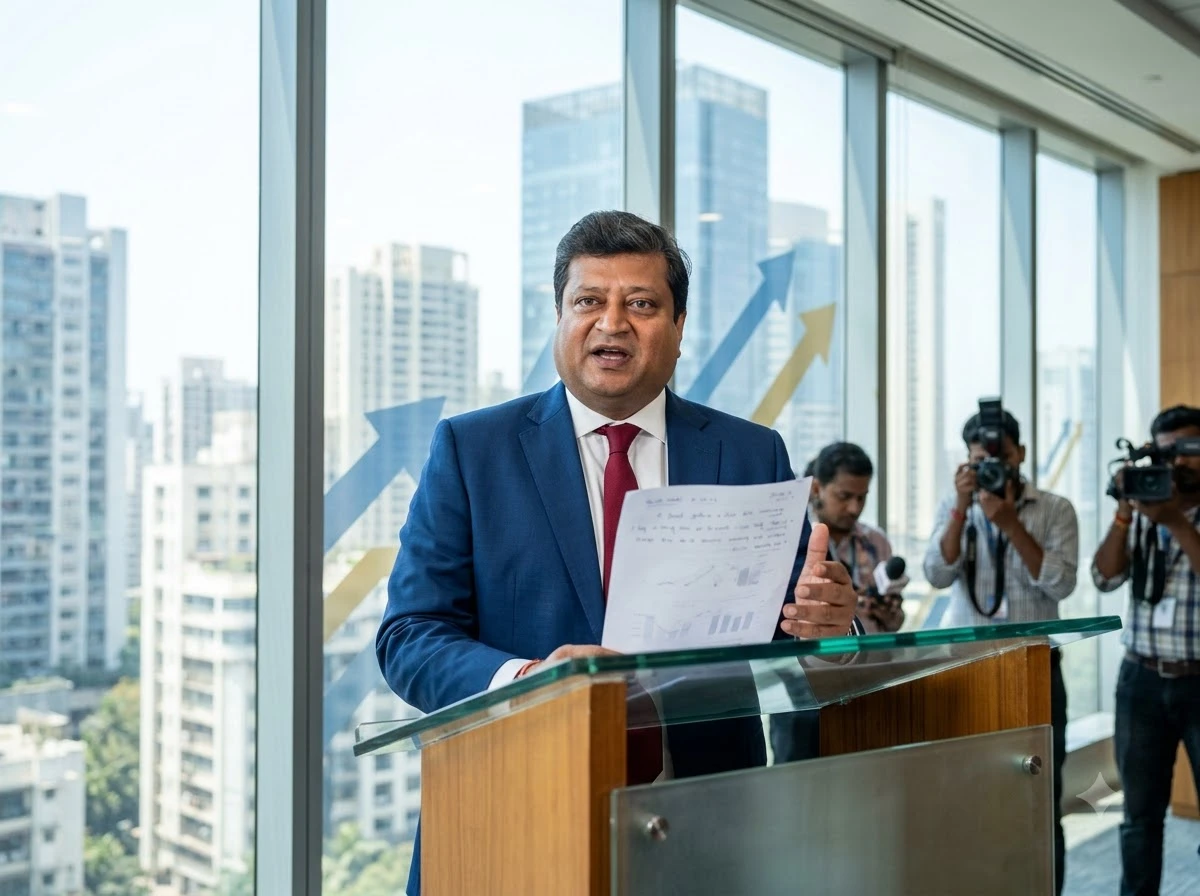
Three income streams and a rising carry share
Gaja is a home-grown alternative asset manager with more than two decades managing India-focused Category I and II AIFs plus offshore vehicles. It targets the mid-market segment of deals sized ₹50-250 crore across education-employment-employability, energy and environment, financial services, consumer and digital technology. Limited partners span more than 20 countries. As of March 2026, income-generating capital across Funds II, III and IV stood at ₹3,162 crore. The firm had put ₹274 crore of its own money in as sponsor commitment, equal to about 6.4% of fund size, well above the regulatory floor.
Revenue arrives in three ways:
- Management fees charged on committed or invested capital
- Carried interest, the performance share once funds clear hurdles
- Gains on the sponsor stakes themselves
Between FY24 and FY26 total income rose from ₹103.96 crore to ₹157.80 crore while PAT climbed from ₹44.74 crore to ₹81.96 crore. Margins expanded past 50%. The composition shifted sharply. Management-fee income fell while carried interest jumped to ₹75.41 crore, nearly half of FY26 total income. That tilt lifts reported profits but ties cash conversion to the timing of exits.
One sharp market observation circulating on opening day noted that operating cash flow stayed negative even as PAT rose, precisely because carry is recognised when earned on paper yet collected only when portfolio companies are sold. Investors in the listed AMC receive dividends only from the manager’s own profits; they do not own units in the underlying funds.
The distinction matters for anyone modelling the stock. Fee income is recurring and relatively smooth. Carry arrives in lumps when exits clear hurdles. Sponsor gains depend on the same exit calendar plus the size of the firm’s own cheques. When carry becomes nearly half of total income, as it did in FY26, the earnings print can look strong while cash still lags.
Where the fresh ₹450 crore actually goes
Most of the net fresh proceeds are earmarked for sponsor commitments. The red herring prospectus objects of the offer allocate roughly ₹372 crore to balance remaining commitments into Fund IV constituents (Gaja Capital India Fund 2020 LLP and the 2021 vehicle), repay a bridge loan, seed the proposed Fund V, and back a new secondaries fund. The balance covers general corporate purposes.
This is the second-order move. Public capital becomes permanent dry powder that lets Gaja keep writing large sponsor cheques. Higher skin in the game eases future fundraising, improves alignment with LPs, and keeps a bigger slice of future carry and sponsor gains inside the listed entity. It is the same permanent-capital logic large global managers have used for years; Gaja is among the first pure Indian PE platforms to put it on the public market. The OFS portion simply lets existing shareholders, including promoters Ranjit Shah and Imran Jafar plus several others, monetise a slice of holdings.
In practical terms the fresh issue turns temporary bridge funding and unfinished Fund IV commitments into equity-backed capacity. Once that capacity is in place, the firm can underwrite larger sponsor lines for Fund V and the secondaries vehicle without repeatedly tapping short-term debt. The OFS does not change that capacity story; it only changes who holds the pre-issue shares that are sold.
Financials, valuation and peer context
Restated consolidated numbers show steady scaling on a light balance sheet.
| Metric (₹ crore) | FY26 | FY25 | FY24 |
|---|---|---|---|
| Total income | 157.80 | 123.31 | 103.96 |
| PAT | 81.96 | 61.95 | 44.74 |
| EBITDA | 72.05 | 60.81 | 49.25 |
| Net worth | 606.52 | 388.97 | 331.88 |
| Total borrowings | 41.56 | 4.00 | 3.51 |
At the upper band the post-issue market capitalisation is about ₹2,256 crore. That implies roughly 27.5x FY26 earnings and around 3x book on some broker calculations, or 22x pre-issue. Anand Rathi called it a long-term subscribe, noting the concentrated earnings and mid-market PE dependence while flagging attractive industry tailwinds. SBI Securities also recommended subscribe for the long horizon, highlighting management-fee yields near 190 bps versus mutual-fund levels of 37-52 bps and the superior unit economics of alternatives. Listed AMC peers trade at higher multiples on average; the gap reflects Gaja’s smaller scale and carry volatility versus the large mutual-fund houses.
| Fee yield comparison | Level |
|---|---|
| Gaja management-fee yield (broker note) | near 190 bps |
| Mutual-fund fee range (same notes) | 37-52 bps |
| Post-issue FY26 earnings multiple (upper band) | roughly 27.5x |
| Pre-issue multiple (same frame) | about 22x |
Net worth rose from ₹331.88 crore in FY24 to ₹606.52 crore in FY26 while borrowings stayed modest until the bridge loan lifted the FY26 figure to ₹41.56 crore. The IPO is designed to clear that bridge. A recent recent SBI Funds Management AMC listing showed how hungry investors remain for pure asset-management paper even after rich valuations.
India’s AIF runway and Gaja’s mid-market niche
SEBI data put cumulative AIF commitments at ₹16.94 lakh crore by 31 March 2026, with Category II (the PE and private-credit bucket) accounting for the bulk. Funds raised and investments made continue to climb at multi-year double-digit rates. Industry projections still point to 25%+ CAGRs into the end of the decade as domestic institutions, family offices and HNIs increase alternatives allocations.
Gaja’s average MOIC across prior investments and the Gaja Capital Funds is reported at 3.3x, with recent funds landing in the top quartile on available independent benchmarks. The firm runs an “invest-and-collaborate” model that puts partners inside portfolio companies on product, sales, people and finance rather than pure capital provision. Headcount is lean at 37 people. That operating leverage shows in the margin expansion. The same concentration, however, means a handful of exits can swing annual carry, and mid-market exits in India still take time.
Deal size stays inside the ₹50-250 crore band across education-employment-employability, energy and environment, financial services, consumer and digital technology. That focus keeps the firm clear of mega-buyout competition yet still exposed to the slower exit clocks typical of mid-market India. Limited partners from more than 20 countries supply the committed capital base; the manager’s job is to keep recycling that trust into the next vintage.
Risks that sit beside the growth case
Carried interest timing is the clearest near-term variable. FY26 carry already formed nearly half of income; any slowdown in realisations would hit both reported profits and cash. Historical fund returns are not guarantees for Fund V or the secondaries vehicle. Valuation methodologies for unlisted assets carry subjectivity. The company remains lightly geared, yet borrowings rose with the bridge loan that the IPO will repay. There is no exact listed pure-play mid-market PE manager peer in India, so price discovery will be noisy.
Because headcount is only 37 people, operating leverage works in both directions. Strong vintage performance lifts margins quickly. A quiet exit year leaves a small team still covering the franchise while carry pauses. Investors comparing the name with large mutual-fund AMCs need to keep that earnings shape in view: higher fee yields, smaller scale, and far more dependence on realisation timing.
What we know
- Fresh issue largely pre-committed to sponsor stakes and bridge repayment
- PAT and margins expanded through FY26 on higher carry
- Anchor book filled with marquee domestic and foreign names
What remains open
- Final subscription multiples and grey-market direction through Friday
- Exact Fund V size and first-close timing after the IPO
- Pace of actual cash realisation from the FY26 carry book
Brokers who like the story frame it as a multi-year compounder once the next funds scale. Those more cautious point to the earnings mix and the 27x-plus multiple leaving limited room for execution slips.
How Listed Shareholders Capture the Upside
Buying the IPO does not give an investor units in Funds II, III, IV or the planned Fund V. It gives a share of the management company. Dividends, if and when paid, come only from the manager’s own profits after fees, carry and sponsor gains have been booked at that level.
That structure explains why the fresh ₹450 crore is aimed so heavily at sponsor commitments. Each rupee of permanent capital that stays inside the listed entity supports a larger claim on future carry and on gains from the firm’s own stakes. Alignment with LPs improves at the same time, because the manager is writing bigger cheques alongside them.
The trade-off is transparency of cash. Carry of ₹75.41 crore can dominate an income statement, as it did in FY26, long before the underlying exits deliver cash to the manager. Negative operating cash flow beside rising PAT is the accounting footprint of that lag. Shareholders who model only the PAT line will miss the working-capital rhythm of an alternatives franchise.
What the Anchor Book Signals for the Offer
The ₹165 crore anchor pot drew a mix that spans foreign brokerage capital, well-known domestic portfolio managers and life insurers. Societe Generale, Bengal Finance, Sanshi Fund, Nippon, Invesco, SBI Life, Bajaj Life and HDFC Life together set an early reference point for quality of demand.
Anchors filled a large slice of the QIB bucket before the retail and NII lines opened. That does not guarantee the rest of the book, yet it reduces the chance of a hollow institutional print. Grey-market talk has stayed in a narrow band from flat to a modest premium, consistent with a deal that is being treated as a long-horizon platform rather than a listing-day trade.
Final multiples through Friday will still decide pricing power at the ₹152-160 band. The anchor list simply shows that several institutions already accepted the permanent-capital thesis at those levels.
Listing day will test the permanent-capital thesis
Gopal Jain, Ranjit Shah and Imran Jafar remain the core promoters. The leadership team’s long India careers and founder-mentor reputation among portfolio CEOs form part of the intangible pitch. If the IPO proceeds translate into larger, better-aligned funds and the mid-market exit environment cooperates, the listed vehicle captures a rising share of management fees, carry and sponsor gains. If exits slow or new fundraising stumbles, the same structure that creates the upside leaves earnings lumpy.
For now the book is open. Retail and HNI bids will decide whether the second-order bet on permanent sponsor capital finds enough buyers at ₹160.

-
 TECH1 year ago
Where Garmin Watches are Made and How They are Assembled
-

 AUTO2 months ago
Tesla’s Roadster Is ‘a Few Weeks Away,’ Says Its Chief Designer
-
 NEWS10 years ago
Samsung Releases Galaxy Note7 TV Ad as Reddit AMA Leaks Specs
-
 NEWS10 years ago
Android 7.0 Nougat Rolls Out To Nexus Devices With New Emoji, Features
-
 FINANCE9 years ago
Cardano Price Surges as ADA Enters the Crypto Top Ten List
-
 NEWS10 years ago
Pre-Order the First Camera Made for Facebook Live Streaming Video
-
 FINANCE1 year ago
Binance Suspends Trading and Withdrawals for a System Upgrade
-
 FINANCE9 years ago
RChain Price Jumps Nearly 150% to a New All-Time High of $2.03