
BUSINESS
Investcorp’s ₹500 crore 20Cube bet aims at logistics roll-up
Investcorp invests ₹500 crore in 20Cube’s India contract logistics arm and targets warehouse growth plus bolt-on deals as part of a fresh $1 billion India push.

Investcorp has invested ₹500 crore in 20Cube 3PL Solutions, carving out the Indian contract-logistics arm as a growth platform and pairing the equity with plans for another ₹500-750 crore of acquisitions. The global private-equity firm, which already holds roughly $1 billion of Indian assets, intends to deploy a further $1 billion across the country over five years.
Gaurav Sharma, head of India investment business at Investcorp, told Mint the capital goes in largely to fund immediate expansion and bolt-on deals. The move marks a clear wager that organised third-party logistics will keep taking share from fragmented operators.
How the 20Cube deal is structured
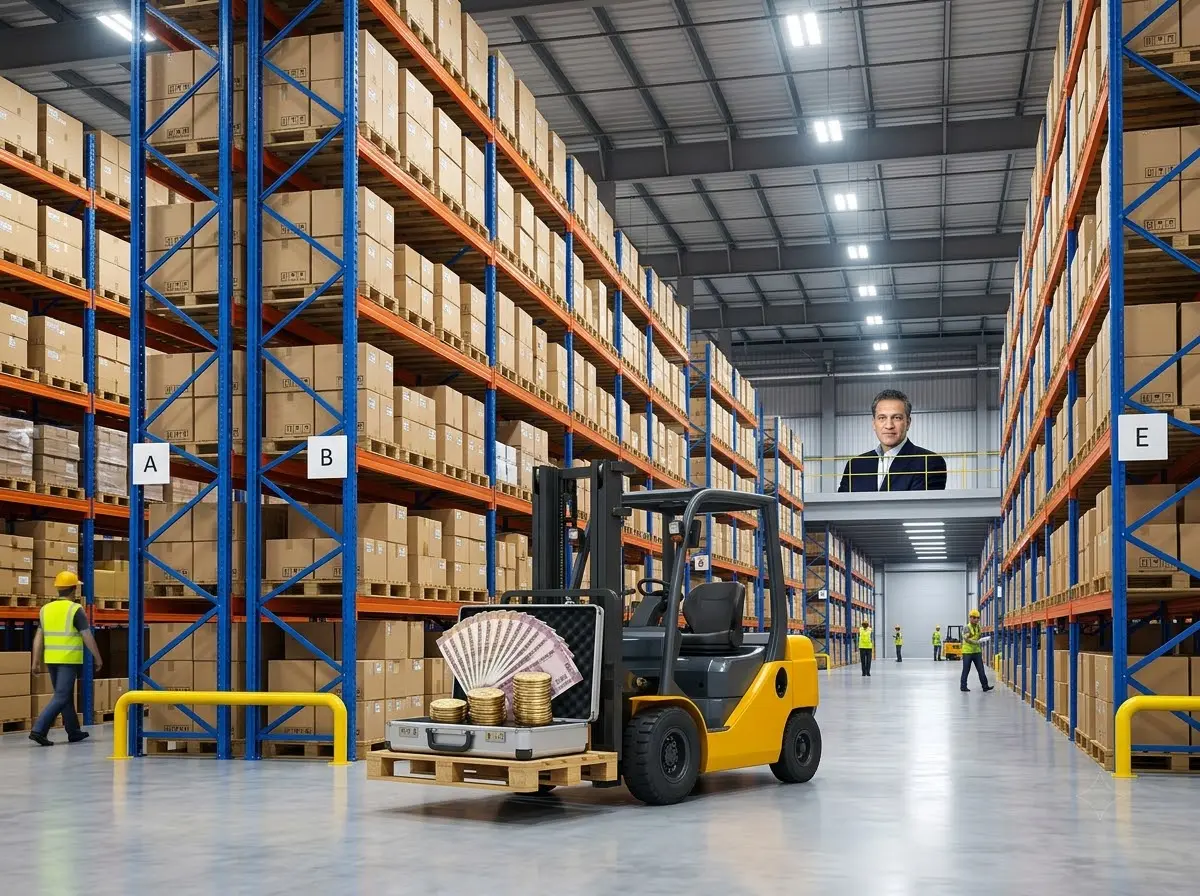
The transaction separates 20Cube’s India contract-logistics business from the Singapore-based parent, 20Cube Logistics, which will stay focused on international freight forwarding. The India entity already runs more than 7 million sq ft of warehousing and serves customers in consumer durables, chemicals, automotive components and engineering goods.
Sharma said the business has been growing 25-30 percent and remains high-margin. Investcorp aims to lift the warehouse footprint above 20 million sq ft within four to five years. The firm’s existing India portfolio already includes logistics names such as Xpressbees and NDR Warehousing, giving it operating pattern recognition in the sector.
- ₹500 crore equity into the India 3PL platform on day one
- 7 million+ sq ft current warehousing, target above 20 million sq ft
- ₹500-750 crore earmarked with 20Cube for further contract-logistics acquisitions
- $1 billion additional India deployment targeted over five years
20Cube itself operates a global freight and warehousing network spanning 12 countries, 85-plus locations and roughly 8 million sq ft of storage. The India split lets the local platform concentrate capital and management on domestic contract logistics while the parent keeps its international focus.
That separation also clarifies accountability. The India platform can raise and deploy capital against a single domestic mandate. The parent can keep freight-forwarding relationships intact without diluting attention across two very different operating models.
Nearly tripling warehouse space in four to five years implies both greenfield builds and acquired capacity. Organic growth alone at 25-30 percent would expand the base, yet the dedicated acquisition pool shows Investcorp expects purchased sites and customer books to supply a large share of the step-up.
Platform build and the acquisition runway
Sharma framed the investment explicitly as a platform play. “We are putting in a substantial amount primarily into the company to be able to drive growth on day one, and we’re already starting to look at M&A opportunities to create this as a platform play within the logistics sector,” he said.
| Metric | Current | Target / Plan |
|---|---|---|
| Warehousing space | >7 million sq ft | >20 million sq ft in 4-5 years |
| Growth rate | 25-30% | Sustained via organic + M&A |
| Follow-on M&A capital | – | ₹500-750 crore |
| Customer sectors | Durables, chemicals, auto, engineering | Broader organised 3PL coverage |
The combination of fresh equity and dedicated acquisition capital is meant to accelerate scale before competitors lock up the better regional assets. Family-owned contract-logistics operators and non-core corporate divisions remain the most likely sellers as generational transitions and portfolio clean-ups continue.
Day-one equity funds working capital, technology and new sheds so the platform does not stall while deals are negotiated. The parallel M&A envelope lets management bid when a regional operator or corporate carve-out appears, without waiting for a fresh fundraise.
Pattern recognition from Xpressbees and NDR Warehousing shortens that learning curve. Integration playbooks, customer onboarding routines and warehouse operating standards can transfer faster when the sponsor already knows the sector’s friction points.
Why organised 3PL looks attractive now
Investcorp sees India still early in the shift from fragmented trucking and warehouse operators to organised third-party logistics providers. Complex supply chains, deeper reach into tier-II and tier-III cities, and demand for technology-enabled visibility are the main pull factors.
We believe that India is at just the beginning of a long journey of that formalization and a more organized 3PL because that is the demand of the time. And that’s why we made this investment.
Sharma made the comment in the Mint interview. Independent market data backs the runway. One recent assessment puts the India 3PL market at $38.18 billion in 2026, up from $36.09 billion in 2025, and projects $50.55 billion by 2031 at a 5.78 percent compound annual growth rate.
Domestic transportation still dominates revenue, yet value-added warehousing and distribution is the fastest-growing service line. E-commerce already accounts for more than a quarter of end-user demand, while life-sciences and healthcare are expanding quicker still. Asset-light and hybrid models continue to gain ground as shippers seek single-window control towers rather than dozens of local contractors.
- Multi-modal infrastructure upgrades and dedicated freight corridors are cutting transit times on key lanes.
- GST compliance and e-way-bill automation favour organised players that can absorb the administrative load.
- Quick-commerce and D2C brands need denser micro-fulfilment networks that smaller operators struggle to fund.
- Manufacturers chasing China+1 production want integrated domestic distribution that matches export reliability.
Logistics costs remain elevated as a share of GDP compared with global benchmarks, so any provider that can compress those costs while improving visibility has pricing power.
The market path from $36.09 billion in 2025 to $50.55 billion by 2031 is steady rather than explosive. That profile suits a platform that compounds through both network density and bolt-on books, instead of relying on a single demand spike.
| Year | India 3PL market size |
|---|---|
| 2025 | $36.09 billion |
| 2026 | $38.18 billion |
| 2031 (projected) | $50.55 billion |
Organised operators capture a larger slice of that expansion when shippers consolidate vendors. Fragmented fleets and standalone godowns struggle to match compliance, visibility and multi-city coverage in one contract.
Manufacturing interest runs alongside logistics
The same interview flagged manufacturing and industrials as a hotter sector for Investcorp. The firm already holds Canpac, a 2023 packaging investment, and is scanning more opportunities. Sharma linked the interest to India’s push to raise manufacturing’s share of GDP and to create jobs under domestic-production and China+1 policies.
“Manufacturing is being recognized now as almost imperative for India to be able to drive jobs and growth and GDP growth as the manufacturing percentage of GDP is still very low,” he said. Contract logistics sits naturally next to that theme: new factories need warehousing, inbound component flows and outbound distribution. A scaled 3PL platform can serve both pure logistics customers and the firm’s own manufacturing investees.
Core focus areas remain consumer, healthcare, financial services and business services. The broader unorganised-to-organised shift is the common thread Sharma cited across the portfolio.
Canpac illustrates the adjacency. Packaging demand tracks factory output; factory output tracks the need for reliable inbound and outbound logistics. A sponsor present in both layers can share customer introductions and operating discipline without forcing formal cross-holdings.
Larger cheques and the next India fund
Investcorp’s current India fund has a ₹5,000 crore corpus. The firm expects a few more deployments from it before returning to market, likely in the second half of next year, for a larger successor vehicle. Average cheque sizes in the mid-market have already moved from the ₹200-250 crore range to around ₹400 crore and are still climbing as companies scale.
- 2019, Maiden India PE fund closed at roughly ₹1,000 crore.
- ~2025, ₹5,000 crore fund closed, targeting 10-11 mid-market companies.
- August 2026, ₹500 crore 20Cube platform investment announced.
- H2 2027 (targeted), Marketing of larger next fund expected, timing tied to deployment pace.
The firm can also draw on its global balance sheet and co-investor network for bigger tickets when needed. Its mid-market private equity strategy in India still prefers significant minority stakes in first-generation, asset-light businesses, yet Sharma noted rising opportunities for buyouts as families transition and corporates sell non-core assets. Minority deals still make up about 80 percent of the Indian PE market by volume.
For founders weighing capital structures, the same dynamics appear in everyday options for financing business expansion; PE platforms simply operate at larger ticket sizes and with longer hold periods.
The jump from a roughly ₹1,000 crore maiden fund to a ₹5,000 crore vehicle, and the climb in typical cheques toward ₹400 crore, show how quickly the India mid-market ticket has grown. A ₹500 crore platform cheque fits that progression and still leaves room inside the current corpus for remaining deployments.
Exits already flowing while new capital arrives
Investcorp has realised value from ASG Eye Hospitals, Safari Industries, Citykart and InCred. Wakefit and NephroPlus have listed and the firm retains stakes. Sharma said multiple additional exit processes are under way without naming them. Public markets and secondary sales both remain open routes.
The simultaneous presence of an active exit pipeline and a fresh platform investment is deliberate. Realisations free capital and demonstrate the model to limited partners just as the firm prepares to raise a bigger fund. Portfolio companies that need institutional systems or M&A support also benefit from the same operating playbook Investcorp intends to apply at 20Cube.
Choosing when to double down on a sector versus harvest an earlier winner is one of the practical techniques for making growth decisions that PE firms codify and that operating companies can adapt at smaller scale.
- Full or partial realisations: ASG Eye Hospitals, Safari Industries, Citykart, InCred
- Listed holdings still on the books: Wakefit, NephroPlus
- Routes in use: public markets and secondary sales
- Further exits: multiple processes under way, names undisclosed
An exit clock that keeps turning while new platforms form is how a mid-market franchise shows continuity. Limited partners see both distributions and fresh deployment stories before the next fundraise opens.
Bolt-on Deals Widen Coverage Fast
The ₹500-750 crore acquisition envelope attached to 20Cube is the mechanism that turns a single-country carve-out into a multi-region platform. Equity alone funds organic sheds and systems. Bolt-ons buy customer density, lane knowledge and warehouse clusters that would take years to replicate from scratch.
Family-owned contract-logistics firms and non-core corporate divisions are the seller pool Sharma’s framing points toward. Generational handovers and portfolio clean-ups create bilateral processes where a funded platform can move quickly.
Each bolt-on also tests the operating playbook. Standards already familiar from Xpressbees and NDR Warehousing can be applied to newly acquired sites, reducing the risk that scale comes at the expense of service consistency.
Success on that path supports the wider formalisation thesis: shippers migrate toward organised 3PLs when one counterparty can cover more cities, more compliance burden and more visibility than a patchwork of local contractors.
Warehouse Growth Anchors the Investment Case
The headline operating target remains warehouse footprint: more than 7 million sq ft today, above 20 million sq ft inside four to five years. That nearly threefold expansion is the clearest public yardstick for whether the platform thesis is working.
Growth at 25-30 percent keeps the existing network compounding while acquisitions add step changes in location count and sector mix. Consumer durables, chemicals, automotive components and engineering goods already sit on the customer list; broader organised 3PL coverage is the stated direction of travel.
High-margin characteristics matter because warehouse-heavy models still require capital discipline. Investcorp’s willingness to pair day-one equity with a separate M&A budget suggests it expects returns from density and utilisation, not from leverage alone.
When the eventual exit arrives, buyers typically pay for network breadth, contracted revenue and technology-enabled control towers. Building those attributes now is how a platform earns a premium later.
Deployment pace will set the next milestones
Investcorp manages about $62 billion in assets globally across private equity, real assets, credit and liquid strategies, with 14 offices. India remains a growth market for the firm rather than a mature one. Sharma’s five-year target of another $1 billion would take cumulative India investment to roughly $2 billion.
How quickly the current ₹5,000 crore fund is put to work will decide when the larger vehicle launches. In the meantime the 20Cube platform gives Investcorp a live vehicle for both organic warehouse growth and the acquisition of smaller contract-logistics businesses. The bet is that formalisation continues, that customers keep migrating to organised 3PLs, and that a scaled, technology-enabled platform will command a premium when the eventual exit arrives.
For now the capital is committed, the separation of the India business is under way, and the search for bolt-on assets has already begun.

-
 TECH1 year ago
Where Garmin Watches are Made and How They are Assembled
-

 AUTO2 months ago
Tesla’s Roadster Is ‘a Few Weeks Away,’ Says Its Chief Designer
-
 NEWS10 years ago
Samsung Releases Galaxy Note7 TV Ad as Reddit AMA Leaks Specs
-
 NEWS10 years ago
Android 7.0 Nougat Rolls Out To Nexus Devices With New Emoji, Features
-
 FINANCE9 years ago
Cardano Price Surges as ADA Enters the Crypto Top Ten List
-
 NEWS10 years ago
Pre-Order the First Camera Made for Facebook Live Streaming Video
-
 FINANCE1 year ago
Binance Suspends Trading and Withdrawals for a System Upgrade
-
 FINANCE9 years ago
RChain Price Jumps Nearly 150% to a New All-Time High of $2.03