
BUSINESS
India’s Sugar Import Pivot Exports Price Pain Abroad
India eyes limited duty-free sugar imports and tighter stock limits after wholesale prices jumped nearly 20 percent in August to records.

Wholesale sugar prices in Kolhapur, a key Maharashtra trading hub, have climbed nearly a fifth since the start of August to a record 5,350 rupees ($56) per 100 kg. India is now weighing limited duty-free imports and tighter trader stock limits to ease the spike ahead of the festival season.
Government and industry sources told Reuters the package under discussion could open overseas shipments for the first time in nearly a decade, even as officials insist current stocks can still cover demand until the next crush begins. The gap between those two readings of the same balance sheet is what now drives policy talk in New Delhi.
What New Delhi is weighing right now
A government source said the rise looks “completely unwarranted” and that a full set of tools is on the table. Options include cutting import duties, allowing limited duty-free arrivals, lowering the volume bulk traders may hold, and adjusting the monthly sugar release quotas that mills must sell into the domestic market.
- Limited duty-free imports, possibly up to 1 million tonnes before end-October
- Tighter stockholding caps beyond the existing 30-day rule for dealers
- Lower import duty from the current high rate that has kept foreign sugar out
- Revised monthly domestic sale allocations for mills
- Possible diversion of refined stocks held by port-based refineries into the local market (around 300,000 tonnes)
A Mumbai-based dealer at a global trade house said mills would likely favour raw sugar because white sugar offers little margin at current world levels. Port refineries already enjoy duty-free raw imports provided they re-export an equivalent volume of refined product; officials could simply redirect some of that material inland.
Each lever works on a different lag. Release-quota changes and stock caps can hit the domestic pipe within days. Duty cuts and fresh overseas orders cannot. Redirecting the roughly 300,000 tonnes already sitting at port refineries sits between those poles: the sugar is inside the country, yet it was never meant for local shelves.
Officials can stack the tools rather than pick one. A modest duty-free window paired with tighter dealer caps and a nudge on mill release quotas would attack both the physical shortage narrative and the speculative buffer at once. That mix is what sources describe as under active review.
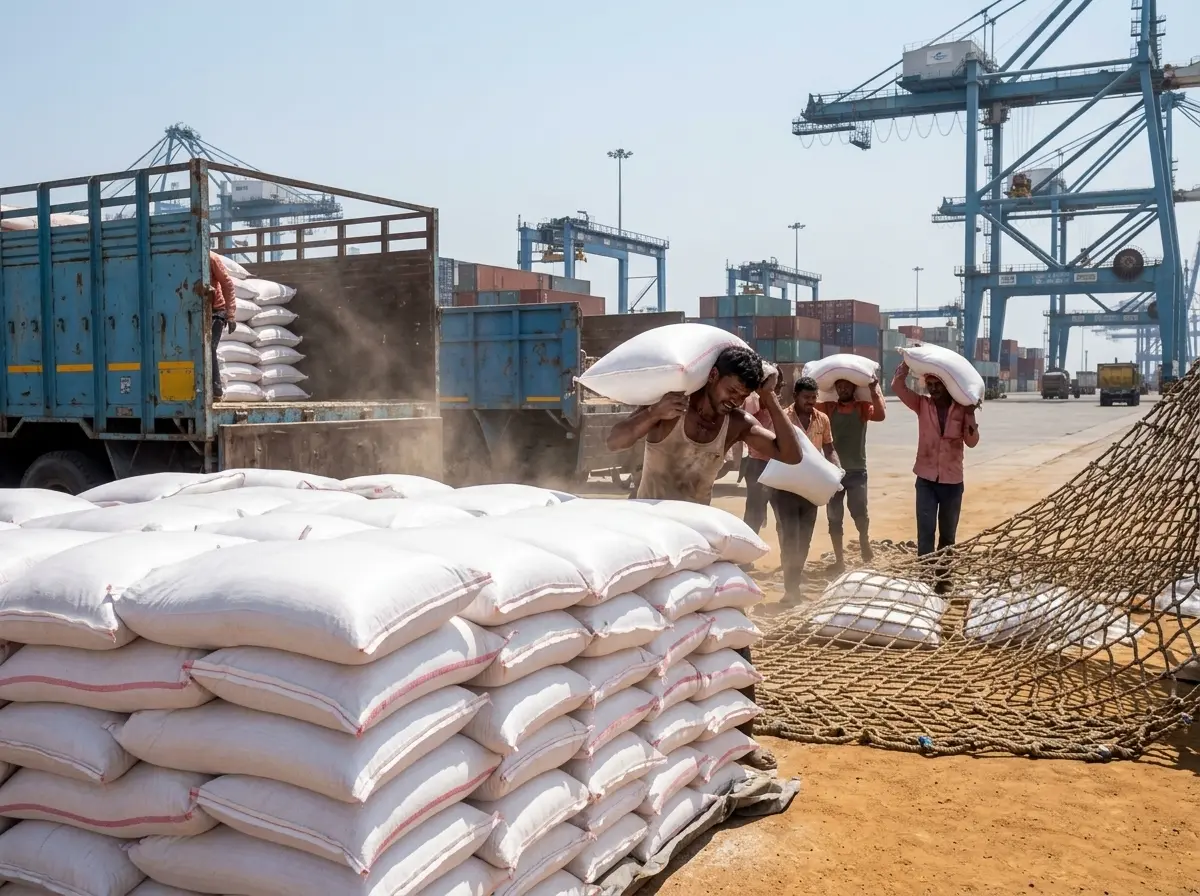
Festival demand meets tight local supply
Indian sugar use normally lifts from August through November. Ganesh Chaturthi, Dussehra and Diwali drive higher sales of traditional sweets and confectionery. Ashok Jain, president of the Bombay Sugar Merchants Association, put it plainly: “Local supplies are tight. Only imports can help increase supplies and bring down prices during the festival season.”
A second government source argued stocks remain adequate until new-season cane arrives. The market has not agreed. Prices jumped about 10 percent in the month before the latest surge and now sit at records even after an earlier export ban and the July order that bars dealers from holding stocks longer than 30 days.
That 30-day stockholding ban ordered in late July already forced dealers to declare positions from 1 August. Further cuts to permitted holdings would squeeze the remaining speculative buffer.
The calendar is unforgiving. Festival buying does not pause for policy debate. Sweets makers and household buyers lock in volumes weeks ahead of each holiday, so a price spike in August feeds straight into September and October invoices. Traders who must turn stock every 30 days cannot smooth that wave the way they once did.
The earlier export ban removed one outlet for surplus. The July holding rule removed another cushion. Together they left the domestic market thinner just as seasonal demand began its climb. That sequence, more than any single order, explains why Kolhapur quotes now set records.
How much sugar India actually has
The current marketing year has delivered less sugar than early forecasts. According to the USDA projects 30 million tonnes of centrifugal sugar (raw value) for 2025/26 after downward revisions caused by heavy late-season rains in Maharashtra and Karnataka. Ending stocks are seen near 5.1 million tonnes, down sharply from earlier projections.
| Marketing year | Production (raw value, MMT) | Ending stocks (MMT) | Consumption (MMT) |
|---|---|---|---|
| 2024/25 | 28.0 | 6.0 | 29.1 |
| 2025/26 (est.) | 30.0 | 5.1 | 30.1 |
| 2026/27 (fcast) | 33.6 | 6.5 | 31.0 |
ISMA’s crystal-value estimate for the present season has also been cut. Crushing finished earlier than usual at many mills after waterlogging cut cane availability. The next crush starts in October, with new sugar only trickling in by November, right after the peak festival window.
Read side by side, the stock path is clear. Ending stocks fall from 6.0 million tonnes in 2024/25 to an estimated 5.1 million tonnes this season even while production edges up to 30.0 million tonnes. Consumption rises in step, to 30.1 million tonnes, so the extra output does not rebuild the cushion. The 2026/27 forecast of 33.6 million tonnes and 6.5 million tonnes of ending stocks would restore comfort, yet that relief arrives after Diwali, not before.
Early mill closures matter as much as the headline tonnage. When crushing stops sooner, the flow of fresh crystal into depots slows months before the next season opens. Merchants then draw harder on whatever remains in the pipeline. That is the mechanical link between late-season rains in Maharashtra and Karnataka and record quotes in Kolhapur.
The ethanol choice that keeps returning
Mills diverted roughly 3 million tonnes of sugar, about 10 percent of output, into ethanol this season through September. Last week Reuters reported that the government is considering a ban on ethanol made from cane juice and B-heavy molasses for the season that begins in October. Only C-heavy molasses, the low-sugar residue left after most crystal sugar is extracted, would remain freely available for fuel.
That shift would free a similar volume of sugar for food use and help offset any weather-related drop in the coming crop. Corn and rice stocks are ample, so the 20 percent ethanol blending target already achieved ahead of schedule could still be met by switching feedstock. High sugar prices already make pure sugar sales more attractive to mills than further diversion, according to industry officials.
The policy tension is plain. Aggressive cane-based ethanol growth helped India hit E20 early. It also removed millions of tonnes from the sweetener balance sheet at the exact moment weather cut production and festival demand rose.
C-heavy molasses carries little recoverable sugar, so leaving that route open protects a slice of ethanol supply without pulling crystal from the food chain. Juice and B-heavy routes do the opposite: they intercept sugar before it can be bagged. A seasonal curb on those two paths is therefore a direct transfer back to the sweetener market, timed for the crush that opens in October.
Mills will follow the arithmetic. When wholesale crystal fetches record money, the opportunity cost of juicing cane for fuel climbs. Officials who want both E20 stability and cooler sugar prices are counting on that price signal, plus ample corn and rice, to keep blending targets intact while sugar flows back to food use.
Since there has been a completely unwarranted increase in prices, we will have to take measures to check prices, and we are considering a whole host of measures and tools.
A government source speaking on condition of anonymity made that assessment this week.
Global markets get a floor they did not ask for
India is the world’s largest sugar consumer. Even limited arrivals of 1 million tonnes would reverse years of net exports and give support to London and New York benchmarks that have been watching Indian policy closely. Dealers note the practical lag: ocean freight and refining mean cargoes ordered now may not land until after Dussehra. Landed costs under zero duty could still sit in the mid-40s rupees per kg range, undercutting the domestic peak but not erasing it overnight.
For Brazilian and Thai exporters the prospect of a rare Indian tender is welcome. For Indian consumers buying sweets in September and October the timing may prove imperfect. The same import talk that calms domestic inflation fears simultaneously lifts the floor under the very prices India wants to import against.
| Price reference | Level |
|---|---|
| Kolhapur wholesale peak | 5,350 rupees per 100 kg |
| Possible zero-duty landed cost | mid-40s rupees per kg |
| Climb since early August | nearly a fifth |
| Rise in the month before the latest surge | about 10 percent |
A tender of up to 1 million tonnes is small against global trade, yet it marks a regime shift after years when high Indian duties kept foreign sugar out. Exporters price that signal quickly. Domestic buyers still face the freight clock: orders placed in mid-August struggle to clear ports before the heart of the festival run.
Who gains and who waits
Millers with remaining stocks or strong cane supply stand to benefit if prices stay elevated and ethanol diversion is reined in; they earn more selling crystal sugar. Bulk traders face tighter holding limits and forced disclosures. Household and commercial buyers of sweets face higher input costs until either imports arrive or the new crush begins. Port refineries could be asked to release refined product inland, turning an export-oriented loophole into a domestic relief valve.
- Millers: higher crystal realisations if ethanol curbs hold and prices stay firm
- Bulk traders: less room to hold inventory under any cap tighter than 30 days
- Sweets makers and households: elevated input costs through the festival window
- Port refineries: possible redirect of about 300,000 tonnes into local channels
The official import-export rules page of the Department of Food and Public Distribution still reflects the high-duty regime that has kept ordinary imports uneconomic for years. Any temporary waiver would reverse that stance for a narrow window.
Winners and losers can flip with a single notification. A duty-free tranche large enough to dent Kolhapur quotes would hand relief to buyers and trim mill margins on residual stocks. A package that leans only on stock caps and release quotas would do the reverse, keeping physical sugar scarce while paper positions shrink. The mix chosen in the coming weeks therefore sets the split.
Import Talk Collides With the Festival Clock
Policy tools and holiday demand do not share a calendar. Ganesh Chaturthi, Dussehra and Diwali already frame the August-to-November lift in use. Duty-free cargoes of up to 1 million tonnes, even if cleared quickly, still face ocean freight and refining steps that push physical arrival past Dussehra on many routes.
Local measures move faster. Tighter stockholding caps, revised monthly mill release quotas, and a redirect of refined lots from port refineries can add supply inside the festival window itself. That is why sources describe a package rather than a single import switch. Imports address the medium-term balance; stock and release rules address September shelves.
Landed sugar in the mid-40s rupees per kg would undercut the 5,350-rupee domestic peak once it appears. Until then, the market trades the promise of arrivals more than the bags themselves. Buyers who must cover sweets lines before Diwali cannot wait for that promise to materialise on the dock.
Stock Caps Tighten the Speculative Buffer
The late-July order that bars dealers from holding stocks longer than 30 days already forced declarations from 1 August. Prices began their sharpest climb of the year in early August, after that rule took hold and after the full export ban of May had closed the outward valve.
Further cuts to permitted holdings would shrink what little flexible inventory remains in the wholesale chain. Dealers who once absorbed short-term swings by carrying extra bags would have to sell sooner and buy closer to need. That shortens the buffer between mill gate and sweets kitchen.
Officials cast the caps as a check on unwarranted speculation. Merchants counter that some inventory is the grease that keeps festival distribution smooth. Both readings draw on the same facts: stocks are tighter than earlier projections, ending inventories are seen near 5.1 million tonnes, and the next crush only begins to feed the market in November. How far New Delhi pushes the holding limit will decide how much of that tightness reaches retail prices before new cane sugar arrives.
- May 2026: Full ban on raw, white and refined sugar exports takes effect.
- 28 July 2026: Dealers barred from holding stocks longer than 30 days; declarations mandatory from 1 August.
- Early August 2026: Prices begin their sharpest climb of the year.
- 10 August 2026: Reports surface of possible curbs on cane juice and B-heavy molasses ethanol for the next season.
- 18 August 2026: Sources confirm active discussion of limited duty-free imports and further stock curbs.
Whether the government settles on imports, ethanol limits, tighter stocks or some mix, the next few weeks will decide how expensive Diwali sweets become and how much support world sugar receives from the world’s biggest consumer. New-season cane will eventually refill warehouses, but the festival calendar does not wait for the crush.

-
 TECH1 year ago
Where Garmin Watches are Made and How They are Assembled
-

 AUTO2 months ago
Tesla’s Roadster Is ‘a Few Weeks Away,’ Says Its Chief Designer
-
 NEWS10 years ago
Samsung Releases Galaxy Note7 TV Ad as Reddit AMA Leaks Specs
-
 NEWS10 years ago
Android 7.0 Nougat Rolls Out To Nexus Devices With New Emoji, Features
-
 FINANCE9 years ago
Cardano Price Surges as ADA Enters the Crypto Top Ten List
-
 NEWS10 years ago
Pre-Order the First Camera Made for Facebook Live Streaming Video
-
 FINANCE1 year ago
Binance Suspends Trading and Withdrawals for a System Upgrade
-
 FINANCE9 years ago
RChain Price Jumps Nearly 150% to a New All-Time High of $2.03