
BUSINESS
Judge Clears Adani but Blasts the Unusual Path to Dismissal
A U.S. judge dismissed fraud charges against Gautam Adani after the Trump DOJ moved to drop them.

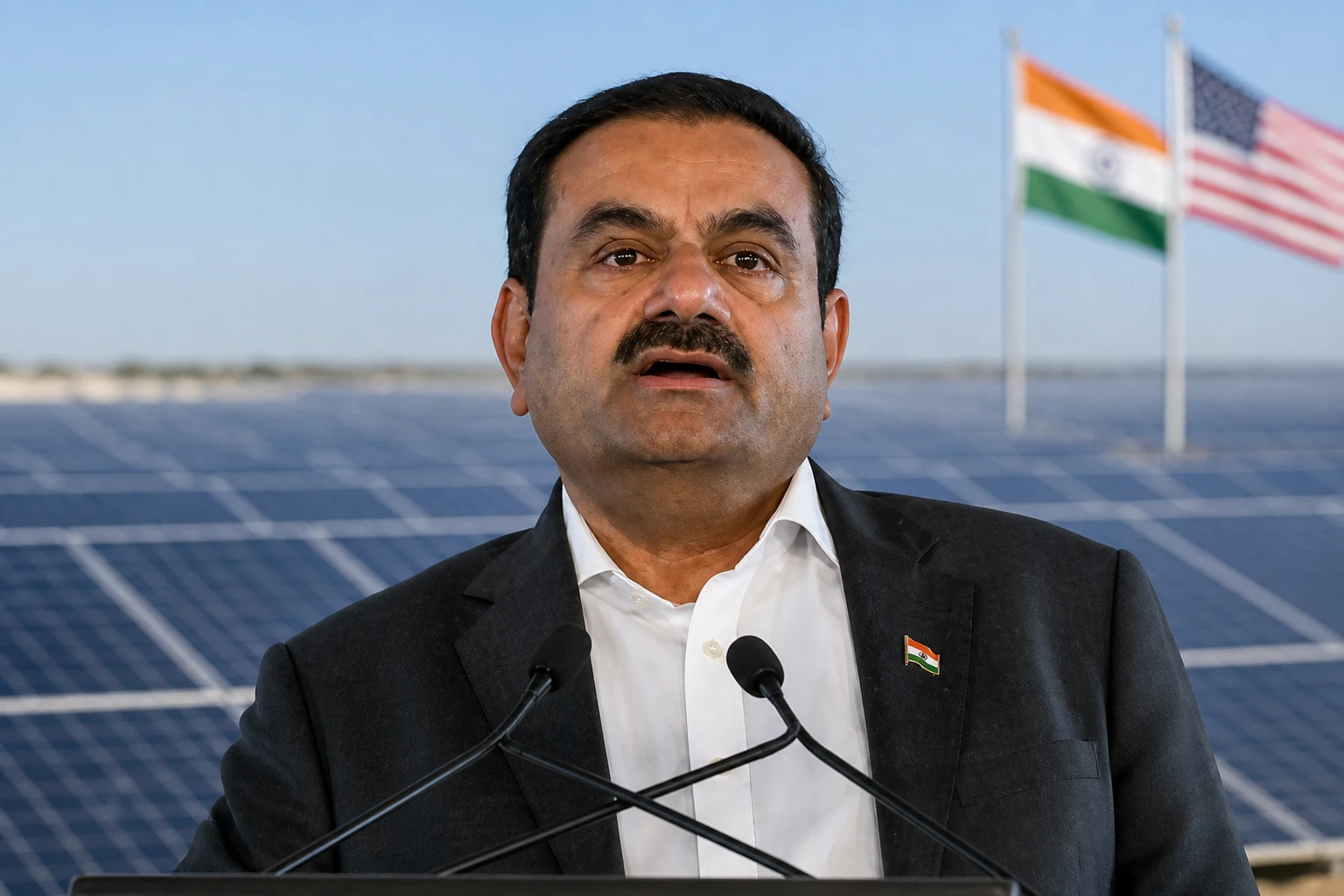
Brooklyn federal judge Nicholas Garaufis on August 10, 2026, dismissed key criminal fraud and bribery counts against Indian billionaire Gautam Adani and two associates after the Trump Justice Department moved to abandon the 2024 indictment. The 47-page memorandum order granted the rare Rule 48(a) request with prejudice on three counts while reserving judgment on others, yet spent pages condemning the process as highly unusual.
Garaufis accepted that the $10 billion U.S. investment pledge Adani’s side floated did not drive the drop. He still found the path to dismissal left lasting questions about how federal cases end.
The Ruling That Cleared the Appearing Defendants
Garaufis granted the motion in part. Counts Two, Three and Four (securities fraud conspiracy, wire fraud conspiracy and securities fraud) against Gautam Adani, his nephew Sagar Adani and Vneet S. Jaain were dismissed with prejudice. Those three had appeared through counsel. Counts One and Five (FCPA conspiracy and obstruction conspiracy) against five non-appearing defendants remain pending further DOJ filings by August 31.
| Count | Charge | Defendants | Status |
|---|---|---|---|
| One | FCPA conspiracy | Non-appearing group | Reserved |
| Two | Securities fraud conspiracy | Gautam Adani, Sagar Adani, Jaain | Dismissed with prejudice |
| Three | Wire fraud conspiracy | Gautam Adani, Sagar Adani, Jaain | Dismissed with prejudice |
| Four | Securities fraud | Gautam Adani, Sagar Adani, Jaain | Dismissed with prejudice |
| Five | Obstruction conspiracy | Four non-appearing | Reserved |
The judge found elements of the securities claims legally dubious enough that continued prosecution carried real risk. He rejected broader claims that the original indictment was pure politics.
How the Indictment Landed and Then Stalled
A grand jury in the Eastern District of New York returned the sealed indictment on October 24, 2024. It alleged three linked schemes from 2020 to 2024: roughly $265 million in bribes to Indian officials for solar energy contracts, lies to U.S. and international investors to raise nearly $4 billion in financing, and obstruction of FBI, SEC and grand jury probes.
- October 24, 2024: Indictment returned under seal; arrest warrants issued for all eight defendants.
- November 6 and 13, 2024: Gautam Adani posts congratulations to President-elect Trump and announces a $10 billion U.S. energy and infrastructure commitment aiming for 15,000 jobs.
- November 20, 2024: Indictment unsealed; SEC files parallel civil actions.
- May 18, 2026: DOJ files Rule 48(a) motion to dismiss with prejudice; OFAC announces related settlement the same day.
- August 10, 2026: Garaufis issues the memorandum order dismissing three counts.
After the unsealing, the docket went quiet for more than a year while the new administration reviewed FCPA priorities. Career prosecutors who brought the case later withdrew once the dismissal motion appeared.
Defense Counsel, the Trump Connection and the Investment Talk
Gautam Adani retained Sullivan & Cromwell in August 2025. Robert J. Giuffra Jr., who also serves as a personal lawyer for President Trump, led the team. The firm submitted roughly 600 pages of analysis, expert reports totaling another 200 pages, and a final 35-page slide deck in April 2026.
Principal Associate Deputy Attorney General Trent McCotter, who joined the office in January 2026, became the sole final decision-maker. He spent well over a hundred hours reviewing the defense materials in multiple meetings that included defense counsel. McCotter later wrote that he had already decided to drop the securities charges before the investment pledge arose in discussions.
- Giuffra and colleagues met repeatedly with Department and SEC officials.
- One presentation disputed the bribery evidence and noted a Trump administration would not have brought the case.
- Defense counsel for non-appearing defendants later pressed for the FCPA counts to fall too or they would oppose partial dismissal.
- The formal one-paragraph motion carried signatures only from McCotter and the Brooklyn U.S. attorney, not the line prosecutors who charged the case.
U.S. media reported the investment offer as early as May. Adani later filed a sworn statement denying any quid pro quo. The judge accepted that the pledge did not factor into the decision.
Where Garaufis Drew the Line on Process
The fact that McCotter came to this decision largely in collaboration with defense counsel, and seemingly without input from the FBI and SEC agents who investigated the alleged misconduct, or the attorneys from the Department, SEC, and U.S. Attorney’s Office who brought the case, appears to be highly unusual.
Garaufis wrote those words in the order. He called McCotter’s singular judgment concerning and said the failure to meet procedural requirements showed a lack of respect for the judiciary as a co-equal branch. When McCotter suggested the original charges were a name-and-shame exercise timed for the end of the prior administration, the judge replied that the claim lacked a scintilla of evidence and was unbecoming of his office.
The court still found enough legal risk in the securities language (generic anti-bribery representations that could be read as inactionable puffery) to support dismissal of those counts. It refused to rubber-stamp the remaining counts without fuller reasons.
Parallel Settlements That Cleared Related Fronts
The same day the DOJ moved to dismiss, the Treasury Department’s Office of Foreign Assets Control announced a 275 million settlement with Adani Enterprises for 32 apparent Iran sanctions violations involving LPG shipments. OFAC called the conduct egregious and not voluntarily self-disclosed, though it credited later cooperation and remedial steps.
On the securities side, the SEC moved for consent judgments requiring Gautam Adani and Sagar Adani to pay civil monetary penalties of 6 million and 12 million respectively. Those civil claims tracked the same core facts as the criminal case.
$265 million alleged bribes in the indictment
$10 billion U.S. investment pledge discussed by defense
$275 million OFAC Iran settlement
$18 million combined SEC penalties
Adani Group stocks had already begun recovering earlier legal overhangs. The criminal dismissal removes one more cloud for investors, even as the underlying allegations were never tested at trial.
What the Dismissal Leaves Unsettled
No witnesses testified. No evidence went before a jury. The judge made no finding on whether the alleged schemes occurred. He simply accepted the government’s prosecutorial discretion on the counts he dismissed and demanded more process on the rest.
Crowd reaction on X quickly split along those lines. Some saw a long-overdue end to selective enforcement against a foreign ally of both the Indian prime minister and the U.S. president. Others noted that a case alleging hundreds of millions in bribes ended after defense counsel with direct Trump ties worked the file while career investigators were sidelined. The absence of a proven quid pro quo did not erase the optics.
Adani posted that he would welcome the US court’s decision with humility and deep respect for the judicial process. He added that faith in truth, fairness and the rule of law had remained unwavering.
The remaining counts against the non-appearing defendants still require DOJ justification. Arrest warrants for all eight remain outstanding because the defendants live abroad. For Adani himself the criminal exposure in this matter is over. The judicial record of how it ended is now permanent.
Frequently Asked Questions
What exact charges did the 2024 indictment bring against Gautam Adani?
The sealed indictment returned October 24, 2024, charged five counts overall: conspiracy to violate the FCPA, securities fraud conspiracy, wire fraud conspiracy, securities fraud, and conspiracy to obstruct justice. Gautam Adani, Sagar Adani and Vneet Jaain faced the three securities-and-wire counts that were dismissed; the FCPA and obstruction counts targeted other defendants.
Which counts were dismissed with prejudice and which remain open?
Counts Two, Three and Four against the three appearing defendants were dismissed with prejudice on August 10, 2026, meaning they cannot be refiled. Counts One and Five against the five non-appearing defendants were reserved pending further DOJ submissions and defendant consent by the end of August.
How much did Adani entities pay in related civil and sanctions resolutions?
Adani Enterprises paid $275 million to OFAC to resolve 32 apparent Iran sanctions violations involving LPG shipments. Separately, Gautam Adani agreed to a $6 million SEC civil penalty and Sagar Adani to a $12 million penalty under proposed consent judgments covering the same core bond-offering statements.
Did the judge find that the $10 billion investment pledge influenced the dismissal?
No. Garaufis explicitly concluded the investment offer did not factor into the Justice Department’s decision. He accepted McCotter’s representation and Adani’s sworn denial of any agreement exchanging the pledge for dismissal, while still criticizing the overall process as highly unusual.
Why is a Rule 48(a) dismissal considered rare and closely scrutinized?
Federal Rule of Criminal Procedure 48(a) allows the government to dismiss an indictment only with leave of court. Legislative history and case law give judges a limited but real role to ensure the motion is not brought in bad faith or for improper reasons once a grand jury has spoken. Full factual support is required; a bare assertion of prosecutorial discretion is often insufficient.

-
 TECH1 year ago
Where Garmin Watches are Made and How They are Assembled
-

 AUTO2 months ago
Tesla’s Roadster Is ‘a Few Weeks Away,’ Says Its Chief Designer
-
 NEWS10 years ago
Samsung Releases Galaxy Note7 TV Ad as Reddit AMA Leaks Specs
-
 NEWS10 years ago
Android 7.0 Nougat Rolls Out To Nexus Devices With New Emoji, Features
-
 FINANCE9 years ago
Cardano Price Surges as ADA Enters the Crypto Top Ten List
-
 NEWS10 years ago
Pre-Order the First Camera Made for Facebook Live Streaming Video
-
 FINANCE1 year ago
Binance Suspends Trading and Withdrawals for a System Upgrade
-
 FINANCE9 years ago
RChain Price Jumps Nearly 150% to a New All-Time High of $2.03